

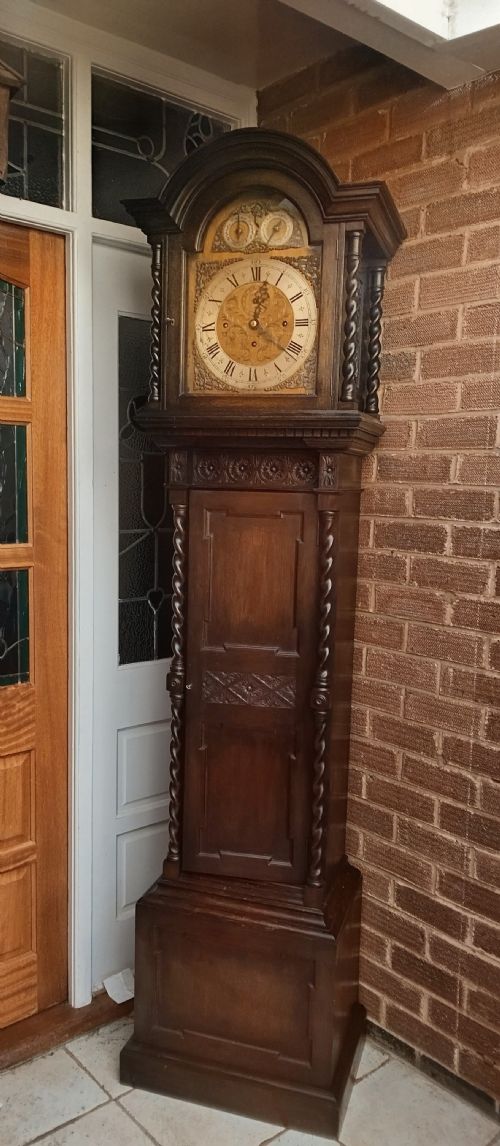

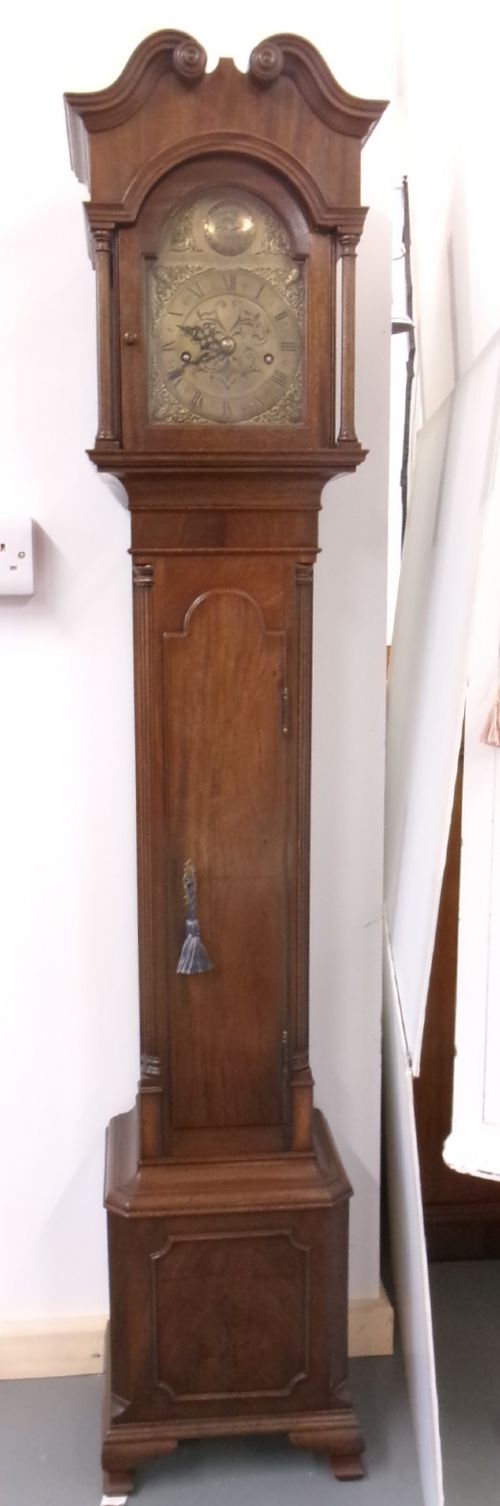
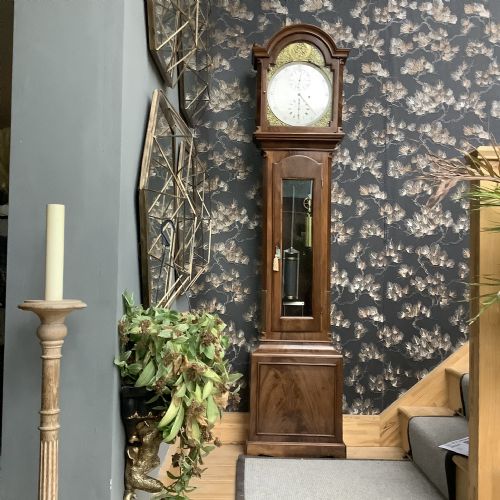
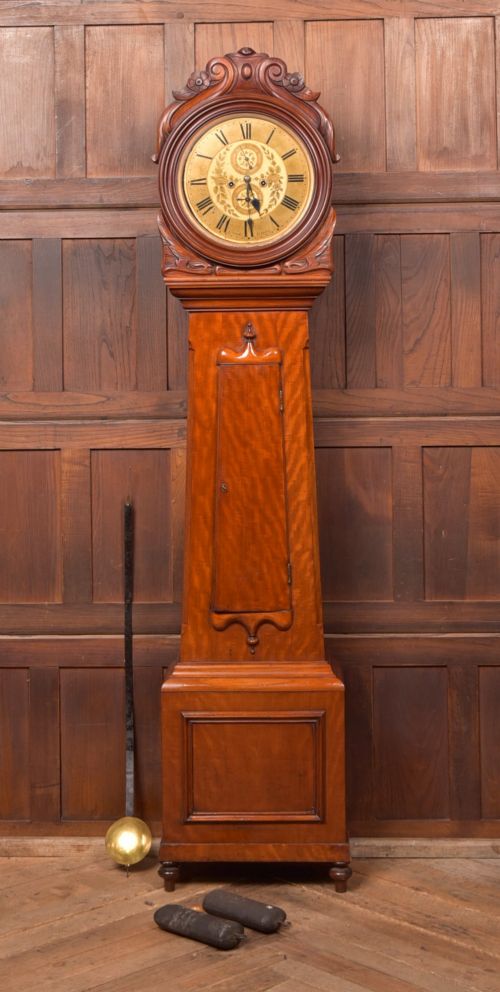


Victorian Grandfather Clock
A victorian grandfather clock stands tall in a hallway, measuring the hours with ticking precision and steady craftsmanship.
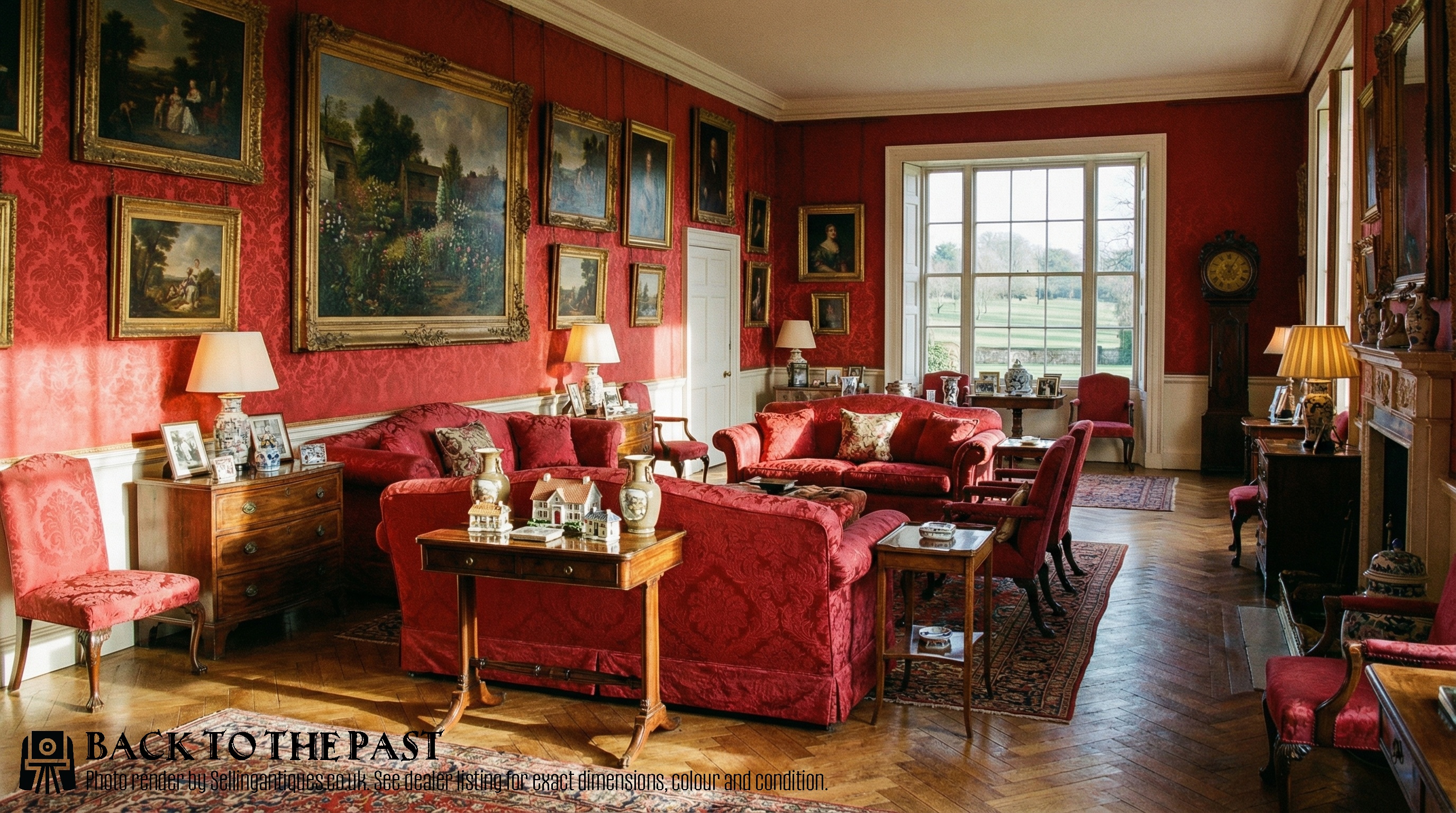
Victorian Grandfather Clock
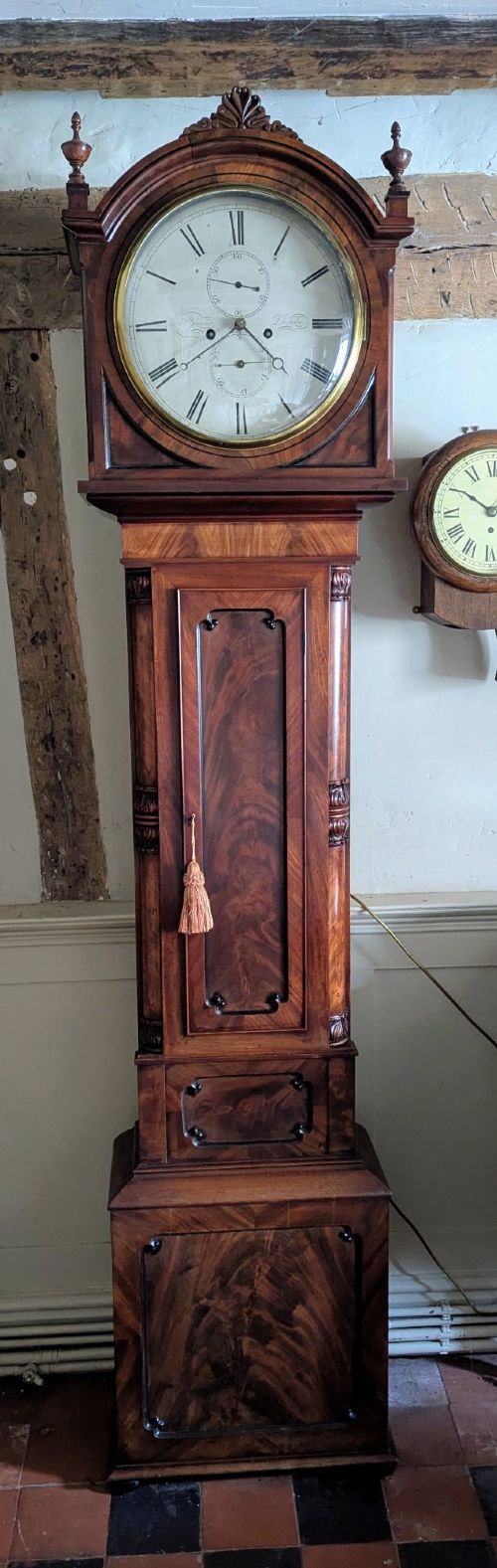
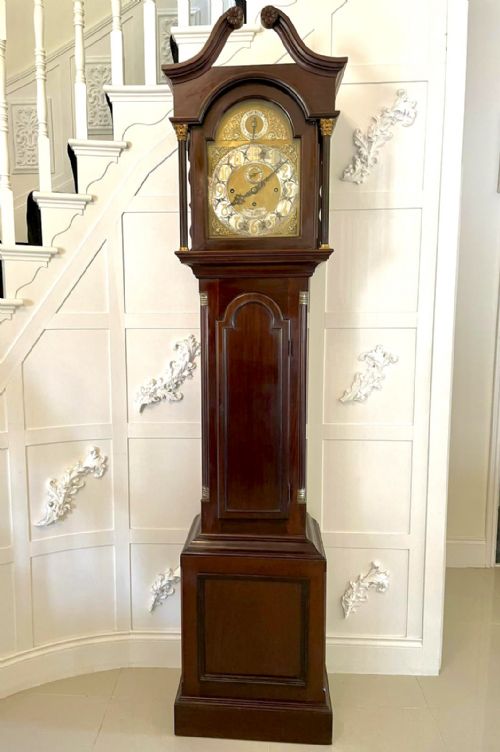
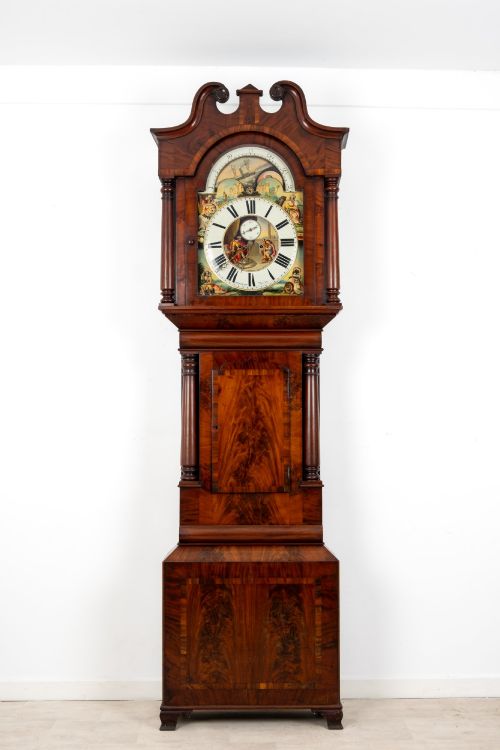
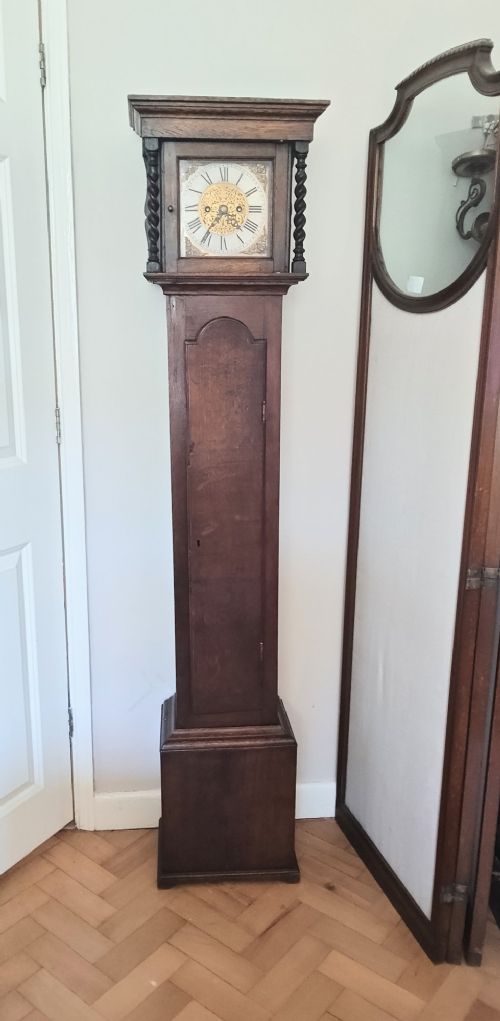
A victorian grandfather clock is a tall floor-standing timepiece enclosing a pendulum and weights, designed to keep domestic time with dignified presence. You will frequently find tall mahogany cases bearing painted arched dials or drumhead faces originating from Scottish and English workshops.
The category encompasses smaller scaled grandmother clocks alongside imposing regulators and musical chiming pieces. Many examples span the nineteenth century, utilising timber cases in mahogany and oak to house complex mechanical movements.
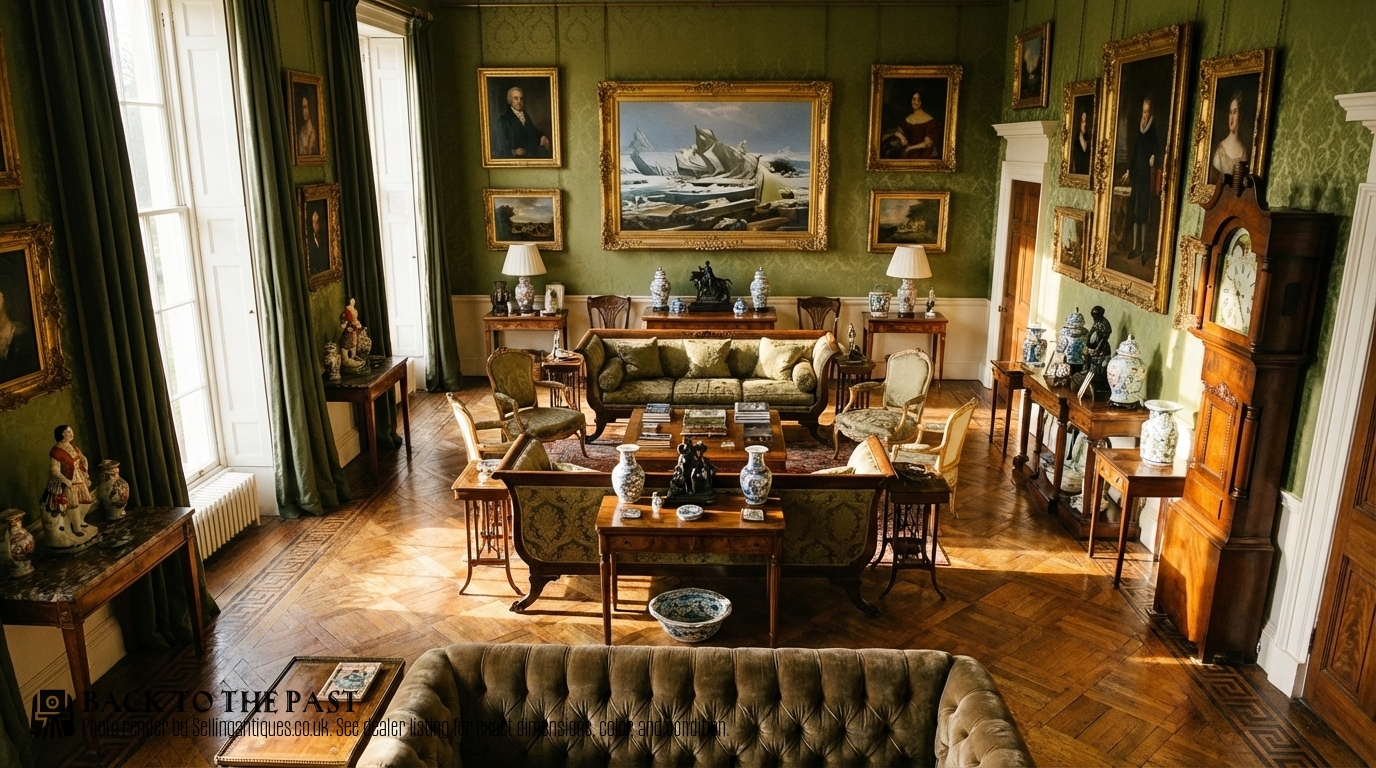
How they were made
Cabinet makers built the tall housings using solid timbers like mahogany and oak, occasionally adding carved details, glass doors, and inlaid decoration. Dial faces combined brass, silvered metal, and painted iron, often displaying subsidiary seconds or moon phases.
Clockmakers fitted brass gear trains driven by hanging weights or springs, sometimes incorporating musical chimes, multiple bells, or tubular gongs to mark the hours.
Victorian Grandfather Clock Retail Price Guide 2026
Typical asking prices for victorian grandfather clock among the pieces listed under this phrase on Sellingantiques today, from the lower quarter to the upper quarter. They describe what is for sale here now, not the wider market.
Listings feature nineteenth-century longcase clocks constructed from mahogany and oak, housing brass and painted iron dials.
What varies in quality
The distinction between ordinary timekeepers and superior examples rests in the complexity of the movement and the figuring of the timber case. Elaborate mechanisms featuring rolling moon dials, musical bells, or regulator escapements elevate a piece far above a standard thirty-hour movement.
Cabinetwork displays this division through carefully selected flame mahogany veneers, substantial brass dial ornamentation, and deeply carved architectural details rather than plain pine or unadorned surfaces.
Winsor Bishop Norwich·Parkinson Bros Batley·Andrew Thom·David Craig Ford Path head·James Wood·William Chisholm Of Aberdeen·Richardson Of Manchester·David Griffith Carnarvon·Pearce And Sons Leicester·Aitchison Of Glasgow·Anthony Binks·J Adamson Of Friockheim·J Purdy Of Carluke·Jame Hay Leuchars·J&W Mitchell Glasgow·John Pringle Of Earlston·James Waring Stockport·J Couzins Langport Somerset
The Victorian Grandfather Clock Glossary
- Drumhead clock
- A longcase clock featuring a circular dial housing shaped like a drum atop a tall trunk. This regional style appears frequently in Scottish examples.
- Regulator
- A precision pendulum clock designed for exceptional timekeeping accuracy. These pieces often feature a clean dial layout and minimal case ornamentation to focus attention on the movement.
- Moon phase
- A dial mechanism tracking the lunar cycle through a rotating painted disc. It reveals the phases of the moon behind a shaped aperture.
- Longcase clock
- The formal horological term for a tall pendulum clock housed in a protective wooden trunk. Grandfather clock remains the common domestic name for these tall pieces.
- Fusee
- A conical pulley used in spring-driven clocks to ensure even power delivery as the spring unwinds. This mechanism helps maintain consistent timekeeping throughout the running period.
Victorian Grandfather Clock: Frequently Asked Questions
How do I wind a grandfather clock?
Most eight-day movements require you to pull the chains or use a crank key to raise the heavy weights every week. Take care not to overwind the mechanism when the weights reach the top.
Allow the pendulum to hang straight and settle into an even beat after winding to ensure accurate timekeeping.
Where should I place my clock?
Position the tall case against a sturdy interior wall away from direct sunlight, heating vents, and damp areas. A stable floor prevents vibrations from interfering with the swinging pendulum.
Ensure the floor is level so the escapement ticks with an even beat rather than a halting rhythm.
What is the difference between a grandfather and grandmother clock?
Grandfather clocks stand over six feet tall and house large movements with long pendulums. Grandmother clocks are smaller scaled versions built for more compact spaces.
Both share similar dial layouts and wooden trunk designs despite the difference in overall height.
How can I tell a Scottish clock from an English one?
Scottish longcase clocks frequently showcase distinctive drumhead dial shapes and flame mahogany veneers with regional signatures on the face. English examples more commonly feature arched painted dials with subsidiary seconds and calendar rings.
Regional cabinetmaking traditions and maker inscriptions help identify the workshop origin.