
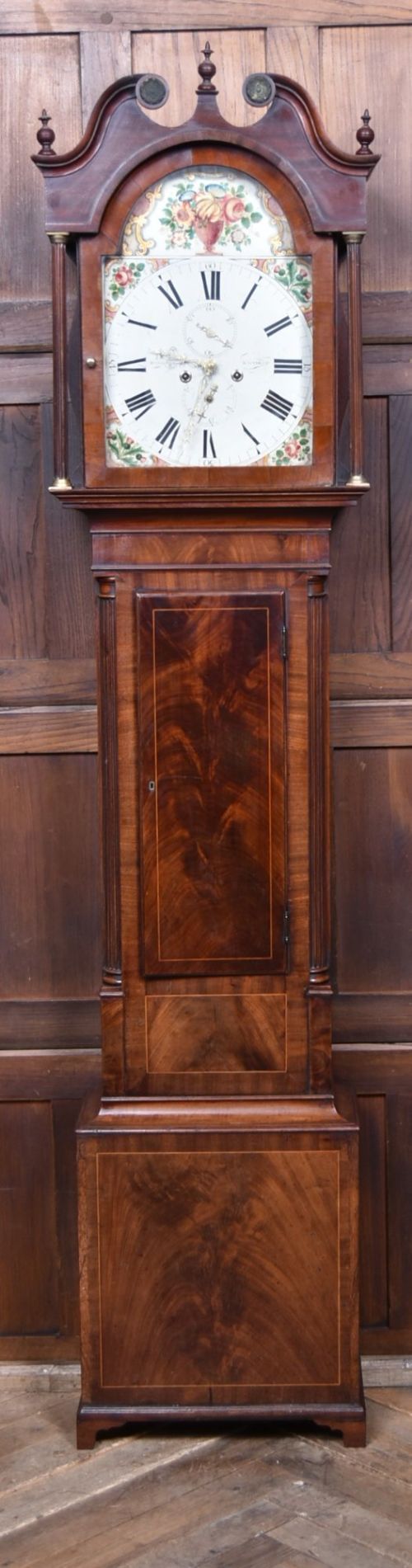
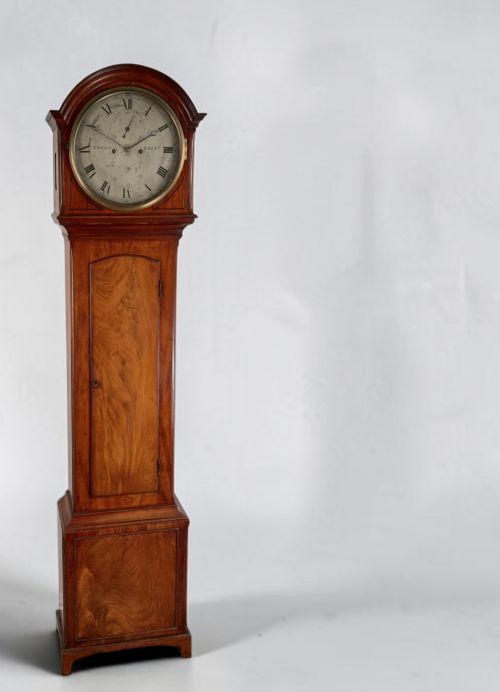
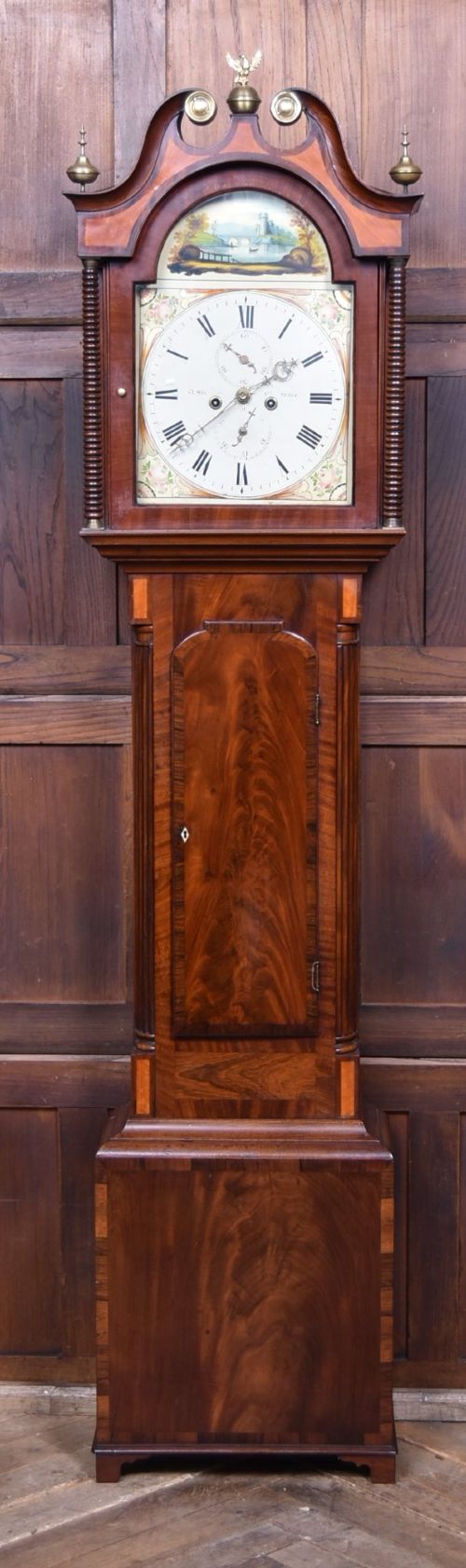

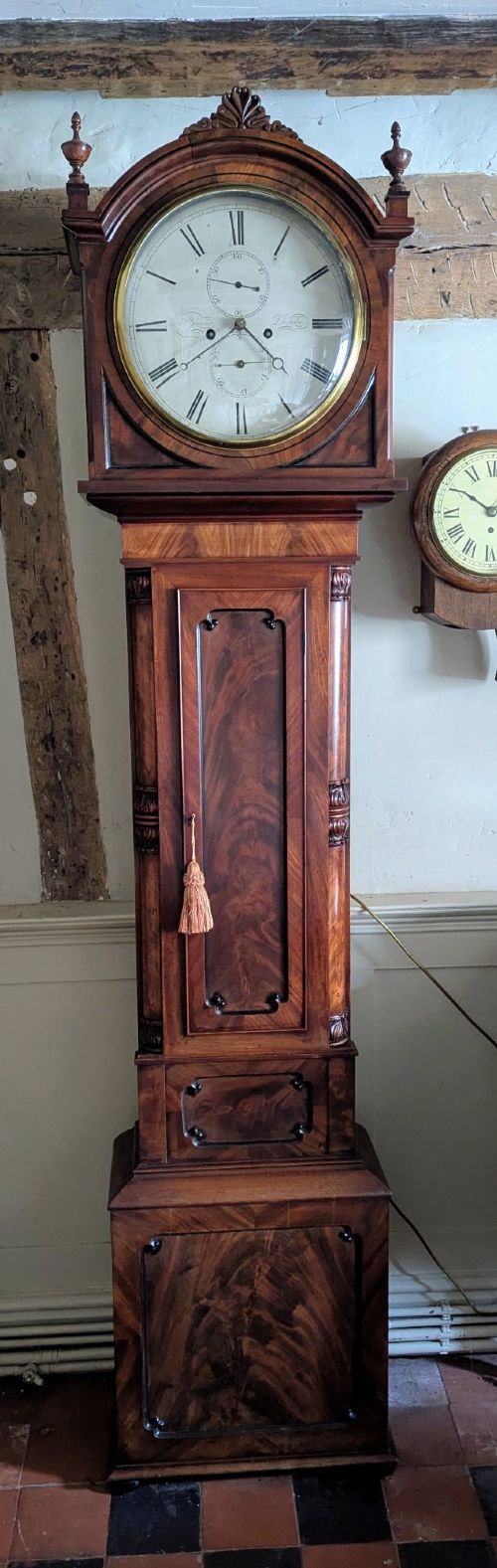
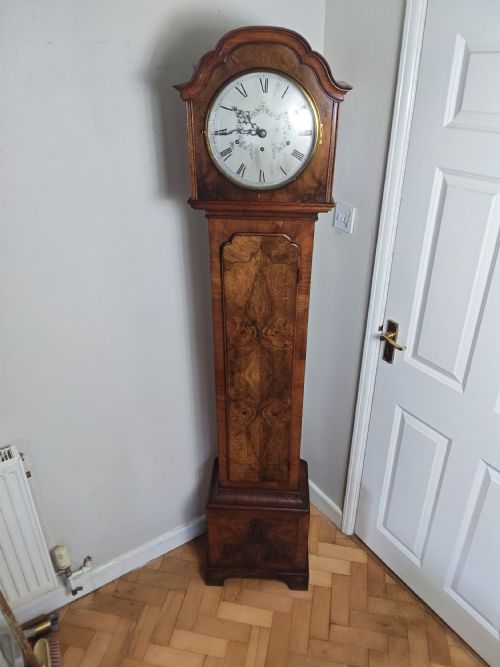
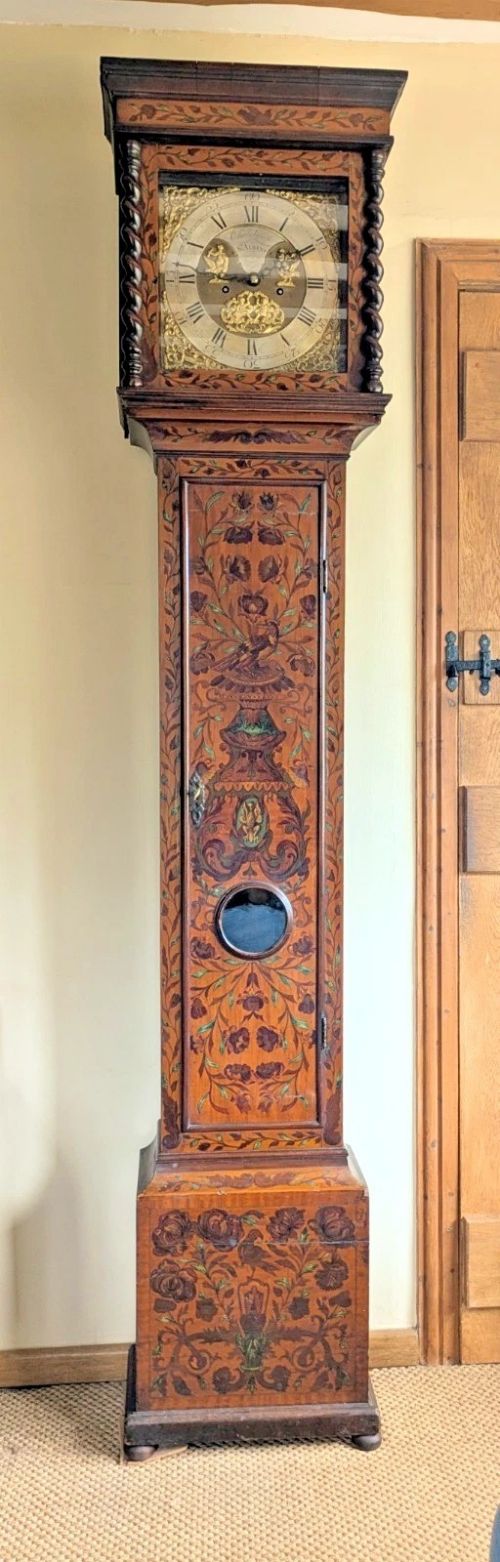
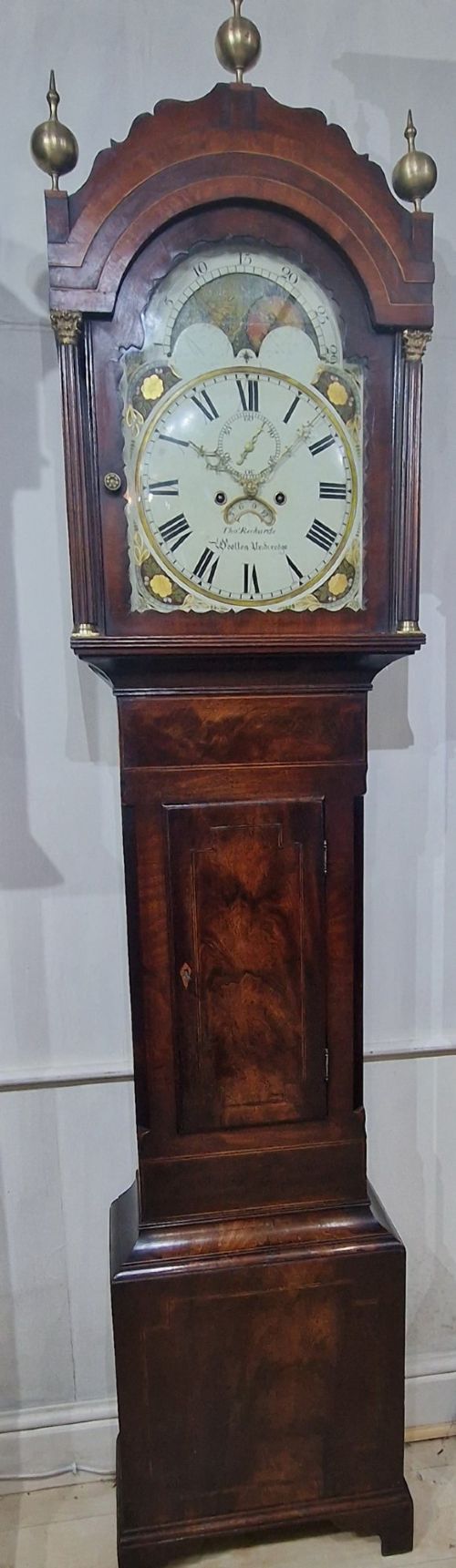
Wooden Longcase Clock
These wooden longcase clock examples bring steady architectural presence and reliable domestic movement into a room.
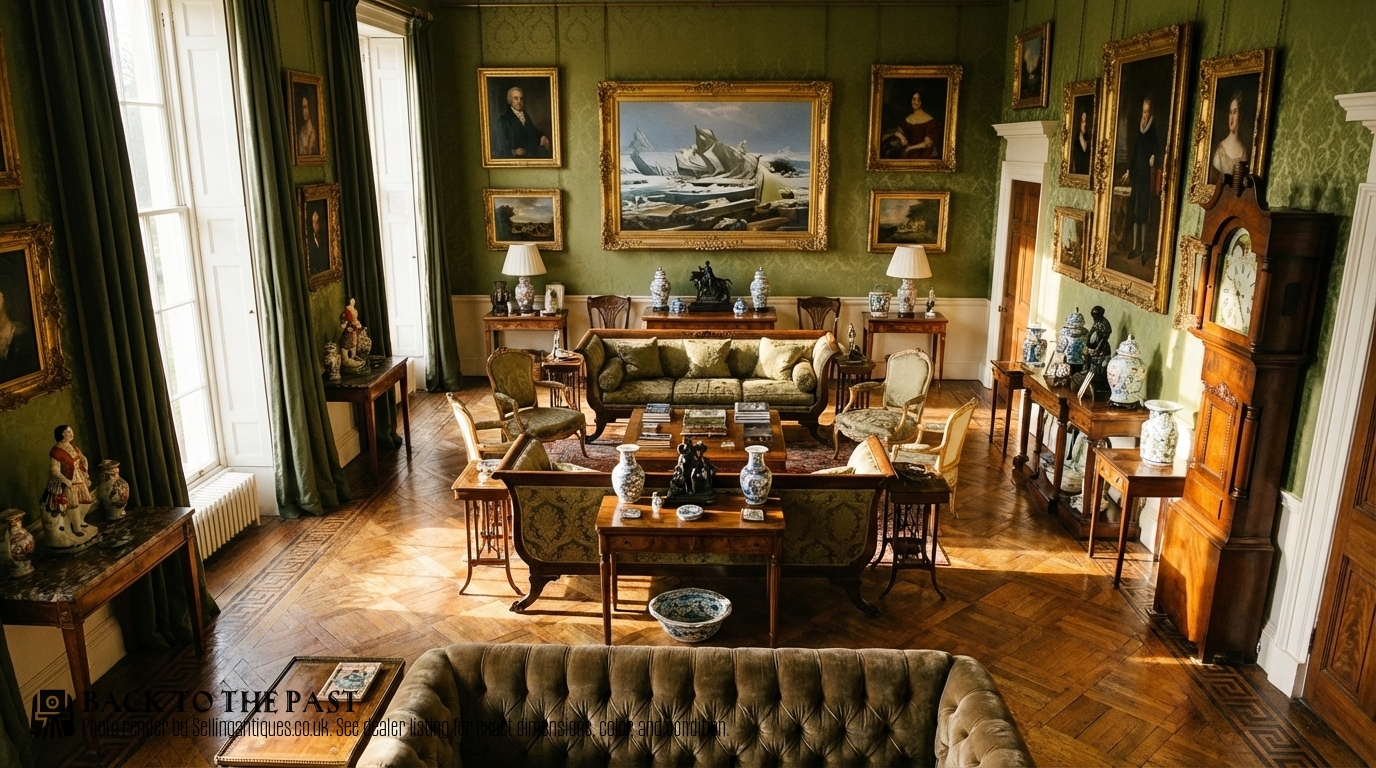
Wooden Longcase Clock
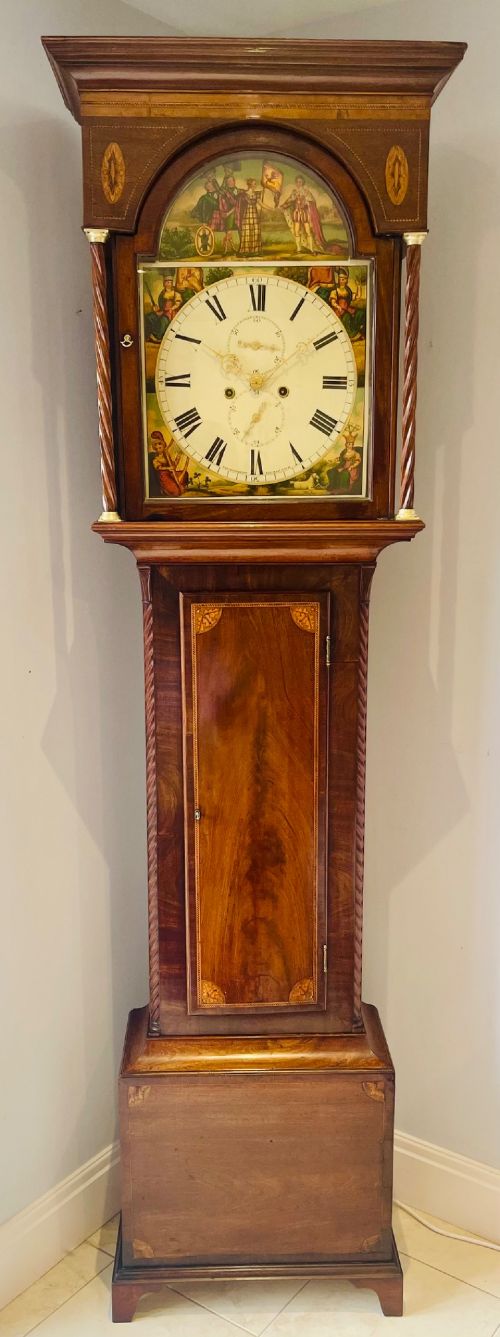
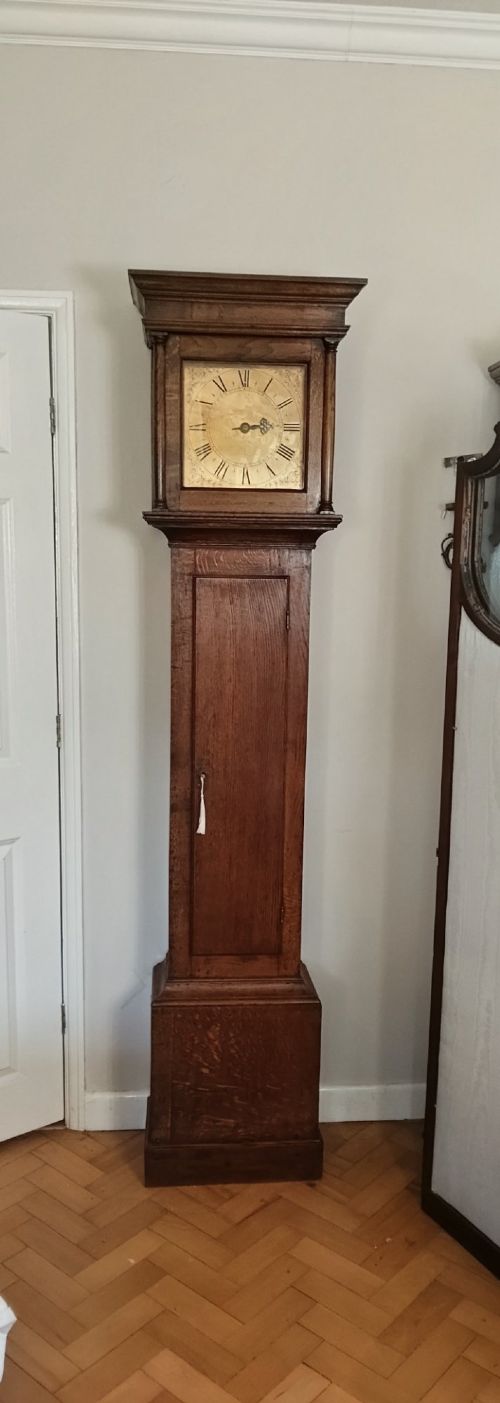
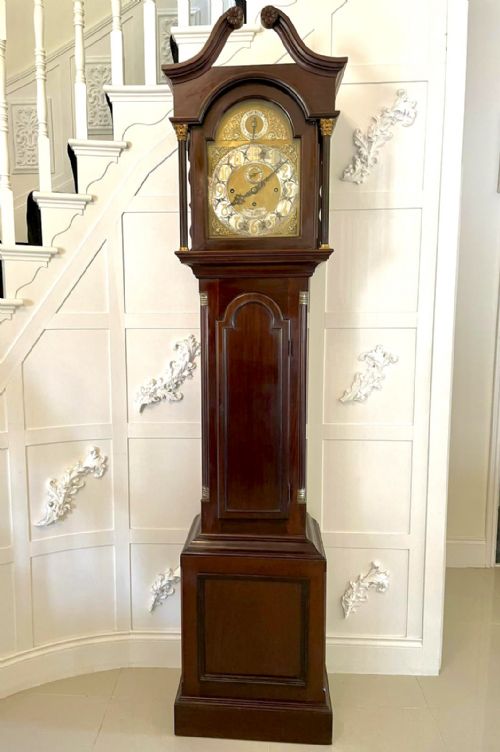
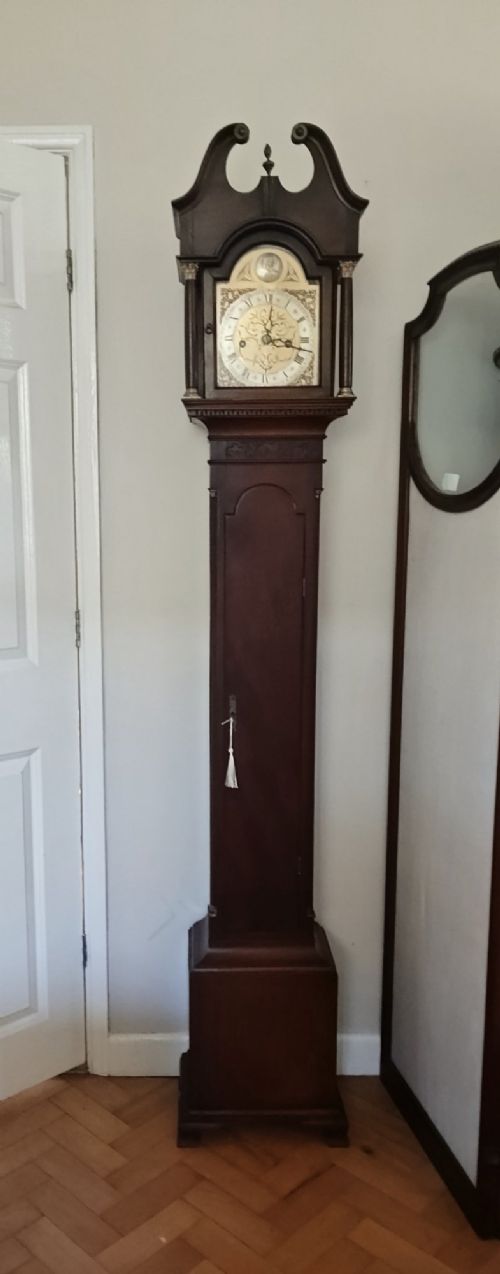
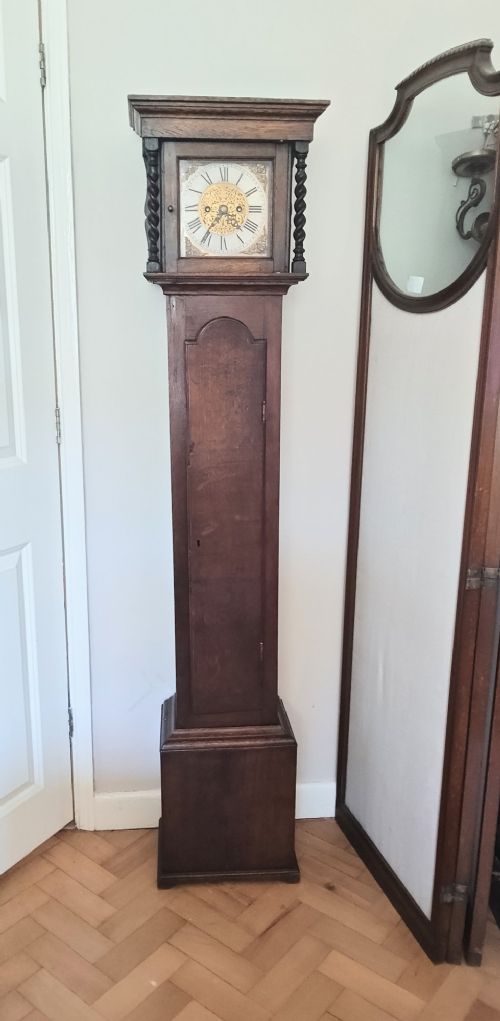
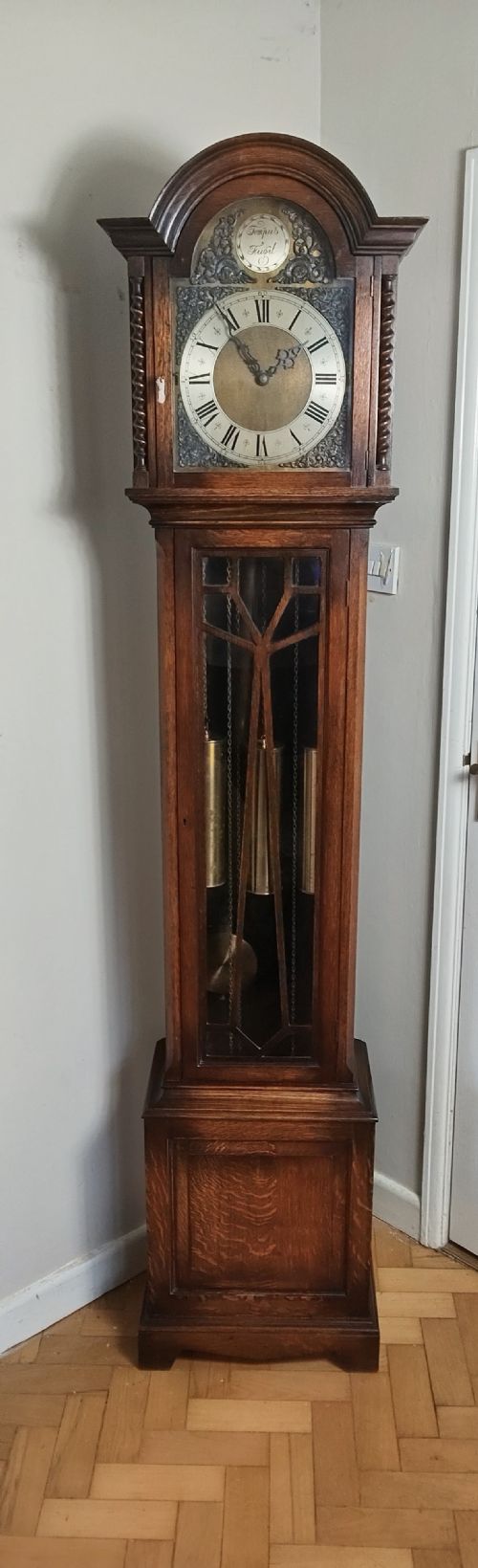
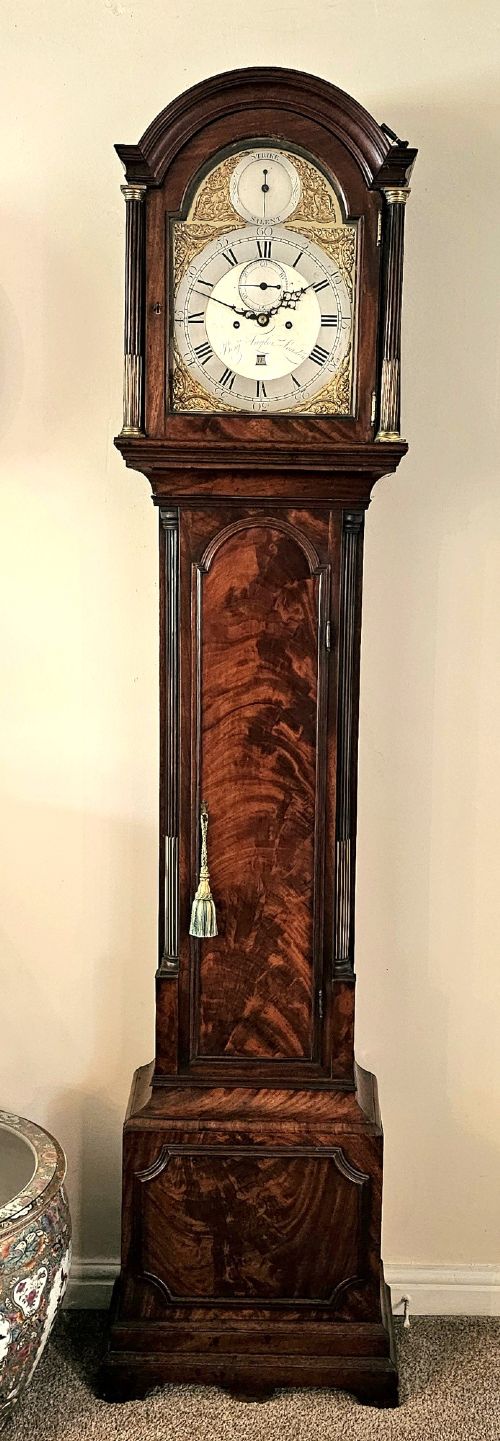
A wooden longcase clock stands tall against a wall, housing a weight-driven movement inside a protective timber case. You will most frequently encounter sturdy oak and rich mahogany pieces dating from the Georgian and 19th-century periods on this page.
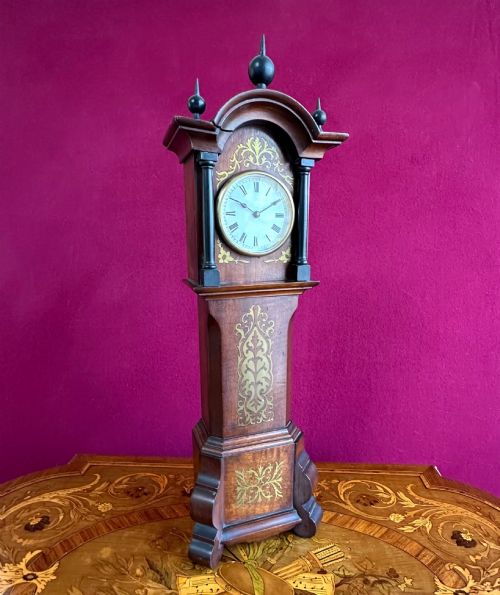
Regional variations appear regularly, particularly from Scottish makers who built distinct proportions into their floor clocks. Alongside full-sized grandfather clocks, smaller grandmother and granddaughter variants surface across 19th-century and later Edwardian formats.
The form combines functional timekeeping with cabinetry, uniting dial work in brass or painted iron with cases finished in crossbanded veneers, marquetry, or plain timber surfaces.
Materials and construction
Cabinetmakers constructed these bodies primarily using solid oak, mahogany, and walnut timbers, often applying flame or burr veneers to highlight grain patterns. Crossbanding and marquetry inlay provide decorative contrast around door panels and trunk edges.
Interior movements rely on brass gear trains driven by hanging iron or lead weights, regulated by a swinging pendulum. Dials are fashioned from brass or painted iron, protected behind hinged glass doors set into the hood.
Wooden Longcase Clock Retail Price Guide 2026
Typical asking prices for wooden longcase clock among the pieces listed under this phrase on Sellingantiques today, from the lower quarter to the upper quarter. They describe what is for sale here now, not the wider market.
Listings span multiple eras from the 18th century through to the 1930s, featuring oak, mahogany, and walnut cases with brass and painted iron dials.
Assessing quality and proportion
Quality rests in the harmony of the case proportions and the crispness of the cabinetwork. Better examples demonstrate well-figured timber selection, precise inlay work, and robust construction that keeps the tall trunk rigid.
Movement execution defines the upper tier, seen in signed brass dials, musical chiming capability, and eight-day gear trains rather than simpler thirty-hour setups. The integration between the clockmaker's movement and the cabinetmaker's case marks the finer pieces.
Hendrie Ogg·Green of Edinburgh·D. Straiton·Tait·Winsor Bishop Norwich·Benjamin Taylor·Charles Louch·Rickards·Edward Upjohn·Benjamin Peers
The Wooden Longcase Clock Glossary
- Grandfather clock
- A large floor-standing pendulum clock, typically exceeding six feet in height. These tall wooden longcase clock bodies protect the weights and pendulum from drafts and dust.
- Grandmother clock
- A smaller, more slender version of the standard floor clock, popular in later periods. They occupy less floor space while retaining the traditional weight-driven movement.
- Crossbanding
- A decorative border technique where veneer strips run perpendicular to the main grain. This frames drawer fronts and trunk doors on mahogany and walnut cases.
- Marquetry
- The art of creating patterned wood pictures using thin veneers of different coloured timbers. Eighteenth-century pieces frequently employ this technique on the trunk door.
- Regulator
- A precision timekeeper designed for high accuracy, often featuring a simplified dial layout. Domestic regulators prioritize exact timekeeping over decorative chime complications.
Wooden Longcase Clock: Frequently Asked Questions
How do I wind an eight day clock?
You wind the movement using a crank key inserted into the winding holes on the dial face, turning it slowly until the weights rise to the top.
Take care not to overwind the springs or pull the weight cords off their pulleys during the process.
What is the difference between oak and mahogany cases?
Oak cases generally date to earlier periods like the 18th century, offering a heavy, visible grain and a warm brown tone. Mahogany arrived later, allowing for finer carving, reddish hues, and smooth polished surfaces.
Both woods provide the necessary structural rigidity to house tall pendulum movements safely.
Why do some clocks have moon dials?
A moon phase dial tracks the lunar cycle alongside standard hours and minutes, displaying the age of the moon through a rotating painted disc in the arch.
This complication was popular on better quality country and city pieces from the Georgian era onward.
Where should I place a longcase clock?
Position the clock against an interior wall away from direct sunlight, central heating vents, and damp exterior stone. Stable temperatures prevent timber warping and keep the pendulum swinging truly.
Ensure the case stands level on the floor so the beat of the escapement remains even.