
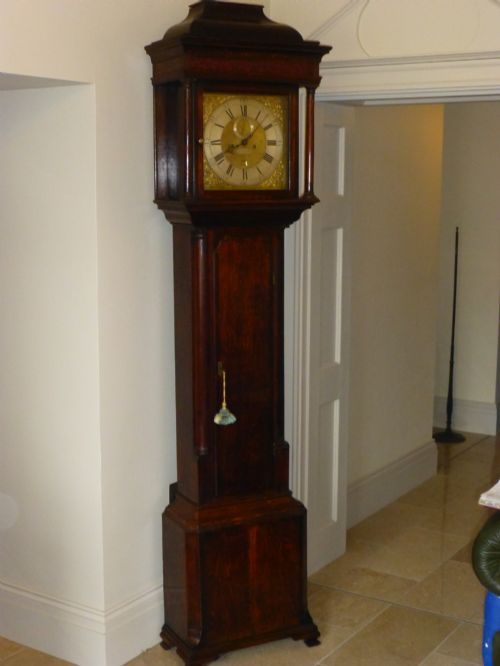
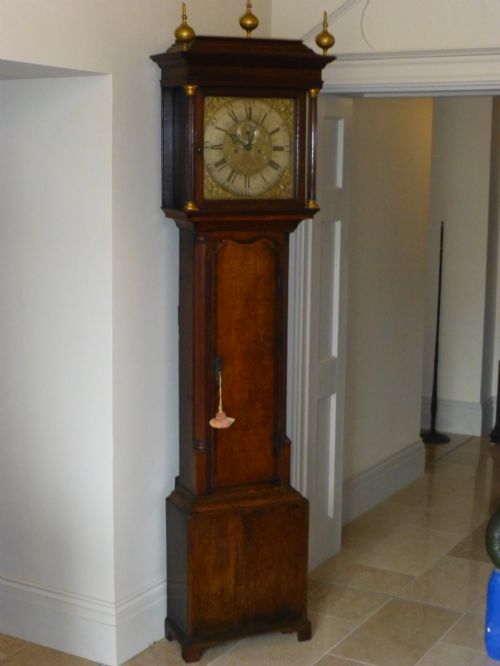
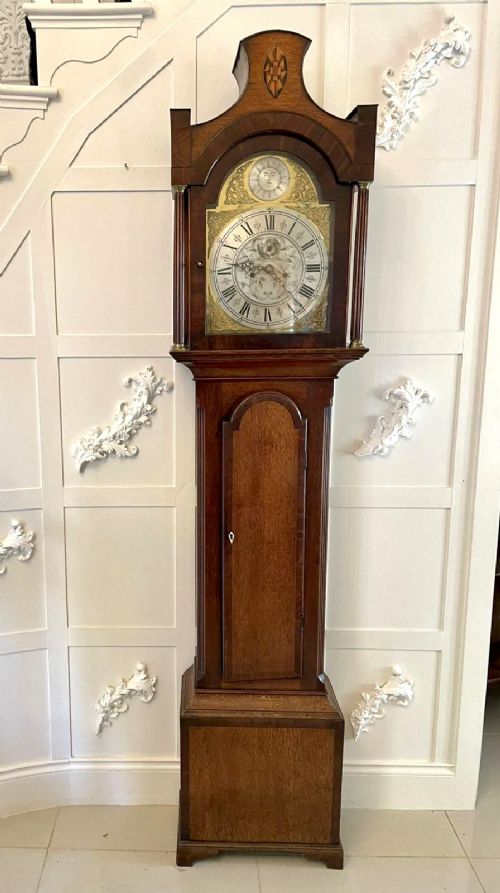
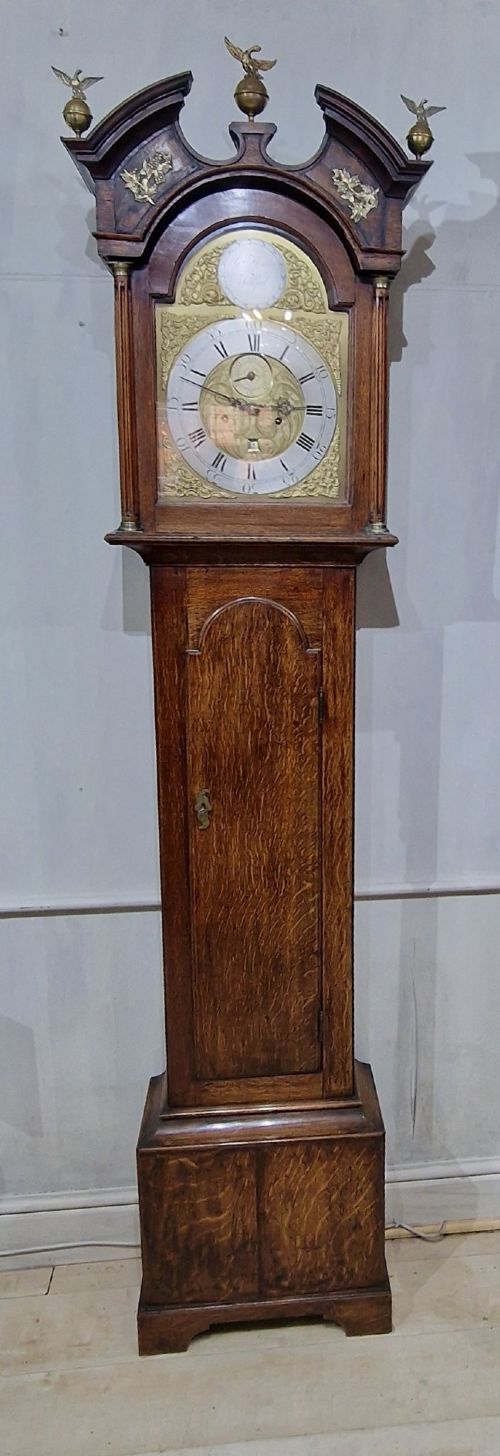
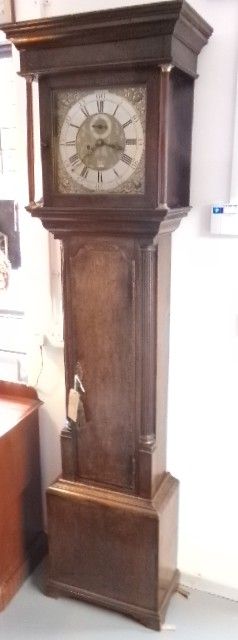
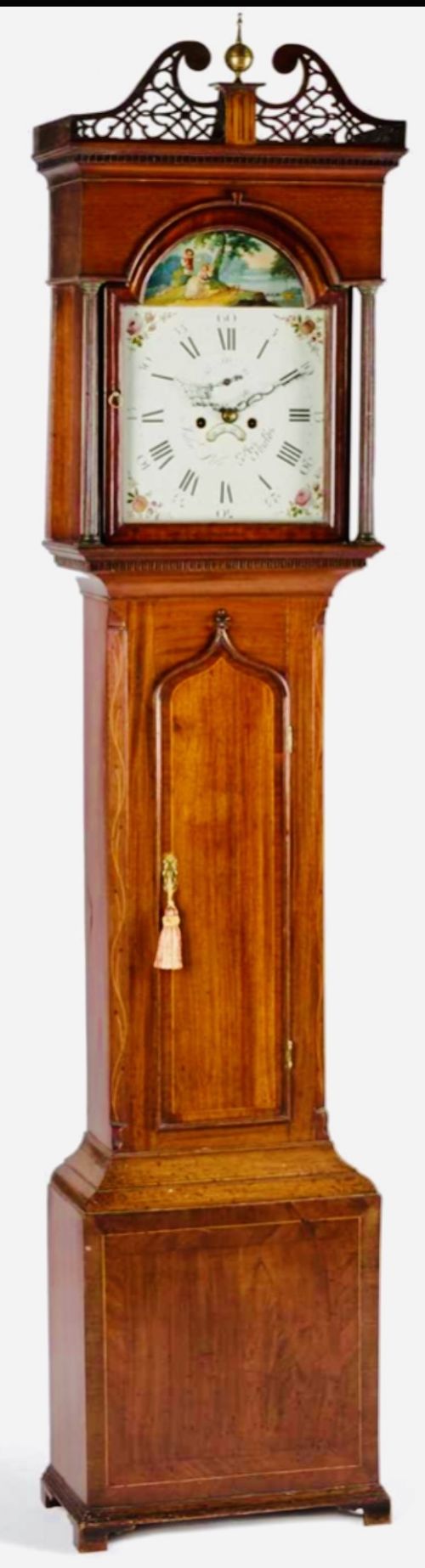
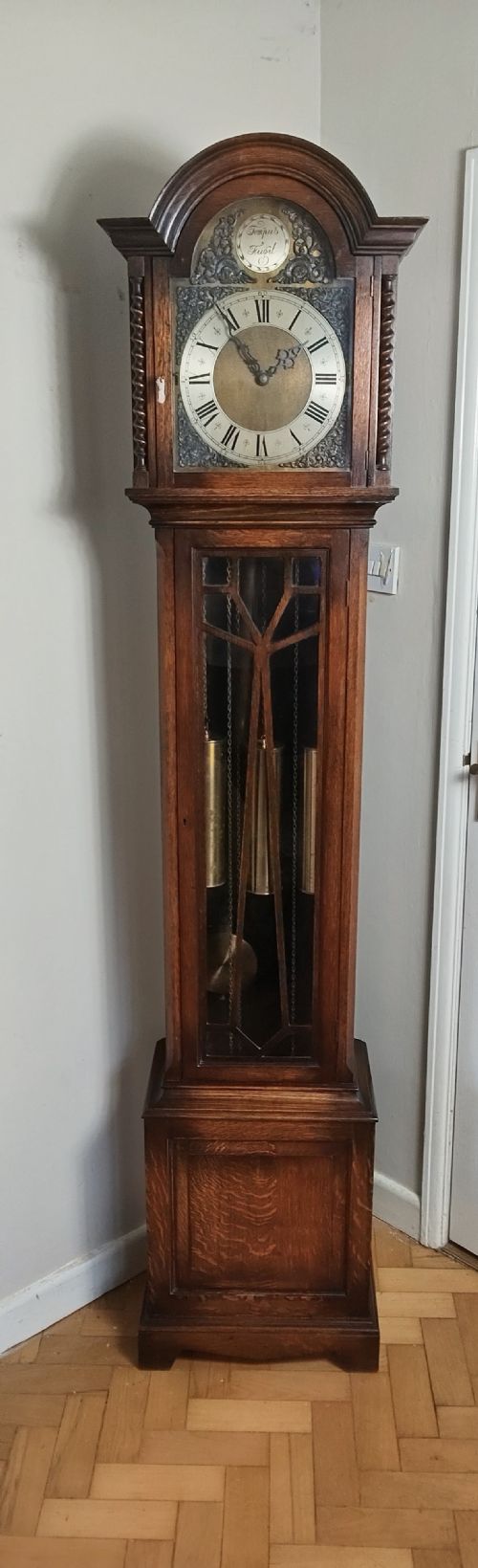
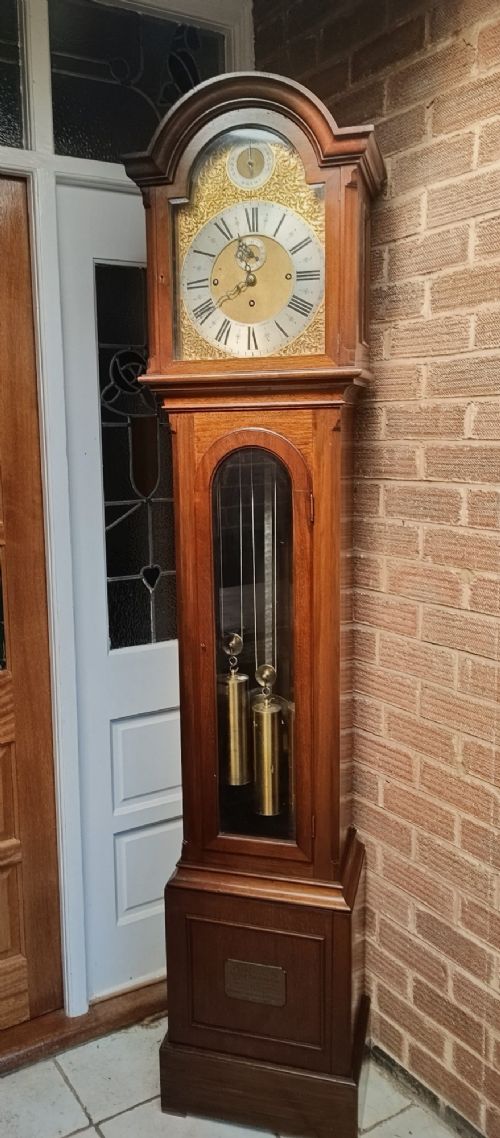
Antique Oak Floor Clock
An antique oak floor clock brings rhythm and presence to a room, measuring time through periods from the eighteenth century onwards with steady gravity.

Antique Oak Floor Clock
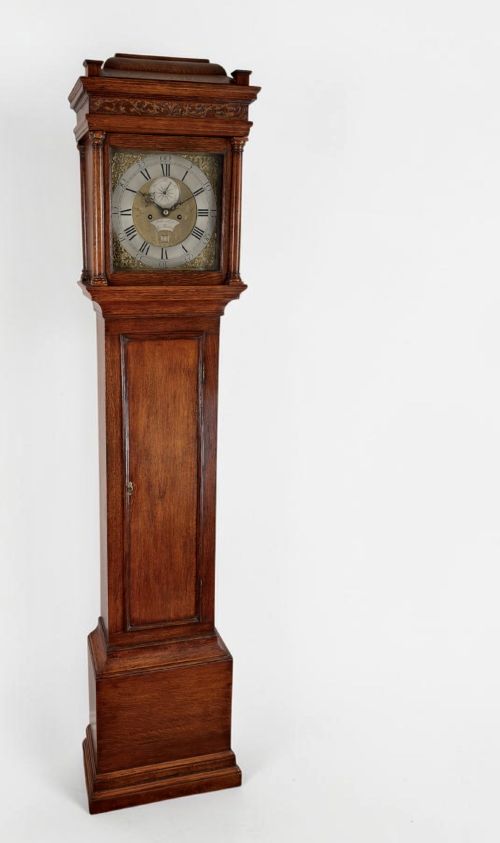
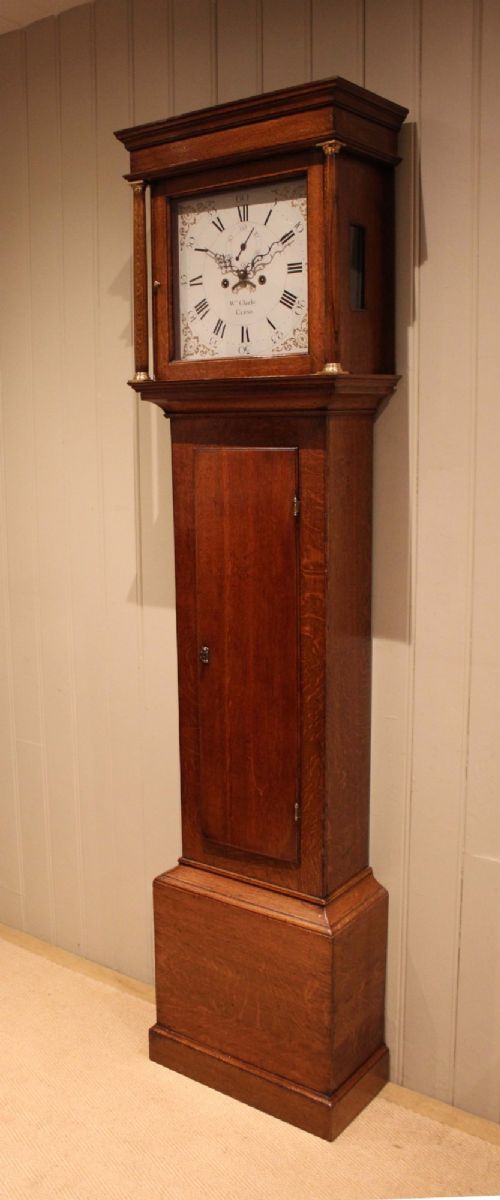
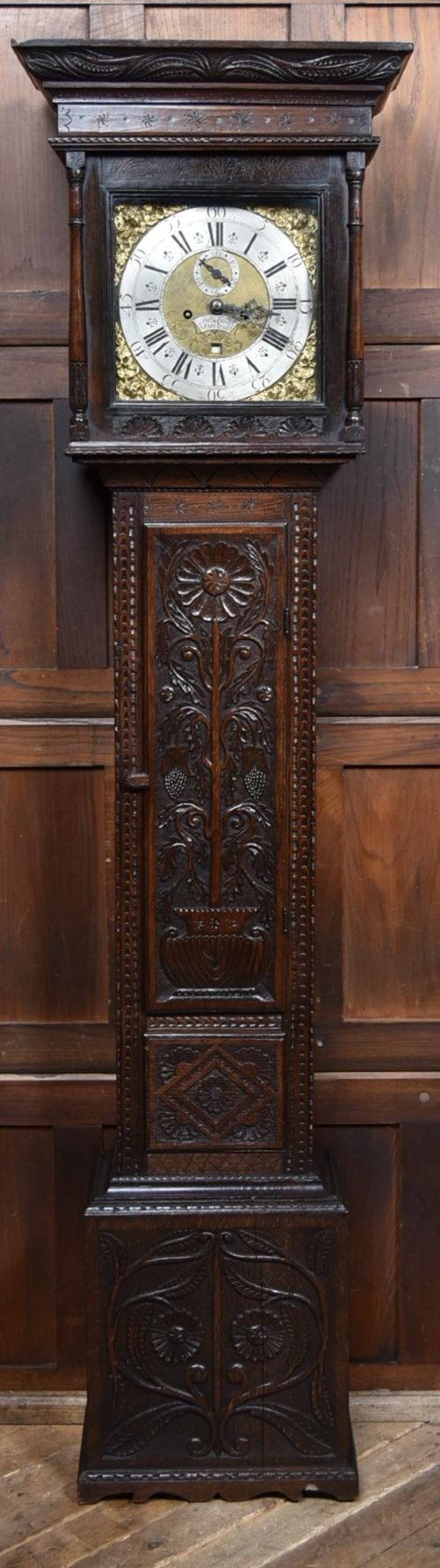
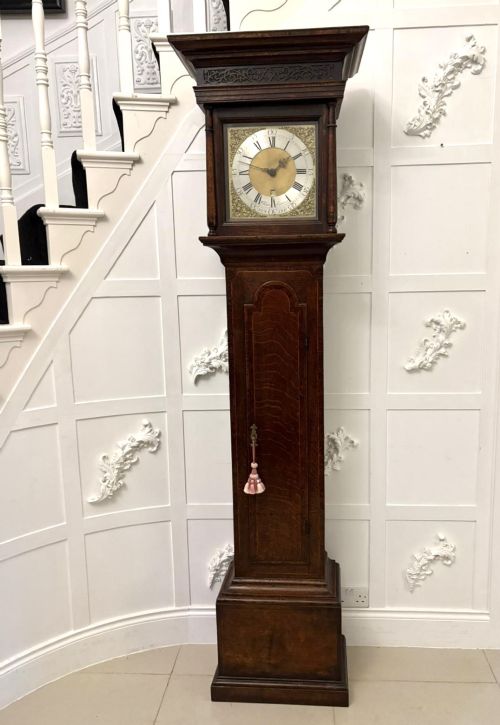
When you search for an antique oak floor clock, you are looking at tall case timepieces housing pendulum-driven movements, spanning forms from grandfathers to smaller grandmother clocks. The examples you meet here originate predominantly in Georgian and eighteenth-century workshops, alongside later Victorian, Edwardian, and twentieth-century interpretations.
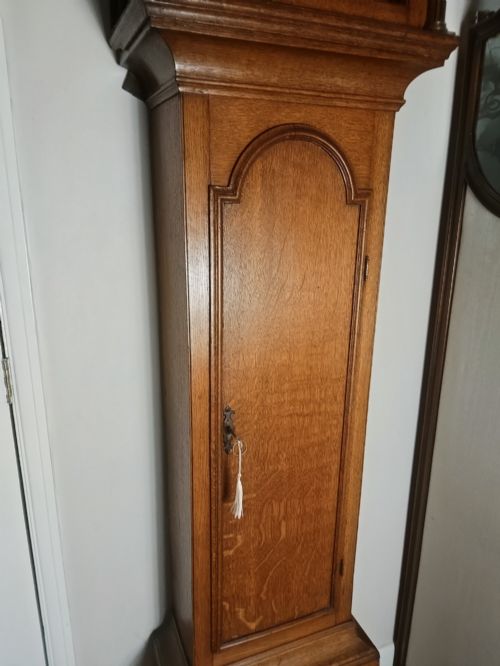
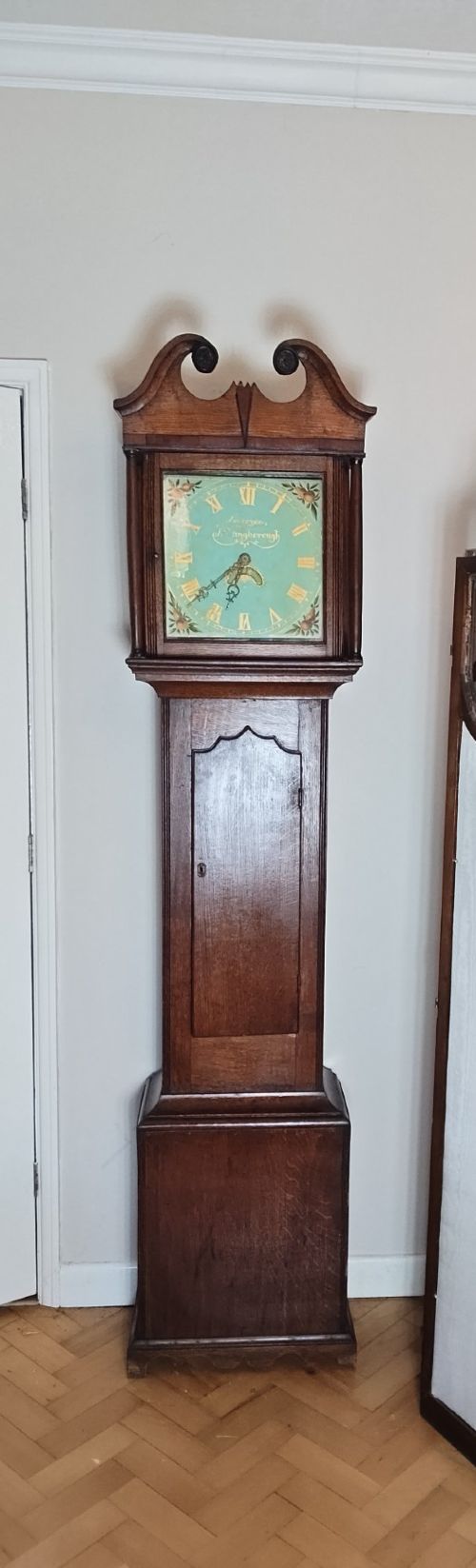
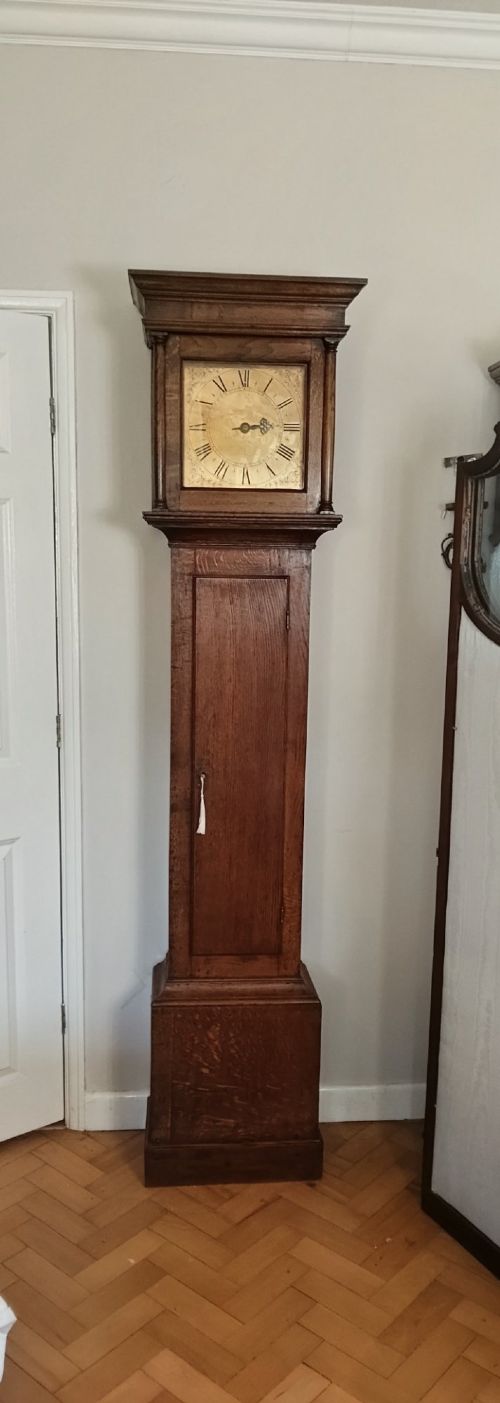
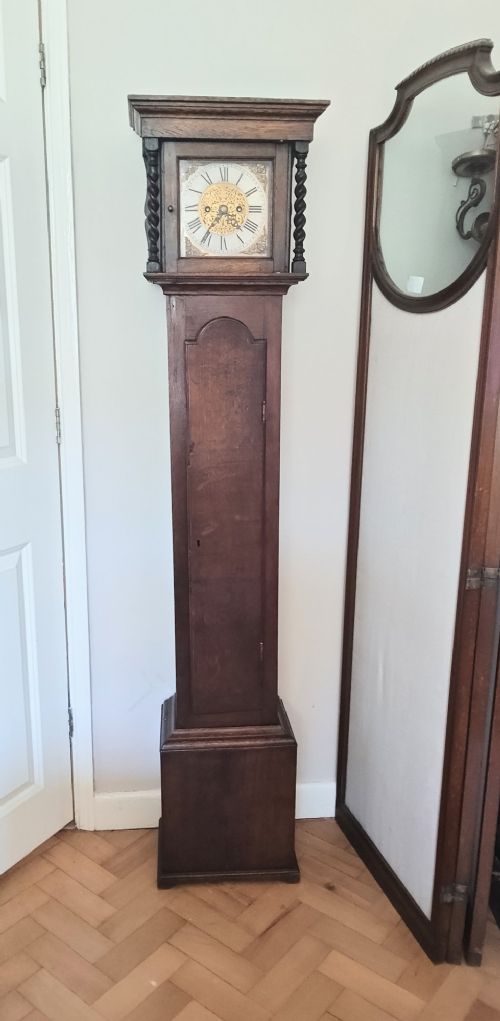
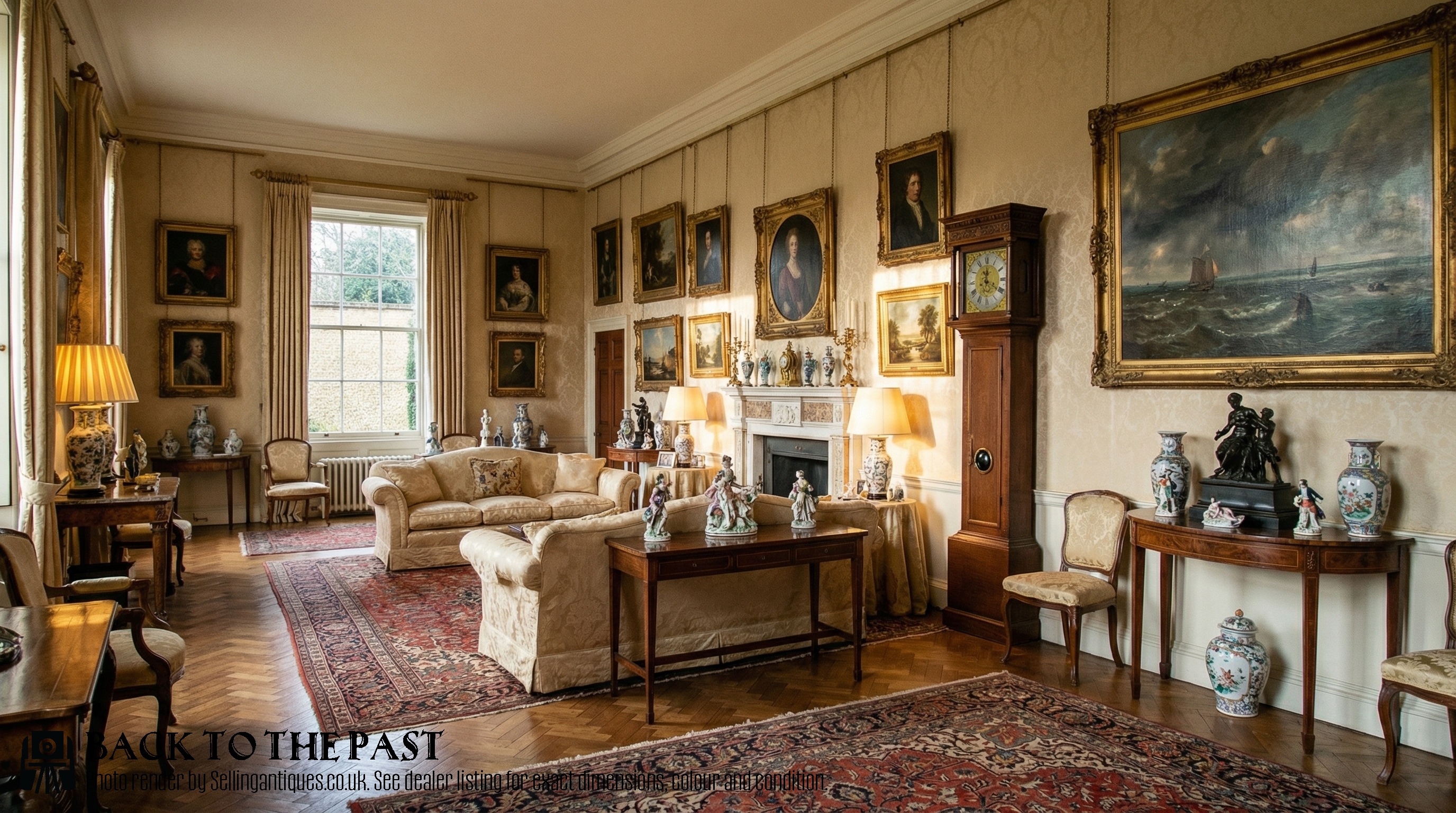
The dominant form on this page is the longcase clock, built to stand upright against a wall with a protective trunk enclosing the swinging pendulum and weights. Makers housed these mechanisms in timber cases designed to anchor a room visually while keeping dust away from the delicate metal gears inside.
Beyond standard timekeeping, these pieces often incorporate regional dial signatures or specialised mechanisms such as moonphase displays and strike-silent levers. The scale ranges from robust full-size eight-day floor clocks down to compact grandmother variants suited for more modest domestic spaces.

Materials and construction
Cabinet makers relied primarily on solid oak for the primary structural housings, frequently combining it with secondary woods like mahogany and walnut for banding, crossbanding, or decorative panel highlights. Brass formed the material of choice for the striking dials, bezels, and internal movement plates, providing a durable metallic contrast to the warm timber grain.
Glass protected the dial faces behind hinged hood doors, allowing clear visibility of the hands while shielding the delicate brass machinery from air currents. Iron and steel components underpinned the weight-driven gear trains and springs, forged to maintain precise tension across daily or weekly running cycles.
Antique Oak Floor Clock Retail Price Guide 2026
Typical asking prices for oak floor clock among the pieces listed under this phrase on Sellingantiques today, from the lower quarter to the upper quarter. They describe what is for sale here now, not the wider market.
Listings feature oak alongside mahogany, walnut, brass, and glass, spanning Georgian periods up through Edwardian and 1930s designs.
Distinctions in quality
Quality in these floor clocks rests on the crispness of the timber carving, the harmony of secondary wood banding such as mahogany or burr oak, and the fidelity of the movement. A superior dial exhibits finely engraved brasswork and clear signatures from recorded makers rather than generic mass-produced parts.
The structural integrity of the long case itself dictates much of the value, particularly where original hood pillars, intact feet, and uncompromised trunk doors survive. Movement complexity, such as moonphase indicators, musical chiming barrels, or eight-day durations, separates standard utility timepieces from high-grade regional masterpieces.
Lee of Great Marlow·Jn° Smith Macclesfd·Richard Corless of Stockport·Smith of Chester·James Hendrie Falkirk·George Hallifax Of Doncaster·Thomas Webbe of New Quay·Edward White Birmingham·David Craig Ford Path head·Enfield
The Antique Oak Floor Clock Glossary
- Longcase clock
- A tall pendulum clock housed in a wooden case standing directly on the floor. These towers protect the hanging weights and ensure the pendulum swings without environmental interference.
- Moonphase
- A dial mechanism tracking the lunar cycle through a rotating painted disk showing the phases of the moon. It added both practical farming utility and visual richness to Georgian dials.
- Grandmother clock
- A smaller, more slender version of the traditional grandfather clock, usually produced in later periods. It offered households the acoustic presence of a tall clock in a compact height.
- Crossbanding
- A decorative technique where thin strips of veneer are laid across the grain of the primary wood panel. This frames the cabinet door or base with a contrasting linear border.
Antique Oak Floor Clock: Frequently Asked Questions
What is a grandfather clock?
A grandfather clock is a tall floor-standing timepiece utilising a long pendulum and hanging weights to drive the gear train. The tall wooden trunk serves both to protect the delicate internal mechanics and to allow the heavy drive weights sufficient drop space.
These pieces were traditionally positioned in hallways or living spaces where their resonant chimes could mark the hours for the entire household. They combine cabinet carpentry with horological engineering.
How do I wind an eight day clock?
An eight-day clock requires winding approximately once a week by inserting a crank key into the winding holes on the dial face. Turning the key draws the internal weights back up to the top of the trunk.
Care must be taken not to overwind the mechanism, stopping as soon as resistance is felt on the key. Ensuring the weights are raised evenly maintains the correct tension on the driving lines.
How do I tell an 18th century clock from a later one?
Eighteenth-century examples typically feature square or arched brass dials with hand-engraved corner spandrels and individual maker signatures. The oak cases often display pegged construction and distinct regional timber patination.
Later Victorian, Edwardian, and twentieth-century versions frequently incorporate mechanical innovations like multiple chimes, tubular bells, or darker applied finishes. Dial typography and movement plates also shift from hand-tooled individual components toward standardised factory production.
Where should I place a floor clock in my home?
A floor clock requires a stable, vibration-free interior wall where it can stand perfectly plumb without rocking. Keeping the case away from direct sunlight and temperature extremes protects the timber and delicate internal glues.
Adequate clearance around the pendulum and weights is essential for free movement. The chosen room should also offer enough acoustic space to enjoy the hourly chimes without overwhelming the ear.