
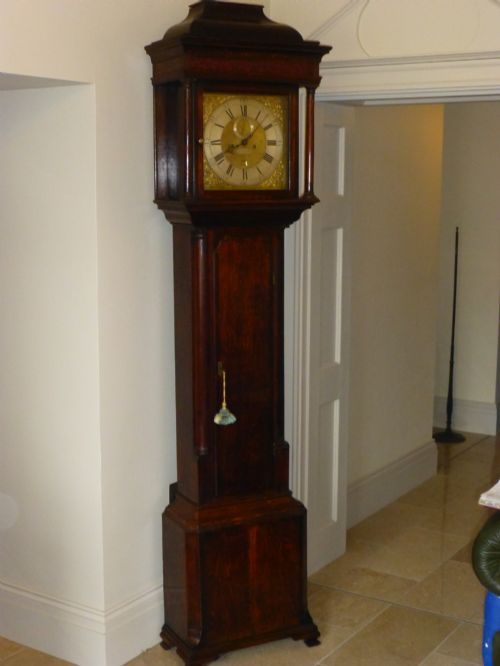
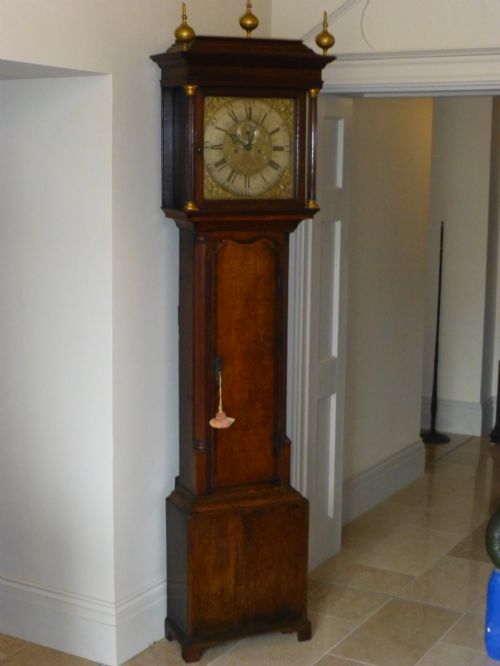
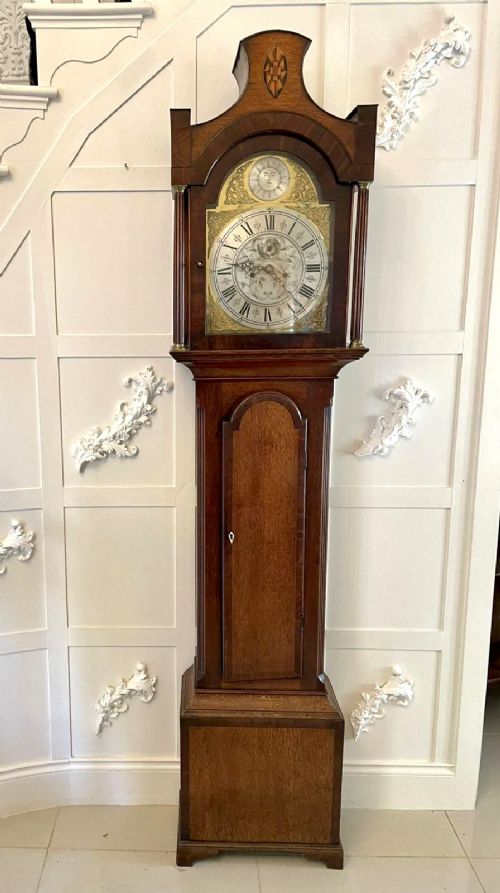
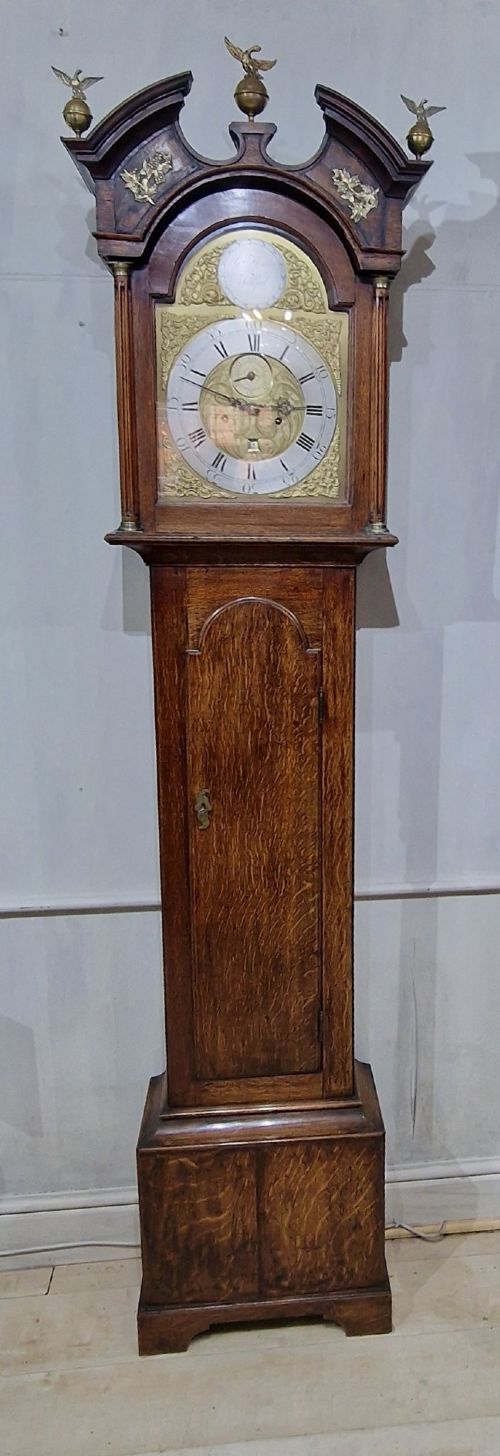

Georgian Oak Longcase Clock
Discover the enduring craftsmanship of a georgian oak longcase clock, combining precise horology with traditional cabinetry for timeless interior appeal.
Georgian Oak Longcase Clock
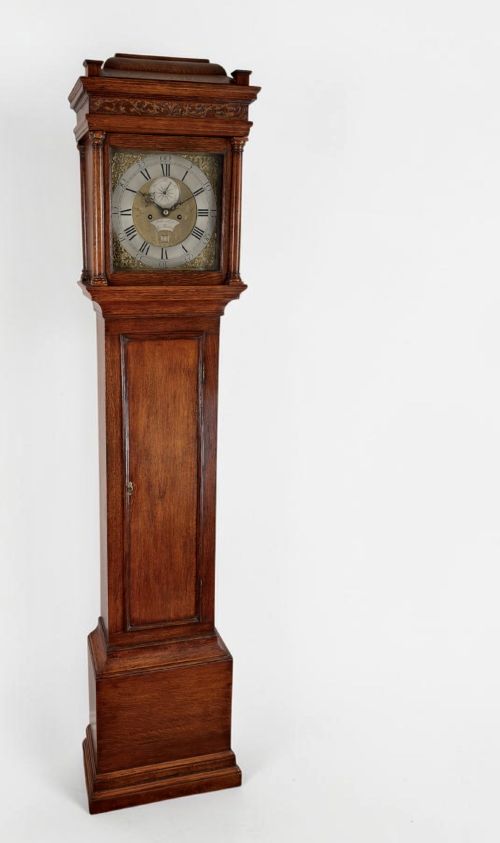
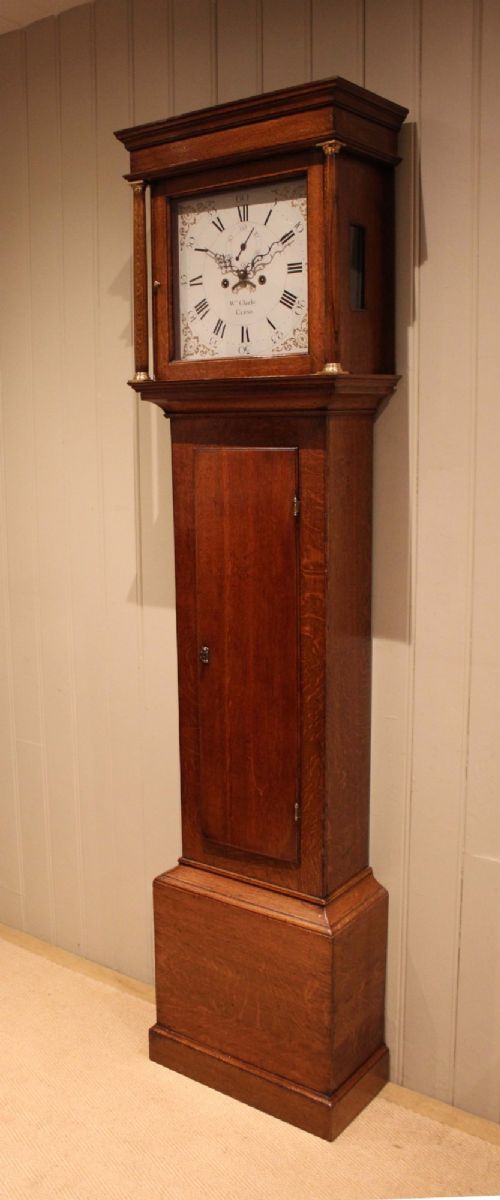
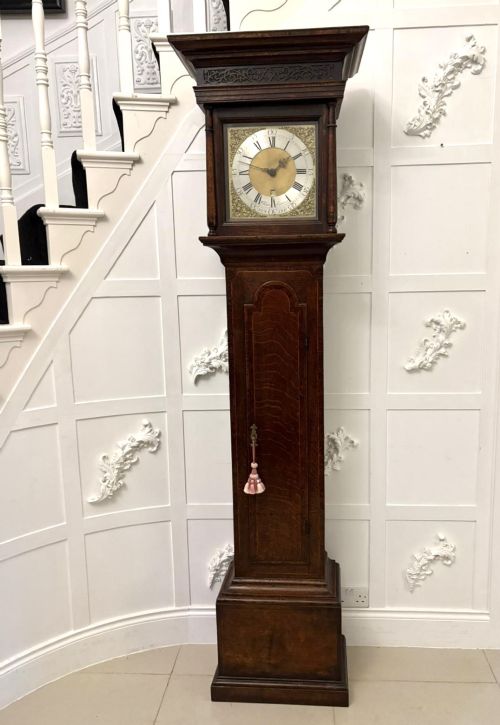
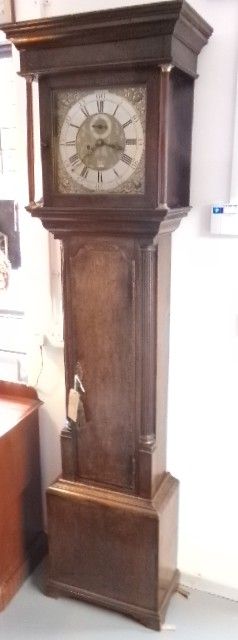
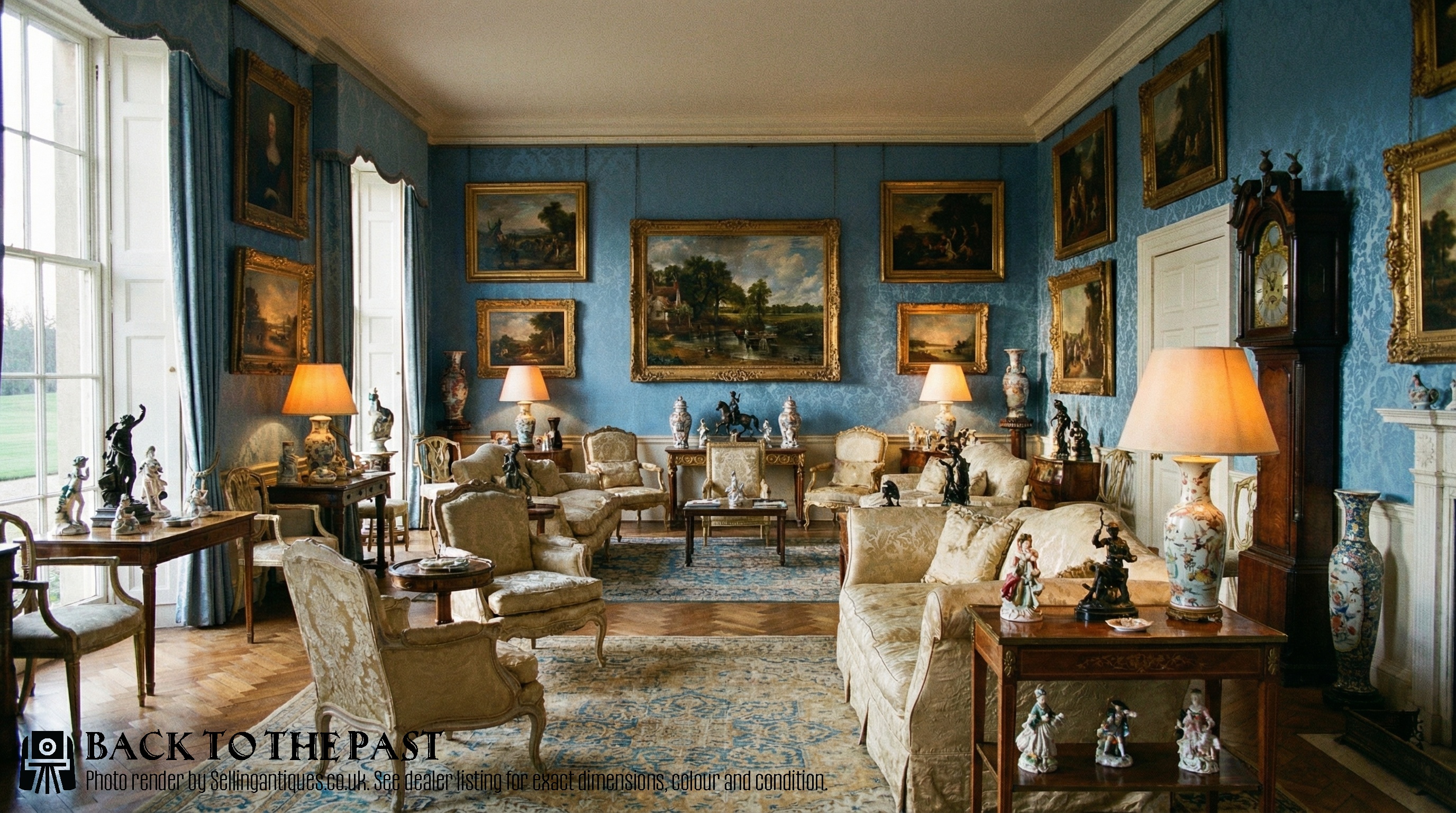
A georgian oak longcase clock stands as a monumental timepiece enclosing weight-driven movements within a tall wooden trunk. These floor-standing clocks originate predominantly from the 18th century and the early 19th century, spanning the Georgian, George III, and Regency periods.
Makers constructed these clocks in various regional centres across Britain, ranging from bustling market towns to rural parishes. Surviving examples often appear as grandfathers or smaller cottage variants, reflecting the domestic spaces they originally inhabited.
How they were made
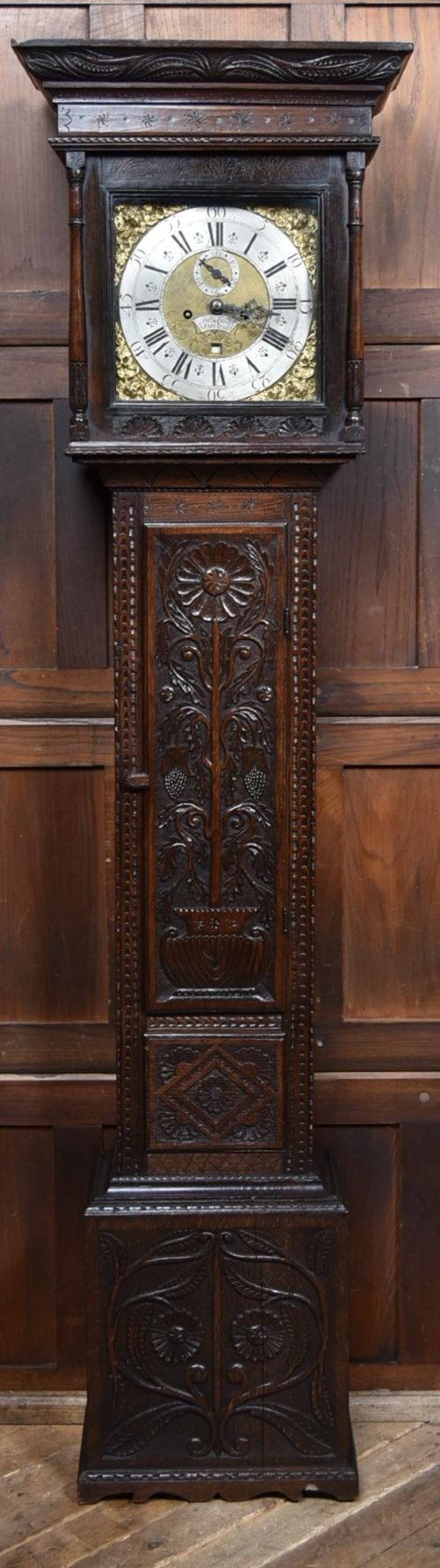
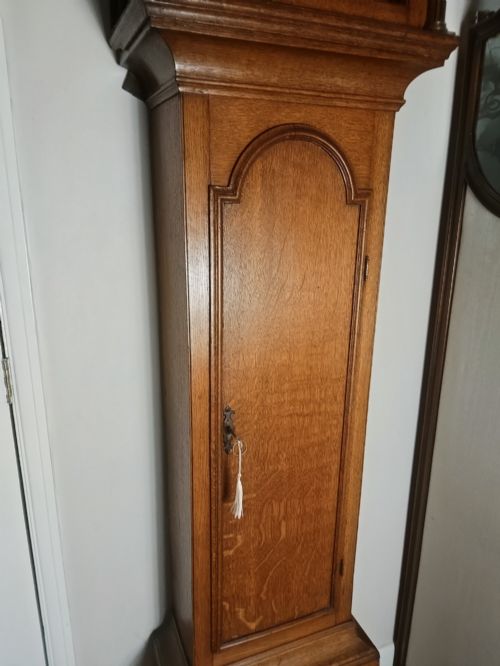
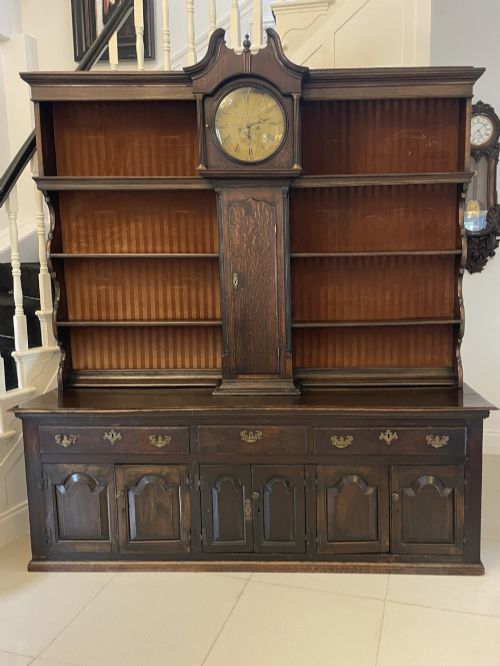
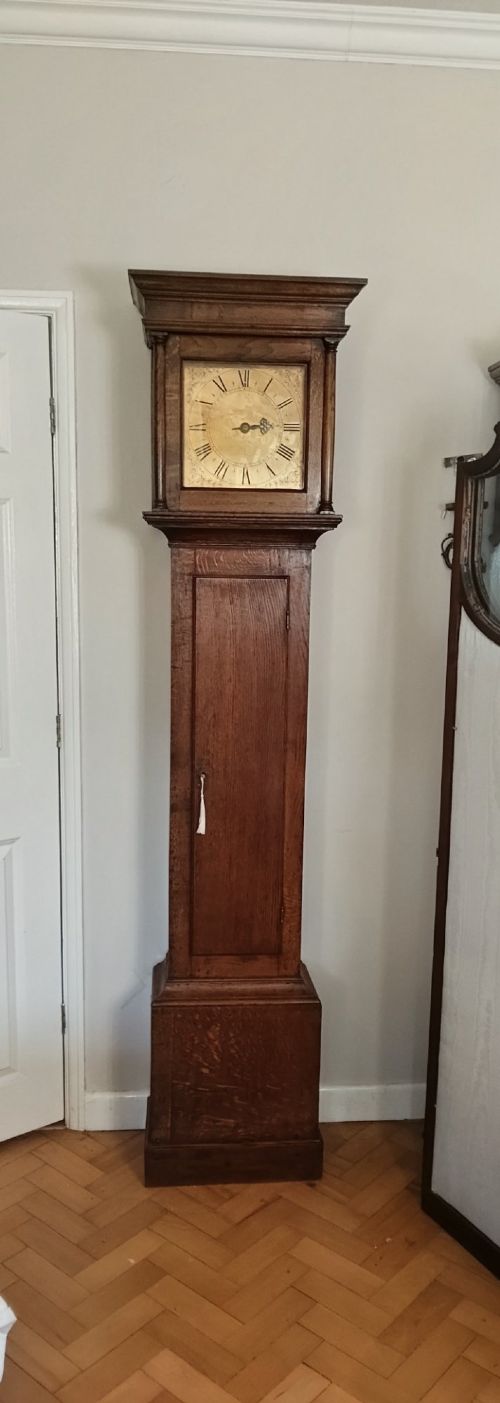
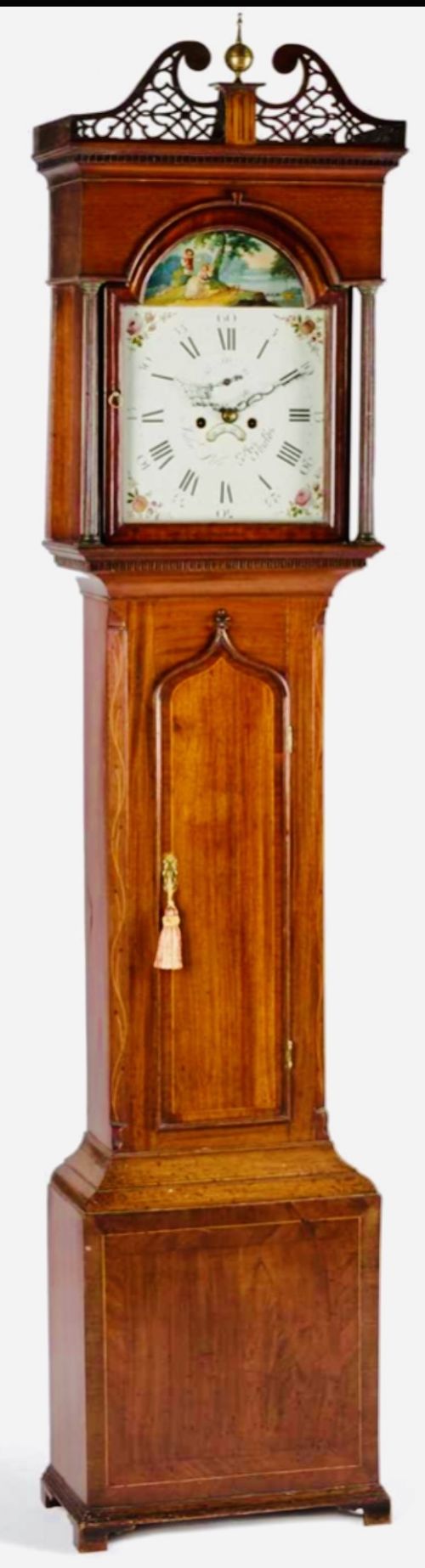
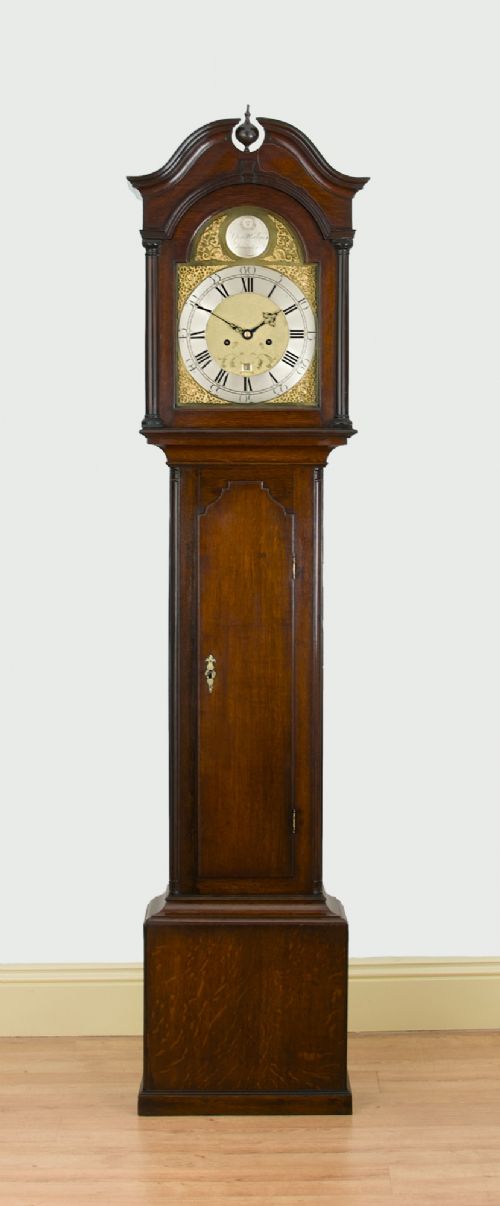
Craftsmen built the tall cases primarily from solid oak, frequently incorporating secondary timbers such as mahogany, walnut, or burr oak for banding, crossbanding, and decorative detail. Cabinetmakers shaped the hoods, trunks, and bases using traditional joinery methods, sometimes adding carved motifs or reeded columns.
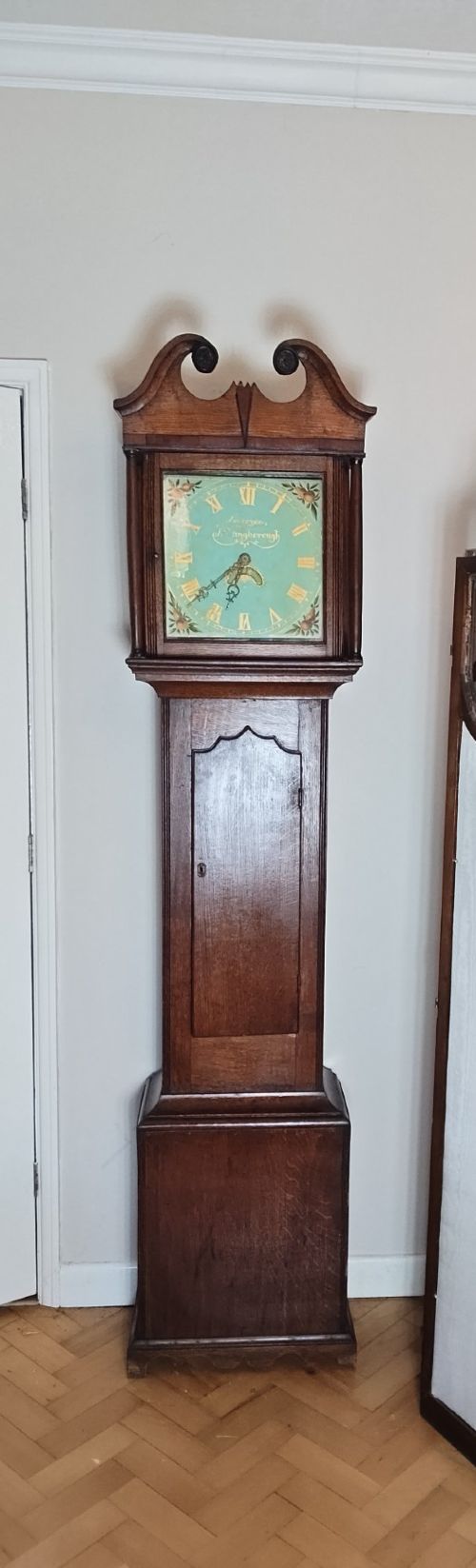
Dial construction utilised brass, iron, or painted iron, paired with glass to protect the face and hands. Movements relied on steel and iron components, configured for either thirty-hour or eight-day durations, with specialised complications like moon phases or strike-silent mechanisms added by regional clockmakers.
Georgian Oak Longcase Clock Retail Price Guide 2026
Typical asking prices for georgian oak longcase clock among the pieces listed under this phrase on Sellingantiques today, from the lower quarter to the upper quarter. They describe what is for sale here now, not the wider market.
One remarkably specific hood column style recorded here mimics the form of a narwhal or unicorn tusk.
What varies in quality
The sophistication of the dial work distinguishes simpler regional pieces from more ambitious commissions, particularly where engraved brass, silvered chapter rings, or intricate painted moon phases are present. Cabinet proportions and timber selection also fluctuate, with some examples displaying refined mahogany banding, dentil moulding, or specialised wood selections.
Movement complexity sets individual clocks apart, ranging from single-handed thirty-hour mechanisms to eight-day systems with strike-silent capabilities or sophisticated rack-stop designs. The integration between the movement and the fitted case reveals the original maker's standard of construction.
Lee of Great Marlow·Jn° Smith, Macclesfd·Richard Corless of Stockport·Smith of Chester·James Hendrie, Falkirk·Fisher Of Preston·George Hallifax Of Doncaster·Thomas Webbe of New Quay·Edward White Birmingham·Thomas May Of Witney·W PIKE BARNSTABLE·J Marr Retford·William Nelson Steele·E. Sanders of Poole·Henry Smith of Petersfield·Massey Newcastle·Watkin Owen of Llanrwst·Thomas King of Alnwick·Kirk of Kibworth·John Greenough·Crawshaw of Rotherham·Ebenezer Handscomb·Blaylock of Longtown·ROWBOTHAM OF LEICESTER·Thomas Dicker (I)
The Georgian Oak Longcase Clock Glossary
- Chapter ring
- The metal ring on a clock dial that bears the hour numerals. It is frequently silvered and engraved on better examples.
- Moon phase
- A dial mechanism tracking the lunar cycle through a rotating disc showing the moon's age. This feature appears on select eight-day movements.
- Crossbanding
- A decorative border of veneer laid with the grain running perpendicularly to the surrounding wood. Cabinetmakers used mahogany or walnut for this contrast on oak cases.
- Hood
- The removable upper section of the case enclosing the dial and movement. Glazed doors and architectural columns typically define its exterior.
- Thirty-hour
- A movement requiring manual winding once a day. These simpler mechanisms often suit country cottage clocks.
Georgian Oak Longcase Clock: Frequently Asked Questions
What is a georgian oak longcase clock?
A georgian oak longcase clock is a tall, weight-driven timepiece housed in an oak case, produced during the 18th or early 19th centuries.
These clocks served as the primary timekeeper in domestic interiors, combining functional horology with substantial furniture design.
How do thirty-hour and eight-day movements differ?
Thirty-hour movements require winding once a day and typically use a simpler gear train, often driven by a single weight.
Eight-day movements require winding weekly and incorporate more complex internal mechanics, frequently accommodating two weights and striking mechanisms.
Where were these clocks made?
Makers produced these clocks across towns and cities throughout Britain, with regional horologists signing the dials.
Examples originate from various counties and urban centres, reflecting distinct local preferences in dial engraving and cabinet styling.
How can I tell the period of a longcase clock?
The transition of dial styles, case proportions, and secondary woods helps determine the date of manufacture.
Early examples often feature square brass dials and single hands, while later Georgian and Regency pieces frequently display arched painted dials and mahogany banding.