



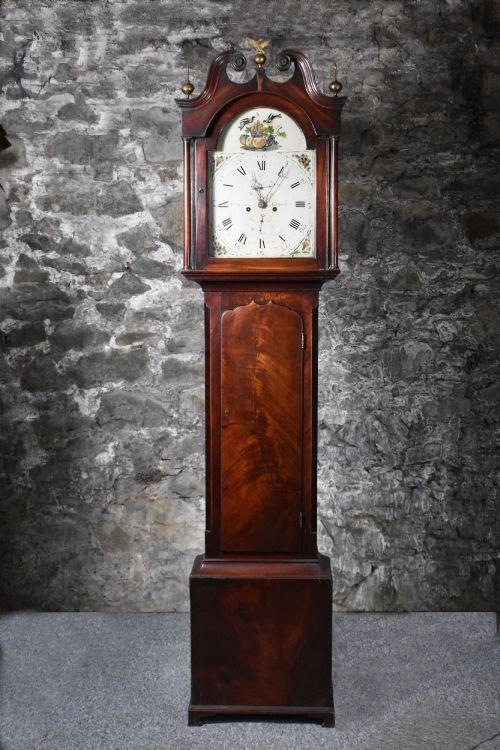


Georgian 8 Day Clock
A georgian 8 day clock brings the measured rhythm of the eighteenth century into a room through brass, timber, and weight-driven movement.
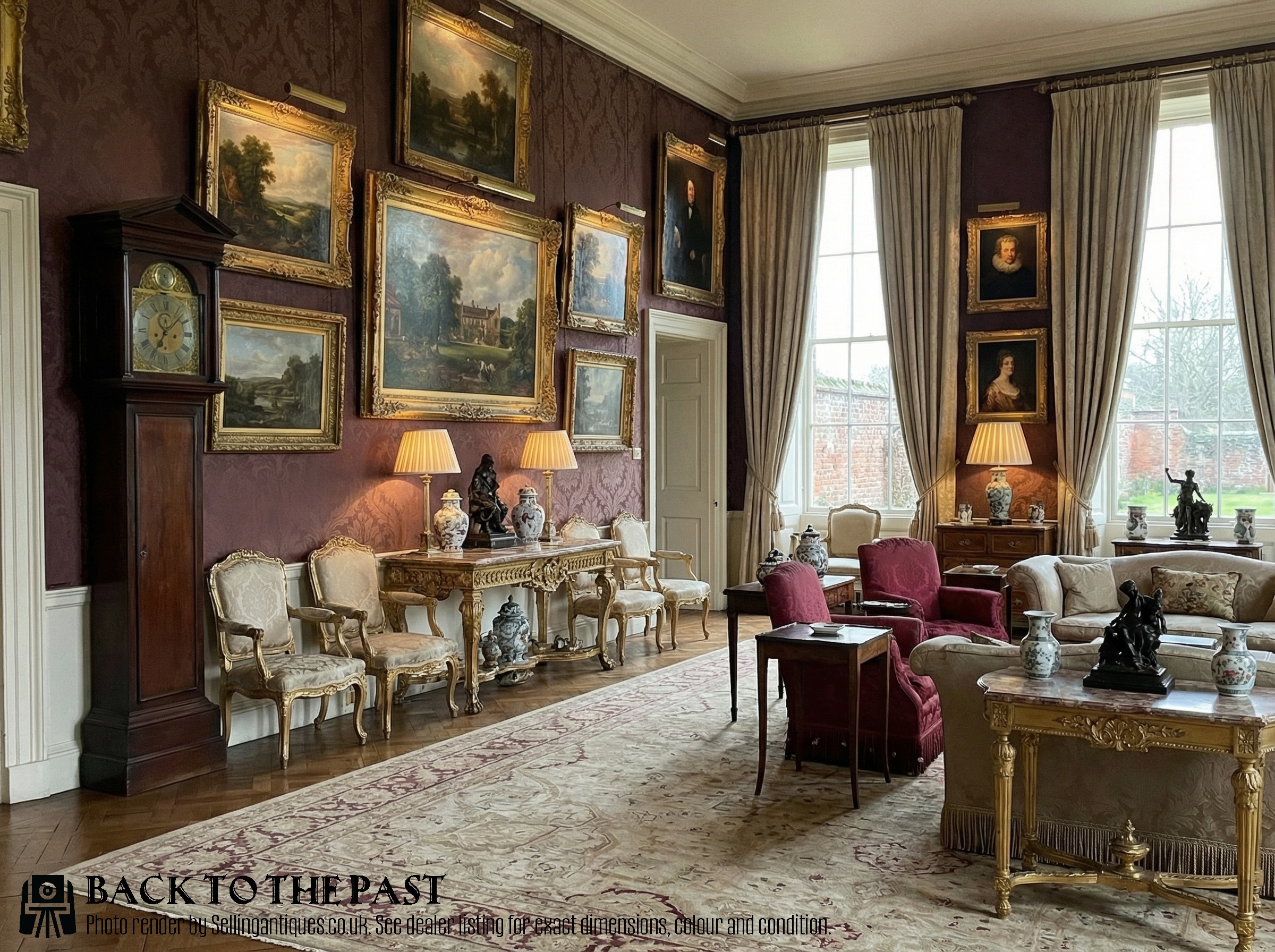
The Nature of the Clocks
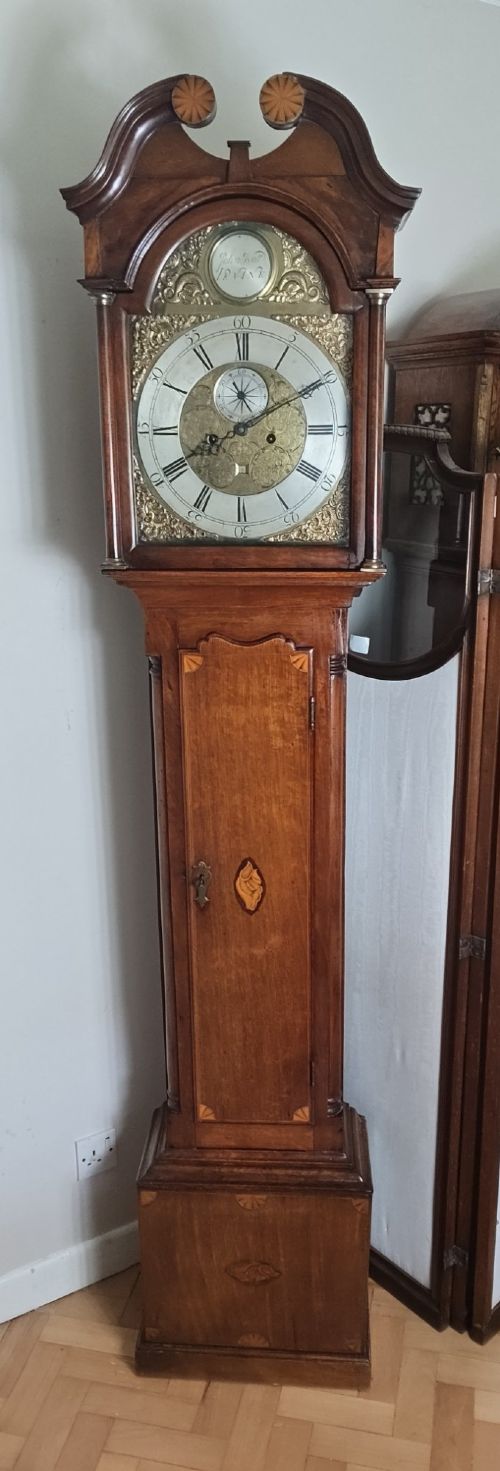
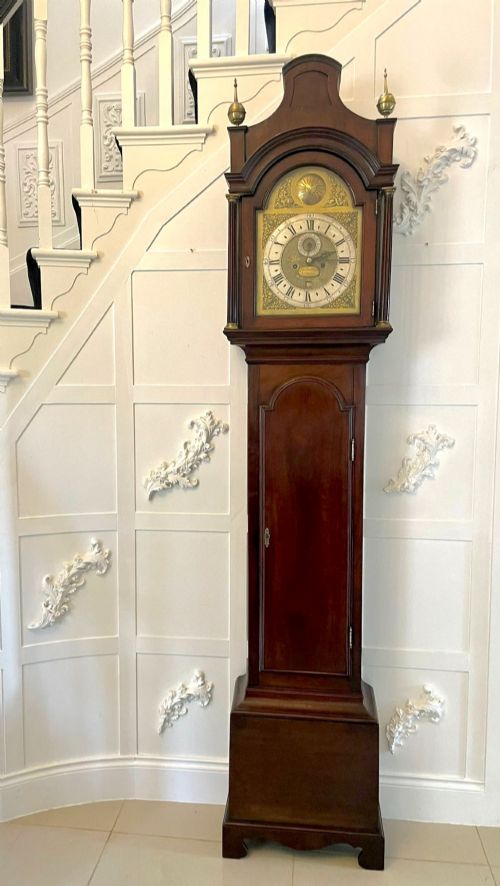
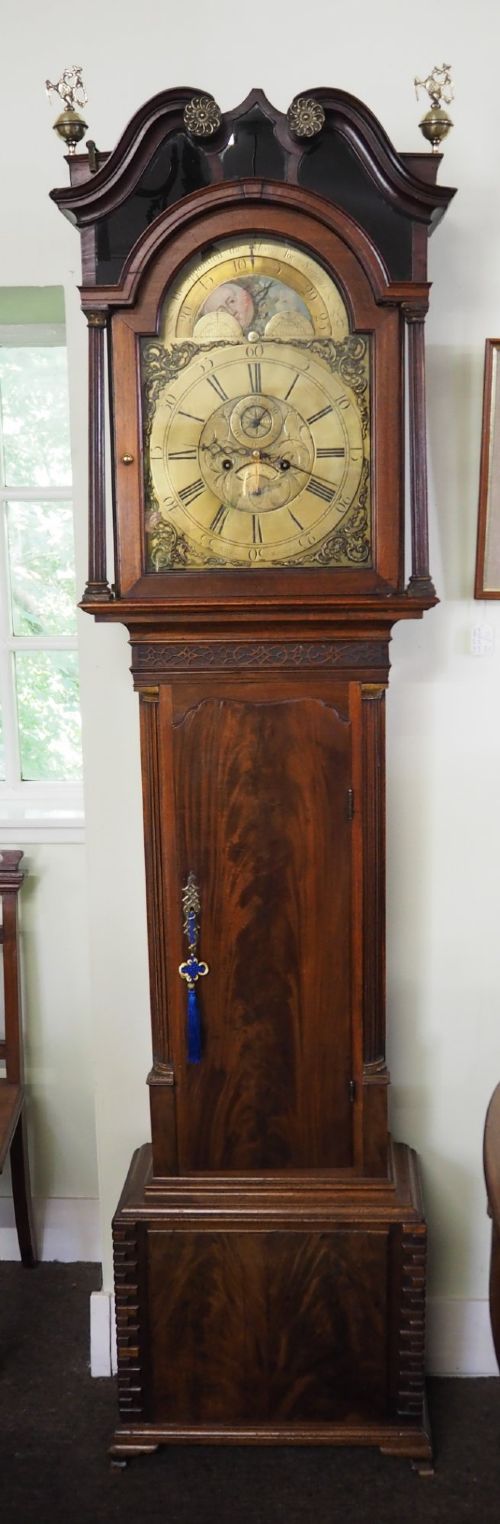
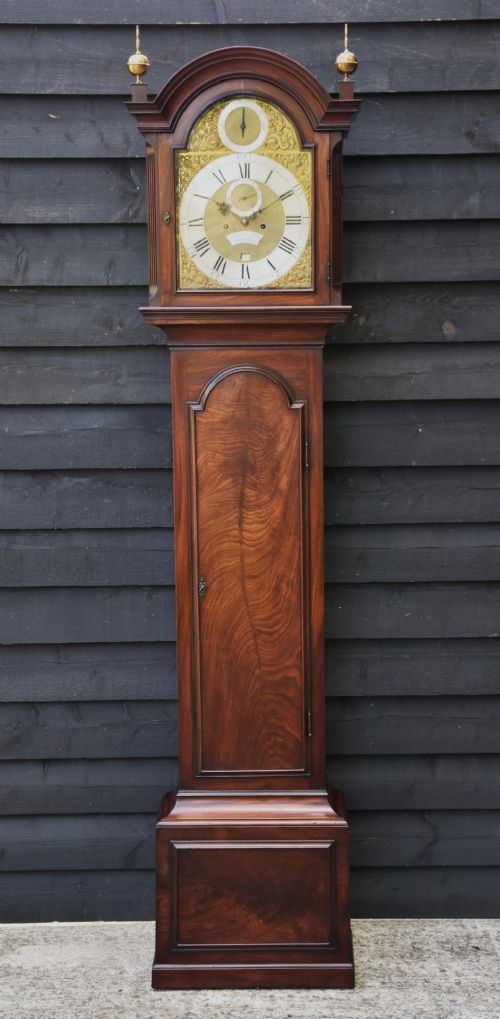
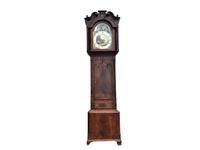
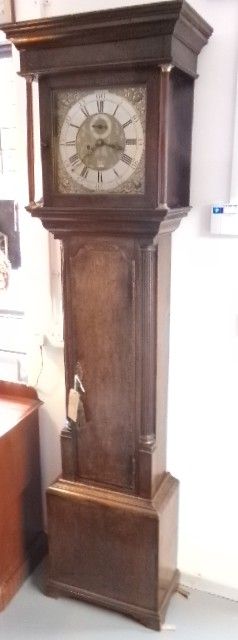
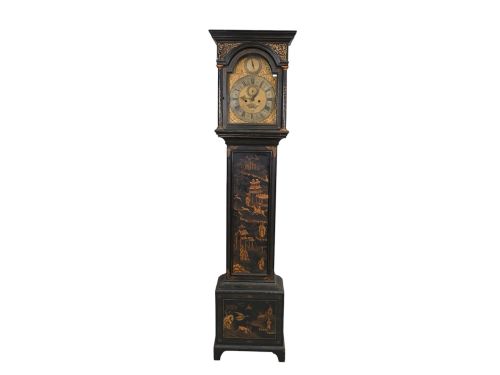
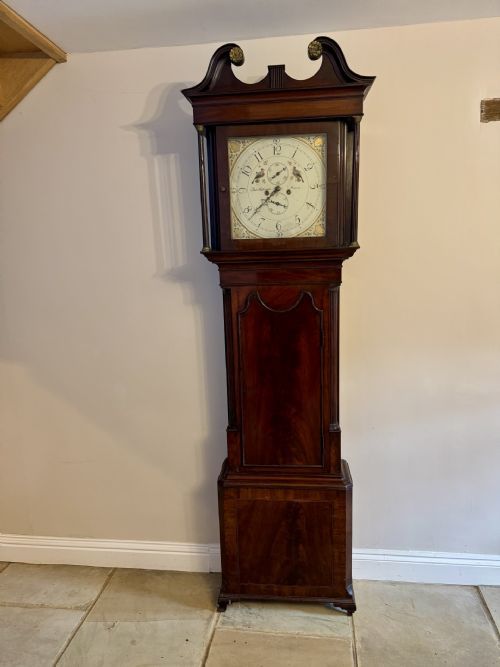
When you search for a georgian 8 day clock, you find tall floor-standing timepieces, also known as longcase or grandfather clocks, alongside occasional striking bracket models. These machines served as domestic timekeepers in houses across England and Scotland during the eighteenth and early nineteenth centuries. Oak and mahogany dominate the cases, housing brass or painted metal dials driven by weight-powered mechanisms that require winding once a week.
The versions most common on this page are oak or mahogany longcase clocks made by regional makers as well as London horologists. They display a range of heights and case treatments, from plain early styles to later examples with marquetry, inlay, or rolling moon phases. Single-handed faces appear alongside more complex painted dials with subsidiary seconds and calendar rings.
Materials and Construction
Cabinetmakers built the wooden housings using local oak, imported mahogany, red walnut, and walnut, often applying veneers and brass inlay or marquetry decoration. Glass protected the dial face, while brass formed the structural plates, wheels, and pillars of the interior movement. Iron and steel components completed the gear trains and striking mechanisms.
Dial construction evolved from engraved brass plates with applied spandrels to painted metal surfaces signed by the maker. Movements relied on five pillars in sturdier examples, utilising count wheels or rack striking systems to govern the hour bell.
Retail Price Guide 2026
Typical UK retail prices for georgian 8 day clock, calculated from the Sellingantiques database of over a million retail prices indexed since 2003. This retail price guide relies exclusively on Sellingantiques data; no external sources or auction records are used, so the figures do not describe the wider market.
Current listings and past archives feature oak, mahogany, and walnut cases housing brass or painted metal dials from eighteenth and nineteenth-century makers.
Distinctions in Execution
The standing of a piece rests upon the crispness of the dial engraving, the finish of the timber cabinet, and the reputation of the maker inscribed upon the face. London horologists and recognised provincial craftsmen often produced movements with finer tolerances and more intricate decorative programmes than lesser-known village makers.
Cabinet work separates simple utilitarian boxes from proportioned architectural cases where flame mahogany, complex stringing, and well-executed fretwork remain intact. Original surfaces and untouched movements elevate a timekeeper above examples with replaced dials or heavily restored woodwork.
William Smith Keighley·Jonathan Marsh London·Joseph Lum·John Harrington·Richard Houton·Samuel Deacon·William Barnard·Mason Of Bawtry·John Cook·John Hancock·Robt Jackson·Major Schofield·Pye Of Falmouth·John Agar·William Peacock·Stewart Of Glasgow·James Cuthbert·Ebenezer Handscomb·John Stancliffe·Thomas Hampson·Thomas Nelson
The Georgian 8 Day Clock Glossary
- Longcase clock
- A tall pendulum clock housed in a wooden case designed to stand directly on the floor. These instruments are frequently called grandfather clocks by collectors.
- Bracket clock
- A portable spring-driven clock intended to sit on a table or bracket shelf. These pieces often feature striking mechanisms and arched lancet tops.
- Count wheel
- An open slotted brass disc mounted on the movement that controls the number of strikes the clock delivers each hour. It represents an older method of strike regulation.
- Rolling moon
- A painted mechanism behind the dial that tracks the phases of the lunar cycle over a twenty-nine and a half day period. This complication adds visual movement to the clock face.
- Spandrel
- An ornamental corner piece fitted to a square brass dial. These cast brass motifs changed in design across the eighteenth century, helping to date the movement.
Frequently Asked Questions
How do I wind an 8 day clock?
Winding involves using a key or crank to pull the heavy weights back up to the top of the case via the gut lines or chains. Care must be taken not to overwind the movement.
This task is performed once every week to maintain the tension required for the pendulum to keep accurate time.
Where should I place a longcase clock?
A longcase clock requires a stable, dry interior wall away from direct sunlight, central heating vents, and exterior doors. The case must stand on a level floor so the pendulum swings evenly.
Securing the tall wooden trunk to the wall using hidden brackets prevents accidental tipping in busy hallways or rooms.
What is the difference between brass and painted dials?
Brass dials feature engraved silvered chapters and cast corner ornaments, which typify earlier eighteenth-century work. Painted metal dials emerged later, offering space for floral decoration, maker signatures, and lunar calendar displays.
Both styles existed concurrently during transitional periods, though painted faces became standard toward the close of the Georgian era.