
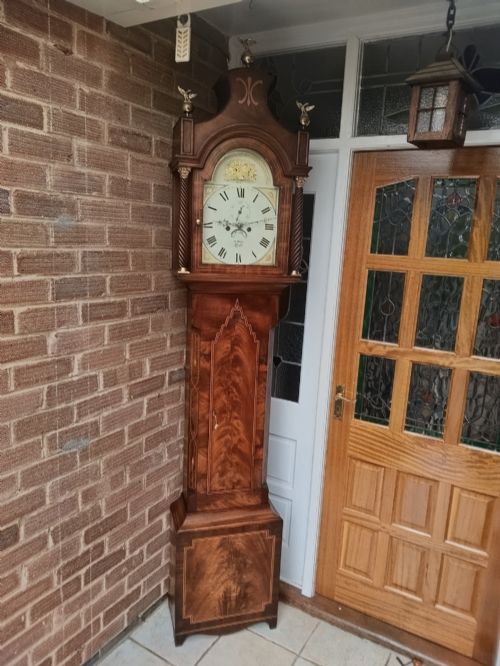
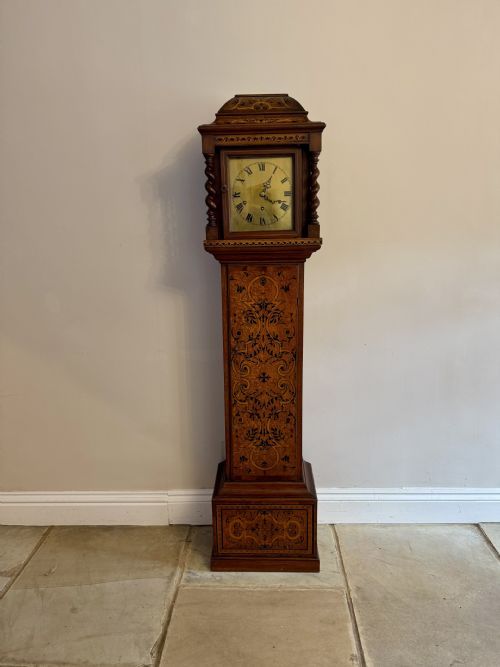


Inlaid Longcase Clock
An inlaid longcase clock brings steady motion and fine timber into a room, joining precise mechanical work with decorative cabinetmaking.
The Nature of Longcase Clocks
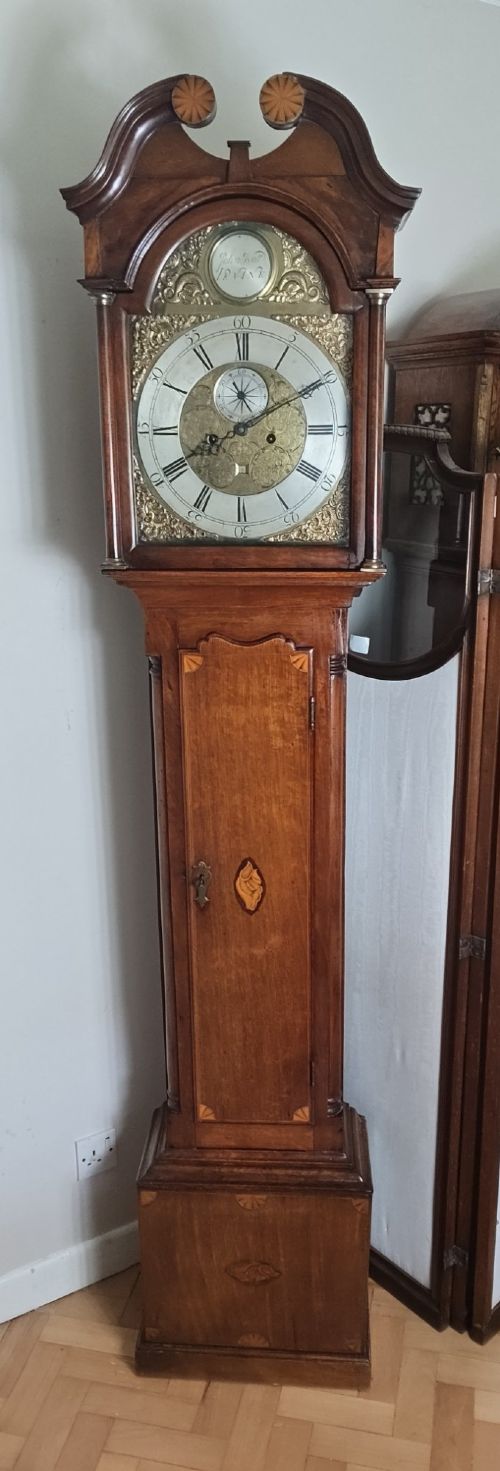
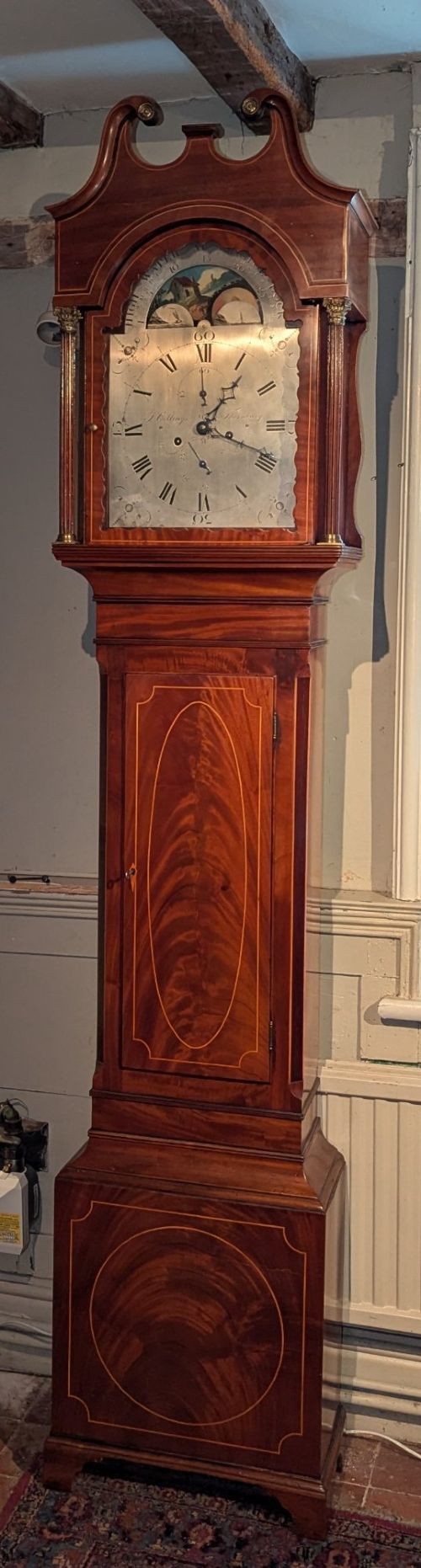
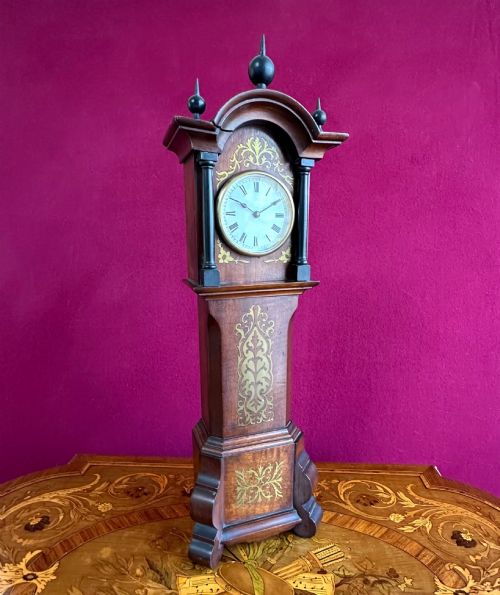
An inlaid longcase clock stands as a tall wooden enclosure housing a weight-driven movement and a dial, combining timekeeping with architectural furniture. When you search for this phrase, you encounter grandfathers and smaller variants originating from the late seventeenth century through the Edwardian period and the nineteenth century. Most examples you meet on this page feature mahogany, flame mahogany, or oak bodies decorated with contrasting wood details.
Makers from London to regional workshops in Scotland, Yorkshire, and Wales built these pieces, often signing the brass or painted dials. Styles span William and Mary, George III, Chippendale Revival, Regency, and Edwardian periods, reflecting the shifting tastes in hood pediments, dial arches, and trunk proportions. Many include subsidiary dials, moon phases, or musical movements that chime the hours and quarters.
Materials and Construction
Cabinetmakers constructed the tall cases using solid timbers and veneers of mahogany, flame mahogany, oak, and walnut, complemented by satinwood inlay and fan decorations. Glass protected the dial behind an opening hood or door, while brass components formed the movement, dial plates, spandrels, and hands.
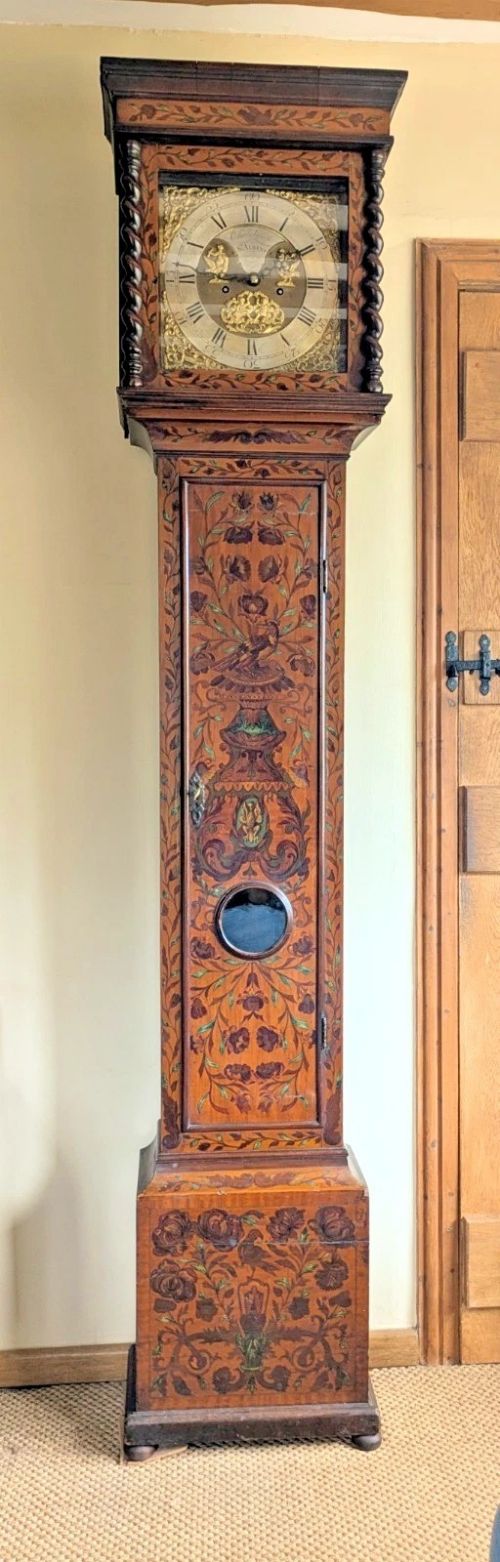
Movements relied on brass wheels, pinions, and weights suspended by cords or chains, driving either eight-day or thirty-hour gear trains. Marquetry panels, stringing, and crossbanding required precise hand-cutting and fitting to secure contrasting veneers into the primary wood body.
Retail Price Guide 2026
Typical UK retail prices for inlaid longcase clock, calculated from the Sellingantiques database of over a million retail prices indexed since 2003. This retail price guide relies exclusively on Sellingantiques data; no external sources or auction records are used, so the figures do not describe the wider market.
Some provincial dials recorded rocking ships that rolled side to side with every sweep of the pendulum.
The Measure of Quality
Superior examples display crisp cabinetwork with balanced proportions, tight veneer joints, and finely executed satinwood inlay that retains its contrast against the primary wood. The integration of the hood to the trunk, the neatness of the fretwork, and the crisp casting of brass spandrels separate accomplished cabinetmaking from simpler regional joinery.
On the mechanical side, the quality rests in the signing of the dial by a known maker, the complexity of the movement - such as musical trains, moon phases, or rocking ships - and the clarity of the engraving on the brass dial plate.
Joseph Lum·Henry Massy·Harford Bristol·John Denbigh·Rowntree York·Ganz of Swansea·William Pridgin·Peter Miller·Charles Campbell·Lott Barwise·Griffiths of Denbigh
The Inlaid Longcase Clock Glossary
- Longcase clock
- A weight-driven pendulum clock housed in a tall wooden case designed to rest directly on the floor. These pieces are frequently called grandfather clocks.
- Inlay
- A technique where pieces of contrasting wood, such as satinwood, are inserted into recessed cavities in the primary timber surface to form decorative patterns.
- Dial
- The face of the clock displaying the hours and minutes, commonly made of brass with applied spandrels or painted white iron.
- Movement
- The mechanical assembly of gears, weights, escapement, and pendulum that drives the clock hands and sound mechanisms.
- Marquetry
- Elaborate veneer work forming pictorial or geometric designs using various coloured woods embedded into the surface panel.
Frequently Asked Questions
What is an inlaid longcase clock?
An inlaid longcase clock is a tall floor-standing timepiece enclosed in a wooden case decorated with contrasting wood veneers and stringing. These pieces combine mechanical timekeeping with period cabinetmaking.
They serve as both functional timekeepers and prominent furniture pieces, featuring weights, pendulums, and dials housed beneath glass hoods.
Where should I place a longcase clock?
These tall clocks require a stable, level floor and a secure fixing to the wall through the backboard to ensure the pendulum swings plumb. Hallways, landings, and principal reception rooms provide suitable vertical clearance and steady ambient conditions.
Avoid positions subject to direct sunlight, dampness, or extreme temperature fluctuations that could affect the timber case and delicate movement.
How do eight-day and thirty-hour movements differ?
Eight-day movements require winding once a week using a key inserted into holes on the dial face, utilising two or three heavy weights suspended inside the trunk. They represent a more complex gear train found in higher-grade town and city clocks.
Thirty-hour movements need winding daily and generally operate with a single weight, often appearing in earlier or more utilitarian regional country clocks.