
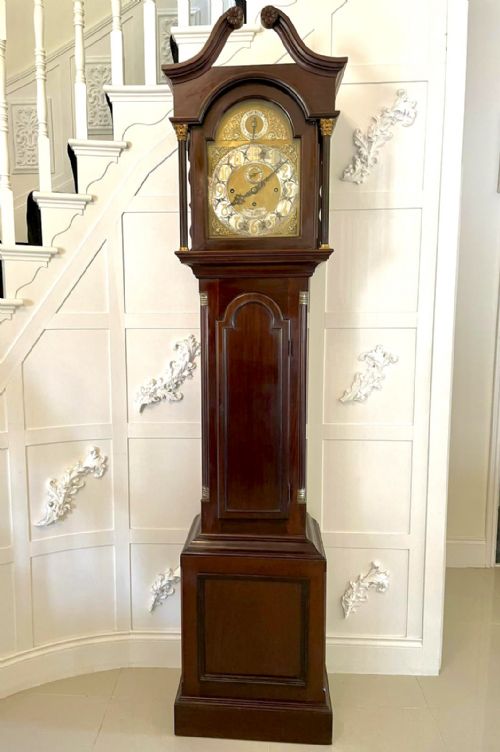
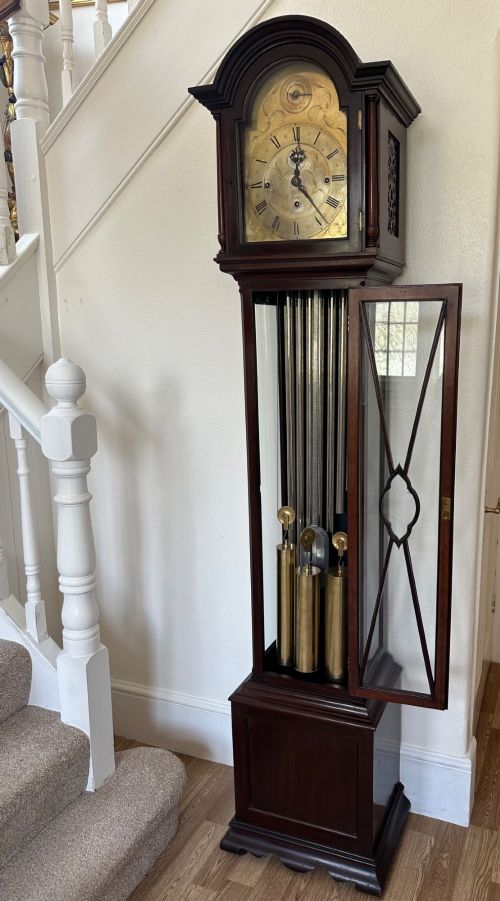
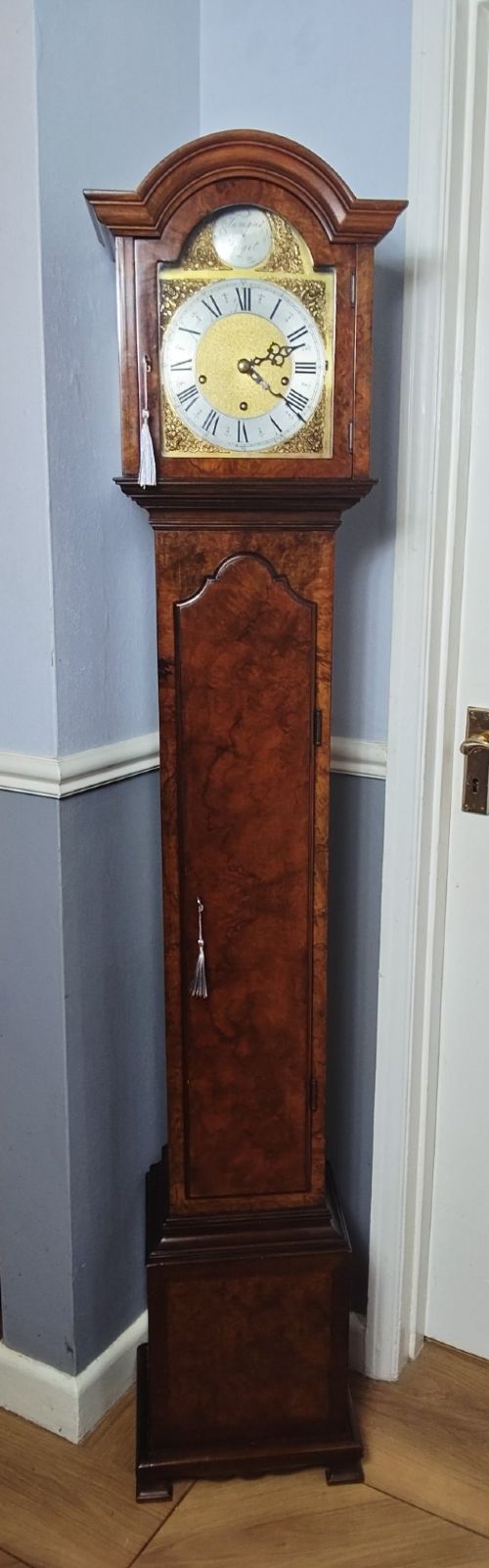
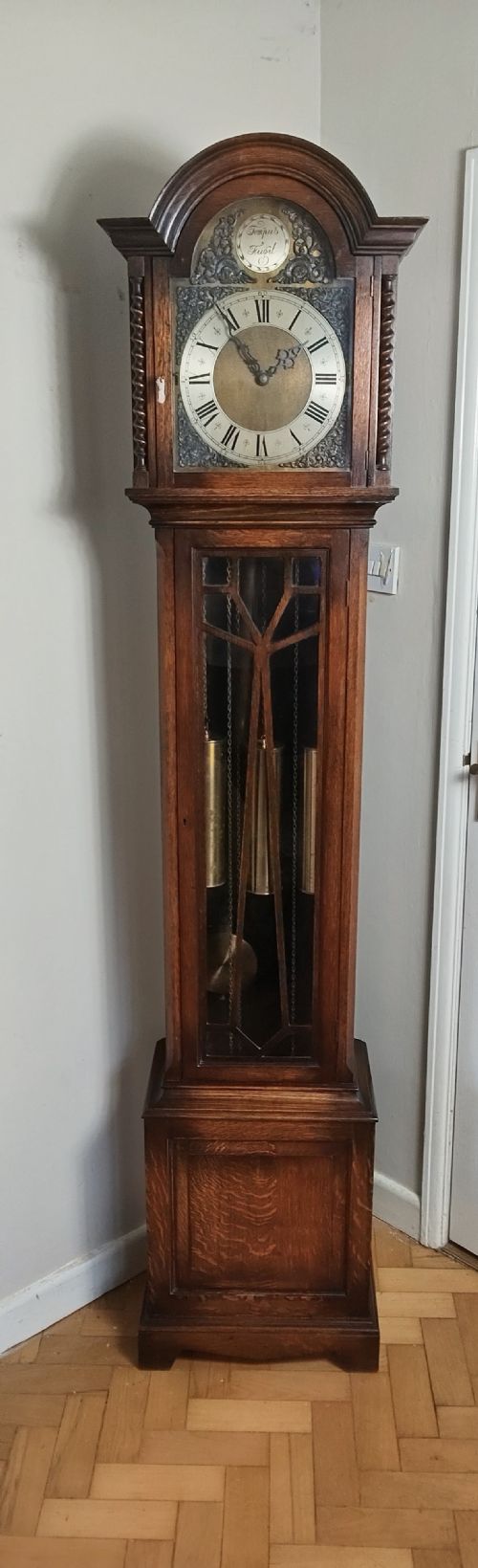
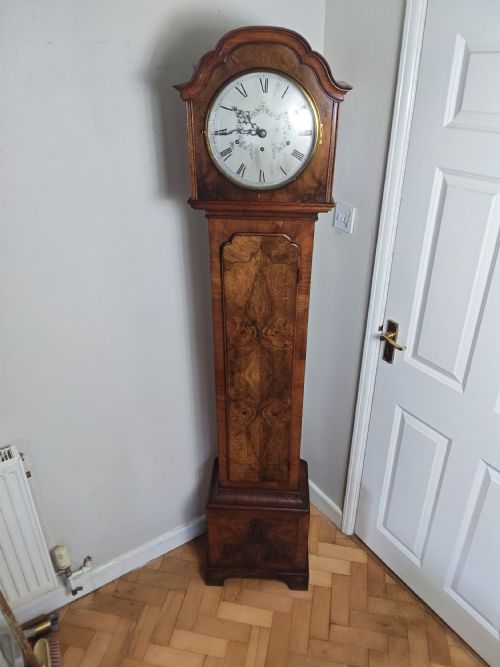
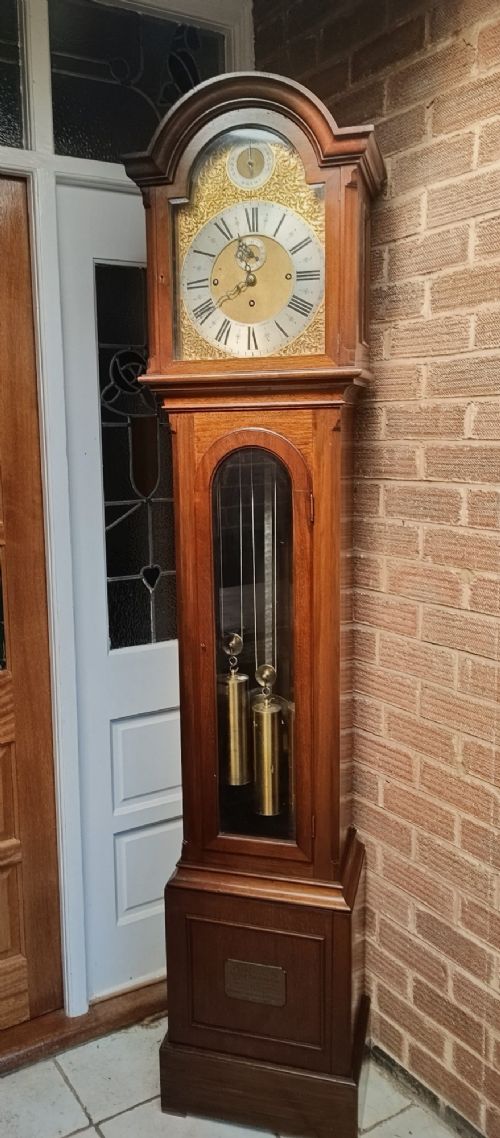


Musical Grandfather Clock
A musical grandfather clock brings time and melody into a room through weighted chimes and tall wooden cases.
Forms and periods of the musical grandfather clock
A musical grandfather clock combines tall floor-standing timepieces with internal mechanisms that play chimes or tunes on bells, rods or tubes. You meet pieces spanning the late Victorian, Edwardian and 1930s periods, alongside earlier examples from the eighteenth and nineteenth centuries.
The selection ranges from tall monumental architectural cases down to smaller grandmother versions under seventy inches high. Oak and mahogany appear frequently as primary timbers, accompanied by walnut, burr walnut and satinwood inlay.
Styles follow traditional revivals including Queen Anne, Chippendale and Jacobean, alongside Edwardian interpretations. Cases house movements that vary from simple quarter chimes to triple tune mechanisms.
Materials and construction methods
Cabinetmakers constructed the tall floor cases from solid timbers and veneered panels of oak, mahogany and walnut, often incorporating glass doors and brass fittings. Dial faces utilise silvered metal and brass with engraved numerals and subsidiary dials.
Clockmakers fitted weight driven movements powered by lead weights suspended on cords or chains, utilising tubular bells, gongs or multiple bells to produce tunes and chimes. Movements range from standard eight day designs to specialised triple weight systems.
Retail Price Guide 2026
Typical UK retail prices for musical grandfather clock, calculated from the Sellingantiques database of over a million retail prices indexed since 2003. This retail price guide relies exclusively on Sellingantiques data; no external sources or auction records are used, so the figures do not describe the wider market.
The listings show Edwardian examples most frequently, alongside pieces from 1900, 1920, 1930 and the late nineteenth century.
Distinctions in execution and mechanism
Quality rests in the complexity of the movement and the resonance of the acoustic output, where triple tune mechanisms and properly adjusted tubular bells produce richer sound than basic chimes. The selection of timber grain, particularly in burr walnut and figured mahogany cases, sets apart finer examples.
Geo Tarratt of Leicester·Boots Drug Company·Maple London·Peerless·Embee·Enfield·Bravingtons
The Musical Grandfather Clock Glossary
- Longcase clock
- A tall weight driven pendulum clock housed in a wooden floor-standing case. These pieces are frequently called grandfather clocks.
- Grandmother clock
- A smaller variant of the longcase clock, typically measuring under seventy inches in height. They share the mechanical functions of larger examples while fitting into lower ceiling heights.
- Tubular bells
- Long metal tubes suspended inside the clock case that are struck by hammers to produce deep resonant chimes. They appear in Edwardian and later musical movements.
- Quarter chiming
- A mechanical function that sounds the quarters of the hour on bells or gongs before striking the full hour. Systems often feature multiple tunes.
- Three train
- A clock movement with three separate gear trains for timekeeping, striking and chiming. This arrangement powers the musical selections.
Frequently Asked Questions
How do I wind a musical grandfather clock?
Weights inside the trunk are raised using a crank or key inserted into holes in the dial face. Care must be taken not to pull the chains too fast.
Different trains control the time, strike and musical chimes, requiring separate winding depending on the specific weight driven setup.
What is the difference between a grandfather and grandmother clock?
Grandfather clocks stand over seventy inches tall, while grandmother clocks measure under that height. Both utilise weight driven pendulum movements.
Shorter grandmother clocks suit domestic spaces with lower ceilings whilst retaining full chiming and musical capabilities.
How do tubular bells differ from gongs?
Tubular bells hang vertically in the upper trunk and produce a deep cathedral-like tone when struck. They are typical of Edwardian musical movements.
Gongs are coiled metal rods mounted inside the case that vibrate to create mellow chime sequences for the quarters.
Can I silence the music at night?
Many Edwardian and later musical movements feature a silent cord or lever to disengage the chiming mechanism. This stops the tunes from playing overnight.
Manual silencing prevents the weights from dropping through the chime sequence without stopping the pendulum timekeeping.