

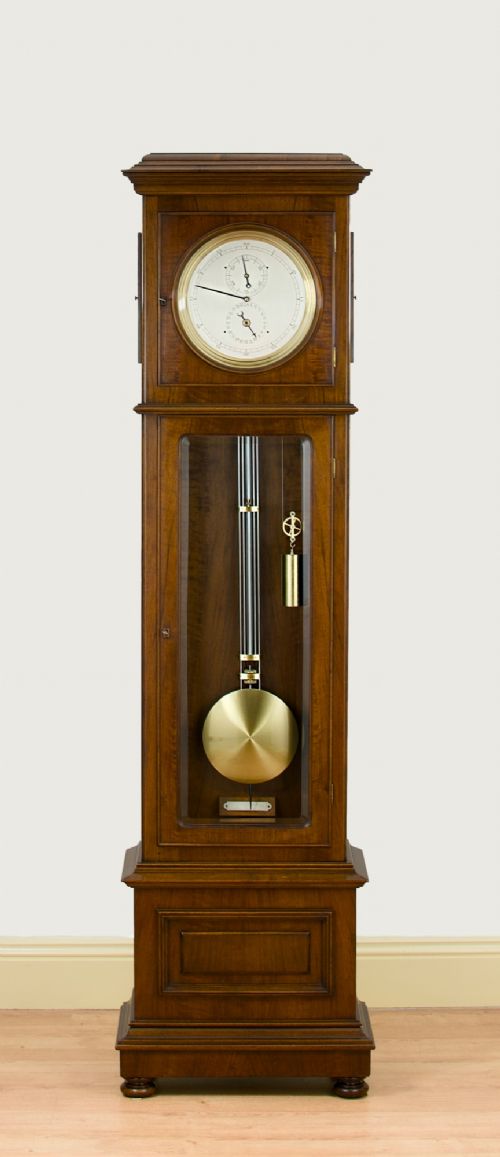


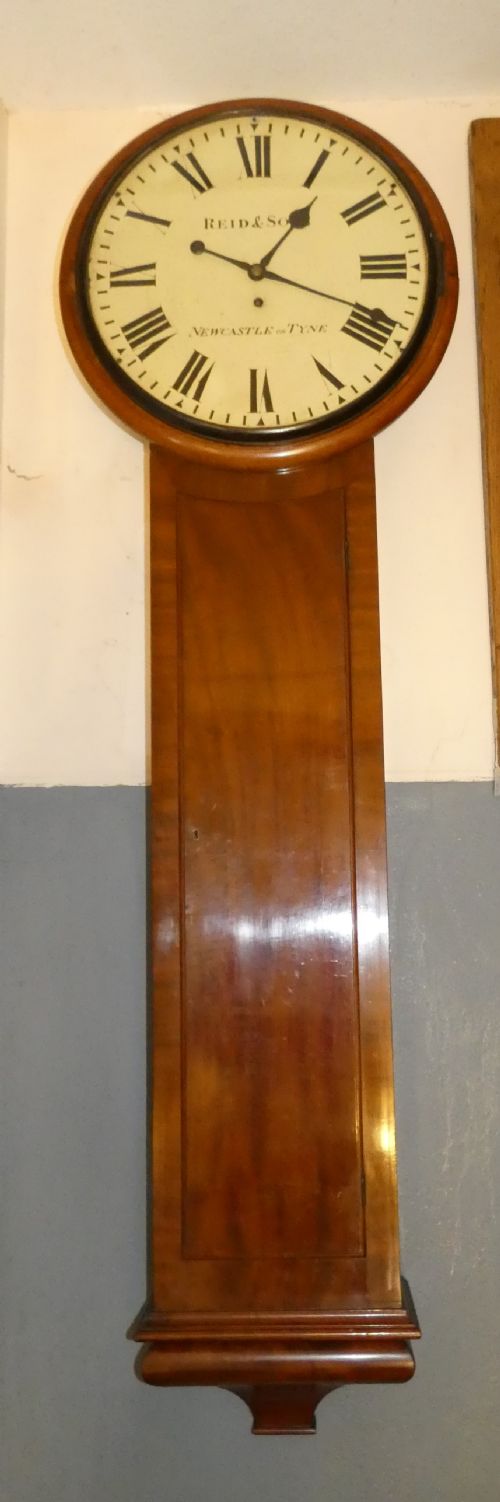


Edwardian Grandfather Clock
An edwardian grandfather clock is a tall floor-standing timepiece combining rich cabinet timbers with intricate chiming movements made to anchor a period hall or parlour.
Edwardian Grandfather Clock
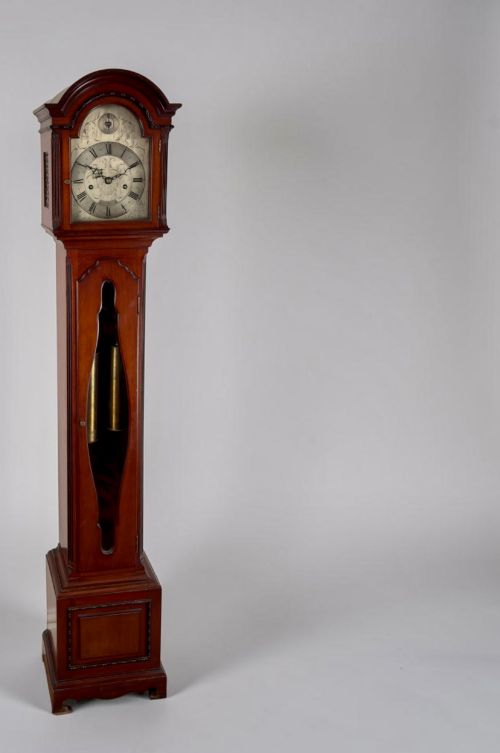
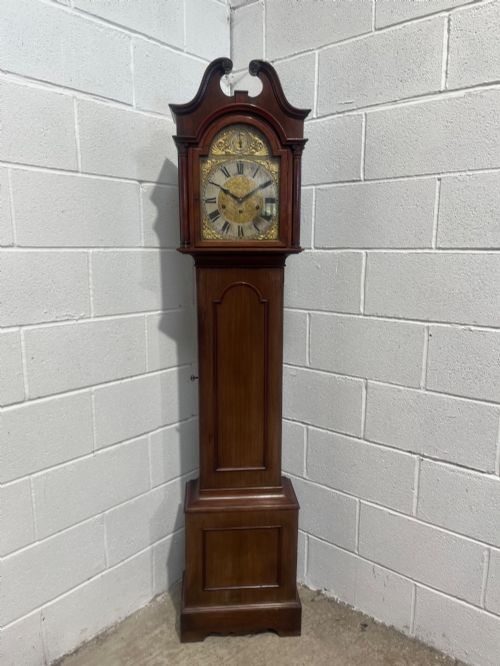
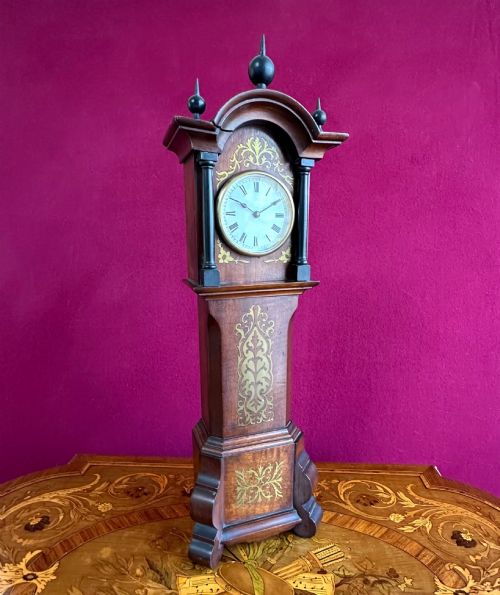
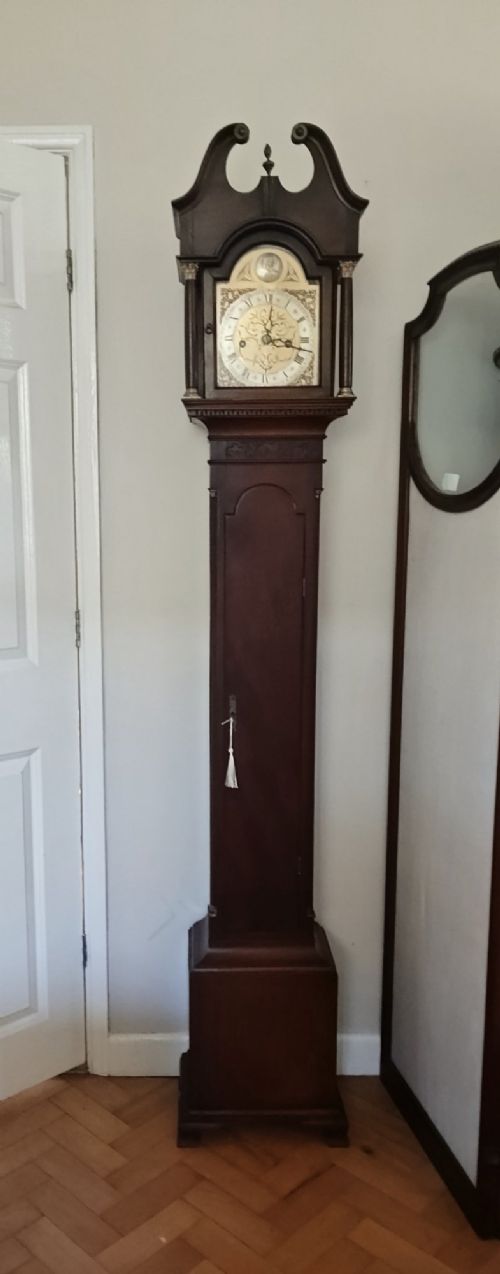
An edwardian grandfather clock sits within a tradition of tall floor-standing timepieces, though the pieces meeting this search phrase lean heavily toward Edwardian production alongside Victorian and later revivals. Buyers encounter full-height examples alongside smaller grandmother and miniature variants designed for more compact modern domestic spaces.
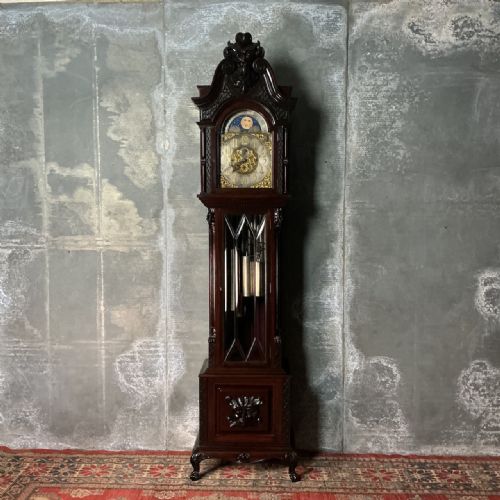
The materials span rich dark timbers like mahogany and oak, often decorated with satinwood inlay or brass dials. Formats range from simple eight-day striking mechanisms to complex musical movements playing multiple tunes on tubes or bells.
Origins include notable English makers and retailers, housed in cabinet styles varying from restrained classical proportions to elaborate Chippendale and Jacobean revival carvings.
How they were made
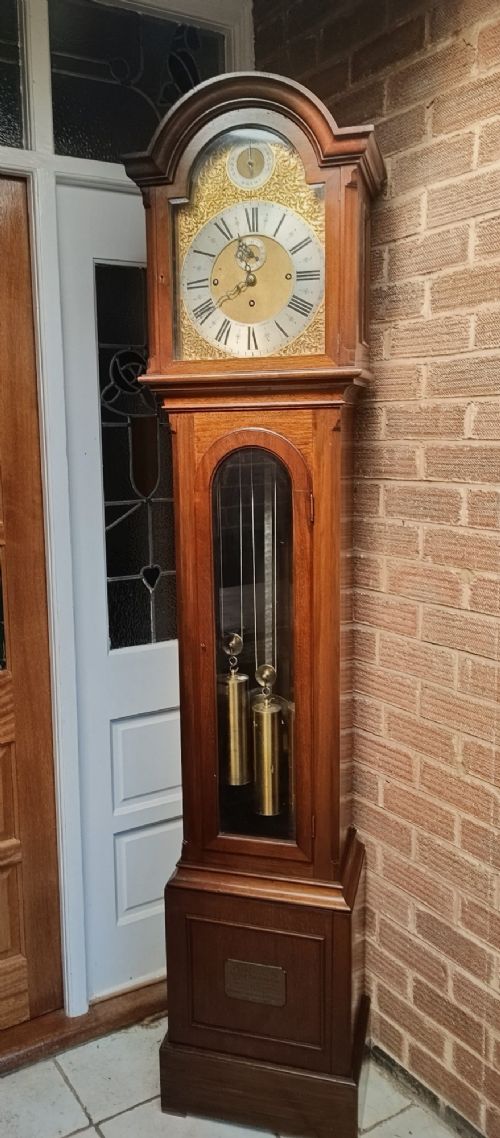
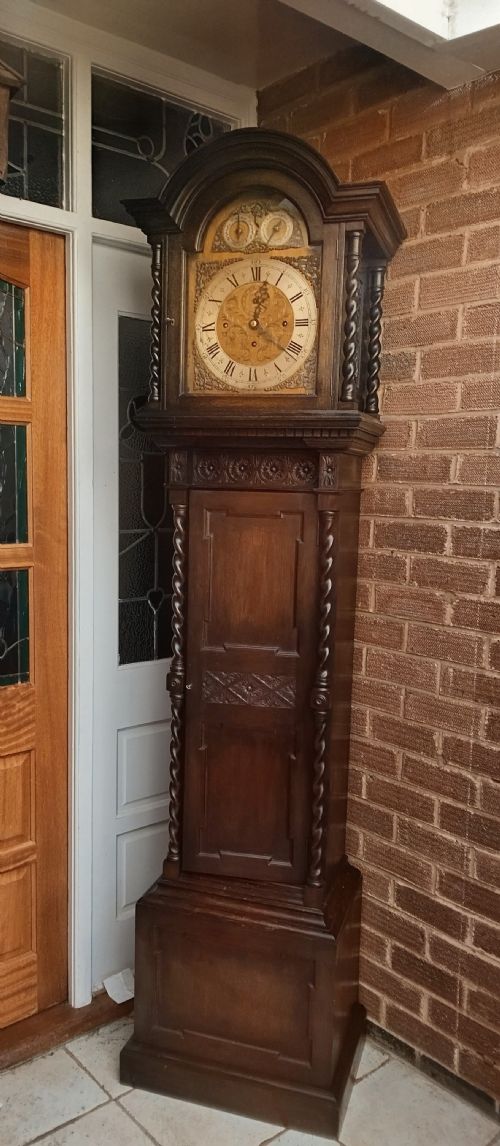
Cabinetmakers constructed the tall wooden cases primarily from solid and veneered mahogany or oak, frequently incorporating glass doors, glazed hoods, and delicate satinwood string inlay. Structural details often include barley twist columns flanking the dial and finely carved architectural cornices.
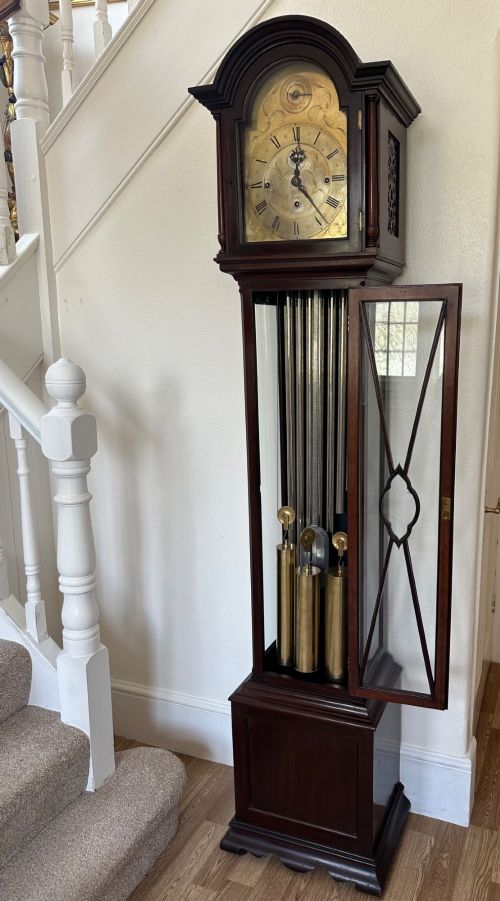
Horologists fitted these housings with brass, steel, and glass components, ranging from standard time-and-strike gear trains to sophisticated three-train musical movements capable of playing melodies on tubular bells or sets of smaller bells.
Edwardian Grandfather Clock Retail Price Guide 2026
Typical asking prices for edwardian grandfather clock among the pieces listed under this phrase on Sellingantiques today, from the lower quarter to the upper quarter. They describe what is for sale here now, not the wider market.
Listings feature oak and mahogany cases alongside walnut and satinwood inlay, spanning periods from late Georgian origins to Edwardian revivals.
What varies in quality
Quality separates ordinary production from exhibition pieces through the crispness of wood carving, the depth of grain in figured mahogany, and the precision of brass dial engraving. Better cases display harmonious proportions and seamless veneer matching across the trunk door and hood.
Movement complexity and finishing dictate the upper tiers of the market, where multi-train chiming mechanisms, precision regulators, and signed dial plates by esteemed makers elevate both the acoustic performance and the mechanical value of the clock.
Gillett and Johnston·Elliott·Lenzkirch·Edward Shepley·Mappin and Webb·Harrods·Lister and Sons·Camerer Cuss and Co·Dent·Cottell Brothers
The Edwardian Grandfather Clock Glossary
- Grandmother clock
- A smaller version of the traditional longcase clock, typically standing under six feet tall and popular during the early twentieth century. These smaller proportions allowed them to fit comfortably in rooms with lower ceilings.
- Longcase clock
- The formal horological term for a tall pendulum clock housed in a wooden case, commonly called a grandfather clock. The case protects the pendulum and weights while serving as a prominent piece of furniture.
- Regulator clock
- A high-precision timepiece designed to keep exact time and often used as a standard to check other clocks. They feature clear dials and high-grade movements with minimal friction.
- Three-train movement
- A mechanical system utilising three separate gear trains to drive timekeeping, hour striking, and quarter-hour chime melodies. This complexity requires larger weights or heavier spring barrels.
- Tubular bells
- Long metal tubes suspended inside the clock case and struck by hammers to produce deep, resonant chimes. They replaced traditional stacked bells in many larger Edwardian musical longcase clocks.
Edwardian Grandfather Clock: Frequently Asked Questions
What is the difference between a grandfather clock and a grandmother clock?
A grandfather clock generally stands over six feet tall with substantial proportions suited to grand hallways and high ceilings. A grandmother clock is a smaller, more delicate version built with reduced dimensions.
Both utilise similar pendulum and weight-driven mechanics, but the smaller variant fits domestic spaces where full-sized longcase clocks overwhelm the room.
How do three-train movements work?
A three-train movement separates the workload of the clock into three distinct sections powered by separate weights or springs. One train drives the timekeeping hands, the second strikes the hours, and the third plays the musical chimes on the quarters.
This division ensures that chiming activity does not interfere with the precision of the clock's pendulum timekeeping.
Where should I place a longcase clock in my home?
Longcase clocks require a stable, level floor and a solid interior wall to anchor the case securely without wobble. Keeping them away from direct sunlight and rapid temperature fluctuations protects the wood veneer and internal wooden components.
Allowing sufficient clearance around the pendulum and falling weights ensures the mechanical action operates smoothly without obstruction.
How do I identify an Edwardian period movement?
Edwardian movements often feature refined brass plates, patent chime selectors, and mechanisms designed to accommodate tubular bells or multiple tune options. The dial work frequently combines silvered chapter rings with ornate corner spandrels in the revival tastes of the era.
Maker signatures etched onto the dial plates or movement backplates further confirm the production period.