
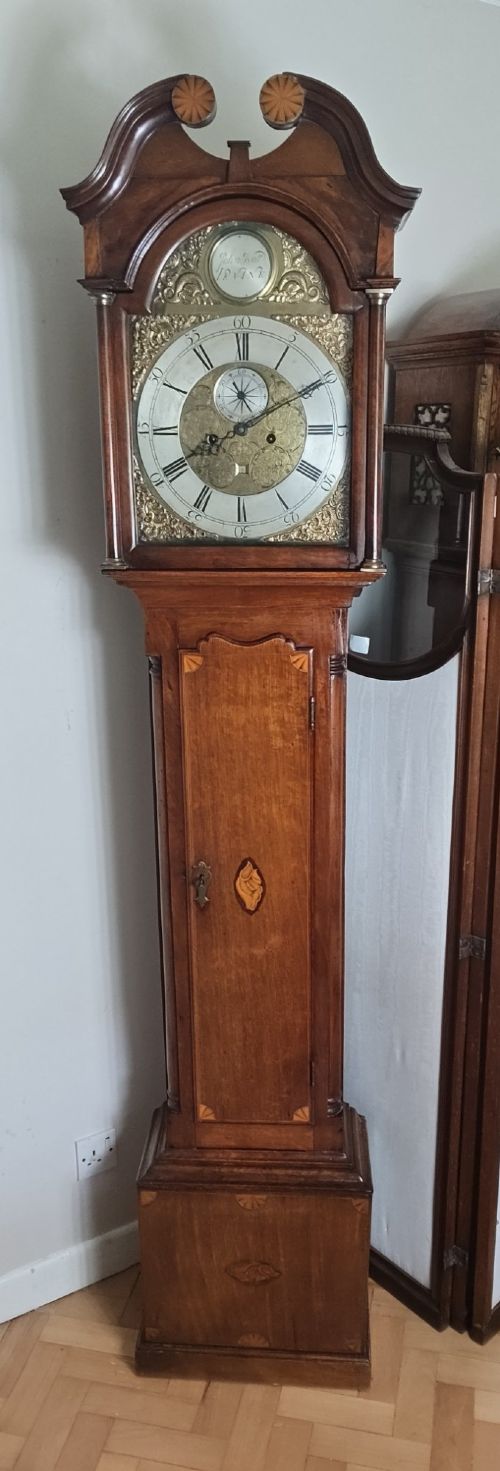
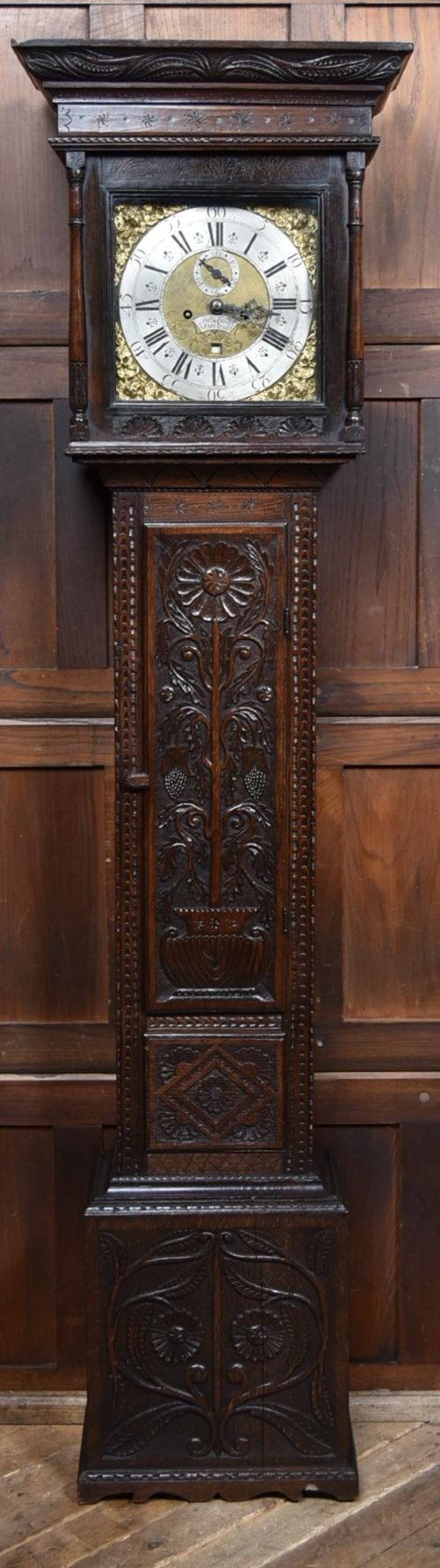
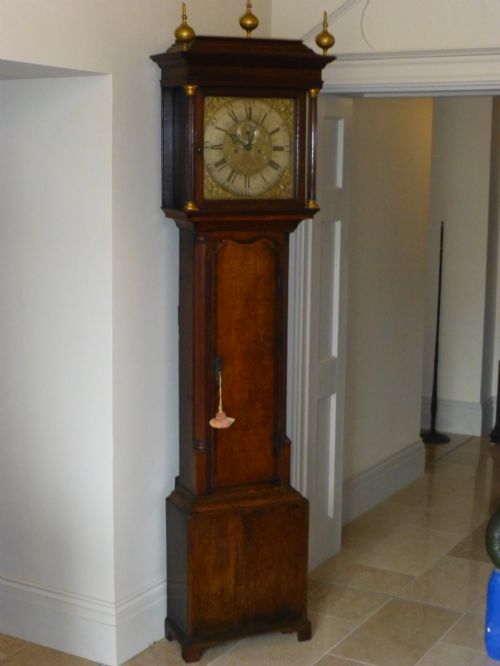
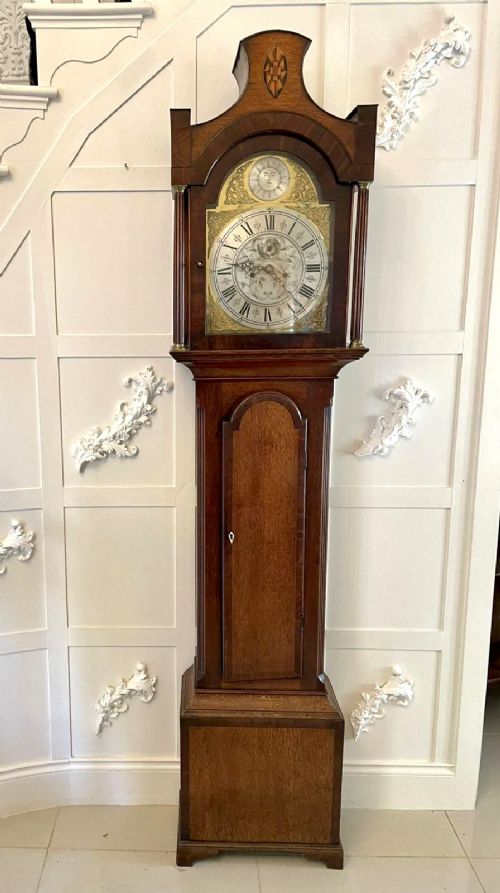
Traditional Floor Clock
A traditional floor clock stands as a commanding centrepiece, bringing mechanical timekeeping and fitted cabinetry into a room.
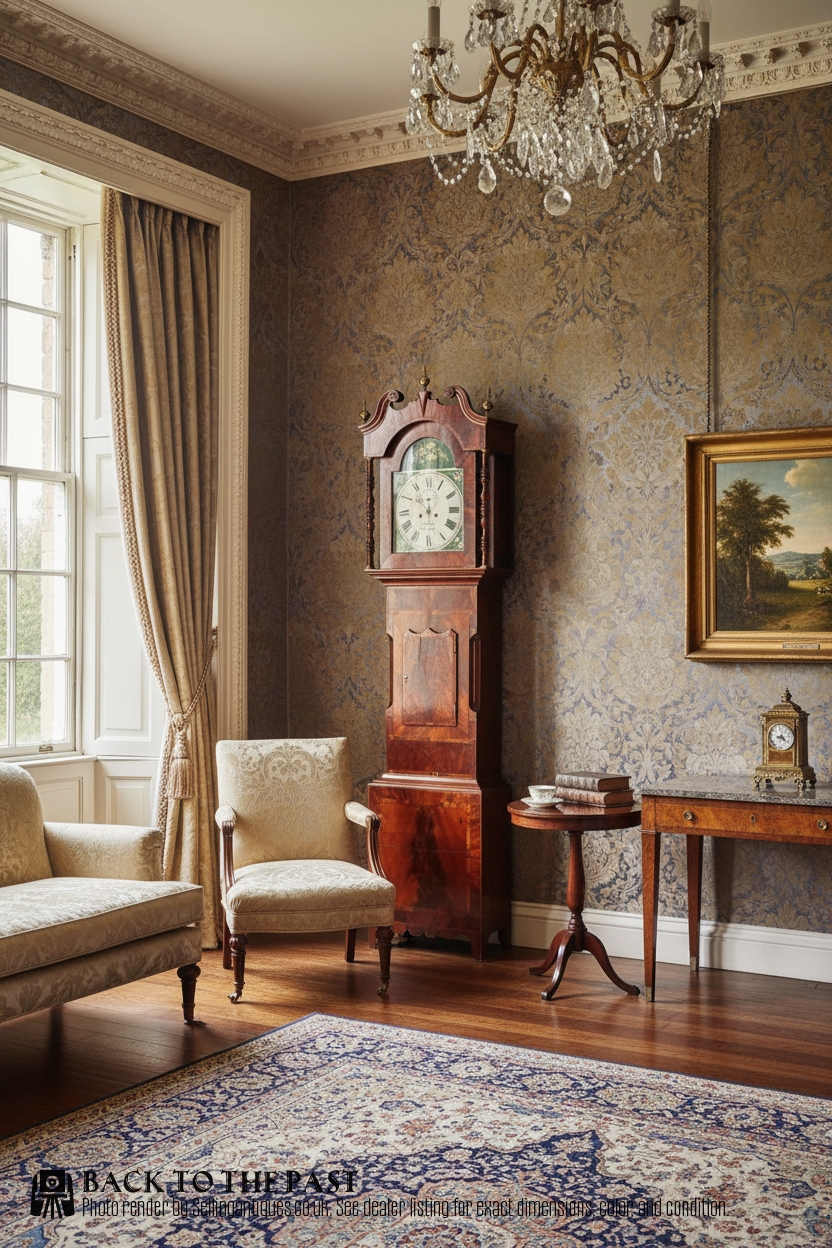
Traditional Floor Clock
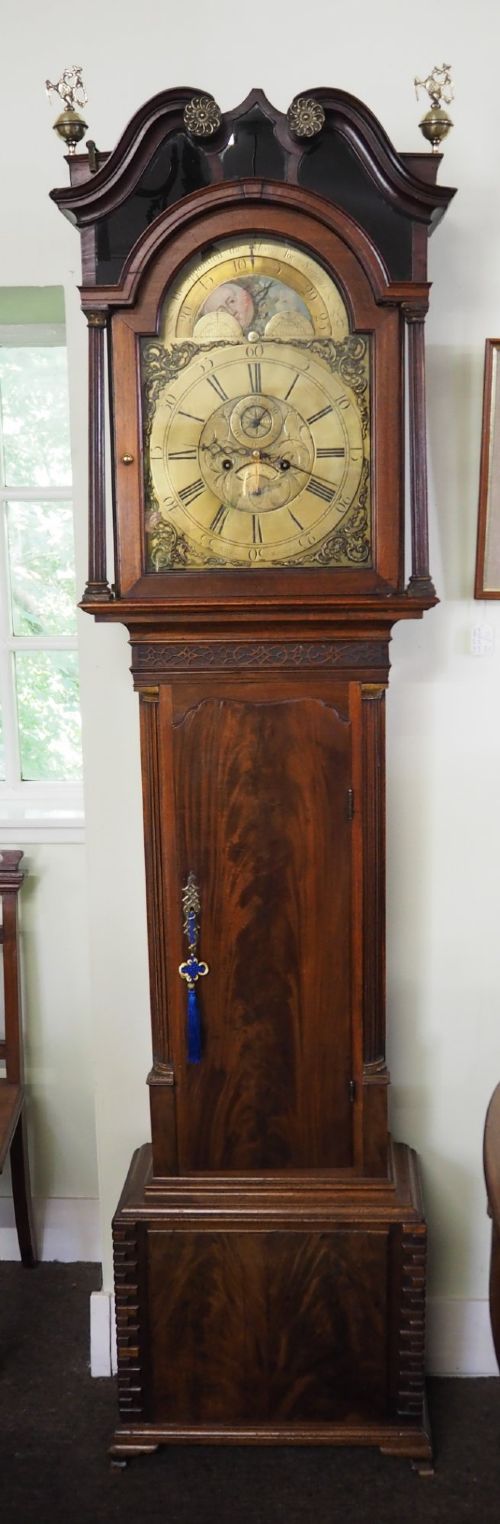
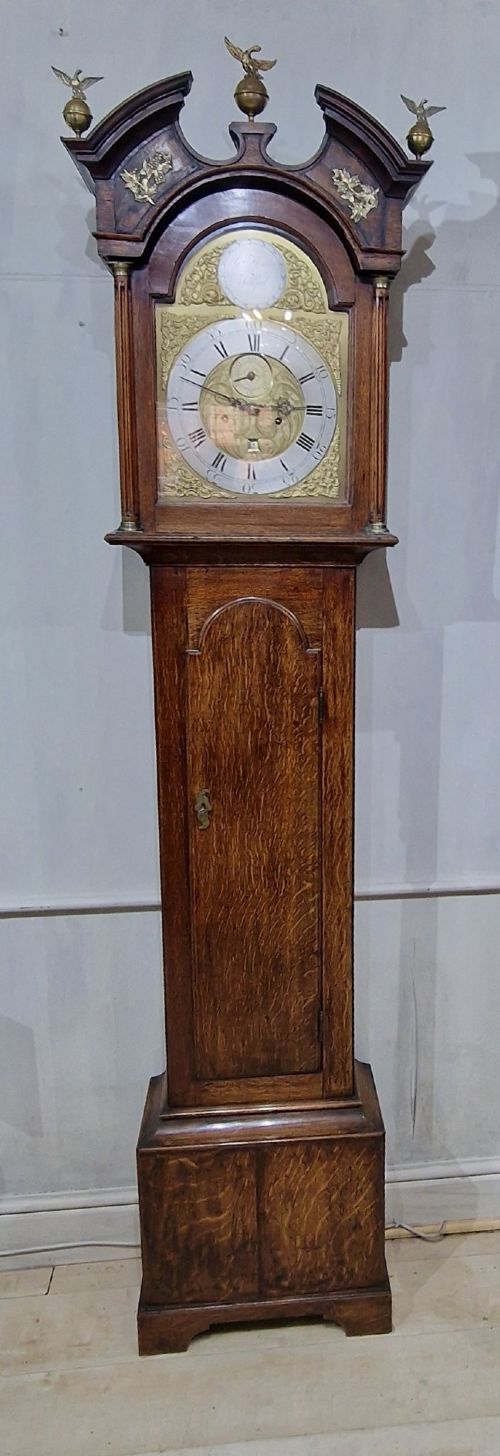
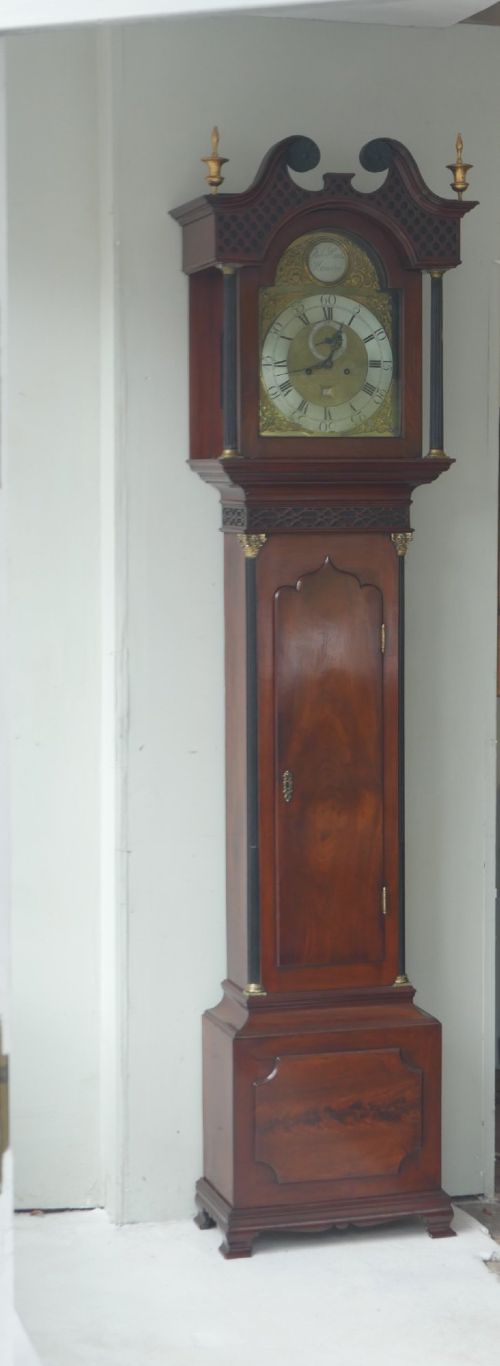
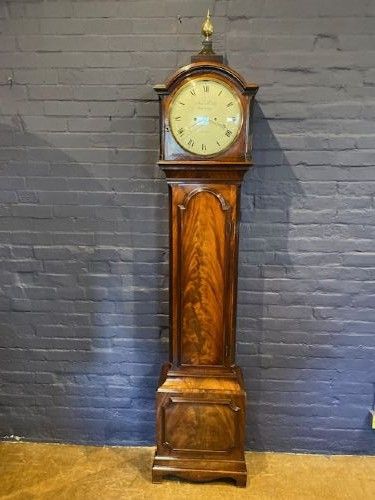
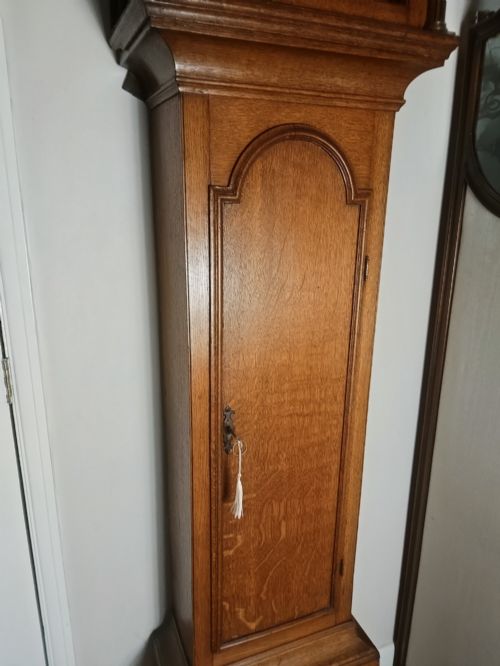
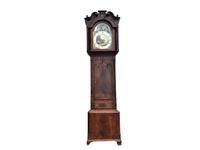
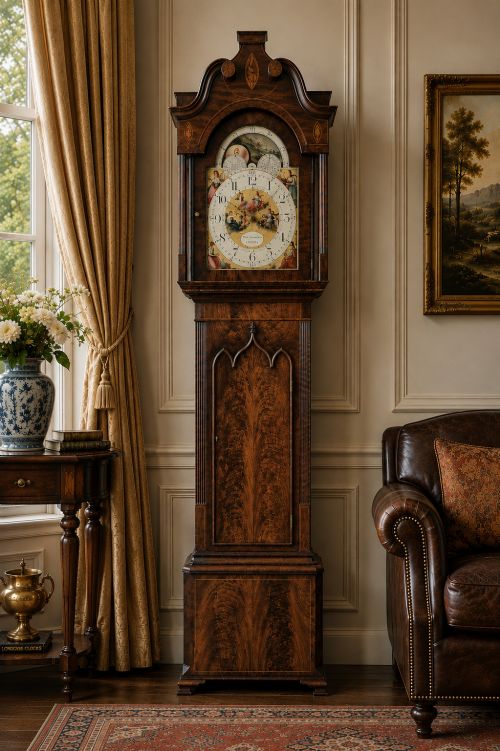
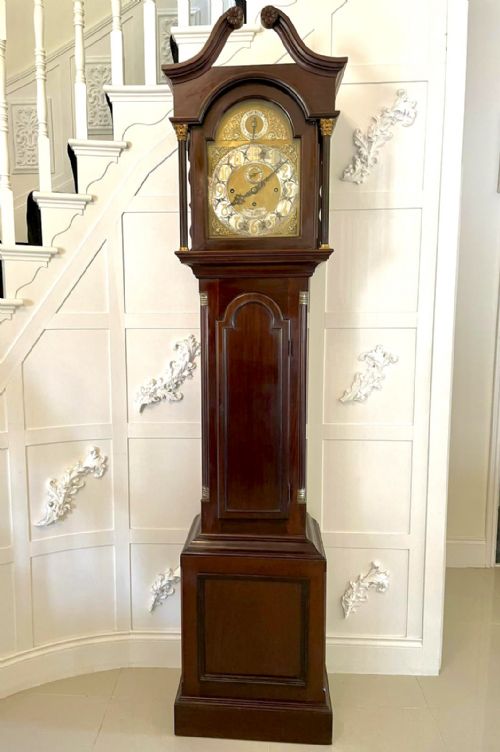
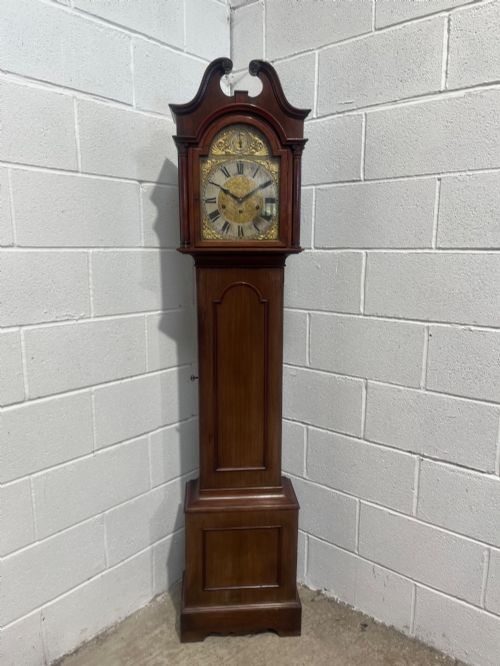
A traditional floor clock, often called a longcase, grandfather, grandmother or granddaughter clock, houses a weight-driven movement in a tall wooden case. The pieces found here span from the 18th century through the Georgian, Victorian and Edwardian periods up to the 1930s.
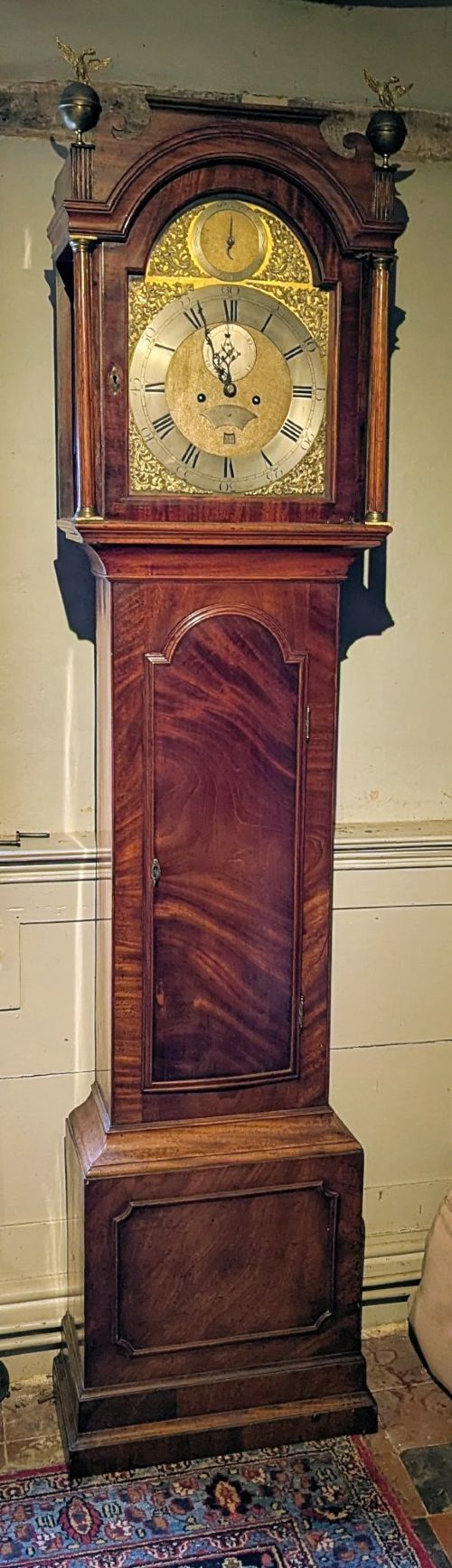
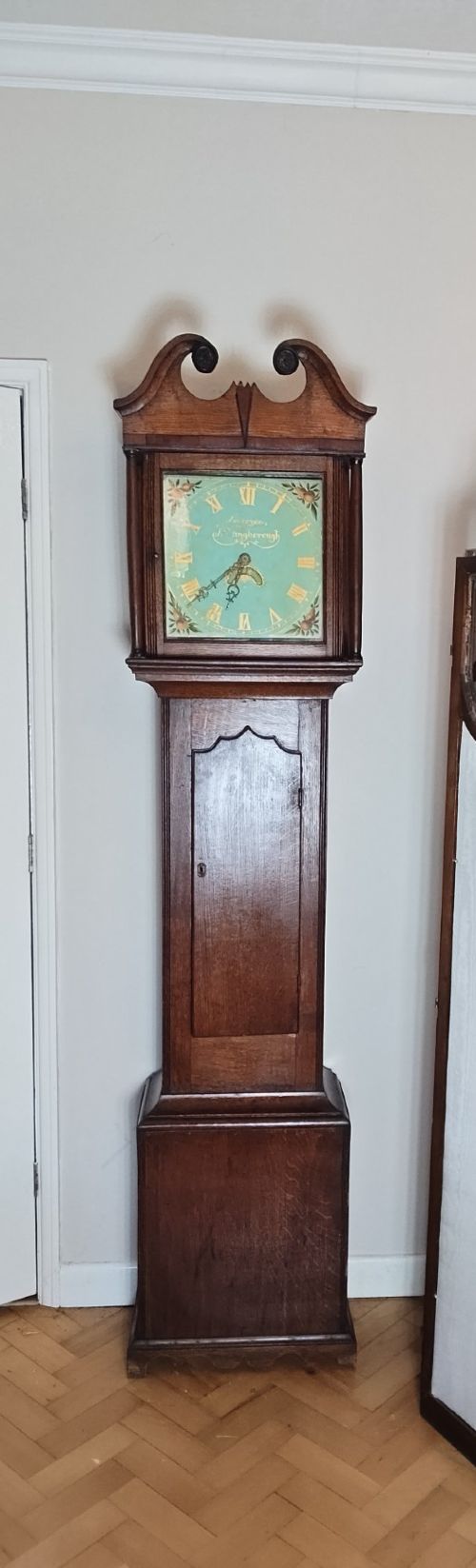
The versions most commonly met on this page are substantial mahogany or oak longcase clocks from the Georgian and 18th century periods, alongside smaller mahogany and burr walnut grandmother clocks from the early 20th century.
Dial types vary considerably, featuring engraved brass faces, painted iron dials with moon rollers, and subsidiary dials for strike and silent functions or calendar displays.
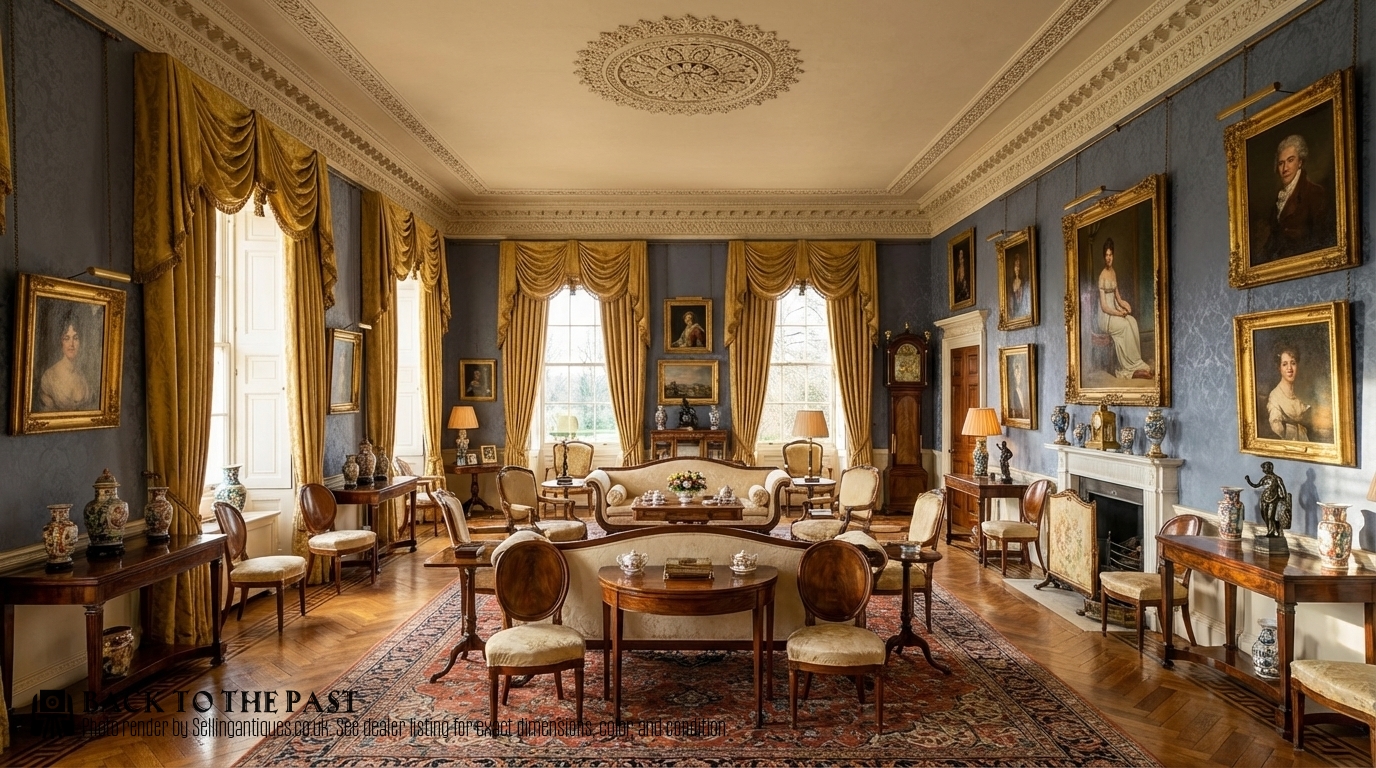
How they were made
Cabinetmakers constructed the tall cases using native and imported timbers, notably oak, mahogany, walnut and burr walnut, frequently applying flame veneers, marquetry inlay and brass paterae.
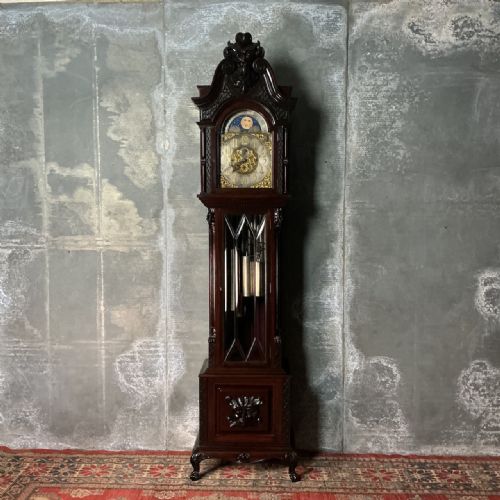
Clockmakers fitted brass or steel gear trains powered by hanging weights, ranging from simple eight-day movements to complex three-train mechanisms capable of playing chimes on bells or tubular gongs.
Traditional Floor Clock Retail Price Guide 2026
Typical asking prices for traditional floor clock among the pieces listed under this phrase on Sellingantiques today, from the lower quarter to the upper quarter. They describe what is for sale here now, not the wider market.
Listings feature movements ranging from simple thirty-hour clocks to complex three-train musical mechanisms with tubular bells.
What varies in quality
The distinction between standard and superior examples lies in the cabinetry work, such as the depth of timber figure, the crispness of marquetry inlay, and the harmony of proportions in the hood and waist.
Movement sophistication also dictates value, where multi-train musical mechanisms playing on bells or tubular gongs represent a higher tier of horological achievement than standard time-and-strike movements.
Jn Smith Macclesf[ield]·Smith of Chester·James Hendrie Falkirk·James McCabe·Samuel Kellett of Bredbury·Winsor Bishop Norwich·Charles Louch St Albans·Rickards Wotton Under Edge·Priory of Dundee·Andrew Thom·Elliott
The Traditional Floor Clock Glossary
- Longcase clock
- A tall weight-driven pendulum clock enclosed in a wooden case resting directly on the floor. This term is often used interchangeably with grandfather clock.
- Grandmother clock
- A smaller, more slender version of the traditional longcase clock, typically produced during the 20th century. These models suit rooms with lower ceilings than full-sized floor clocks.
- Moonphase
- A dial mechanism tracking the phases of the lunar cycle through a rotating disc behind the clock face. This complication adds visual movement and technical intricacy to the dial.
- Strike and silent
- A mechanism allowing the clock's striking train to be manually silenced at night. This function was particularly valued in bedrooms and formal reception rooms.
- Three train
- A movement containing three separate gear trains to drive the timekeeping, the hour strike, and the musical chimes or quarter chimes. Such systems require multiple weights or springs to operate.
Traditional Floor Clock: Frequently Asked Questions
What is the difference between a grandfather and grandmother clock?
A grandfather clock is a full-sized traditional floor clock standing well over six feet tall, designed primarily during the 18th and 19th centuries.
By contrast, a grandmother clock is a scaled-down, slender version produced mainly in the 20th century to fit modern domestic proportions.
How do eight-day movements work?
An eight-day movement requires winding only once a week using a crank key that draws the driving weights back up inside the case.
This system uses longer drops and additional gearing compared to thirty-hour clocks, which needed daily or twice-weekly winding.
Where should I place a floor clock?
Floor clocks need a stable, dry location against a solid wall away from direct sunlight, central heating vents, and heavy foot traffic that might disturb the pendulum.
Placing the case on a level surface ensures the escapement beats evenly and the clock keeps accurate time.
How do I date a traditional floor clock?
Dating relies on stylistic clues in the cabinetwork, such as the architectural hood design, wood choice like early oak versus later mahogany, and dial construction.
Signatures or inscriptions left by the maker on the dial or movement backplate also provide definitive historical reference points.