
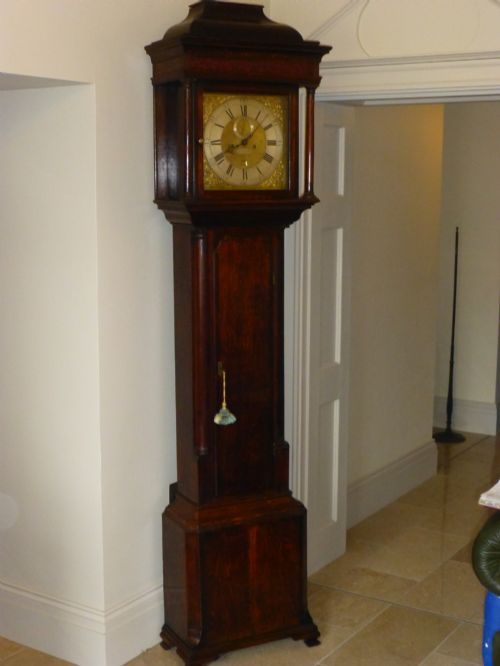
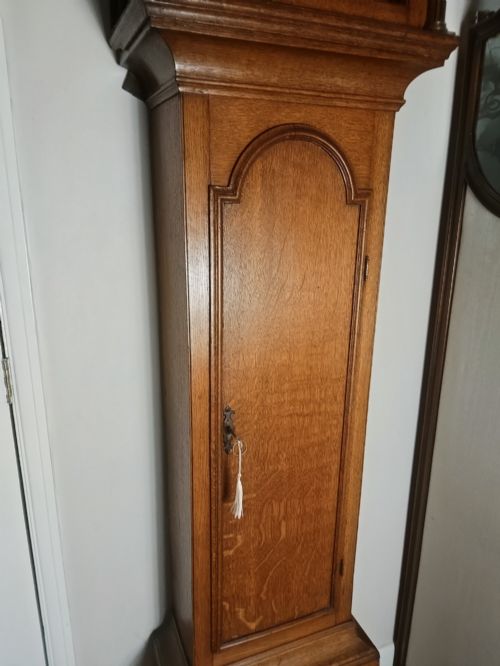
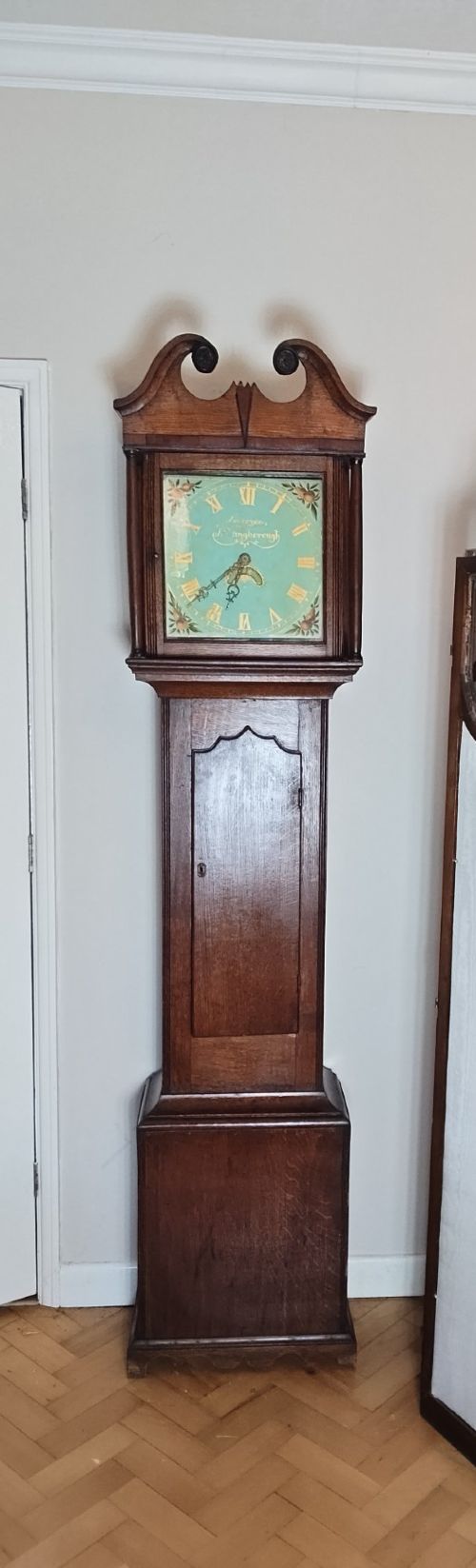
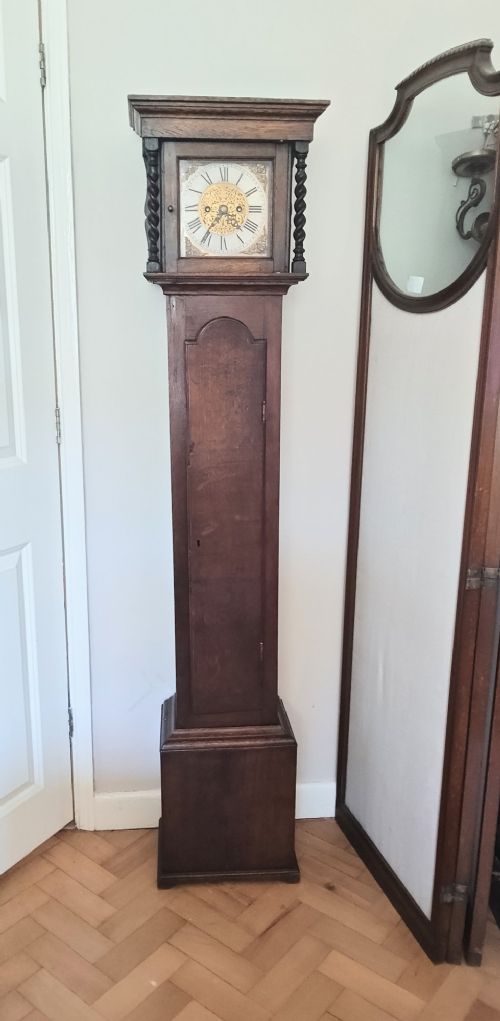


Oak Tall Case Clock
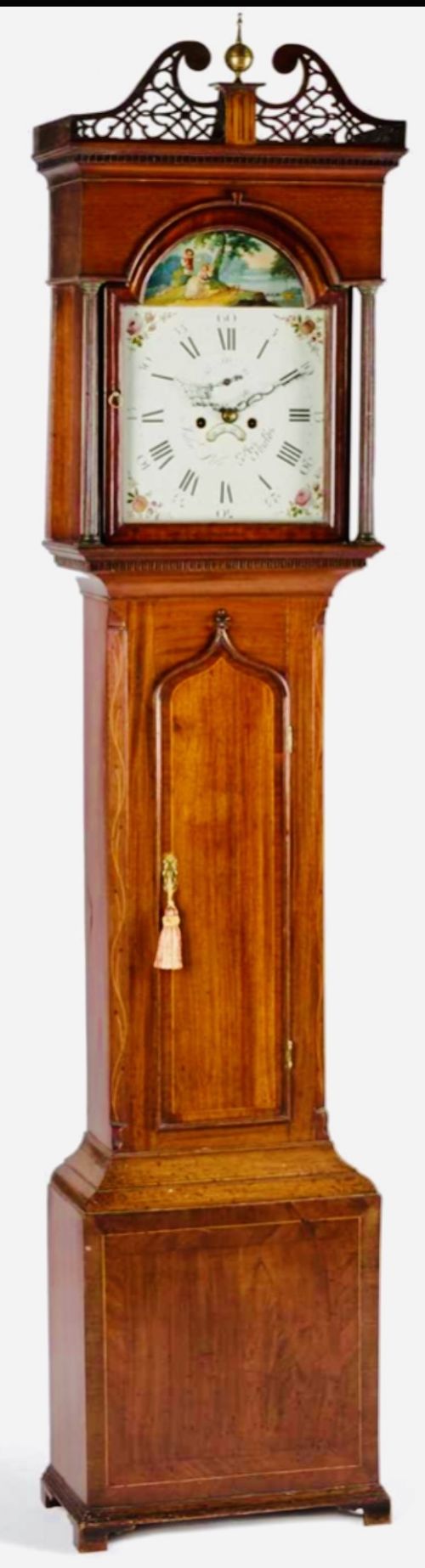
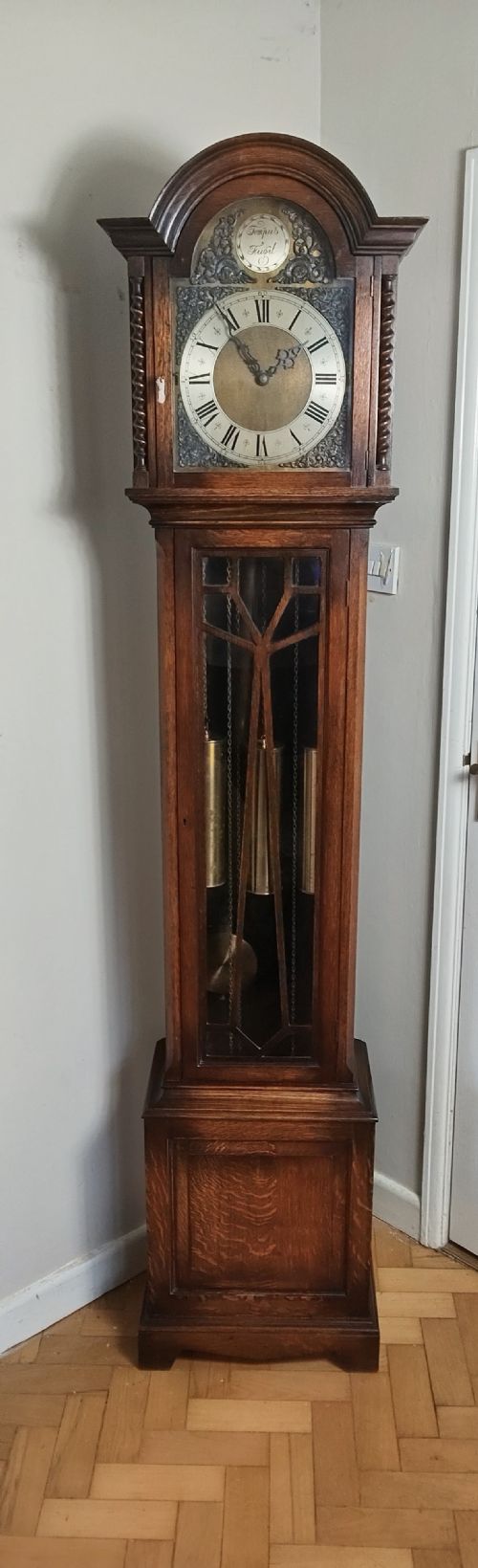
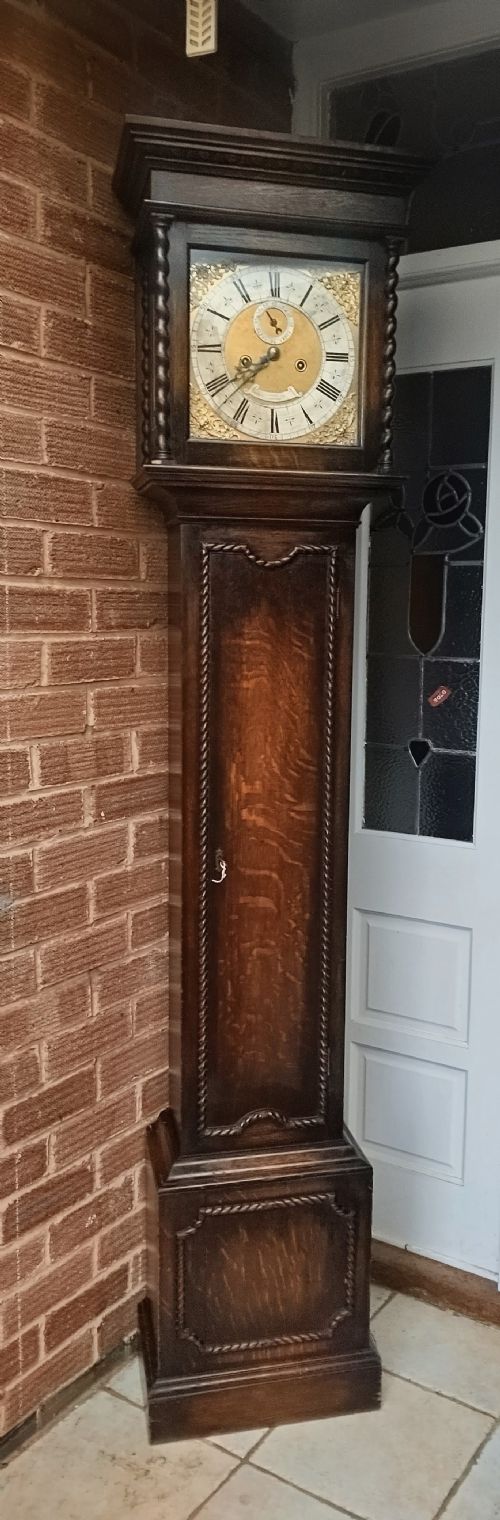
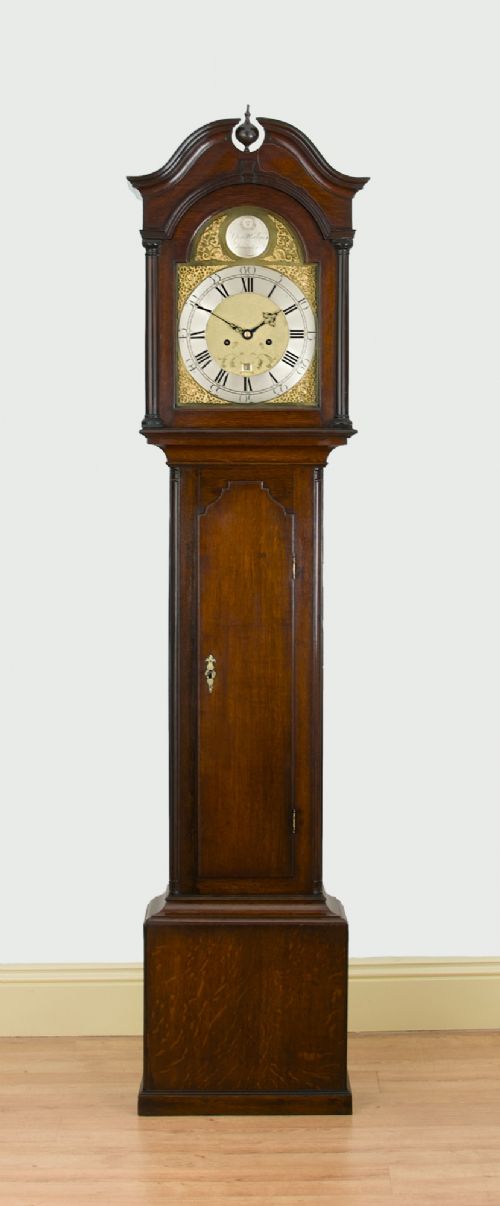
An oak tall case clock anchors a room with steady motion and deep timber grain, standing tall across centuries of British domestic life.
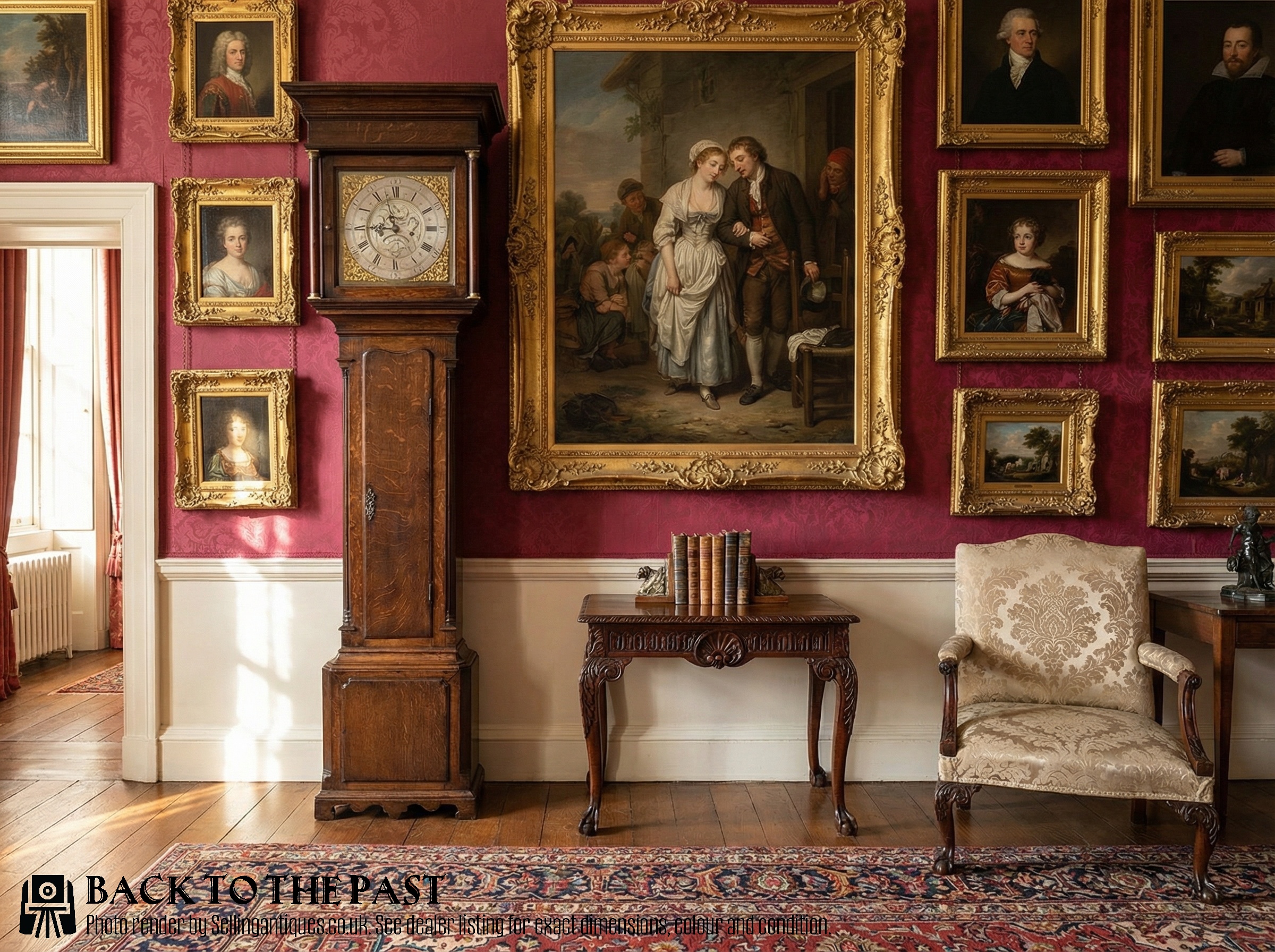
Oak Tall Case Clock
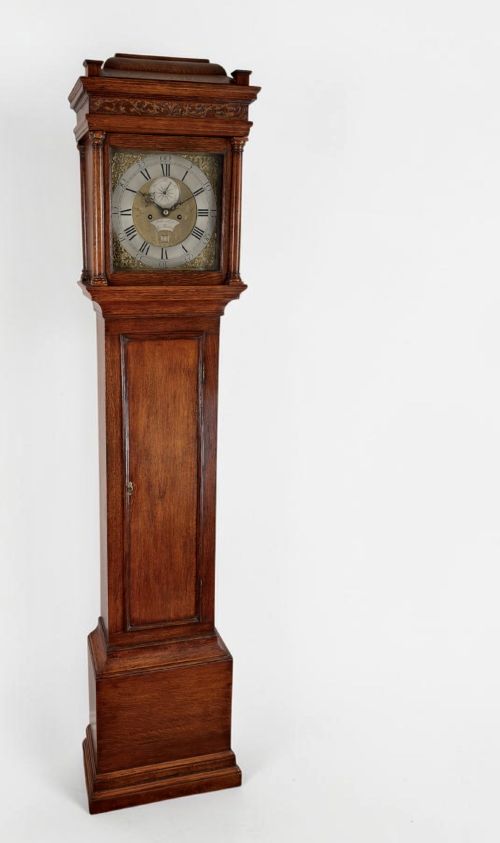
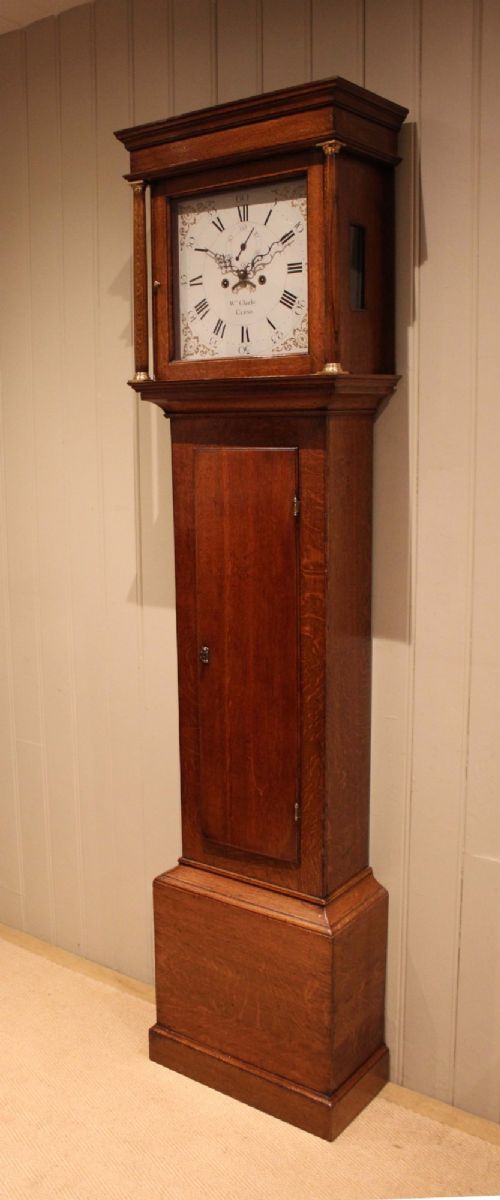
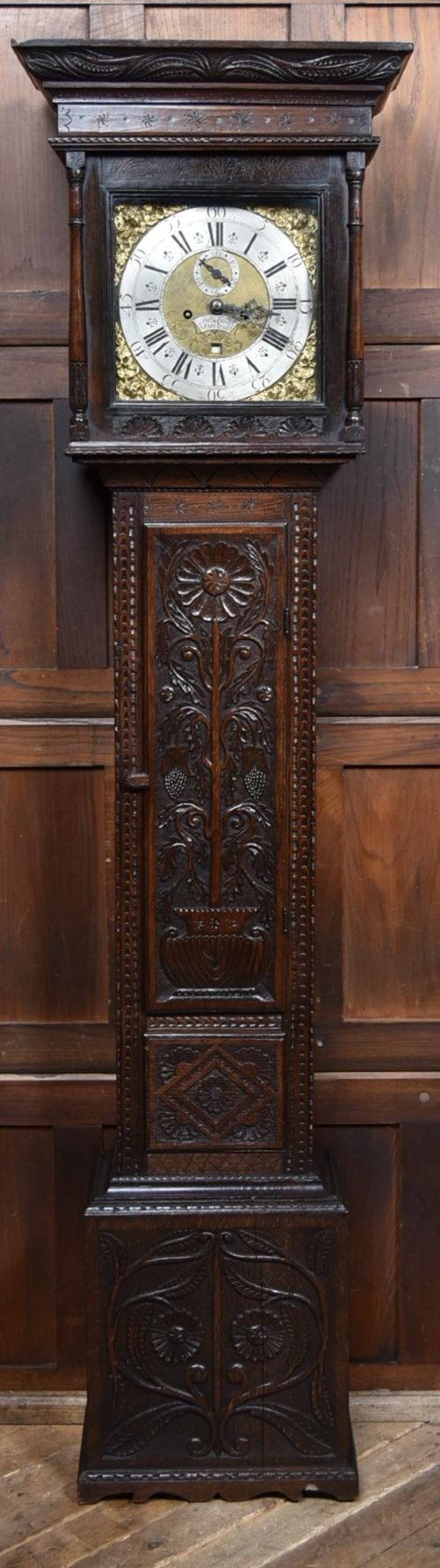
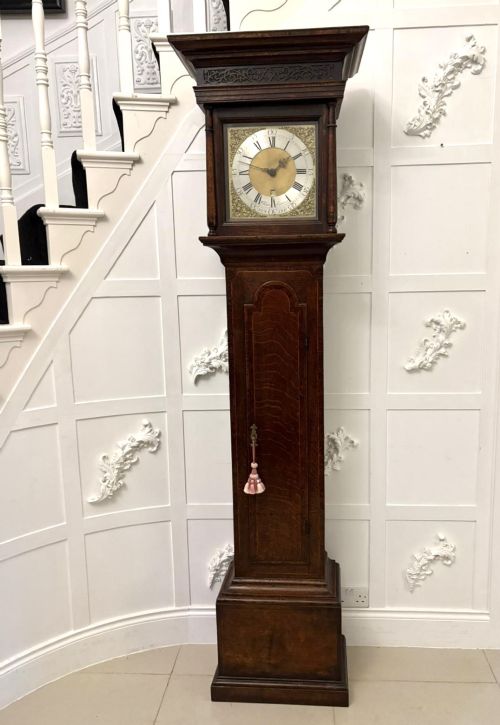
An oak tall case clock represents a traditional floor-standing timepiece that houses a weight-driven movement inside a protective wooden trunk. Buyers seeking an oak tall case clock frequently encounter examples from the Georgian and 18th Century periods, alongside later Victorian and Edwardian interpretations.
The selection ranges from robust provincial examples bearing brass dials and single-hand movements to more elaborate models featuring moonphase mechanisms, painted faces, and musical chimes. Makers from regional market towns across Britain signed many of these works, embedding local history into the timber.
Shorter variants known as grandmother clocks appear alongside grander grandfather versions, providing options suited to different ceiling heights and room proportions. These floor clocks combine functional timekeeping with cabinetry, utilising woods like oak, mahogany, and burr oak to frame the dial.

How They Were Made
Cabinetmakers constructed the tall cases primarily from solid oak, frequently incorporating mahogany crossbanding, walnut accents, and burr oak panels to add visual depth to the door and hood. Glass panels protected the brass or painted dial, allowing the slow swing of the pendulum to remain visible within the trunk.
Clockmakers fitted brass or iron movements, ranging from thirty-hour cord-driven systems to eight-day gear trains powered by heavy cast iron weights. Dials featured engraved brass chapter rings, spandrels in the corners, and sometimes specialised mechanisms for strike/silent functions or multiple tunes.
Oak Tall Case Clock Retail Price Guide 2026
Typical asking prices for oak tall case clock among the pieces listed under this phrase on Sellingantiques today, from the lower quarter to the upper quarter. They describe what is for sale here now, not the wider market.
Listings feature oak tall case clocks spanning the Georgian period, the 18th century, Victorian eras, and early 20th-century Edwardian and Art Deco decades.
What Varies in Quality
The finesse of the dial engraving and the complexity of the movement separate standard regional timepieces from exceptional signed works by notable makers. Finely cast brass spandrels, auxiliary subsidiary dials for seconds or date, and advanced musical or moonphase complications elevate a piece.
Cabinet construction quality shows in the choice of secondary timbers, the crispness of crossbanding, and the proportions of the hood and trunk. Retaining the original movement matched to the case preserves the integrity of the object far better than married components assembled later.

Lee of Great Marlow·Jn° Smith Macclesfd·Richard Corless of Stockport·George Hallifax Of Doncaster·Thomas Webbe of New Quay·Edward White Birmingham·Thomas May Of Witney·Mappin & Webb London
The Oak Tall Case Clock Glossary
- Longcase clock
- A tall, weight-driven pendulum clock enclosed in a wooden case standing directly on the floor. This term encompasses both grandfather and grandmother clocks.
- Moonphase
- A rotating dial mechanism displaying the lunar phases through an arched aperture above the main clock face. It tracking the cycle of the moon across the month.
- Spandrel
- The decorative corner piece fitted between the circular dial and the rectangular frame of the clock face. These cast brass ornaments evolved in style across different decades.
- Grandmother clock
- A smaller, more slender version of the traditional longcase clock produced mainly during the 20th century. It fits rooms with lower ceilings while retaining weight-driven mechanics.
- Regulator
- A precision pendulum clock designed for high accuracy and minimal friction. These movements prioritize exact timekeeping over domestic chime complications.
Oak Tall Case Clock: Frequently Asked Questions
How do I wind an oak tall case clock?
Winding involves pulling the chains or using a key to raise the heavy iron weights inside the trunk back to the top of the case. Care must be taken not to overwind the movement, as this can strain the internal gut lines or wire.
Most eight-day movements require winding once a week, while thirty-hour versions need attention daily. Keeping a consistent schedule helps maintain steady timekeeping accuracy.
Where should I place a tall case clock?
These clocks require a stable, dry interior wall away from direct sunlight, heating vents, and damp exterior stone. Placing the case on a level floor ensures the pendulum swings evenly and the tick remains consistent.
Securing the upper trunk to the wall using a discreet bracket prevents accidental tipping, particularly in hallways or rooms with heavy foot traffic.
How do I tell an 18th-century clock from a later one?
Earlier 18th-century examples frequently feature square brass dials with cast spandrels and single-hand or eight-day movements built by regional makers. The oak timber often displays deeper patination, hand-cut nails, and simpler joinery within the hood.
Later Victorian and Edwardian pieces often incorporate arched painted dials, triple-weight chiming trains, or decorative elements like Jacobean Revival carvings that signal a 20th-century revival style.
What is the difference between a grandfather and grandmother clock?
Grandfather clocks are the standard full-sized floor clocks, standing well over six feet tall with generous proportions designed for large hallways and living rooms. They house substantial movements and heavy weights.
Grandmother clocks are significantly shorter and narrower, built primarily during the Edwardian period and later. They offer the traditional aesthetic of a weight-driven timepiece in a compact footprint.