
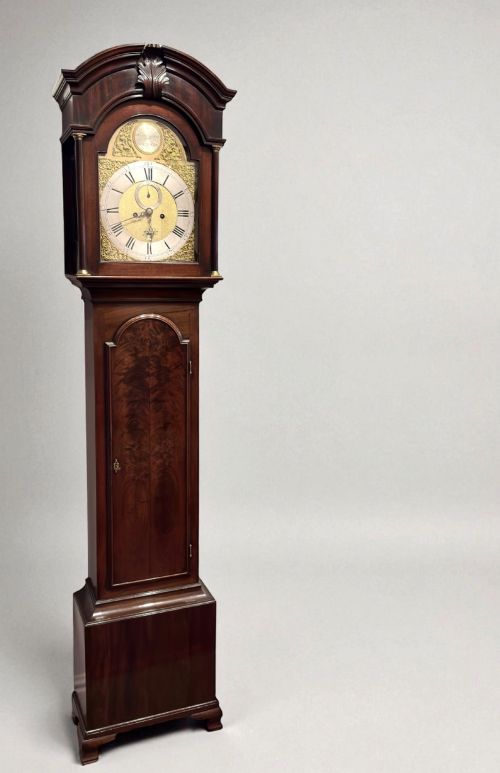
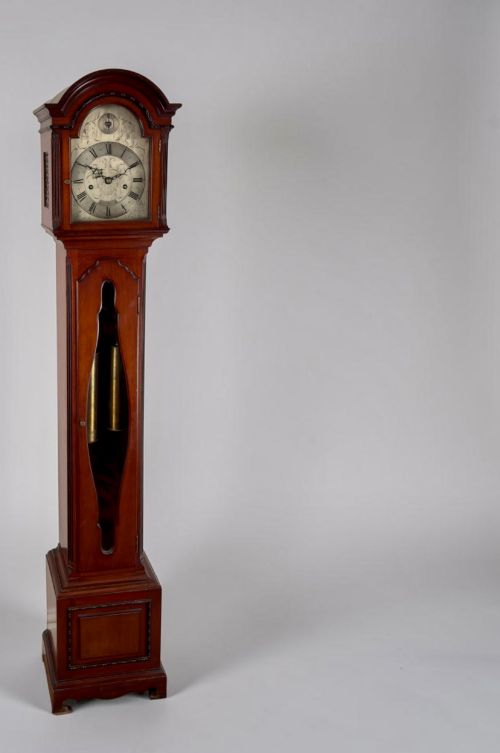

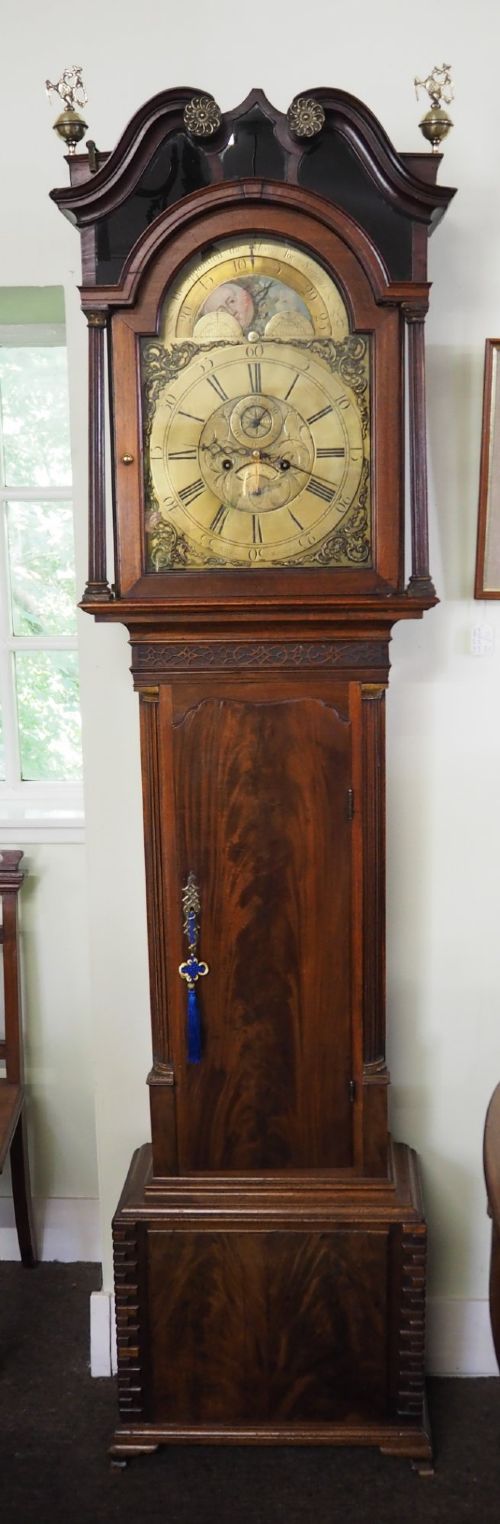
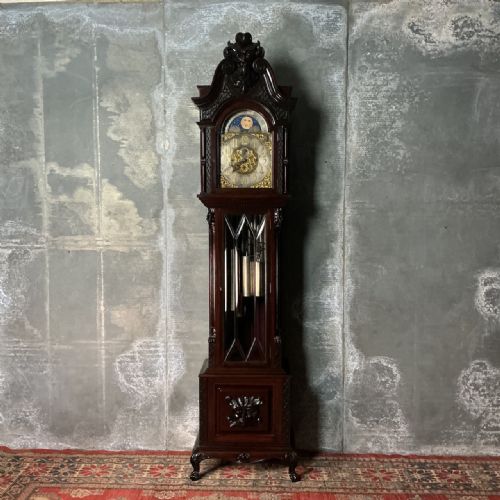
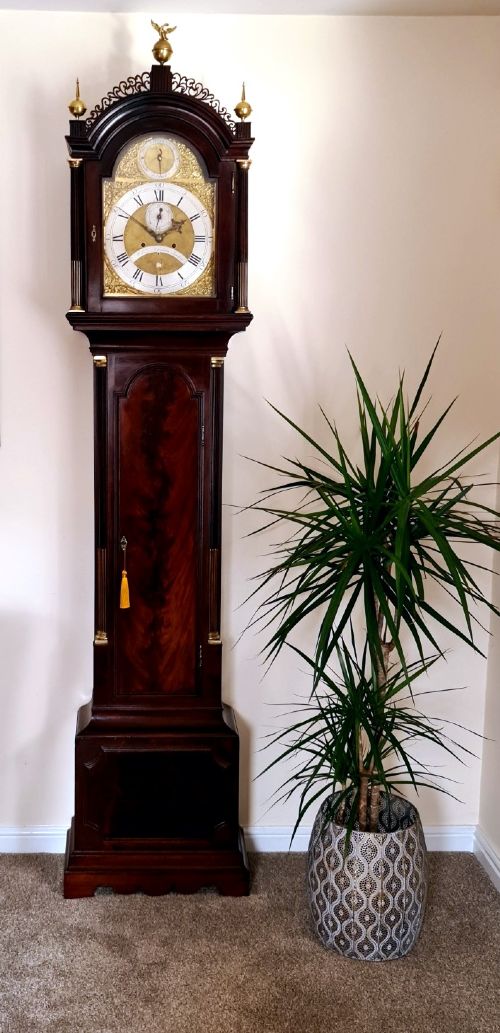

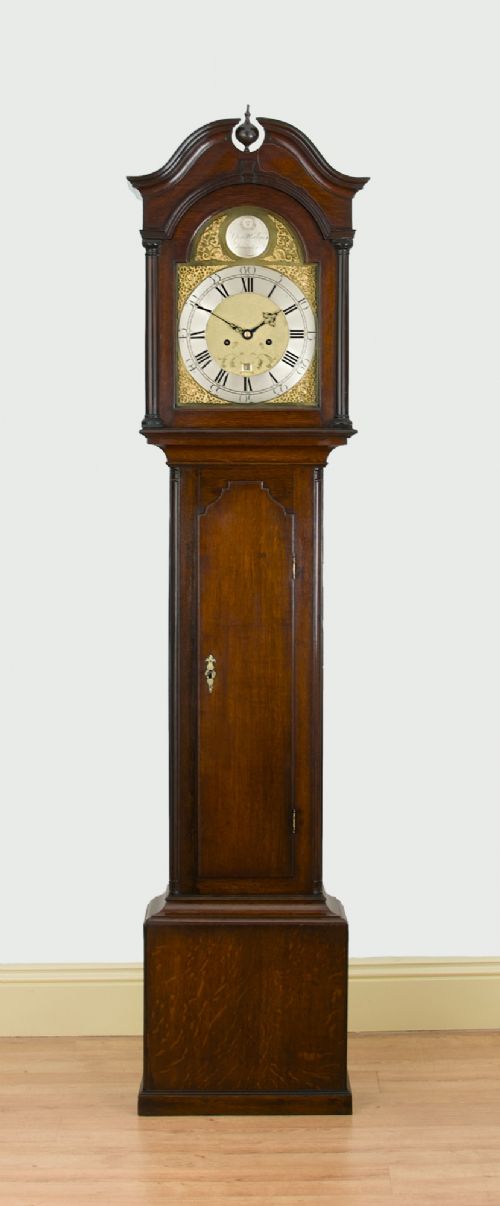
Dark Wood Longcase Clock
A dark wood longcase clock anchors a room with mechanical precision and architectural presence, offering centuries of horological heritage.

Dark Wood Longcase Clock
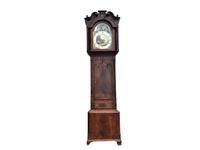
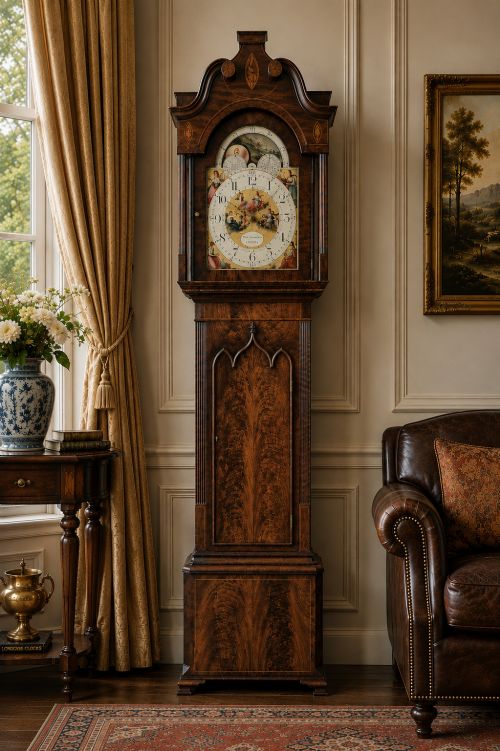
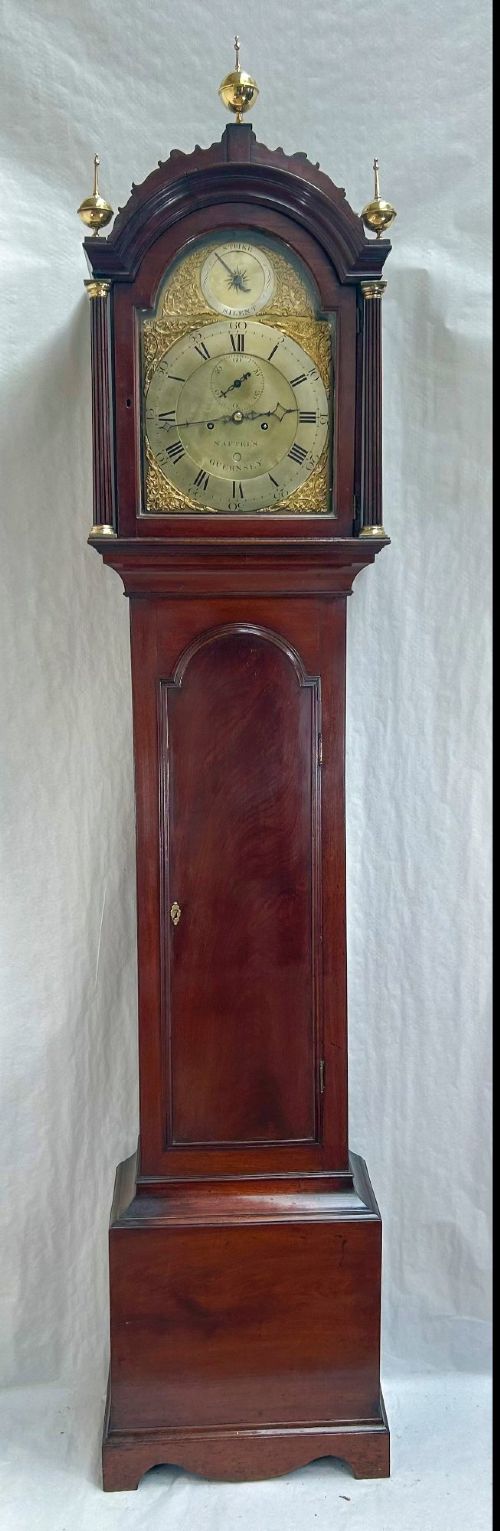
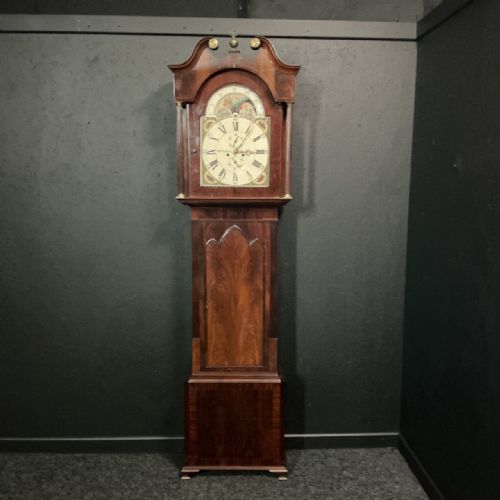
A dark wood longcase clock is a tall, floor-standing timepiece enclosed in a timber case, designed to house a weight-driven movement and a pendulum. Buyers searching this phrase encounter substantial floor-standing pieces built to measure time accurately through descending weights.
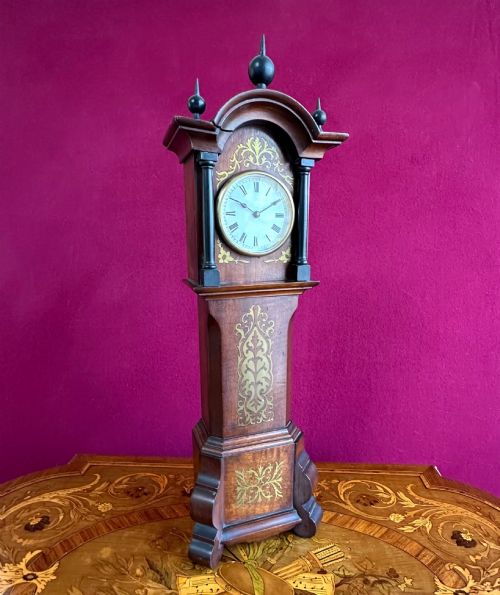
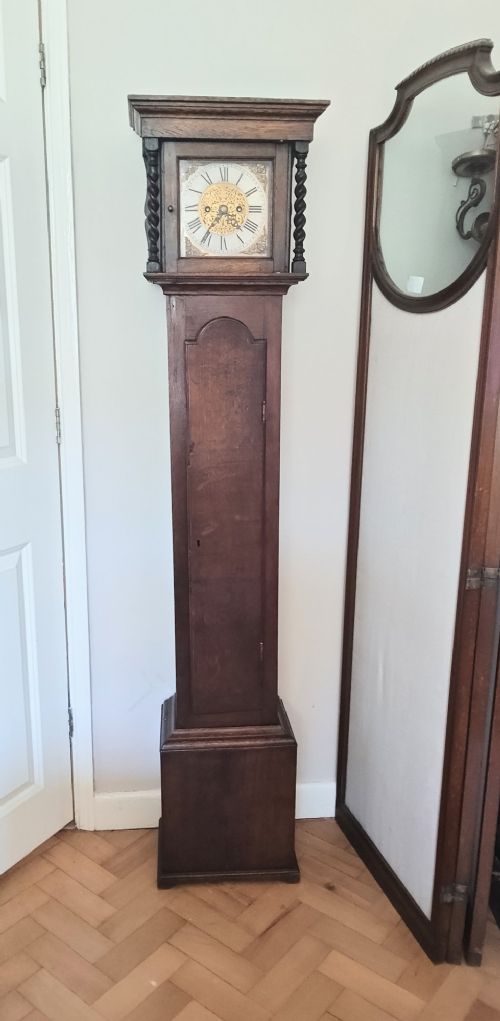
The versions most commonly met on this page span the Georgian, Victorian, and Edwardian periods, constructed primarily in mahogany, flame mahogany, walnut, and oak. These tall enclosures range from full-sized grandfather clocks down to smaller grandmother clocks and miniature variations.
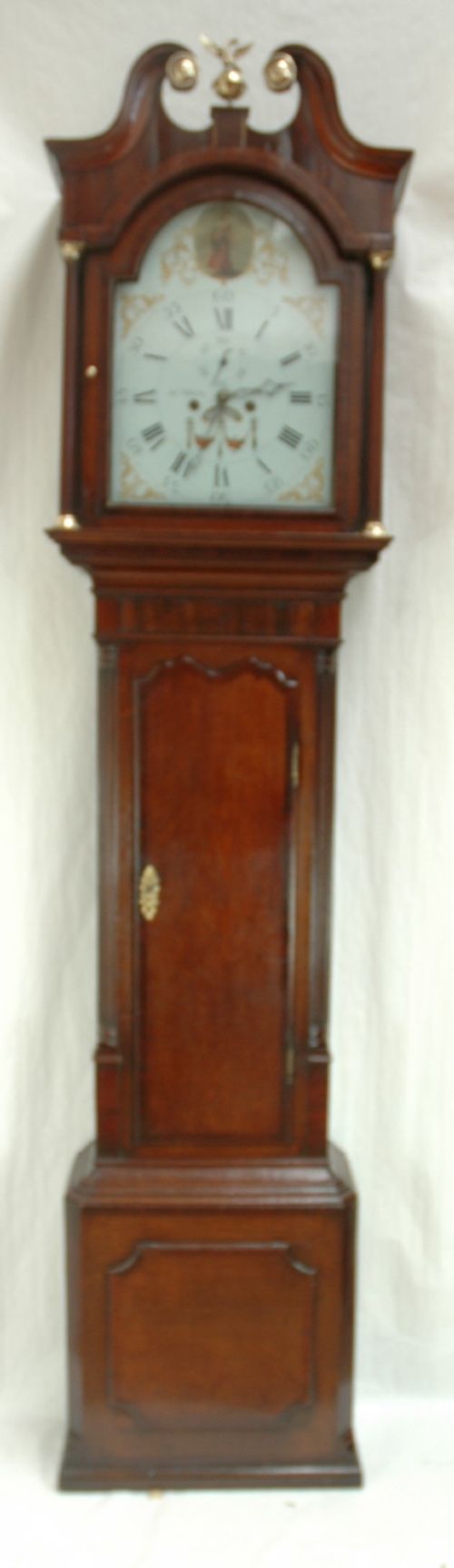
Makers housed these movements in regional styles across Britain, from Scottish workshops to London centres. The physical evidence shows regional variations including moon roller dials, musical tubular bell movements, and drum head designs.
How They Were Made
Cabinetmakers built the tall housings using solid timber and decorative veneers such as mahogany, flame mahogany, walnut, and oak, often incorporating fine inlay work. These cases protect the delicate internal mechanism while providing structural height.
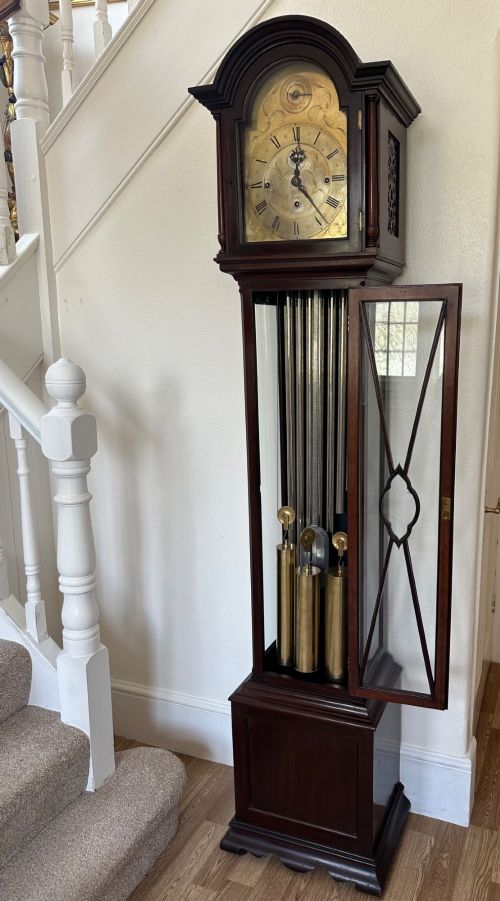
Horologists constructed the inner workings from brass, iron, and steel, integrating weights, gears, and pendulums to drive eight-day or multi-train movements. Dials feature painted iron or brass plates, sometimes paired with glass hoods to protect the hands.
Dark Wood Longcase Clock Retail Price Guide 2026
Typical asking prices for dark wood longcase clock among the pieces listed under this phrase on Sellingantiques today, from the lower quarter to the upper quarter. They describe what is for sale here now, not the wider market.
Some models track the moon across a painted dial, bringing the night sky inside with every swing of the pendulum.
What Varies in Quality
The refinement of the timber case distinguishes everyday examples from exhibition pieces, particularly the selection of figured veneers like flame mahogany and the intricacy of carved details. Cabinet work ranges from simple regional joinery to sophisticated London craftsmanship with complex inlay.
Movement complexity separates standard timekeepers from advanced pieces featuring moonphase dials, musical chimes, or multiple trains. The precision of the brass and steel gear train, alongside signed dials from known makers, elevates the horological merit.
Gordon of Aberdeen·Gillett and Johnston of Croydon·James Field of Hempstead·Samuel Kellett of Bredbury·William Jourdain·George Hallifax of Doncaster·Edward Shepley of Manchester·Matt Wylie Paisley·Thwaites London·Charles Dowsett of Canterbury·John Denbigh Merton Park·Francis Perigal of Bond Street
The Dark Wood Longcase Clock Glossary
- Longcase clock
- A tall, weight-driven pendulum clock housed in a protective wooden case. These pieces stand directly on the floor and measure time via descending internal weights.
- Grandfather clock
- A colloquial term for a full-sized longcase clock, typically standing over six feet tall. This term distinguishes the larger floor models from smaller variants.
- Grandmother clock
- A smaller, more compact version of the longcase clock, generally standing under six feet in height. These scaled-down pieces offer the mechanical movement of a standard clock in a reduced footprint.
- Eight day movement
- A clock mechanism designed to run for eight days on a single winding of its weights. This configuration requires fewer interventions from the owner than daily-wound clocks.
Dark Wood Longcase Clock: Frequently Asked Questions
How do I wind an eight day longcase clock?
Winding involves inserting a key into the winding holes on the dial face to draw the internal weights back up. Care must be taken not to over-wind the movement.
Most eight day clocks require this maintenance once a week, keeping the pendulum swinging steadily without disrupting the timekeeping.
What is the difference between a grandfather and grandmother clock?
The primary distinction lies in overall height and proportions, with grandmother clocks offering a significantly more compact stature. Both utilise similar weight-driven pendulum mechanisms.
This smaller scale allows grandmother clocks to fit into rooms with lower ceilings where a standard longcase would overwhelm the space.
How do I date a dark wood longcase clock?
Dating relies on stylistic clues in the wooden case, such as the presence of flame mahogany veneers, bracket feet, or architectural hoods. Cabinet designs shifted across the Georgian, Victorian, and Edwardian eras.
Signatures on the brass or painted iron dial often name the maker and town, pointing directly to working records and active periods.
Where should I place a longcase clock in my home?
These clocks require a stable, level floor and a secure fixing to the wall behind the case to keep the pendulum swinging truly. Vibrations from heavy footfall or passing traffic should be avoided.
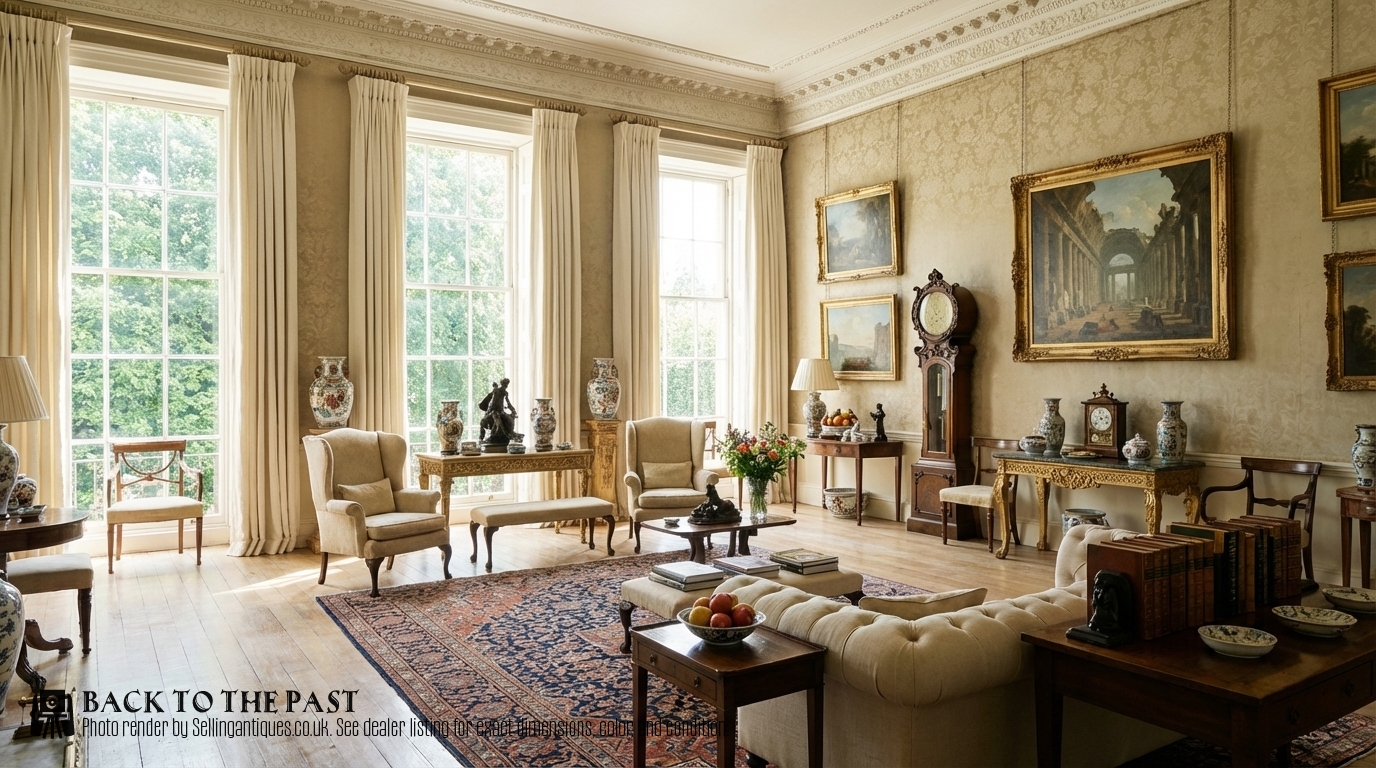
Placed in a hallway or principal room, the tall wooden case and chiming movement become an architectural focal point.