


Edinburgh Longcase Clock
An edinburgh longcase clock brings together Scottish cabinet-making and precision horology, offering tall mahogany housings and brass dials to measure passing time.
The Edinburgh Longcase Clock
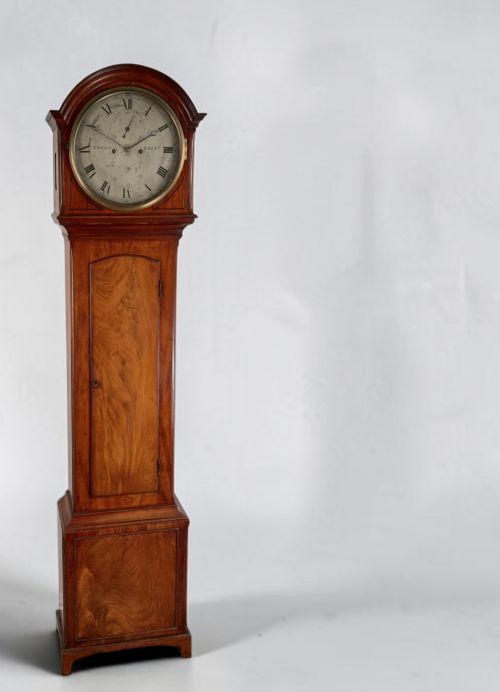
An edinburgh longcase clock stands as a tall wooden enclosure designed to protect a weight-driven movement and a painted iron or brass dial. These floor-standing pieces appear most frequently from the Georgian and nineteenth-century periods, showing regional Scottish proportions and craftsmanship.
Makers working in the capital built these clocks in various styles including Scottish Georgian, Regency, and George IV forms. The tall case design incorporates a hood above the dial and a long trunk to accommodate the hanging weights and pendulum.
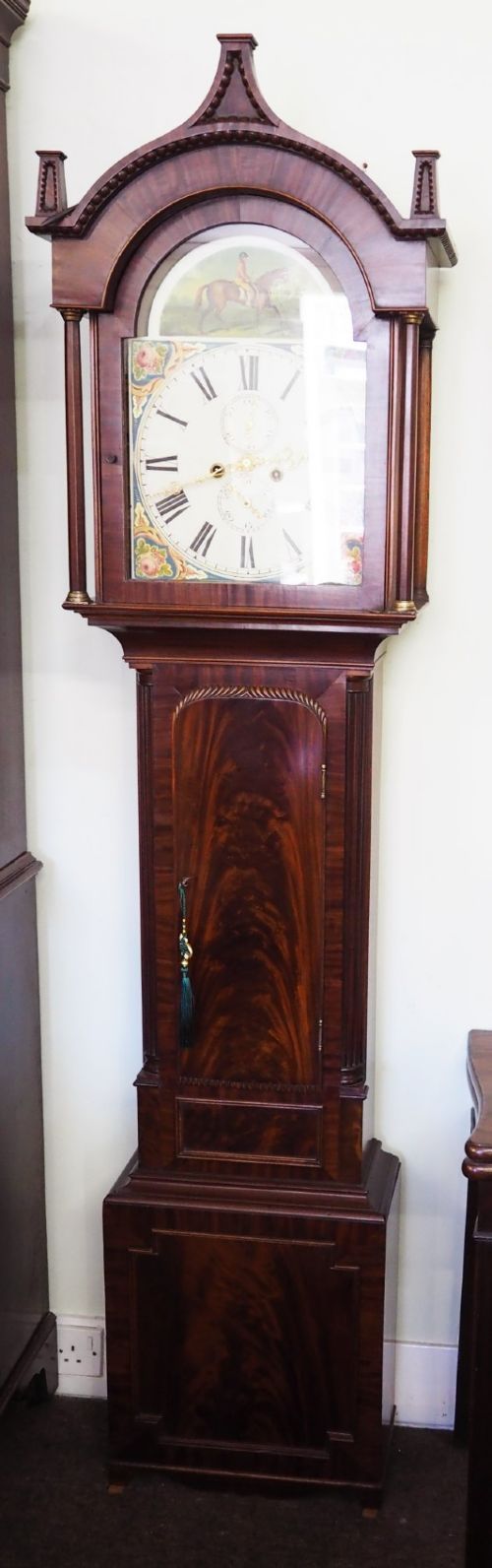
Most examples encountered here use mahogany or flame mahogany timbers, sometimes with inlaid details or drum head top sections. The form functions as both a domestic timepiece and a substantial architectural element in a room.
Judging Quality and Execution
Quality separates ordinary utility pieces from finer work through the crispness of the cabinet joinery and the selection of figured timber veneers. Flame mahogany cases with precise inlay or drum head formations demonstrate greater ambition from the maker.
The refinement of the movement and the legibility of the painted iron or brass dial indicate the original cost and skill invested in the clock. Maker reputation also influences distinction, as certain workshops produced particularly complex regulator mechanisms.
Retail Price Guide 2026
Typical UK retail prices for edinburgh longcase clock, calculated from the Sellingantiques database of over a million retail prices indexed since 2003. This retail price guide relies exclusively on Sellingantiques data; no external sources or auction records are used, so the figures do not describe the wider market.
Several makers clearly had trouble spelling their own surnames, leaving collectors with delightful dialect variations on the dials.
Green of Edinburgh·Whitelaw of Edinburgh·John Breakenrig·J. Melrose·Robert Green·Brysons of Edinburgh·Robert Hinmers·John Paterson·Skirving of Edinburgh·Robert Clidesdale·Mclaren Of Edinburgh·Thomas Reid·James Macfarlane·Bryson of Edinburgh·A Wilson·A Backenrig·James Love·Aitchison of Edinburgh·Andrew Scot·W Wighton·Howden of Edinburgh·John Williamson·Normand MacPherson·Scott of Edinburgh·Thomas Morgan
The Edinburgh Longcase Clock Glossary
- Longcase clock
- A tall floor-standing timekeeper also known colloquially as a grandfather clock. It houses a weight-driven movement within a protective wooden trunk.
- Regulator
- A precision timekeeper designed for high accuracy, often featuring a simplified dial layout and a compensated pendulum. These movements represent the more technical side of Edinburgh clockmaking.
- Flame mahogany
- A veneer cut from the branch junctions of the mahogany tree, producing a distinctive flickering grain pattern. Cabinet-makers used this figure to decorate the main doors and bases of better clocks.
- Drum head
- A circular dial housing set atop the trunk of specific Scottish clocks. This regional variant creates a distinct silhouette compared to traditional flat-topped hoods.
- Painted iron
- A sheet metal dial surface coated and painted with numerals and maker details. These replaced brass dials in many late eighteenth and nineteenth-century pieces.
Frequently Asked Questions
What is an Edinburgh longcase clock?
An edinburgh longcase clock is a tall floor-standing timepiece made in the Scottish capital, housing a weight-driven movement inside a mahogany or oak case.
These pieces combine local cabinet-making traditions with regional clockmaker signatures on brass or painted iron dials.
How do I wind the clock?
Winding involves pulling the cords or using a crank key to raise the heavy weights suspended inside the trunk.
Most traditional eight-day movements require winding once a week to maintain accurate timekeeping.
Where should I place it?
A longcase clock requires a stable, level floor and a secure attachment to a wall to ensure the pendulum swings freely.
Placement away from direct heat sources and heavy vibrations helps preserve the wooden case and mechanical movement.
How do I date a longcase clock?
Dating relies on stylistic clues in the case design, such as the presence of flame mahogany veneers, fretwork, or drum head proportions.
Inscribed signatures and naming conventions on the painted iron or brass dials also point to active working periods of the maker.