


Nineteenth Century Floor Clock
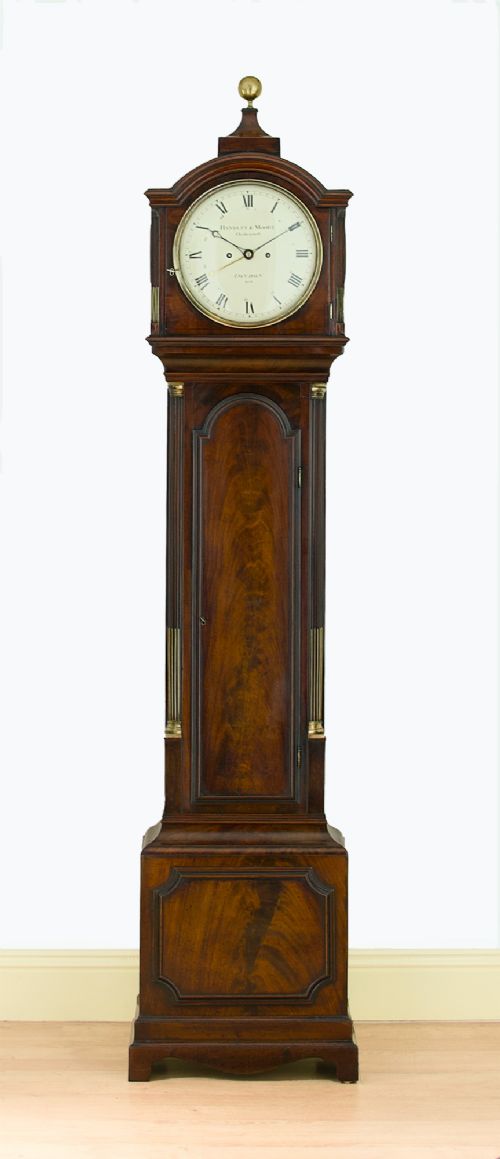
A nineteenth century floor clock stands as a towering architectural anchor, built to measure time and command a room with gravity.

Nineteenth Century Floor Clock
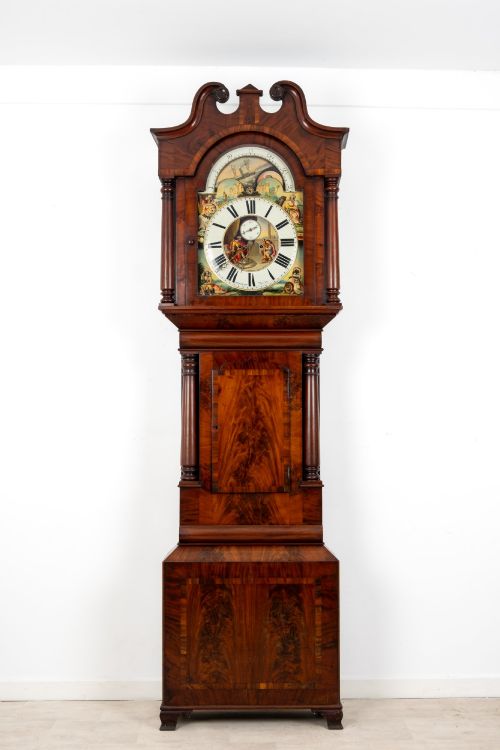
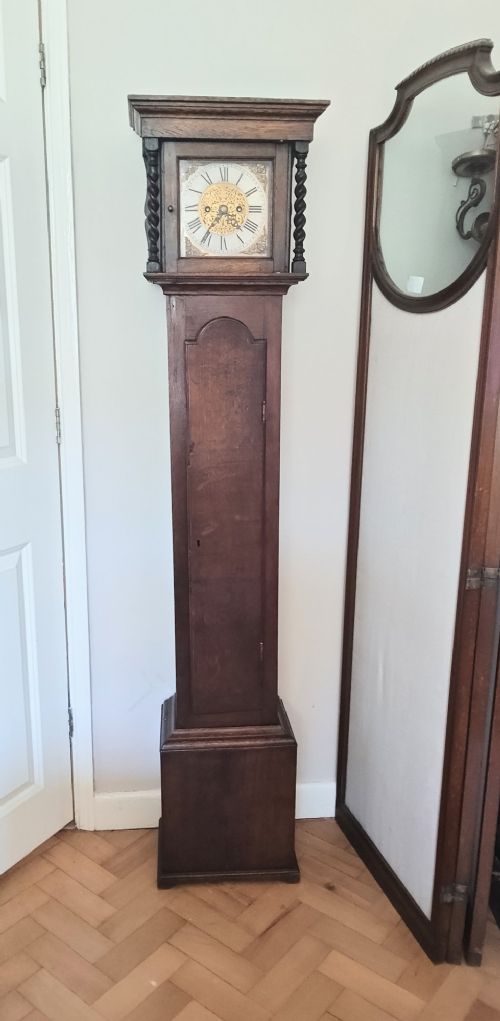
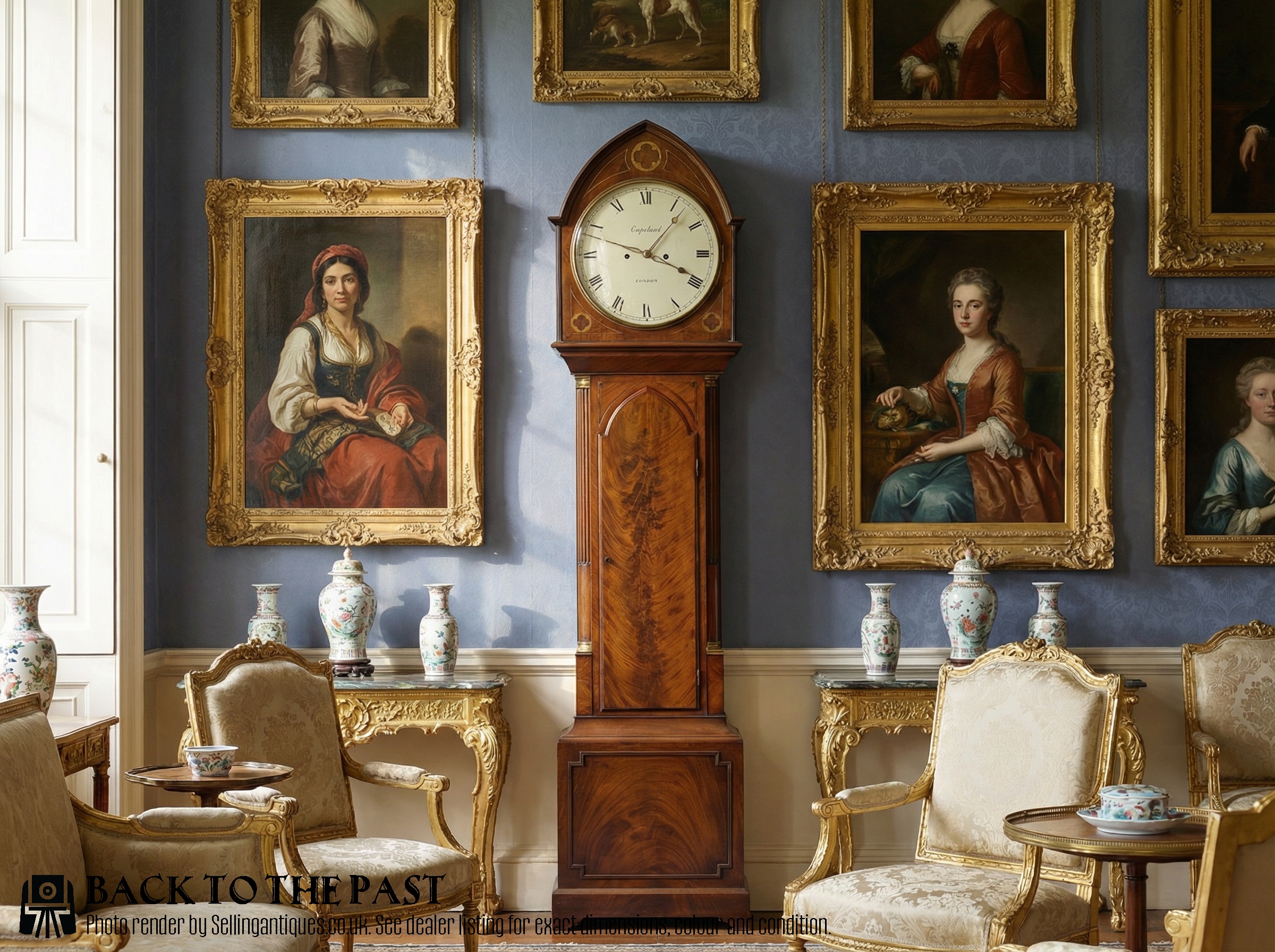
A nineteenth century floor clock takes the form of a tall case enclosing a weight-driven pendulum movement, commonly known as a longcase or grandfather clock. These standing timepieces appear across Georgian, Regency, and Victorian periods, reflecting shifting tastes in case design from restrained classical proportions to more elaborate regional interpretations.
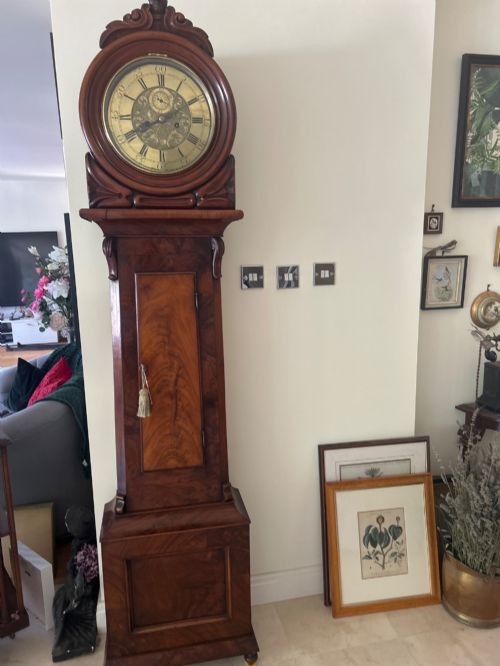
Regional variations emerge clearly across the evidence, with Scottish workshops producing distinctive drumhead and marquetry examples alongside English makers from London to Oxford and Wales. Buyers encounter both full-scale longcase clocks and smaller grandmother clock variants, offering options suited to varying ceiling heights and room dimensions.
How They Were Made
Cabinetmakers constructed the tall wooden housings principally in mahogany, flame mahogany, oak, and burr mahogany, often enriched with marquetry inlay. These timber surfaces support glazed dial doors that protect the face of the clock.
Nineteenth Century Floor Clock Retail Price Guide 2026
Typical asking prices for nineteenth century floor clock among the pieces listed under this phrase on Sellingantiques today, from the lower quarter to the upper quarter. They describe what is for sale here now, not the wider market.
What Varies in Quality
Quality rests in the harmony between the cabinetwork and the mechanical movement housed inside. Finer examples display carefully selected timber veneers such as flame mahogany or intricate marquetry patterns that match the precision of the signed dialwork.
The sophistication of the movement distinguishes standard timepieces from high-grade regulators and moonphase clocks. Regional signatures from established makers in London, Edinburgh, and provincial towns add further distinction to the construction.
Handley & Moore·Parkinson Bros·David Craig·Whitelaw Of Edinburgh·Wightman Of London·James Wood·Ganthony Of London·David Griffith·Aitchison Of Glasgow·Frederick Rowe·Richard Rowell
The Nineteenth Century Floor Clock Glossary
- Regulator
- A precision pendulum clock designed for high accuracy, often featuring a simplified dial layout with separated hour, minute, and second hands. These movements were essential for timing and scientific observation in the nineteenth century.
- Moonphase
- A dial mechanism tracking the lunar cycle through a rotating disk behind an arched aperture. This feature adds visual complexity to the upper portion of the clock face.
- Drumhead
- A circular upper case design enclosing the dial, characteristic of certain Scottish regional longcase clocks. This distinctive shape sits atop a tapering trunk.
- Marquetry
- The art of applying decorative veneer pieces to a wooden surface to create pictorial patterns or floral motifs. It appears on selected nineteenth-century cases.
- Longcase clock
- The traditional term for a tall weight-driven pendulum clock enclosed in a wooden case resting on the floor. It is frequently referred to as a grandfather clock.
Nineteenth Century Floor Clock: Frequently Asked Questions
How do I wind an eight day floor clock?
Winding involves using a crank key to raise the weights suspended inside the trunk by pulling the driving cords or chains upward. Care must be taken not to overwind the movement.
Most eight-day mechanisms require attention once a week, keeping the pendulum swinging at a steady beat to maintain accurate timekeeping.
Where should I place a longcase clock?
These tall timepieces require a stable, dry interior wall away from direct sunlight, heating vents, and heavy vibrations from doors. A level floor ensures the pendulum swings evenly.
Securing the upper trunk to the wall provides stability for taller Victorian and Georgian cases against accidental knocks.
What is the difference between a grandfather and grandmother clock?
Grandfather clocks represent the standard full-size nineteenth century floor clock standing over six feet tall with substantial weight-driven movements. Grandmother clocks are scaled-down versions produced in smaller proportions.
Both share similar mahogany or oak construction methods but differ significantly in floor space requirements and ceiling clearance.
How do I read a moonphase dial?
The painted disk rotates behind two arched cutouts on the dial face to display the current phase of the moon over a lunar month. This complication tracks the synodic month of roughly twenty-nine and a half days.
Setting the display requires consulting a lunar calendar and advancing the disk manually using the designated adjustment arbor.