
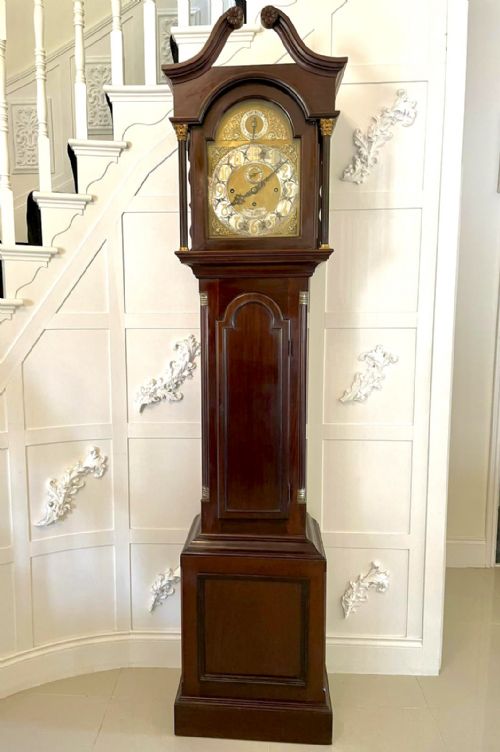
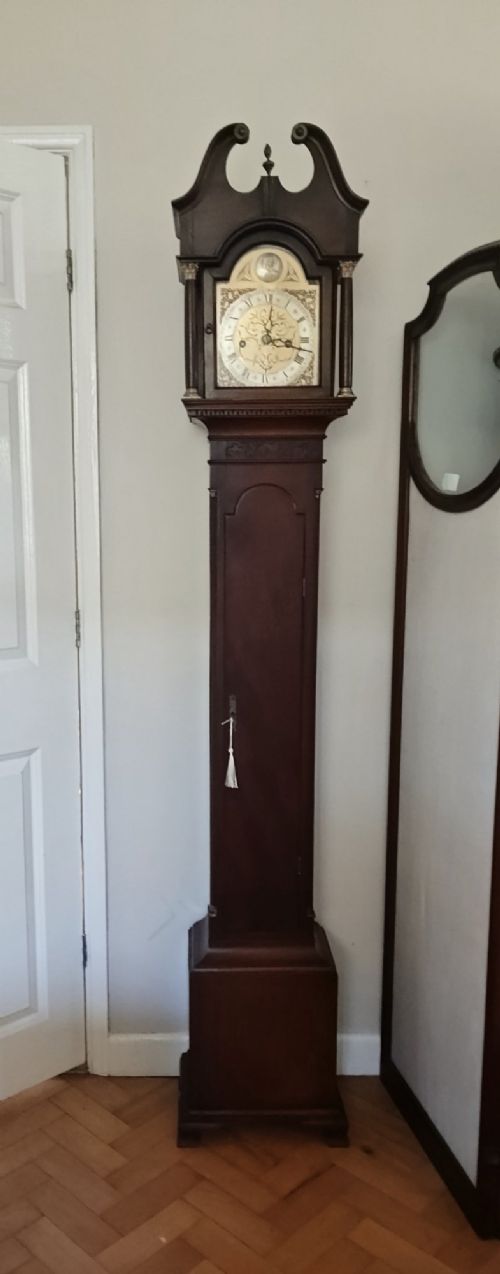
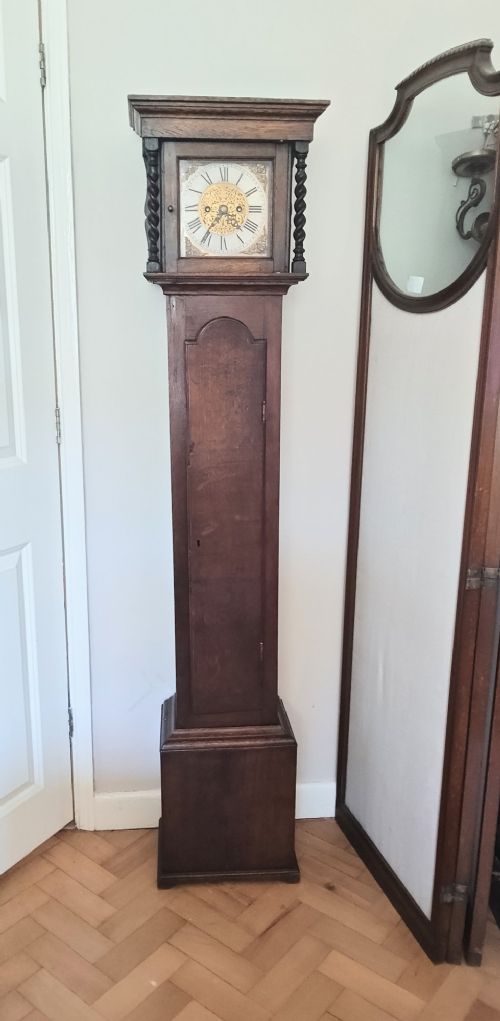
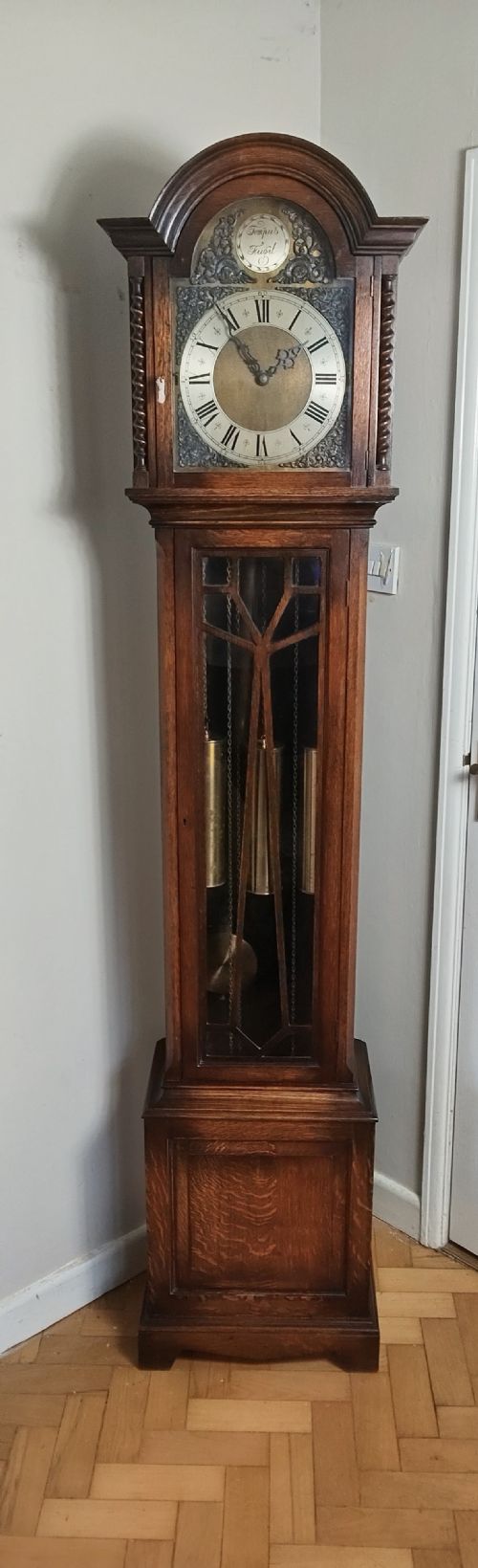


Traditional Wooden Longcase Clock
A traditional wooden longcase clock stands as a floor-standing timekeeper in timber cases spanning Georgian to Victorian periods.
Traditional Wooden Longcase Clock
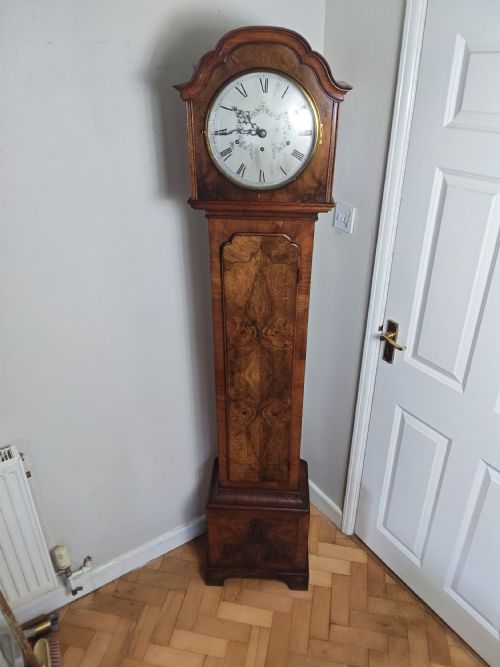
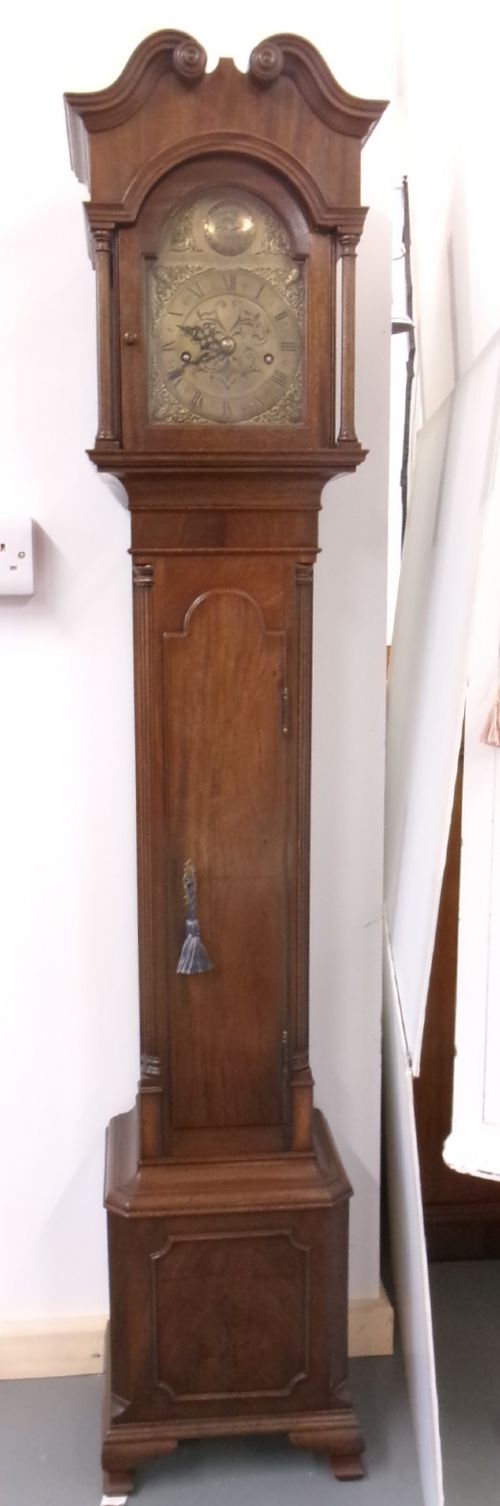
A traditional wooden longcase clock is a tall floor-standing timepiece housed in timber cases that reach several feet in height. These objects appear in various forms across this selection, including grandfather clocks, grandmother clocks, and smaller miniature variants.
Most examples found here date from the Georgian, 18th century, and 19th century periods, alongside later Victorian, Edwardian, and 1930s pieces. Buyers encounter both full-sized floor clocks and scaled-down formats in oak, mahogany, and walnut.
Origin points span English regions and Scottish workshops, showing regional variations in dial work and case proportions. Oak and mahogany serve as the primary timbers, while walnut appears in both solid forms and quarter veneers.
How they were made
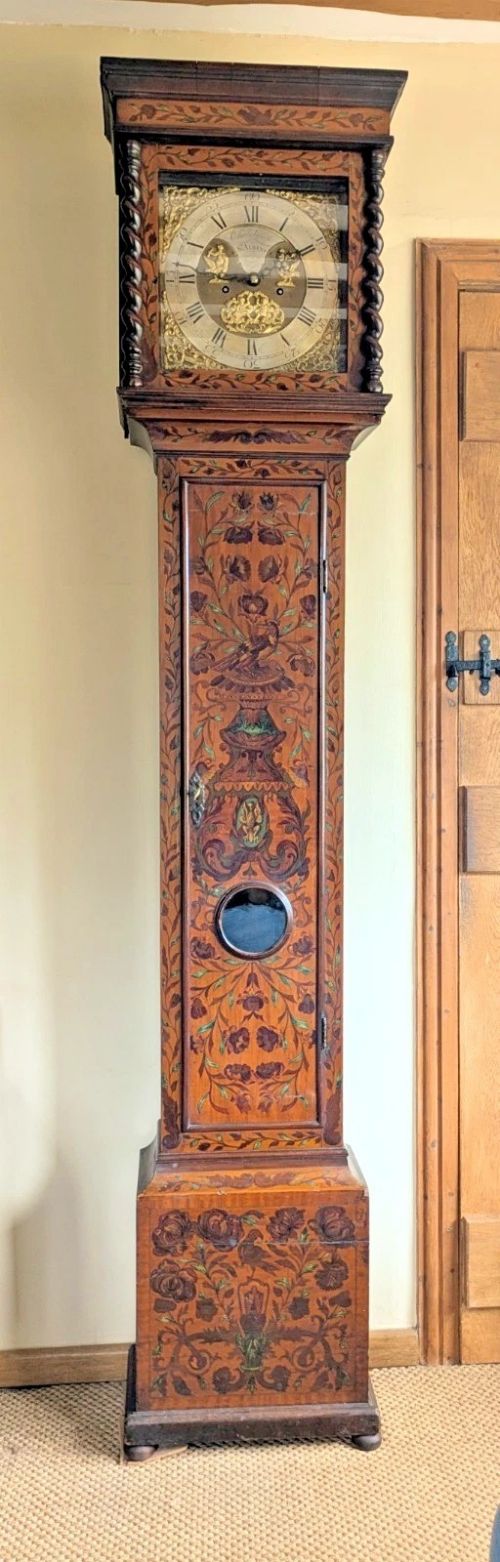
Cases combine solid structural timbers of oak, mahogany, or walnut with decorative elements such as crossbanding, marquetry, and wood veneers. Dial faces feature painted metal, brass surrounds, and glass covers to protect the hands and movement.
Movements rely on brass, iron, and weight-driven mechanisms to regulate time, chime quarters, and operate musical cylinders or moon phases. Regional clockmakers constructed these inner workings by hand, pairing them with timber housings built by cabinet makers.
Listings span periods from the 18th century through the 1930s, featuring timber cases in oak, mahogany, and walnut.
What varies in quality
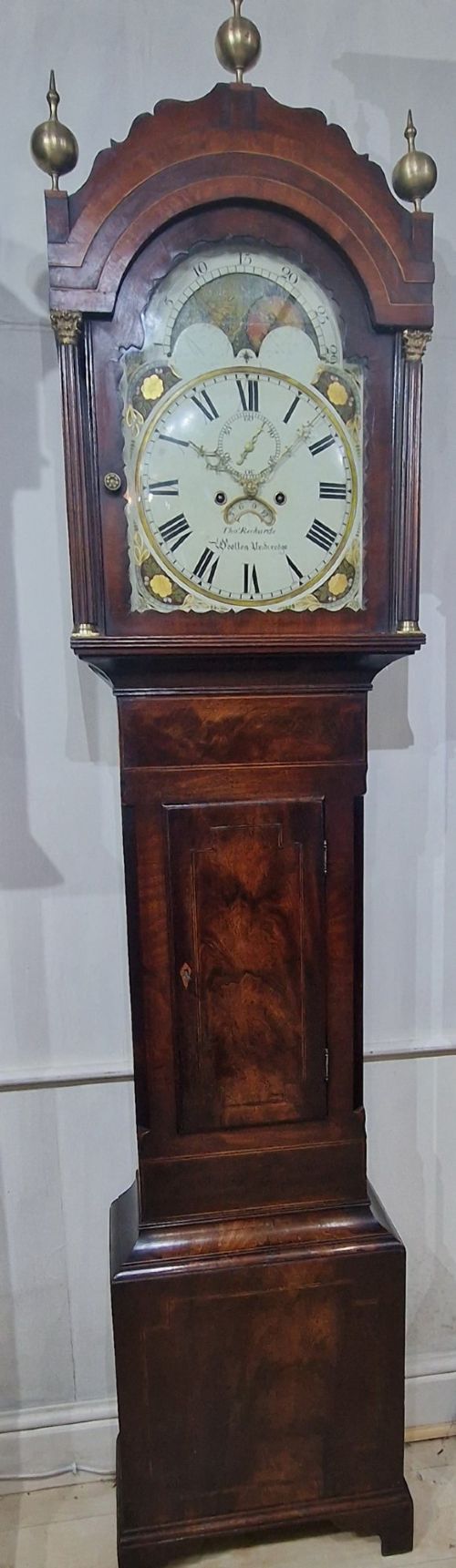
The sophistication of the movement dictates much of the standing, moving from standard time-only mechanisms up to eight-day striking systems, rolling moon dials, and musical quarter-chiming configurations. Dials signed by notable regional makers command closer attention for their inscribed brass or painted faces.
Cabinetwork execution separates standard production from finer output, visible in the choice of burr walnut, precise crossbanding, or intricate marquetry inlay. Proportions also differ, with slender small formats and robust architectural oak cases representing distinct tiers of cabinet making.
Winsor Bishop Norwich·Charles Louch St. Albans·Rickards Wotton Under Edge·James Coster Of Henley·John Banks Oldham·Garman Meonstoke·Samuel Young Nantwich·Packer Of Reading·Wm Stanford·W Prior Skipton·Jn Wright Linton
The Traditional Wooden Longcase Clock Glossary
- Longcase clock
- A tall pendulum clock enclosed in a wooden floor-standing case. These are also frequently designated as grandfather clocks.
- Grandmother clock
- A smaller, scaled-down version of the traditional longcase clock produced during later periods. They occupy less floor space than full-sized grandfather clocks.
- Crossbanding
- A decorative border technique where thin strips of veneer are laid with the grain running perpendicular to the surrounding wood. This is often seen framing mahogany or oak cabinet doors.
- Rolling moon
- A painted dial mechanism that tracks the phases of the lunar cycle behind a shaped aperture. It rotates slowly to mirror the moon's progression.
- Marquetry
- The art of applying pieces of veneer to a structure to form decorative patterns and pictorial designs. Eighteenth-century examples utilise this technique on case surfaces.
Traditional Wooden Longcase Clock: Frequently Asked Questions
What is a grandmother clock?
A grandmother clock is a smaller, more slender variant of the traditional longcase clock. They generally date from the late 19th century through the 1930s.
These compact timepieces suit rooms with lower ceilings or tighter floor plans while retaining the mechanical movements of larger grandfather clocks.
How do eight day clocks work?
Eight day clocks utilise a weight-driven mechanism that requires winding only once every week. Heavy weights suspended inside the trunk descend slowly as the gear train unwinds.
This movement type allows the clock to maintain accurate time over extended periods without daily attention to the weights.
What woods were used for cases?
Cabinet makers built these cases primarily using oak, mahogany, and walnut. Early pieces often feature solid oak, whilst later Georgian and Victorian examples frequently employ mahogany.
Some refined specimens incorporate burr walnut veneers, crossbanding, or marquetry inlay to enhance the visual texture of the timber trunk.
What is a rolling moon dial?
A rolling moon dial is a painted mechanical display positioned above the main clock face. It tracks the lunar cycle through a rotating painted disc.
This feature adds both visual complexity to the dial and indicates the phase of the moon through a curved aperture.