
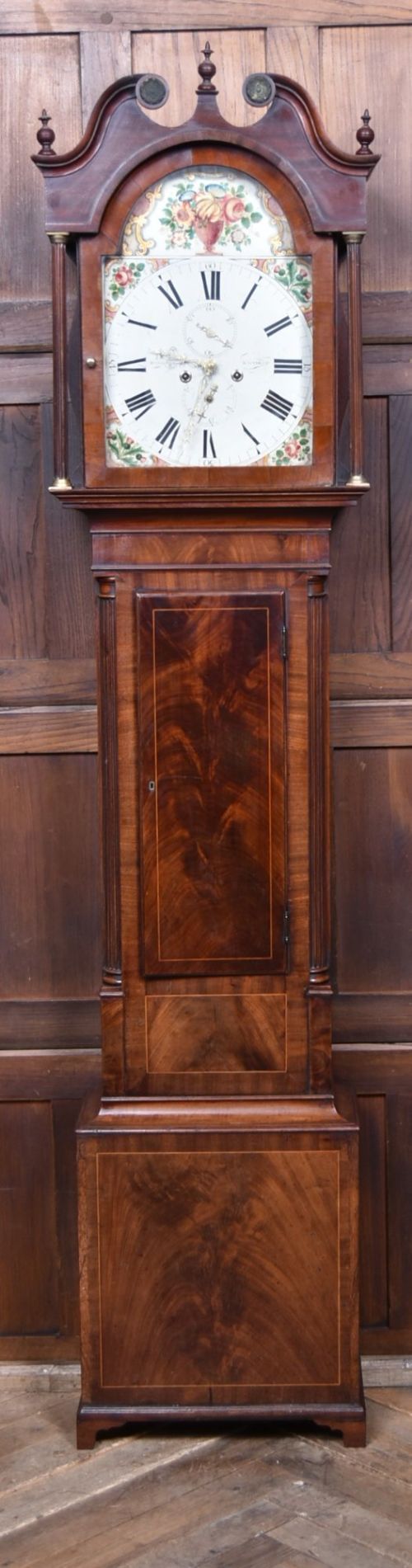

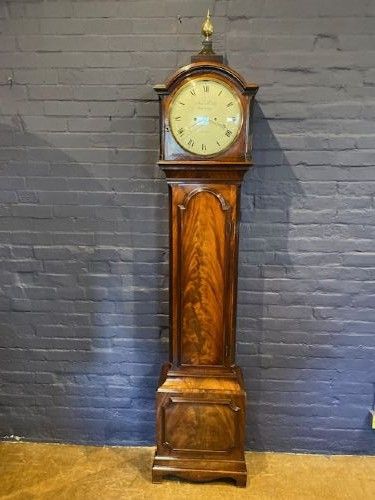
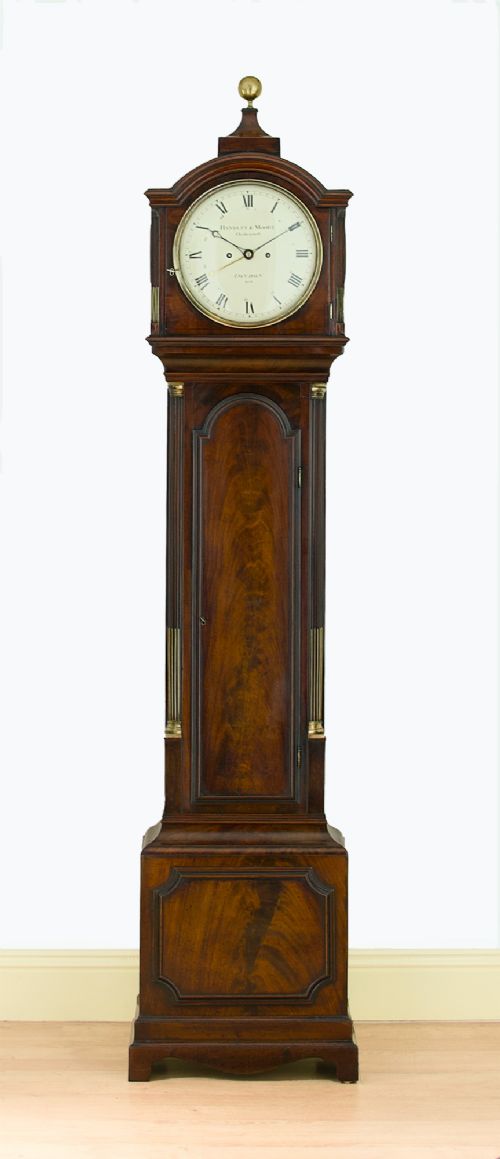
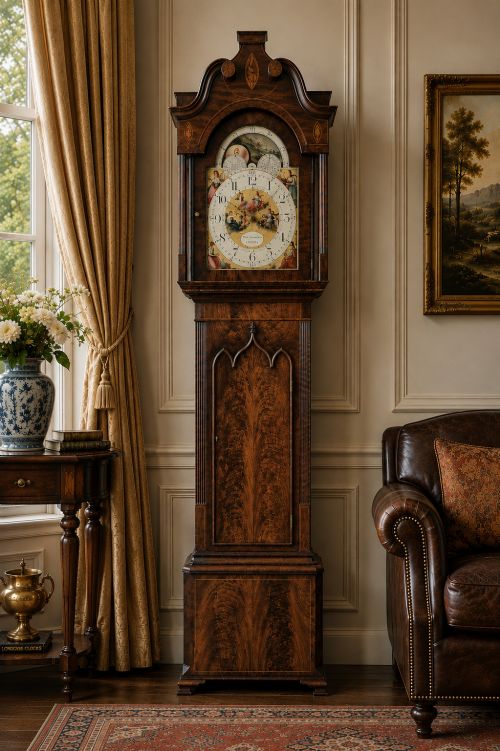
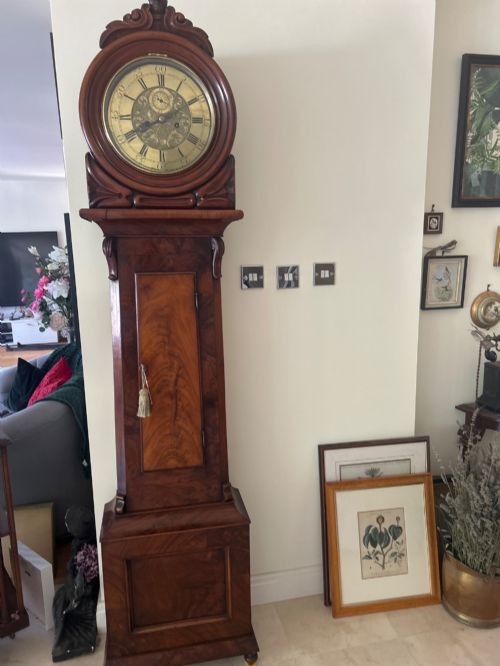
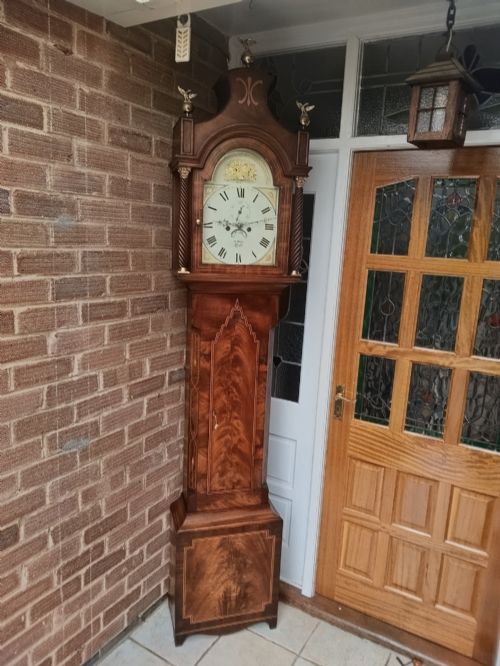

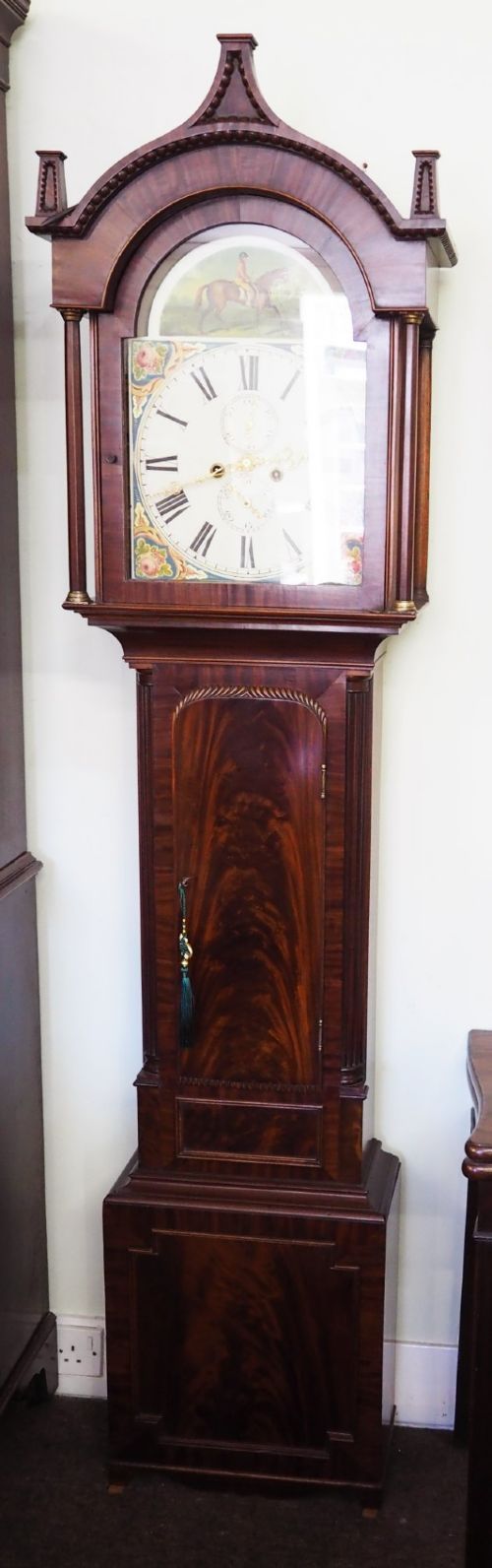


Regency Mahogany Floor Clock
A regency mahogany floor clock commands attention in a hallway with its tall timber case and steady mechanical heartbeat.
Regency Mahogany Floor Clock
A regency mahogany floor clock is a tall timekeeper housed in a wooden trunk, designed to stand upright on a room's floor. These pieces frequently appear under various historical labels, including grandfather clocks and longcase clocks.
The specimens on this page emerge primarily from the nineteenth century, George III, Georgian, and Regency eras, with occasional Victorian examples. Regional variations span English makers in London, Birmingham, and York, alongside distinct Scottish interpretations from Edinburgh, Peebles, and Dunfermline.
Makers shaped these upright clocks to measure hours through weight-driven or spring-driven movements housed behind glass doors. Tall floor-standing cabinets protect the pendulum and weights while displaying the dial prominently at eye level.
Determinants of quality
The visual depth of the timber grain dictates much of the exterior appeal, with figured flame mahogany veneer marking a higher tier of cabinetmaking. Inlay precision and proportion across the hood, trunk, and base further separate standard workshop output from exceptional commissions.
Internal mechanical complexity distinguishes simpler timepieces from sophisticated eight-day movements, moonphase complications, or specialised regulators. The reputation of the signatory clockmaker inscribed on the dial directly influences the standing of the piece.
Listings feature dial materials including painted iron, enamel, and brass set within mahogany, flame mahogany veneer, and inlaid pine cases.
James McCabe·Handley and Moore·Samuel Kellett·Parkinson and Frodsham·Dwerrihouse and Carter·Hampston Prince and Cattles
The Regency Mahogany Floor Clock Glossary
- Longcase clock
- A tall pendulum clock enclosed in a wooden case that stands directly on the floor. These tall timekeepers are frequently called grandfather clocks.
- Flame mahogany
- A distinctive wood veneer showing a fiery, undulating grain pattern derived from branch junctions. Cabinetmakers prized this figured timber for prominent hood and door panels.
- Moonphase
- A dial mechanism tracking the lunar cycle through a rotating painted disc visible through an aperture. This display indicates the phases of the moon alongside standard time.
- Regulator
- A precision timekeeper designed for high accuracy, often featuring a simplified dial arrangement and a heavy pendulum. These specialised clocks served as reference standards in workshops and public exchanges.
- Drumhead
- A round dial housing set atop a tapered wooden stem, resembling a drum mounted on a pedestal. This specific Scottish form creates a distinct silhouette.
Regency Mahogany Floor Clock: Frequently Asked Questions
Where should I place a floor clock?
Position the piece on a solid, level floor away from direct sunlight, heating vents, and damp exterior walls to protect the wood case and delicate internal mechanics.
Ensure there is sufficient clearance for the swinging pendulum and weights inside the trunk without the cabinet touching vibrating surfaces.
How do eight-day movements work?
An eight-day movement requires winding approximately once a week using a key inserted into holes on the painted dial face. Suspended weights descend slowly inside the wooden trunk over the course of the week to power the gear train.
Gravity pulls these heavy weights downward, driving the escapement and turning the hands while operating any striking or gong mechanisms.
What is a moonphase dial?
A moonphase dial incorporates a secondary rotating disc behind the main face to track the lunar cycle over a twenty-nine and a half day period. Painted moons and starry skies appear through a curved aperture above the central hands.
Clockmakers added this feature to help farmers and coastal residents anticipate tides and lunar illumination alongside keeping standard hours.