
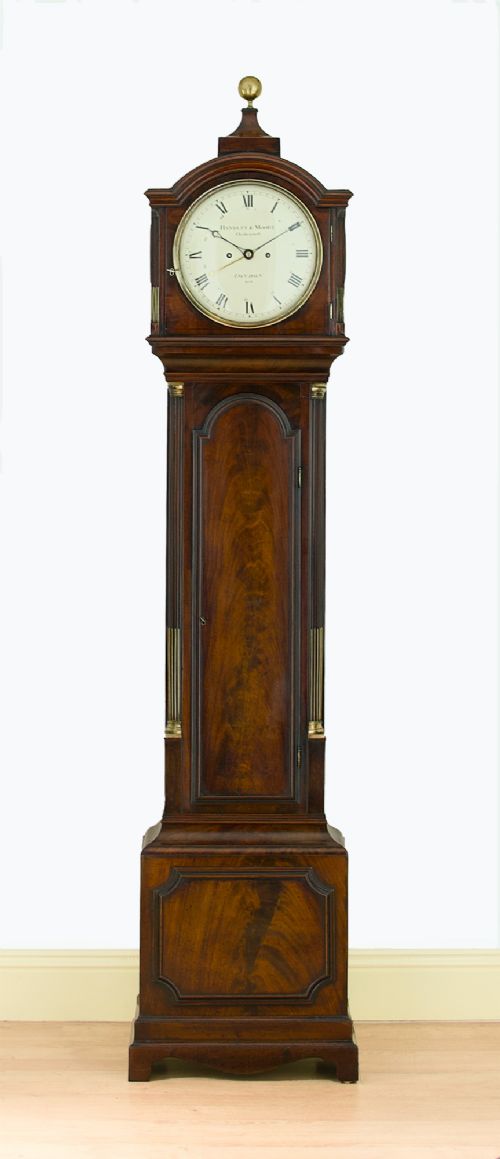
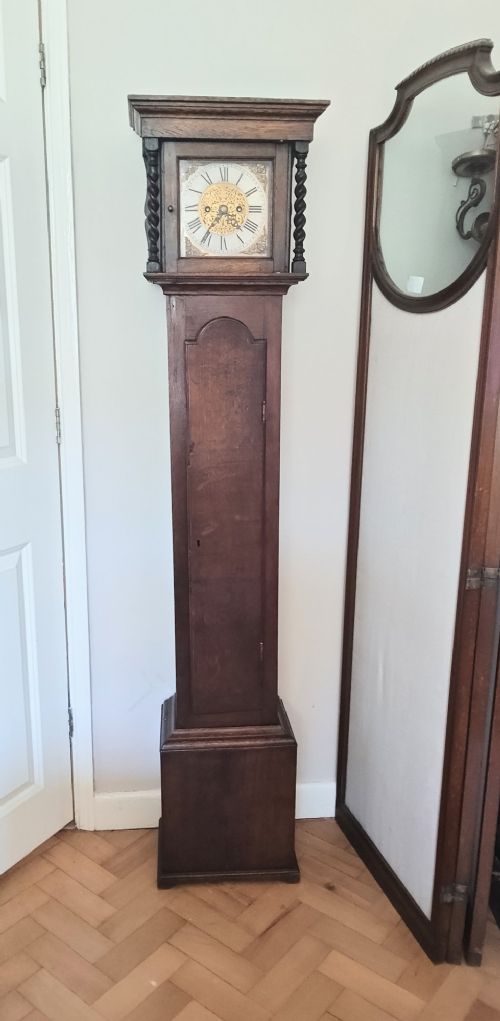


Nineteenth Century Tall Clock
These nineteenth century tall clock pieces bring commanding presence and intricate mechanics to any room, offering traditional timekeeping alongside rich cabinetmaking.
Nineteenth Century Tall Clock
When searching for a nineteenth century tall clock, you encounter substantial floor-standing timepieces designed to dominate domestic interiors. These grand pieces include longcase clocks, grandfather clocks, and smaller grandmother variations originating from diverse regional workshops.
The selections available here span Georgian, Regency, and Victorian periods, showcasing cabinetmaking traditions from London, Scotland, Wales, and provincial England. Mahogany and oak form the structural backbone of these cases, occasionally enriched with marquetry inlay or ebonised wood.
Regional variations distinctively shape these nineteenth century tall clock examples, ranging from Scottish Victorian pieces and Welsh moonphase dials to London Regency regulators. Buyers frequently meet eight-day movements housed in architectural timber trunks topped with glass faces and brass fittings.
How They Were Made
Cabinetmakers utilised dense timbers such as mahogany and oak, often selecting flame mahogany veneers to create striking grain patterns across the trunk doors and bases. Ormolu mounts, tortoiseshell accents, and meticulous marquetry inlay embellished the finer surfaces.
Mahogany and oak dominate the timber selections across these nineteenth century tall clock pieces, accompanied by brass and glass.
What Varies in Quality
Superior examples display exceptional timber selection, such as carefully matched burr mahogany or precise marquetry inlay that demonstrates advanced cabinetmaking skill. The crispness of brass dial work and the sophistication of the movement, particularly regulators or rolling moon mechanisms, separate the exceptional items from standard production.
Proportion and architectural harmony define the upper tier of these pieces, where imposing heights balance cleanly with refined mouldings and lancet tops. Inferior pieces often show less considered timber matching or simpler painted dials lacking the depth of engraved brass faces.
Handley And Moore·David Craig Ford·Wightman Of London·James Wood·Ganthony Of London·David Griffith Carnarvon
The Nineteenth Century Tall Clock Glossary
- Longcase clock
- A tall pendulum clock enclosed in a wooden case that stands upon the floor. These instruments rely on suspended weights housed inside the trunk.
- Moonphase
- A dial mechanism tracking the phases of the lunar cycle through a rotating painted disc. This complication appears on the upper arch of the clock face.
- Regulator
- A precision pendulum clock designed for extreme accuracy, often utilised as a standard for setting other timepieces. These movements prioritise exact timekeeping over decorative dial complications.
- Marquetry
- Decorative veneer work created by fitting together small pieces of wood, shell, or metal to form pictorial patterns. Artisans apply these intricate designs across the door and base panels.
- Lancet top
- An architectural hood design featuring a pointed arch reminiscent of gothic window shapes. This profile crowns the upper dial door on specific regional variations.
Nineteenth Century Tall Clock: Frequently Asked Questions
Where should I place a tall clock?
These grand timepieces require stable, level flooring away from direct sunlight and sudden temperature shifts to protect the timber and internal mechanics. Hallways, landings, and spacious reception rooms provide suitable environments where the case can stand securely against a supporting wall.
Ensure adequate ceiling clearance for the hood and sufficient swing room for the pendulum before final placement. Positioning the piece away from heavy foot traffic prevents accidental vibrations that might disrupt the delicate beat of the pendulum.
How do eight-day movements work?
An eight-day movement requires winding approximately once a week using a key that draws up the suspended internal weights. The descending pull of these heavy weights drives the gear train, which regulates the escapement and turns the hands.
This mechanism balances convenience with mechanical reliability, freeing the owner from daily winding routines. Regular maintenance ensures the intricate brass gears mesh smoothly over extended periods of operation.
What is a moonphase dial?
A moonphase dial tracks the lunar month across a rotating pictorial disc visible through an aperture on the clock face. This complication adds visual movement and traditional charm to the upper arch of the dial.
Historically, this feature assisted mariners, farmers, and travellers in gauging night-time illumination without relying on calendars. Today, it remains a celebrated example of horological craftsmanship found on select regional examples.
How do I distinguish Regency from Victorian styles?
Regency pieces typically display restrained classical elegance, featuring clean architectural lines, premium mahogany veneers, and subtle brass inlay. These designs reflect an interest in archaeological motifs and proportion during the early nineteenth century.
Victorian examples often embrace bolder, more imposing proportions and heavier ornamentation, reflecting changing domestic tastes later in the era. Examining the timber choice, dial execution, and overall silhouette helps clarify the specific period of manufacture.