
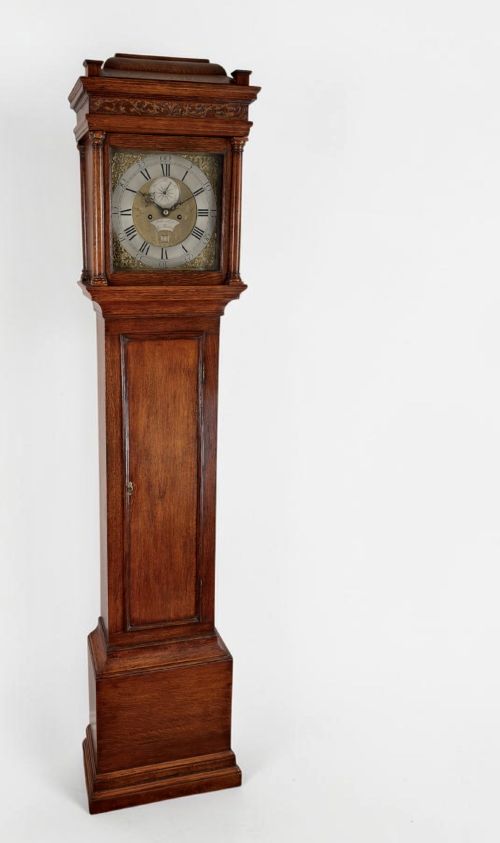
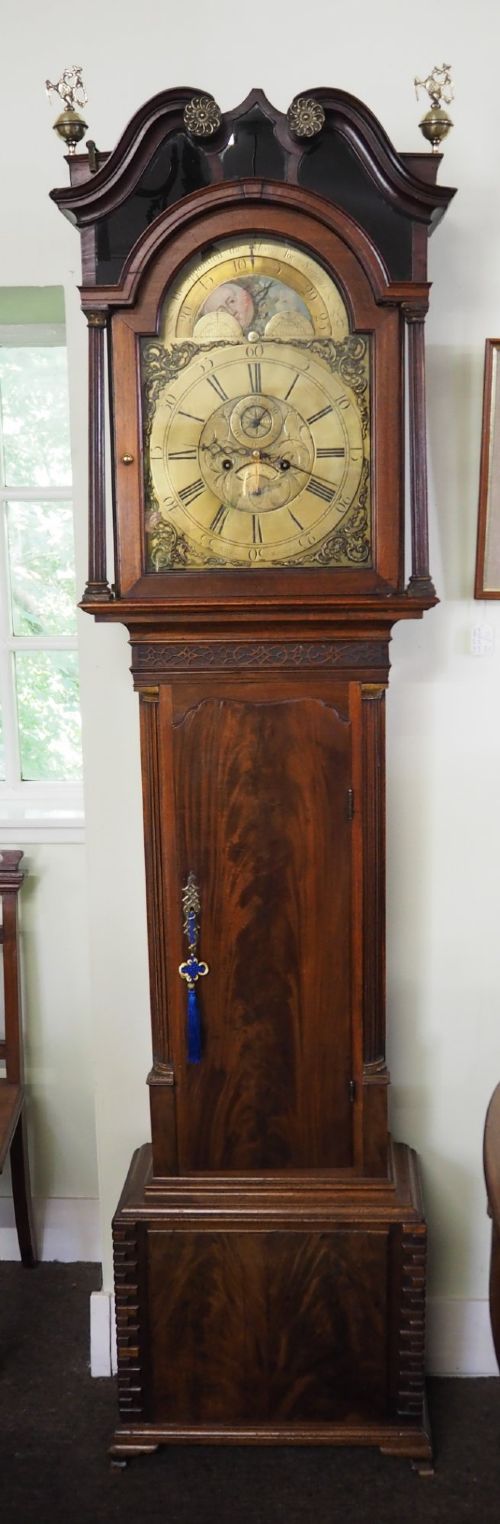
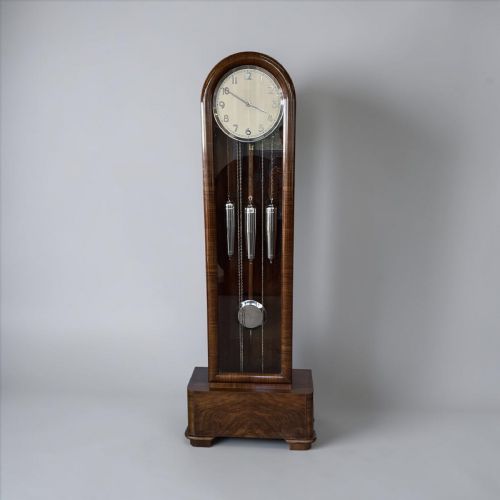
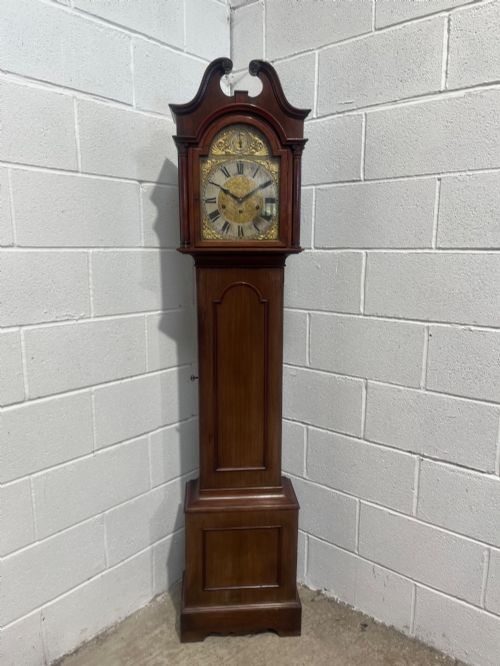




Vintage Weight Driven Clock
These vintage weight driven clock pieces keep time through descending iron or brass weights, bringing mechanical movement and period woodwork into a room.
Vintage Weight Driven Clock
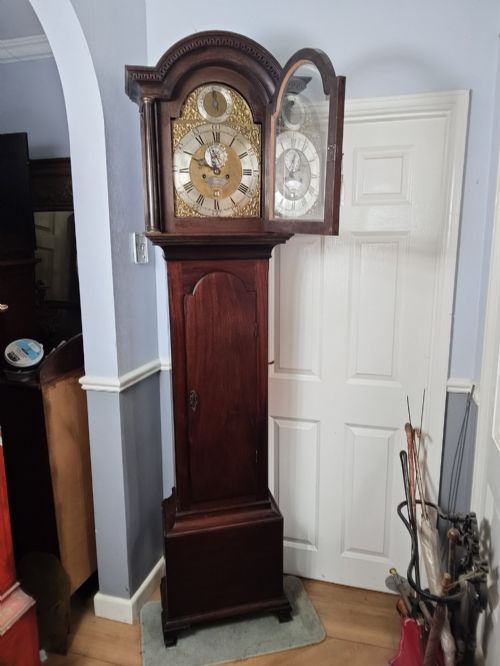
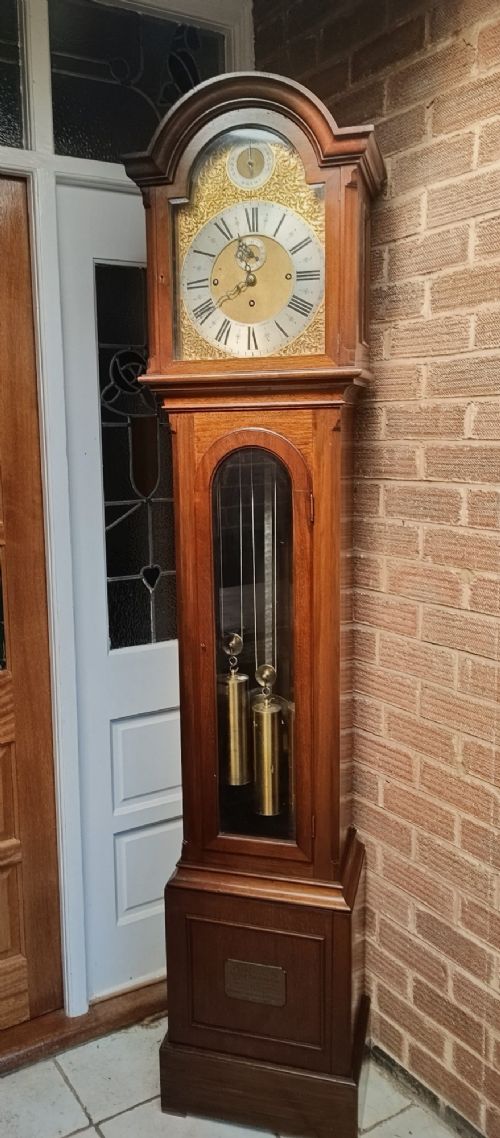
A vintage weight driven clock brings together traditional timekeeping and period furniture, ranging from tall floor-standing longcase examples to compact wall-hanging variants. When exploring this selection, a buyer encounters tall grandfathers alongside smaller Dutch and wall-mounted pieces.
The materials span oak, mahogany, and walnut cases housing brass movements, glass dials, and iron weights. These objects represent centuries of domestic timekeeping across English, Scottish, and continental traditions.
Floor-standing longcase formats dominate the selection, appearing alongside wall clocks, regulators, and lantern clocks. Each piece relies on suspended weights rather than springs to drive the internal gear train.
How they were made
Cabinetmakers constructed the wooden cases using mahogany, oak, and walnut, frequently incorporating glass door panels and brass dial faces with enamel markings. Iron and steel components form the internal gears and winding mechanisms.
The mechanical movement relies on suspended weights attached to chains or cords that drop slowly as the clock operates. Metal casting and hand-cutting techniques shaped the brass wheels, plates, and striking mechanisms inside each housing.
Vintage Weight Driven Clock Retail Price Guide 2026
Typical asking prices for vintage weight driven clock among the pieces listed under this phrase on Sellingantiques today, from the lower quarter to the upper quarter. They describe what is for sale here now, not the wider market.
Listings feature movements spanning the Georgian, Victorian, and Edwardian eras alongside 1930s regulator designs.
What varies in quality
The refinement of the cabinetwork separates standard domestic timepieces from superior examples, particularly in the choice of figured timber veneers and carved details. Fine marquetry, inlays, and balanced proportions indicate greater skill in the workshop.
Movement complexity also sets pieces apart, distinguishing simple time-only mechanisms from those featuring musical chimes, multiple bells, or strike-silent functions. The crispness of the brass casting and the precision of the dial engraving reflect the maker's capability.
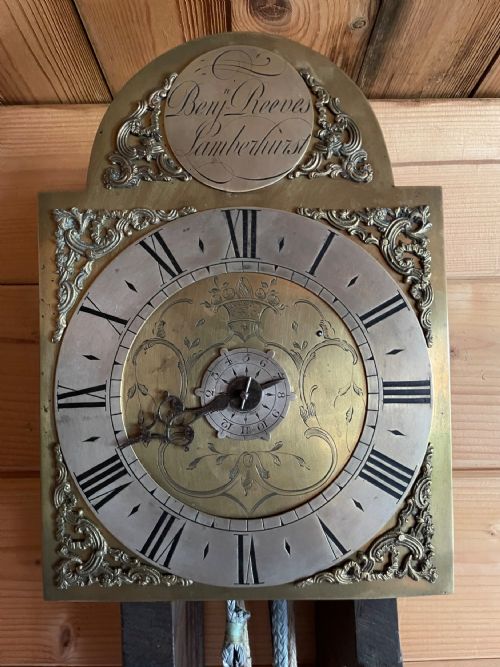
Lee of Great Marlow·John Spershott·Benj Reeves Lamberhurst·David Craig·Gustav Becker
The Vintage Weight Driven Clock Glossary
- Longcase clock
- A tall floor-standing timekeeper enclosed in a wooden case, commonly known as a grandfather clock.
- Regulator
- A precision pendulum clock designed for high accuracy, often featuring a clear view of the dial and weights.
- Lantern clock
- An early form of brass wall clock driven by weights, suspended on a bracket with exposed side doors.
- Stoelklok
- A traditional Dutch wall clock mounted on a wooden chair-like bracket, driven by hanging weights.
- Drop dial clock
- A wall-mounted timepiece featuring an extended case below the dial to accommodate the drop of the weight or pendulum.
Vintage Weight Driven Clock: Frequently Asked Questions
How do weight driven clocks work?
These clocks operate using heavy iron or brass weights suspended by cords or chains. As gravity pulls the weight downward, it turns the internal gear train to drive the hands.
To keep the clock running, the weights must be periodically pulled back to the top using a winding key or crank.
Where should I place a longcase clock?
Longcase clocks require a stable, level floor and a solid interior wall to support their height and weight. Placing them away from direct sunlight and heavy foot traffic helps protect the wood case and ensures the pendulum swings evenly.
Sufficient clearance is also needed above the case to allow room for the weights to descend fully during their run.
What is the difference between a grandfather and grandmother clock?
Grandfather clocks are tall floor-standing longcase timepieces that typically measure over six feet in height. Grandmother clocks are smaller, scaled-down versions of the same design, usually standing under six feet tall.
Both types use weight-driven movements and share similar case proportions, but the smaller format suits rooms with lower ceilings.
How do I wind a weight driven clock?
Winding involves inserting a key into the dial face or pulling the chain until the weights rise back toward the top of the case. Care must be taken not to pull past the maximum point or force the mechanism.
Frequency depends on the movement design, with some requiring attention daily and others running for eight days between windings.