
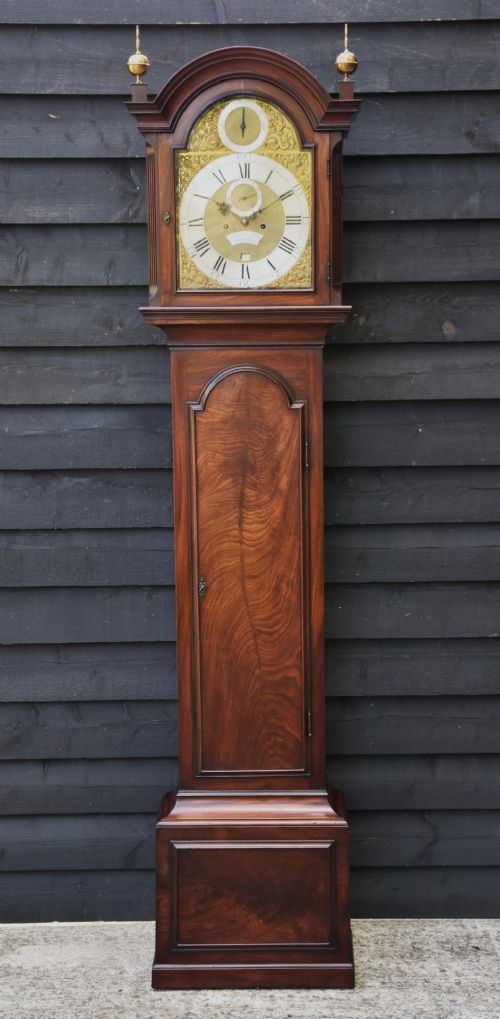
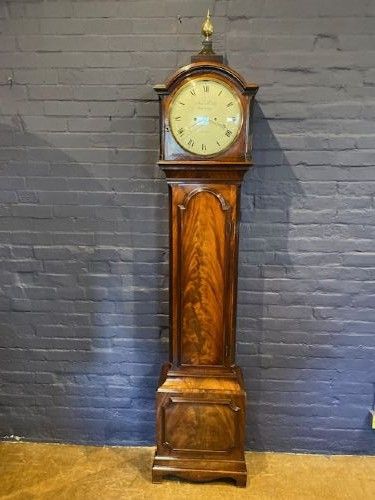
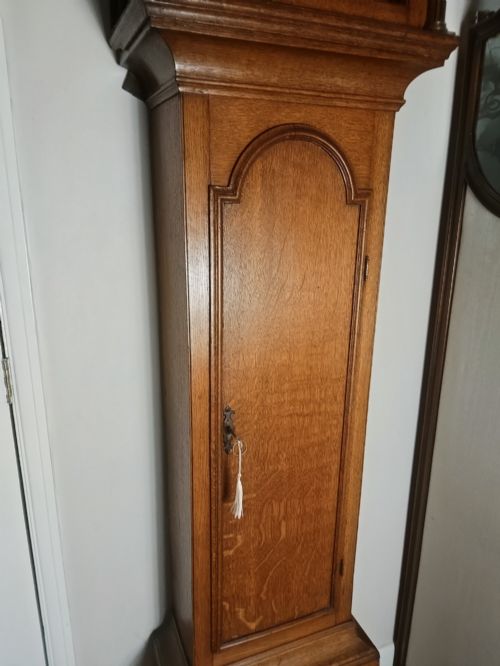
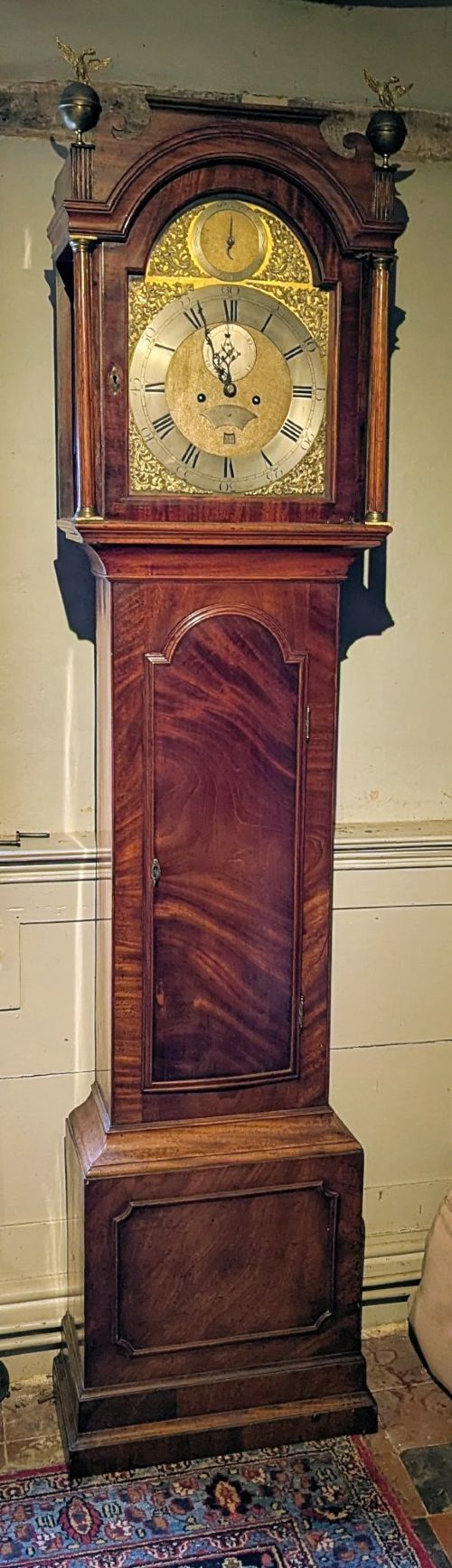
Georgian Floor Standing Clock
A georgian floor standing clock is a tall timepiece built to measure time with weight-driven movements, bringing mechanical authority and architectural presence into a room.
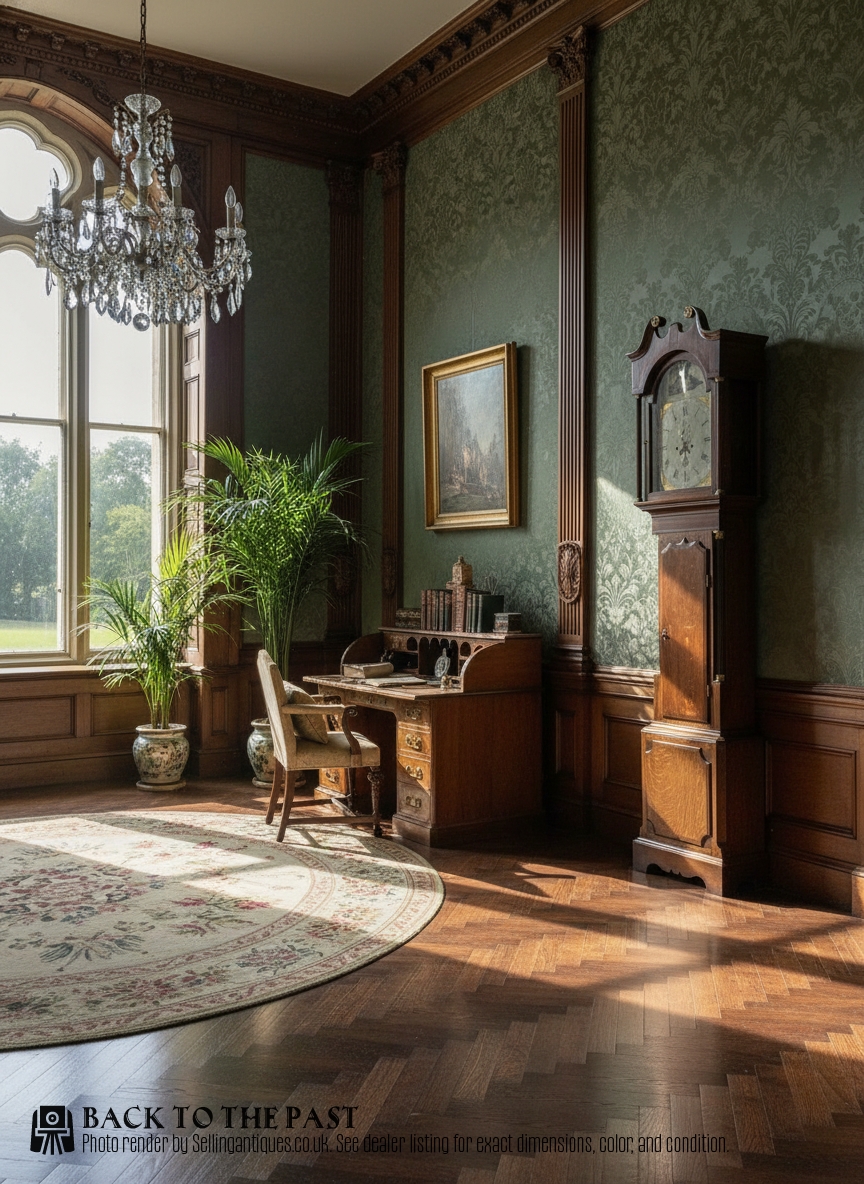
What a georgian floor standing clock is
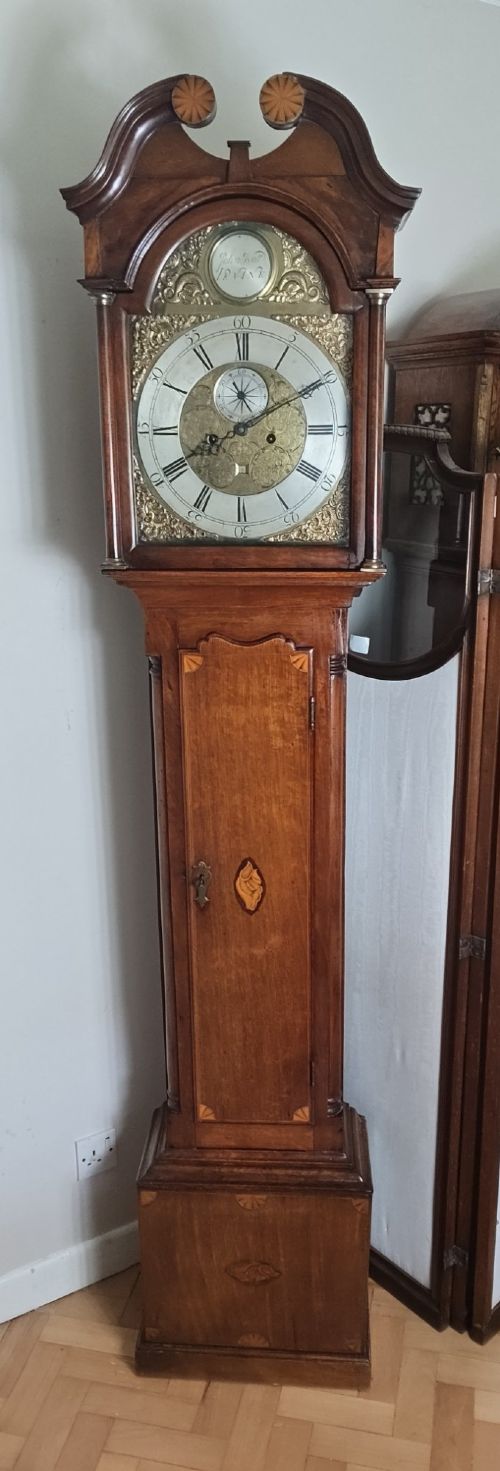
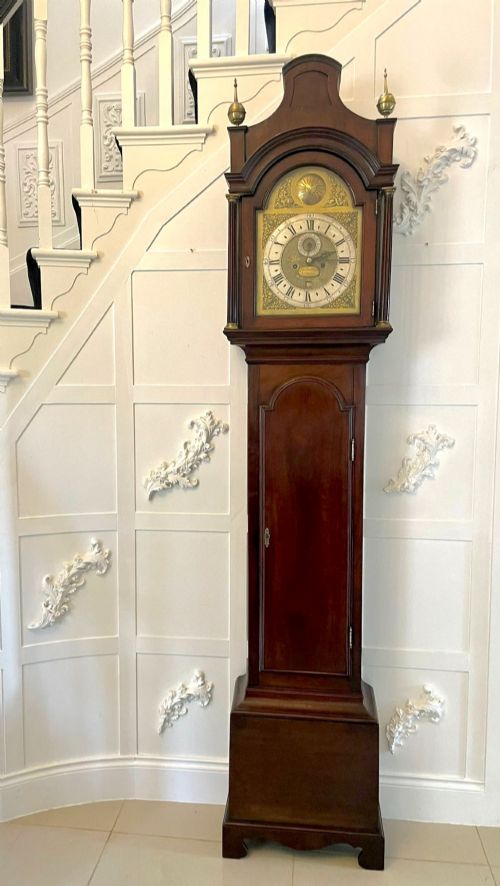
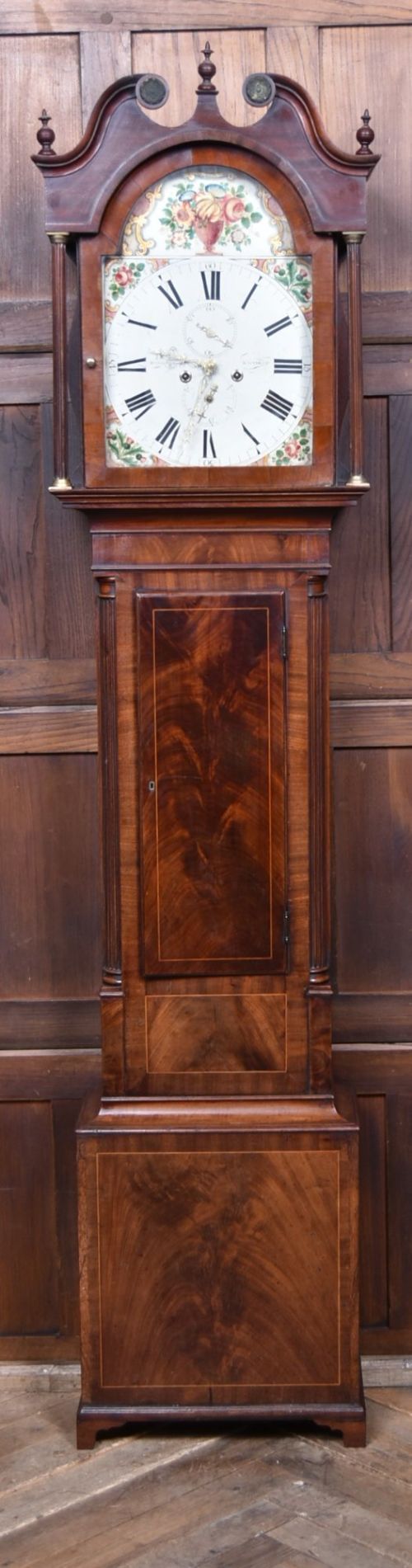
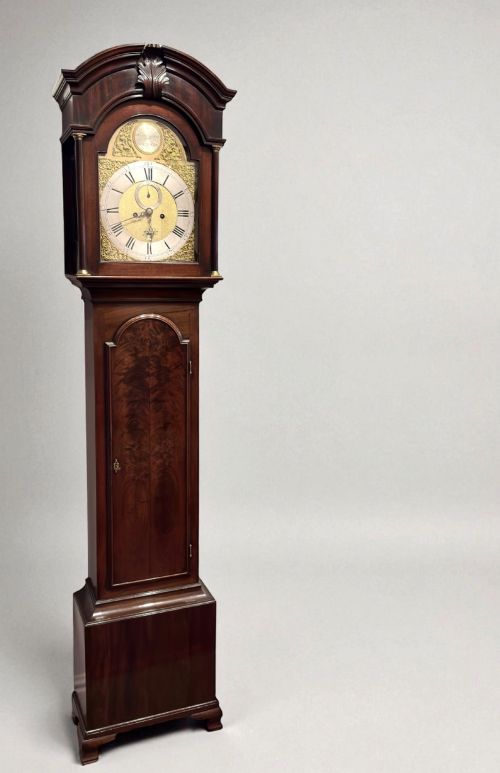
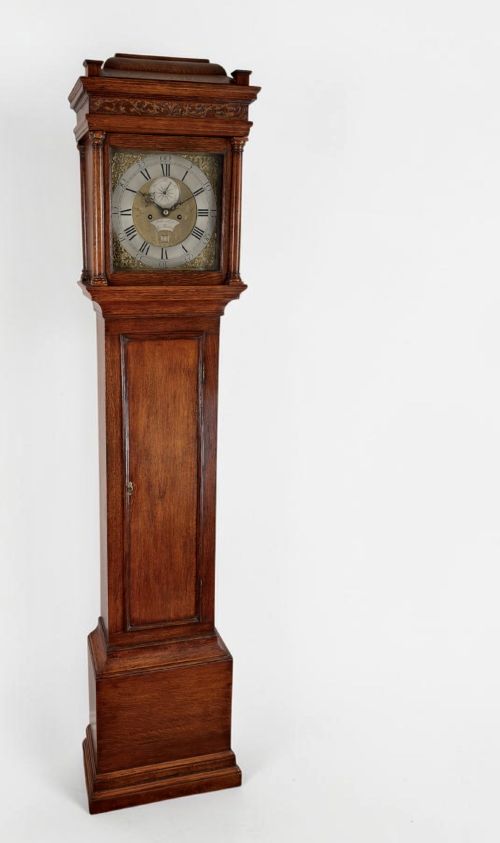
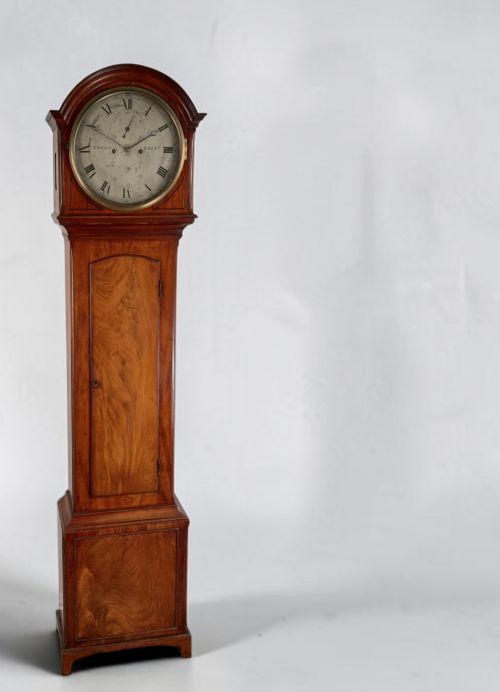
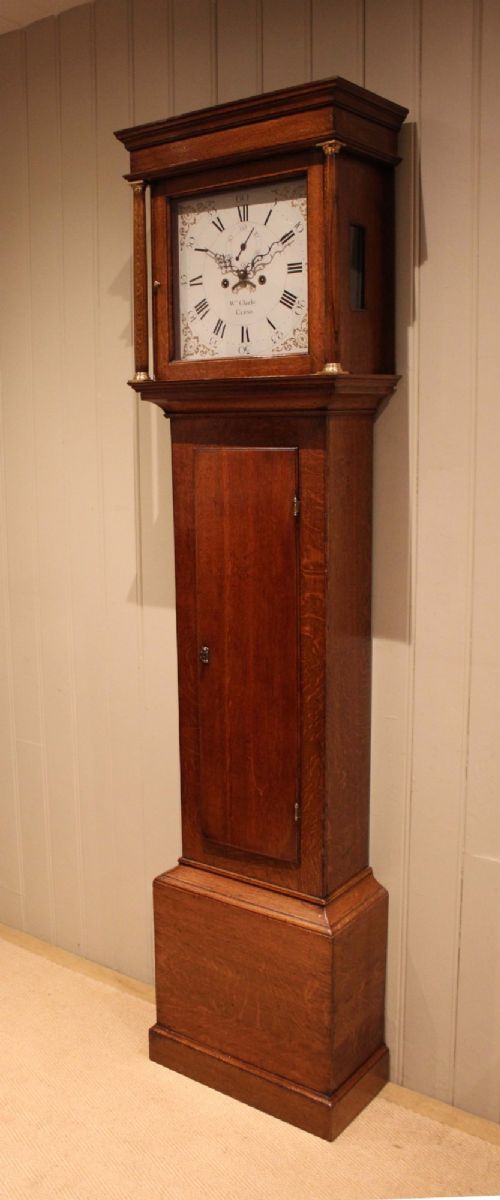
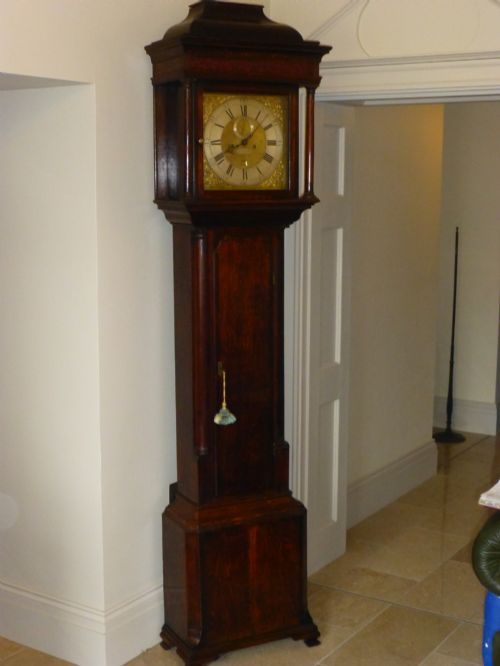
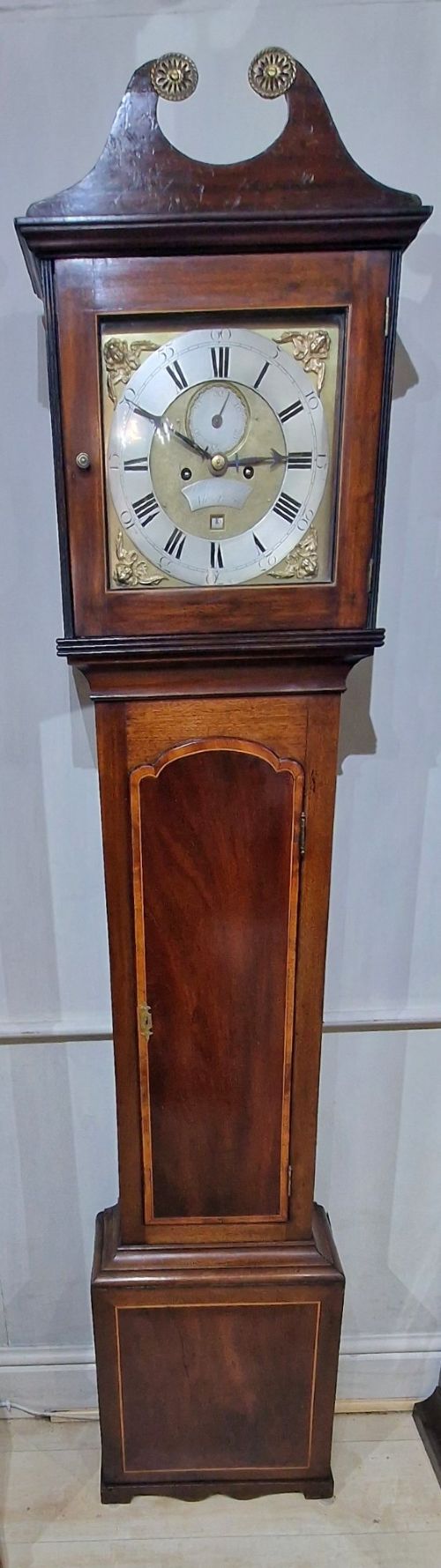
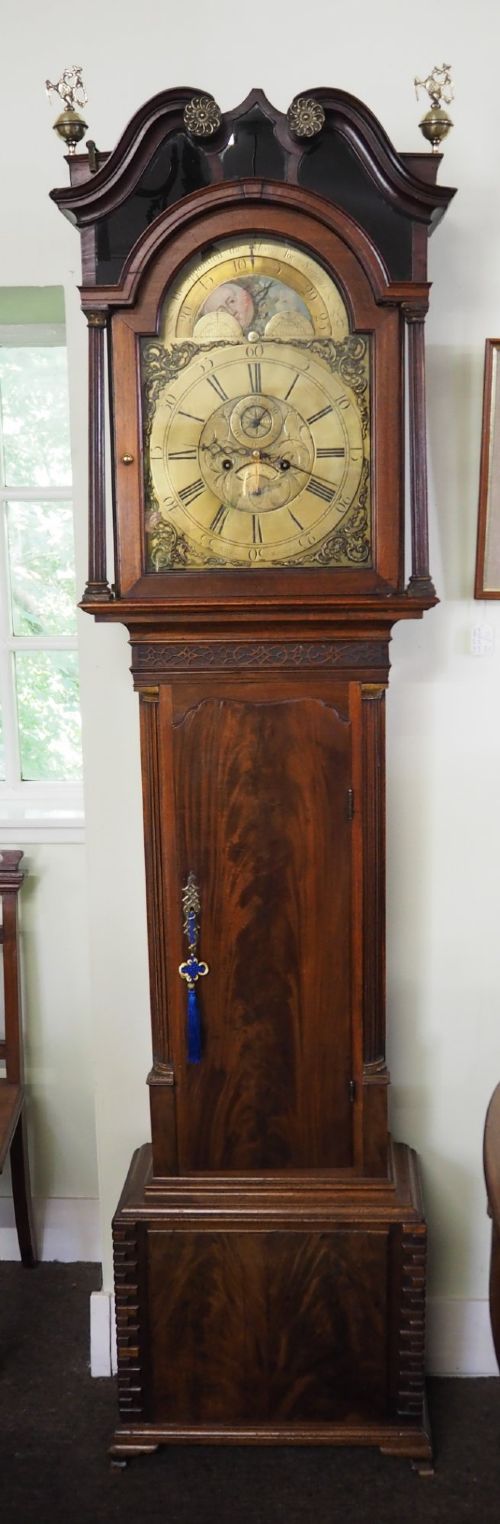
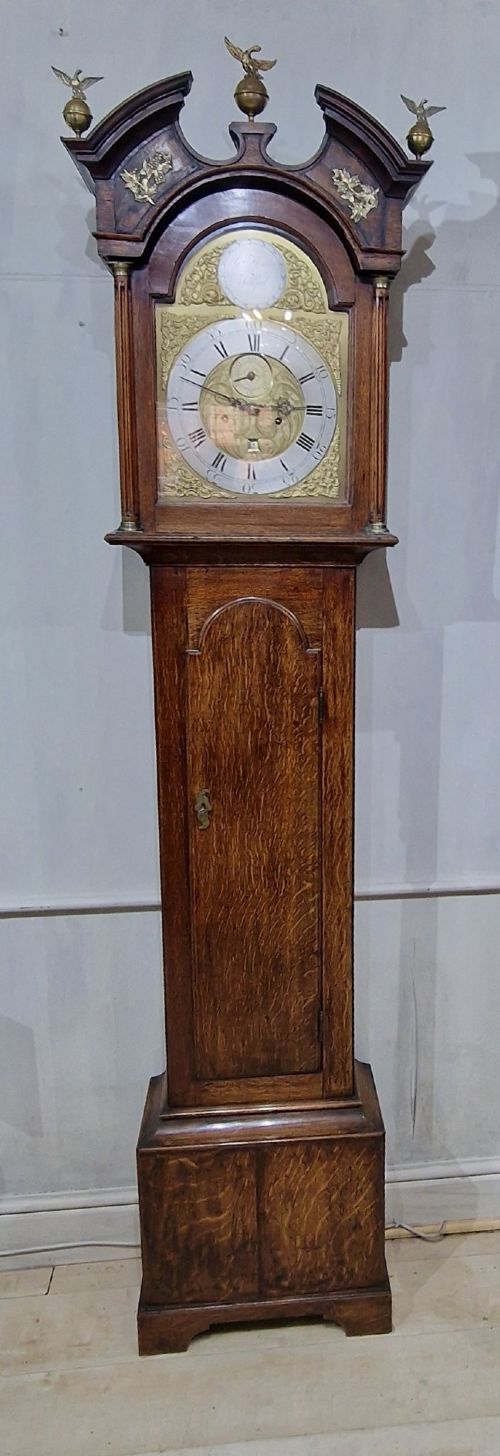
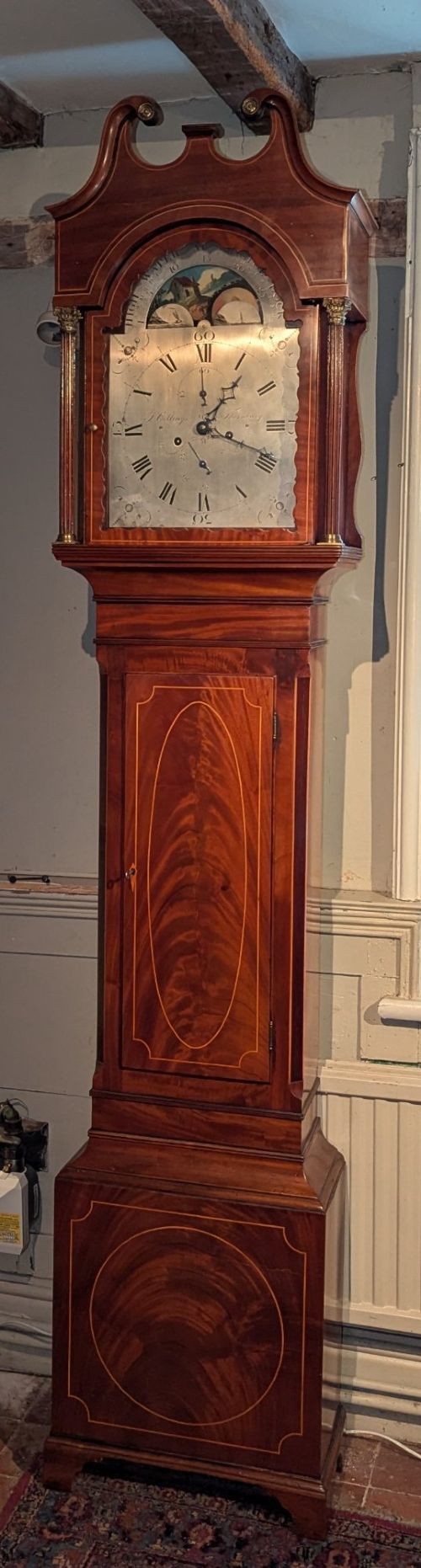
A georgian floor standing clock, frequently termed a longcase or grandfather clock, stands tall against the wall and houses a pendulum driven mechanism within a wooden trunk. These pieces originate from the eighteenth century, spanning the Georgian and George III periods.
The versions most commonly met on this page are constructed from oak, mahogany, flame mahogany, or lacquered wood. They take the form of longcase clocks with brass and silvered metal dials visible behind glass panelled doors.
How they were made
Watchmakers and cabinetmakers combined timber, glass, and metal to construct these timepieces. Cases utilise solid oak or mahogany, occasionally featuring flame mahogany veneers or intricate lacquered and chinoiserie decoration.
Dials incorporate brass and silvered metal components, engineered to house weight-driven movements capable of running for eight days or featuring strike silent mechanisms.
Retail Price Guide 2026
Typical UK retail prices for georgian floor standing clock, calculated from the Sellingantiques database of over a million retail prices indexed since 2003. This retail price guide relies exclusively on Sellingantiques data; no external sources or auction records are used, so the figures do not describe the wider market.
Listings feature oak, mahogany, flame mahogany, and lacquered wood materials across eighteenth-century periods.
What varies in quality
The calibre of timber selection and decorative finish dictates the distinction between standard examples and finer works. Flame mahogany veneers and detailed chinoiserie lacquer demonstrate greater workshop investment than plain oak surfaces.
The reputation of the horologist signing the dial elevates the standing of the piece. Signed movements by London makers carry historical weight that distinguishes them from provincial longcase clocks.
Benjamin Taylor·Thomas Utting·Walker of Nantwich·James Draycot Wells·John Jackson·Thomas Mudge
The Georgian Floor Standing Clock Glossary
- Longcase clock
- A tall, weight-driven pendulum clock housed in a wooden case. It is commonly referred to as a grandfather clock.
- Chinoiserie
- A decorative style reflecting Chinese artistic traditions, applied in European lacquered furniture and clock cases. It involves raised motifs on a painted ground.
- Strike silent
- A mechanism that allows the striking train of the clock to be silenced at night. This prevents the bell from sounding on the hour.
- Silvered metal
- A metal dial surface treated with a silver solution to provide a bright background for engraved numerals and maker signatures.
Frequently Asked Questions
How do I wind a longcase clock?
Winding requires using a crank key to raise the heavy driving weights suspended inside the trunk by cords or chains. Care must be taken not to overwind the movement.
Most eight-day clocks require winding once a week, while thirty-hour movements need more frequent attention to keep the pendulum swinging steadily.
Where should I place my clock?
Position the piece against a sturdy interior wall away from direct sunlight, heating vents, and damp areas. A stable floor ensures the case does not lean.
Allow adequate clearance above for the pendulum and weights, ensuring the tall cabinet stands entirely vertical for accurate timekeeping.
What is the difference between oak and mahogany cases?
Oak cases typically reflect provincial cabinetmaking traditions with robust timber grain and simpler lines. Mahogany offers a denser, finer medium suited to polished surfaces.
Mahogany and flame mahogany often indicate London workshop origins or higher status commissions compared to regional oak longcase clocks.