
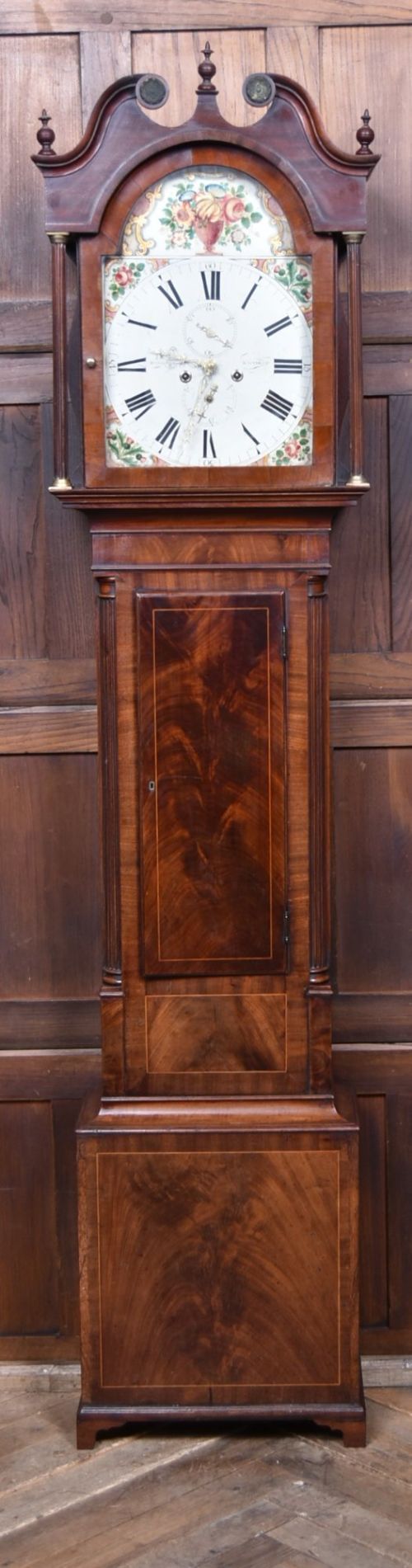
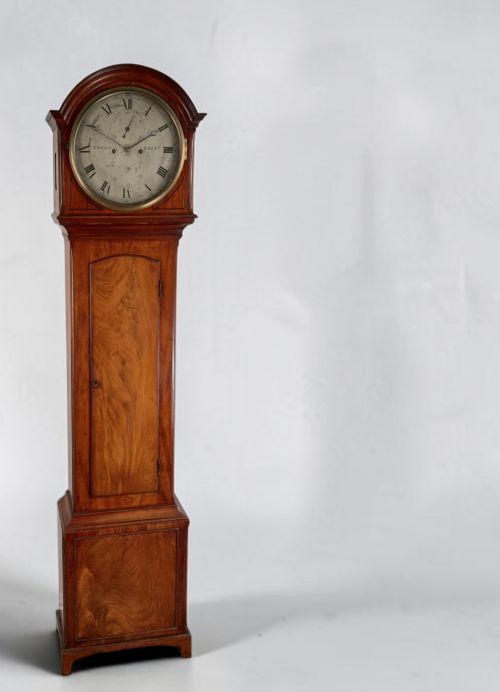
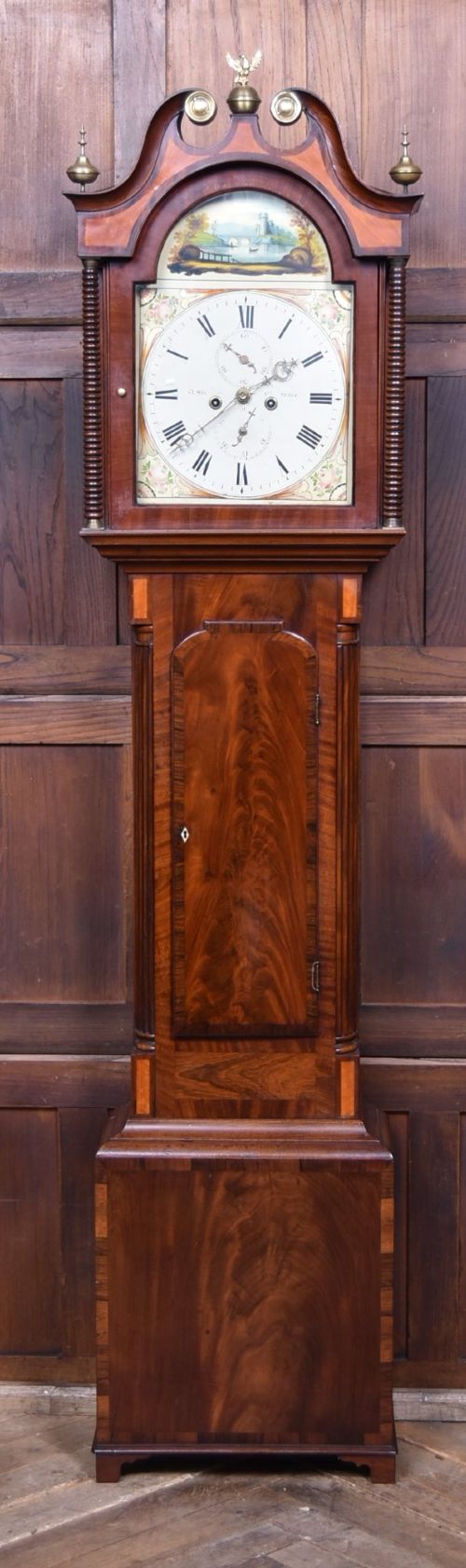
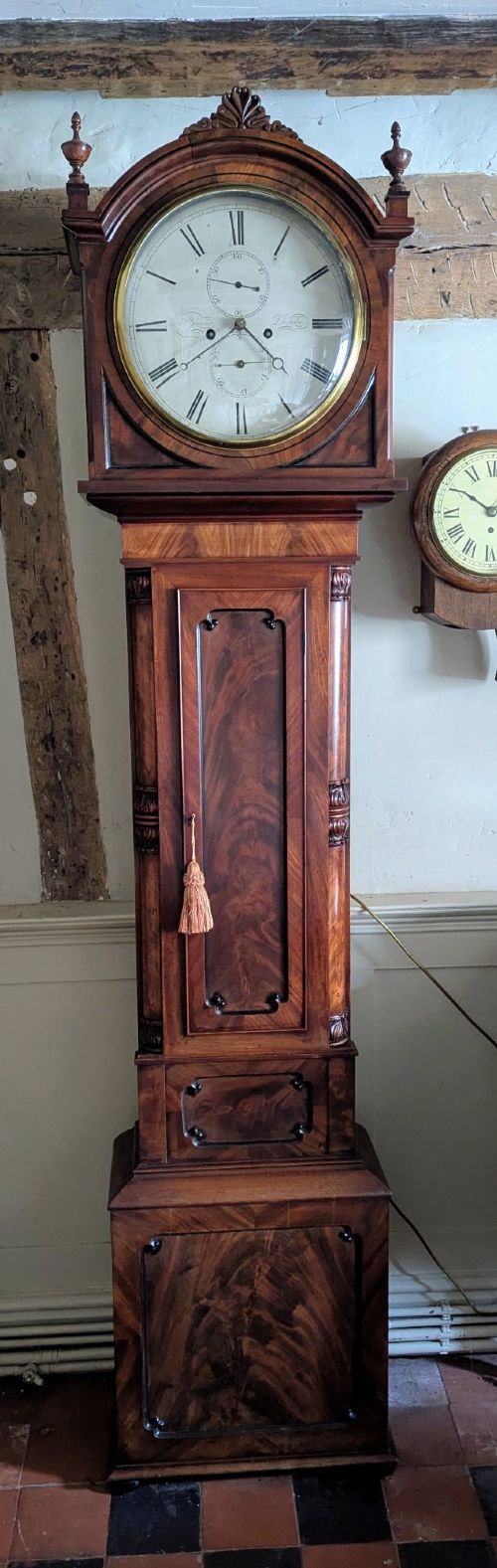
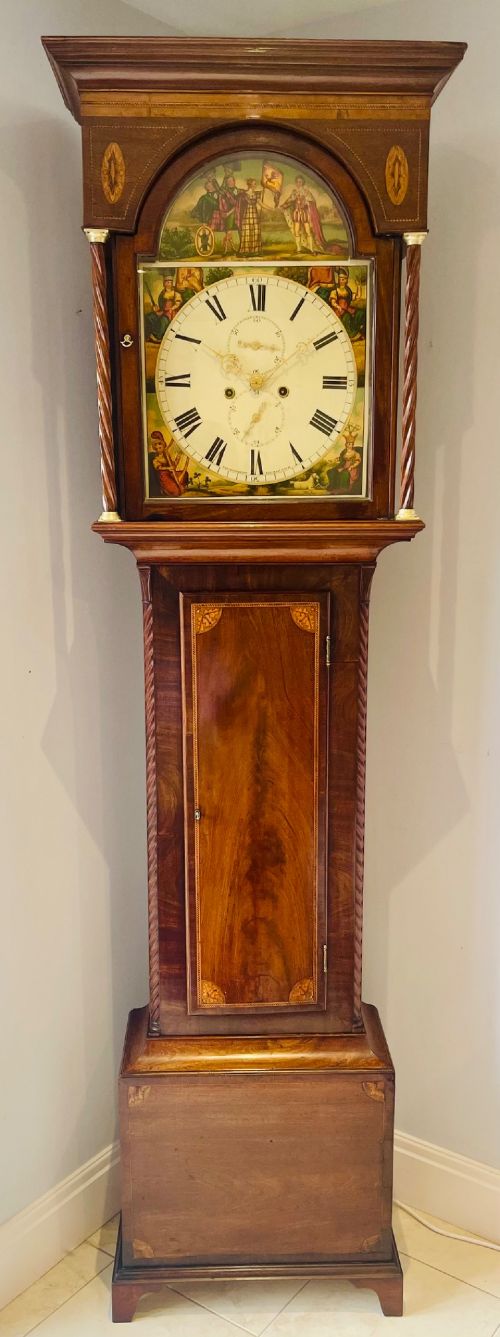
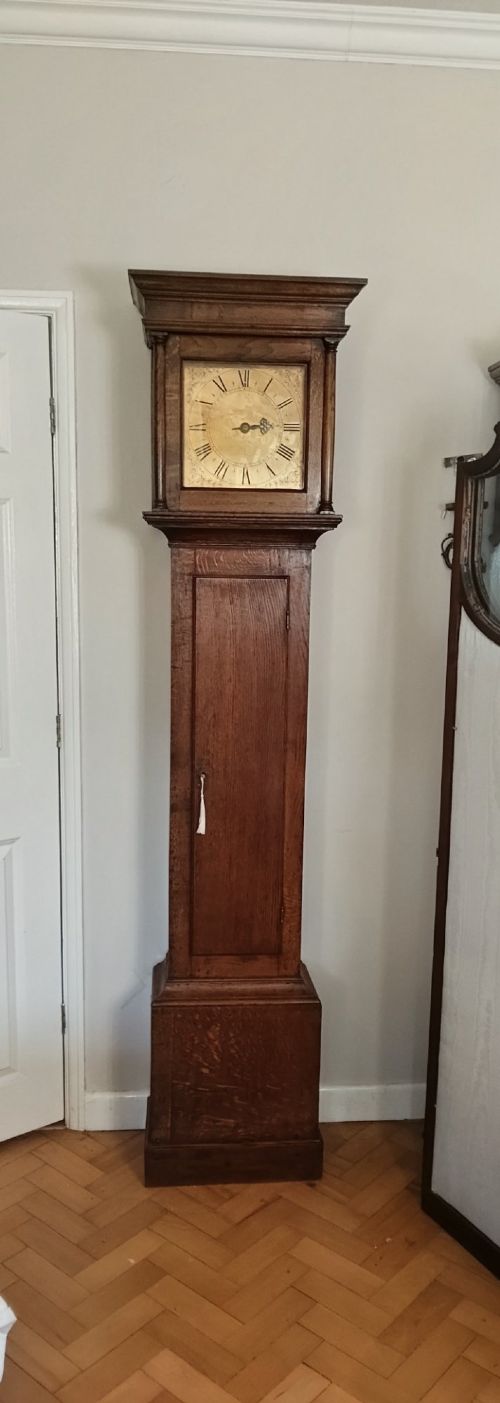
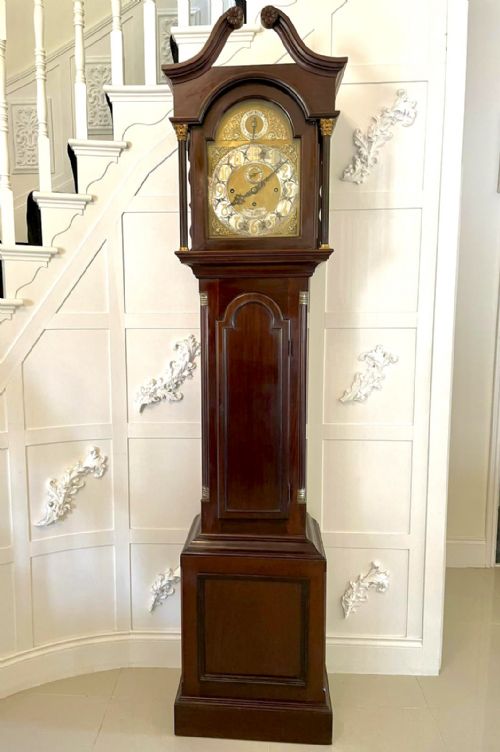
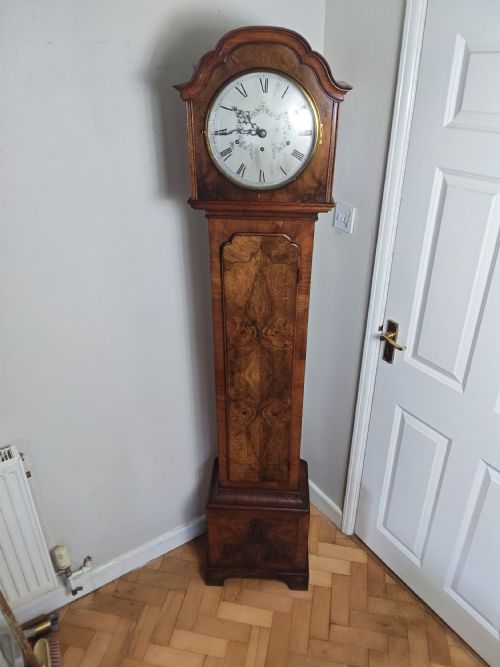


Brown Wooden Grandfather Clock
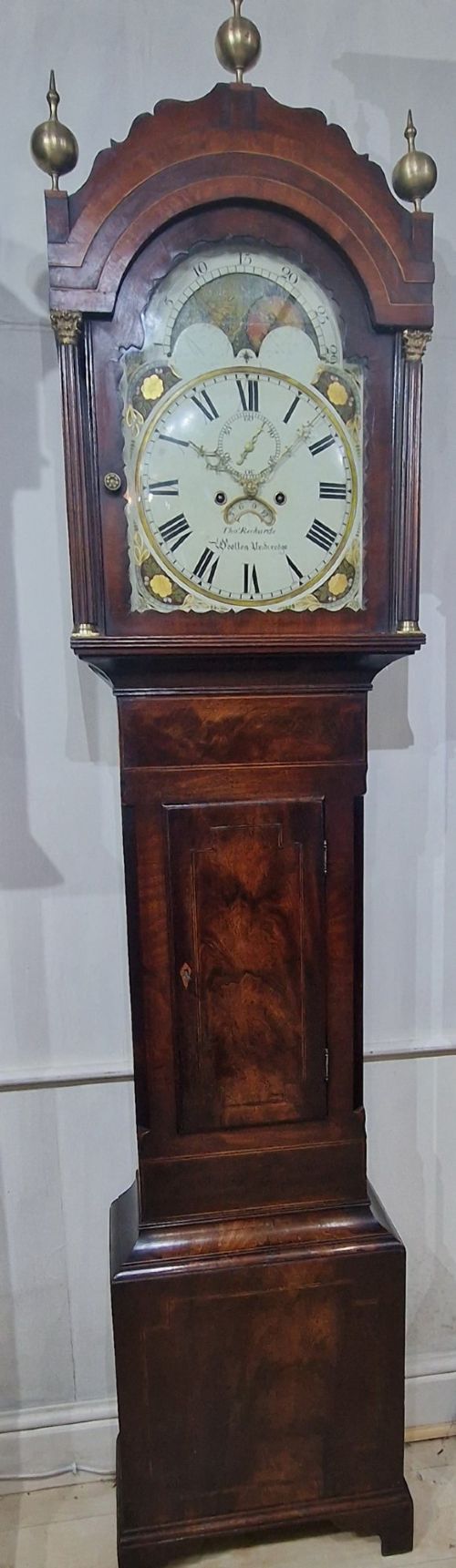
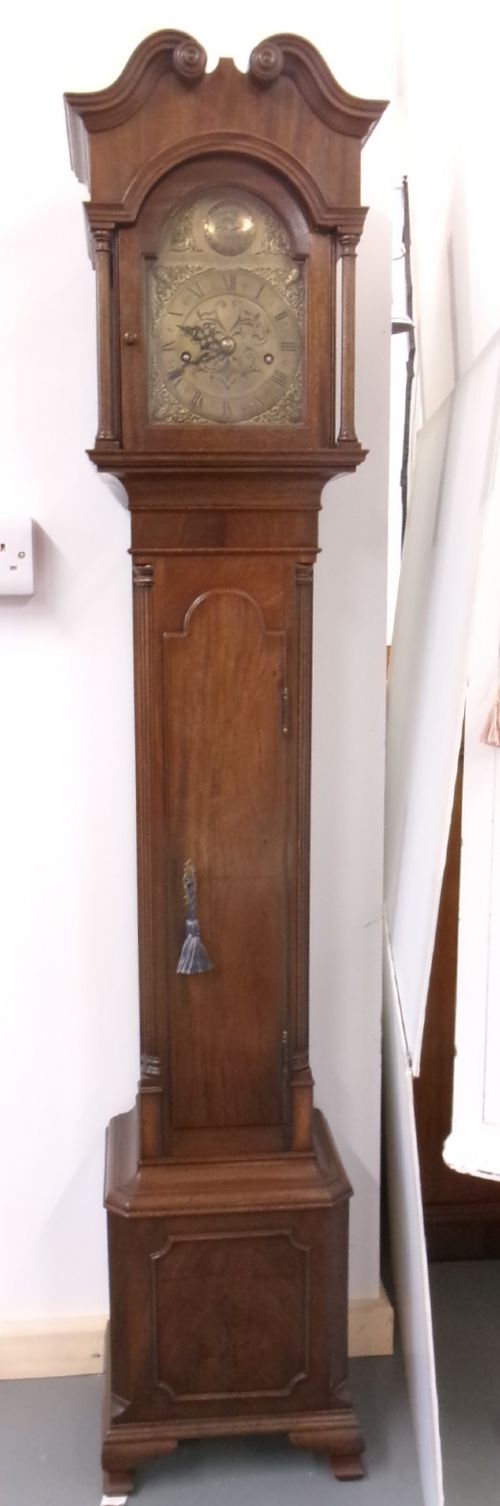
These brown wooden grandfather clock examples anchor a room with steady rhythm and rich timber, built to keep time across generations.
What these brown wooden grandfather clock pieces are
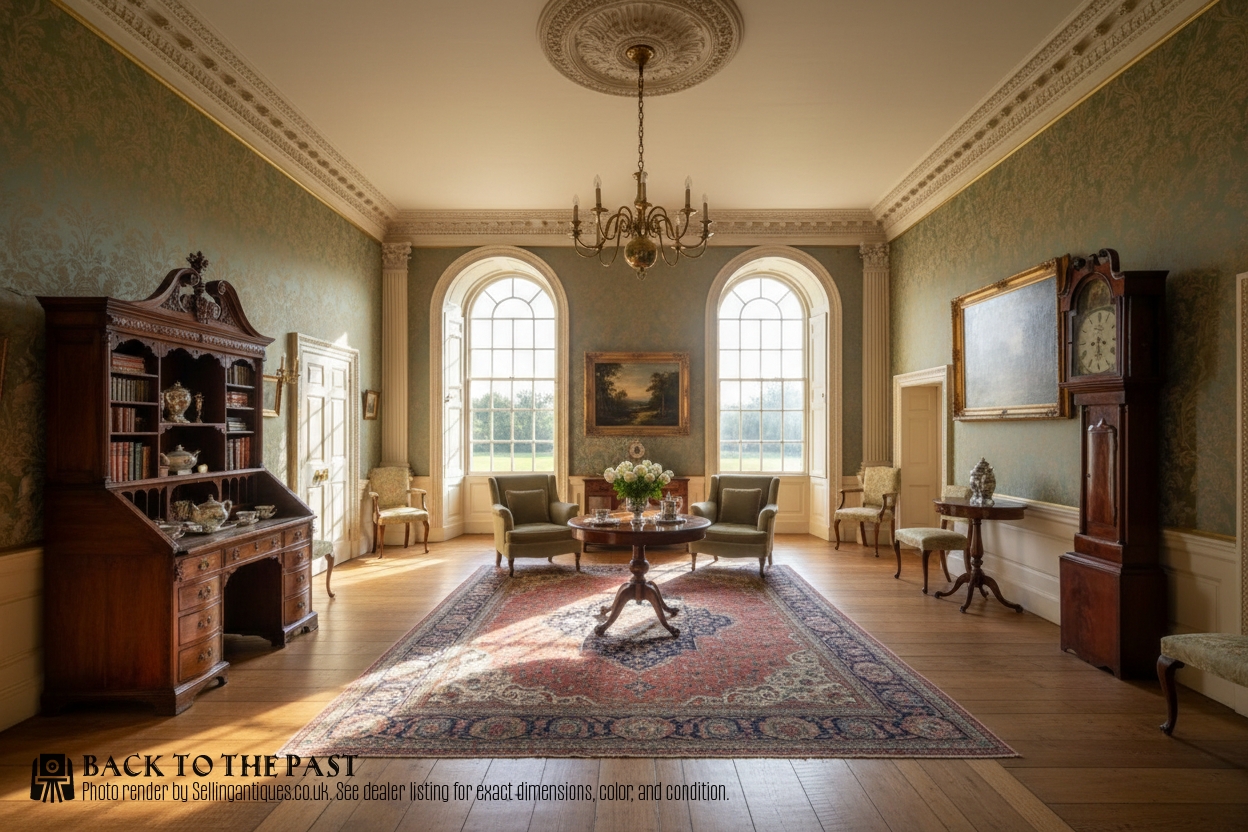
When you search for a brown wooden grandfather clock, you encounter tall floor-standing timepieces that range from compact nineteenth-century examples to grand Georgian and Victorian forms. These longcase clocks appear in materials such as oak, walnut, and mahogany, reflecting the cabinet-making standards of their respective eras.
The selections available here showcase diverse regional British craftsmanship, spanning periods from the seventeenth century through the nineteenth century. Buyers often meet pieces featuring brass dials, painted faces, or musical movements housed within flame mahogany veneer and solid timber cases.

How they were made
Cabinetmakers constructed the tall wooden cases using sturdy timbers like oak, walnut, and mahogany, frequently applying flame mahogany veneer to achieve striking figured grain patterns on the trunk doors and bases. Glass panels protected the dial faces while allowing visibility of the swinging pendulum and weights inside.
Horologists fitted intricate brass and iron movements, sometimes incorporating eight-day mechanisms, musical bells, or enamel and painted dials inscribed by regional makers. Master artisans laboured over both the mechanical gear trains and the timber cabinetry to ensure long-term durability and precision.
Retail Price Guide 2026
Typical UK retail prices for brown wooden grandfather clock, calculated from the Sellingantiques database of over a million retail prices indexed since 2003. This retail price guide relies exclusively on Sellingantiques data; no external sources or auction records are used, so the figures do not describe the wider market.
Current listings feature timber cases in oak, walnut, and mahogany, spanning periods from the seventeenth century to the Victorian era.
What varies in quality
The distinction between standard examples and superior longcase clocks lies in the sophistication of the movement and the finesse of the cabinet work. Finely figured timber veneers, complex musical or eight-day mechanisms, and signed dials by noted makers elevate a piece far above utilitarian timekeepers.
Proportion and decorative restraint also determine the standing of a clock, where balanced architectural mouldings and harmonious dial layouts demonstrate superior workshop standards. Lesser examples often feature simpler casework and standard painted faces without specialised mechanical complications.
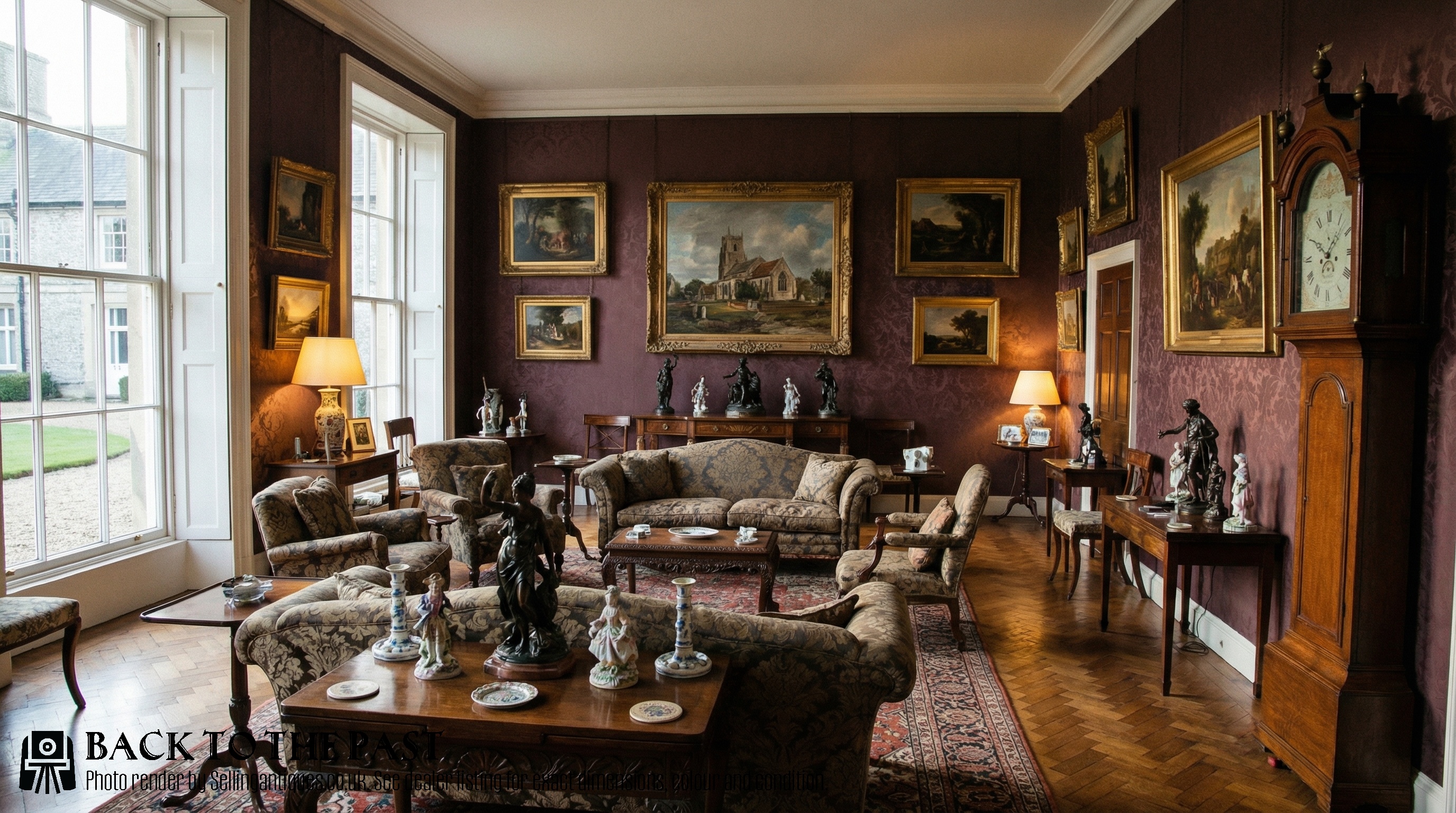
Winsor Bishop Norwich·Joseph Knibb·Jn Wright Linton·Anthony Marsh London
The Brown Wooden Grandfather Clock Glossary
- Longcase clock
- The formal term for a grandfather clock, describing a tall pendulum timekeeper enclosed in a wooden case. These floor-standing pieces became a staple of British domestic interiors from the late seventeenth century onwards.
- Flame mahogany veneer
- A thin slice of mahogany timber cut from the fork of the tree where branches join the trunk, producing a fiery, flammiform grain pattern. Cabinetmakers used this decorative veneer on prominent surfaces like clock doors to catch the light.
- Eight-day movement
- A clock mechanism designed to run for eight days on a single winding of the weights or springs. This upgrade reduced the frequency of winding compared to standard thirty-hour clocks.
- Enamel face
- A dial surface created by fusing powdered glass to a metal plate under high heat, providing a smooth, durable white background for painted numerals. These faces offered high legibility and a clean aesthetic.
- Pagoda longcase clock
- A style of tall clock featuring an elevated, tiered hood design reminiscent of Eastern architecture. This architectural bonnet variation adds significant height and decorative presence to the upper case.
Frequently Asked Questions
How do I wind a grandfather clock?
Winding involves using a specialised key to raise the internal weights or tension the springs via holes in the dial face. Care must be taken not to over-wind the mechanism.
Most eight-day movements require weekly winding to maintain accurate timekeeping and keep the pendulum swinging steadily.
Where should I place a longcase clock?
Position your clock against a solid interior wall away from direct sunlight, heating vents, and damp areas. Stable environmental conditions protect the wooden casework and veneer from warping.
Placing the clock on an even floor ensures the pendulum hangs plumb and the escapement beats evenly for reliable timekeeping.
How do I date a wooden clock?
Examine the timber species, dial construction, and cabinet proportions to narrow down the period of manufacture. Walnut and oak dominate earlier centuries, while mahogany and painted enamel faces become common later.
Signature details on the dial or movement backplate often point to a specific maker and active working dates recorded in historical archives.
What maintenance do these clocks need?
Regular dusting of the wooden case with a dry cloth keeps the timber finish clean and prevents dust buildup on the glass panels. Avoid using harsh chemical polishes that can damage antique surfaces.
Professional oiling and servicing every few years ensures the brass gears and pivots continue to operate without excessive wear.