



Antique Grandmother Clock
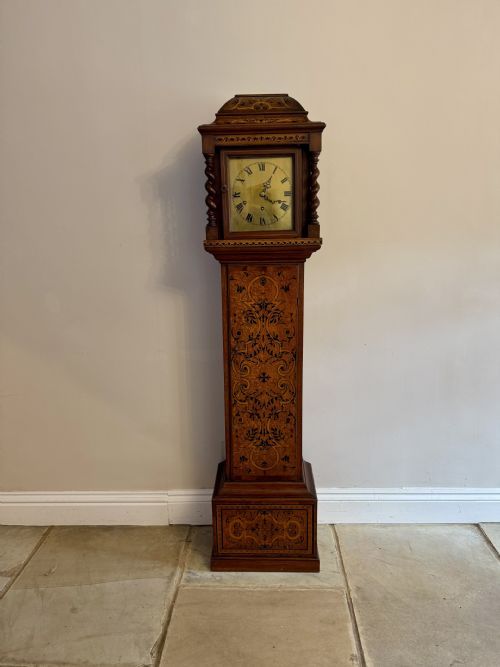
An antique grandmother clock delivers the dignity of a tall case timekeeper in a scaled-down proportion suited for modern rooms.
What an antique grandmother clock is
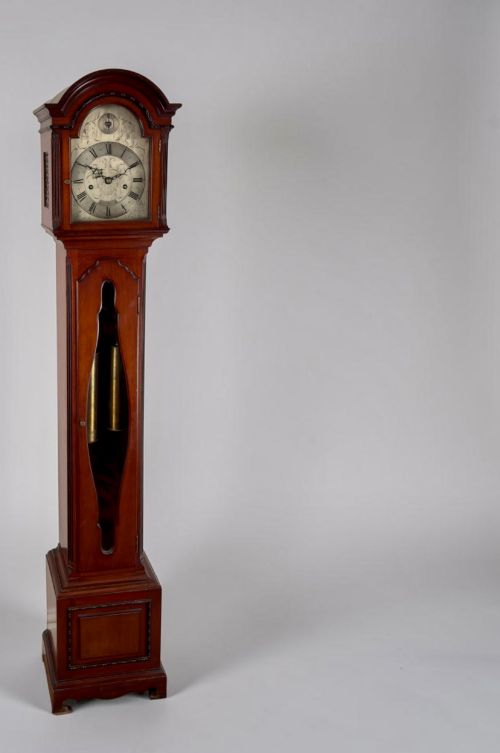
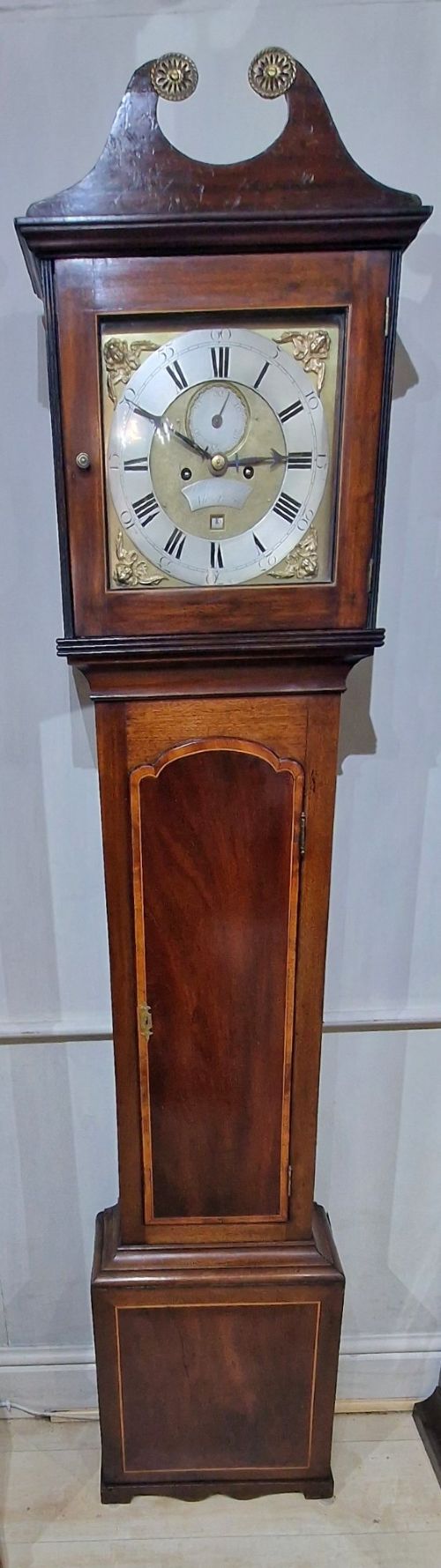
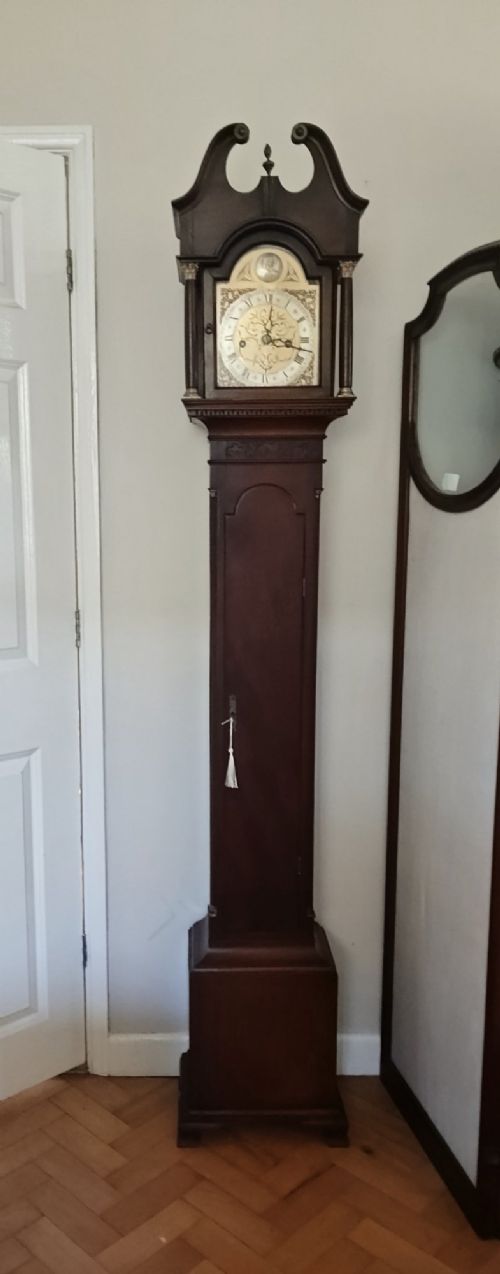
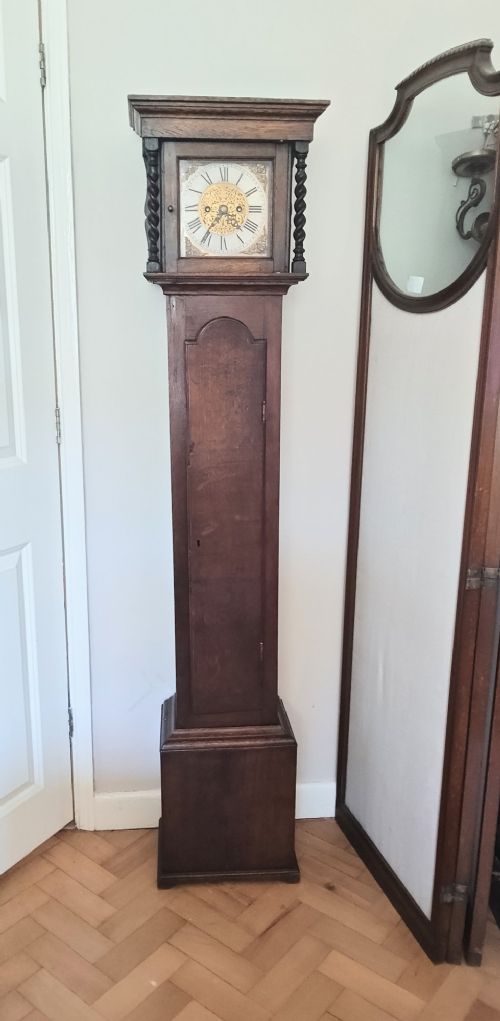
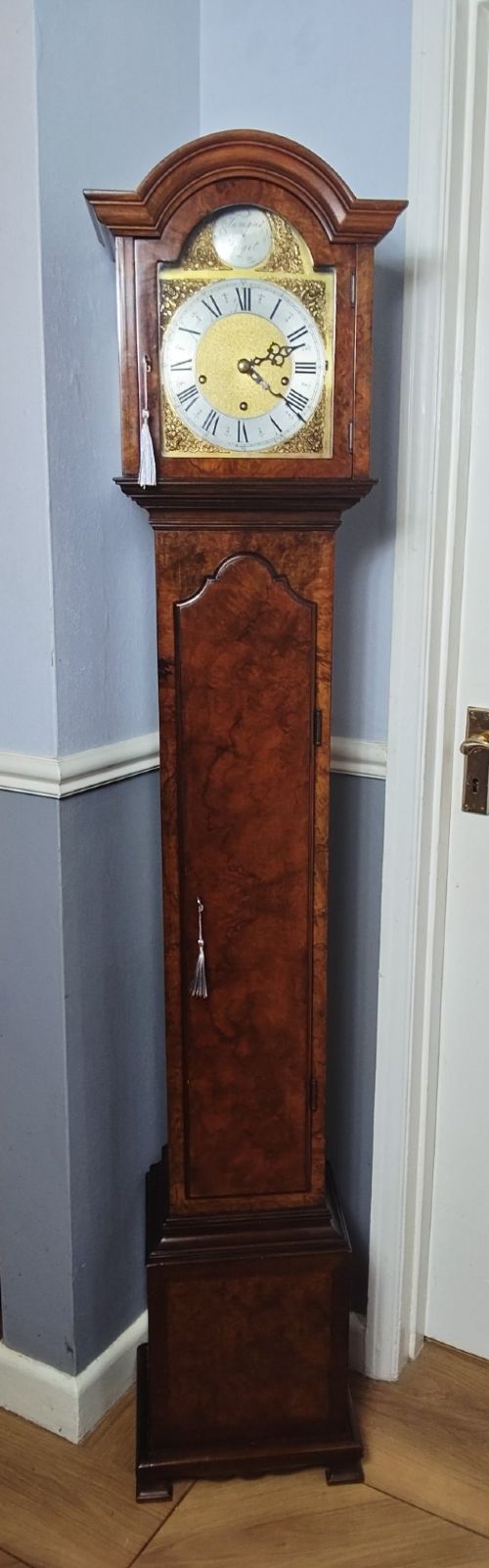
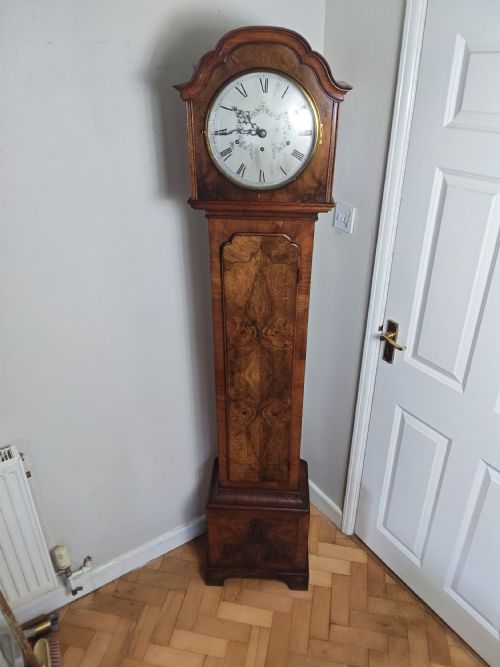
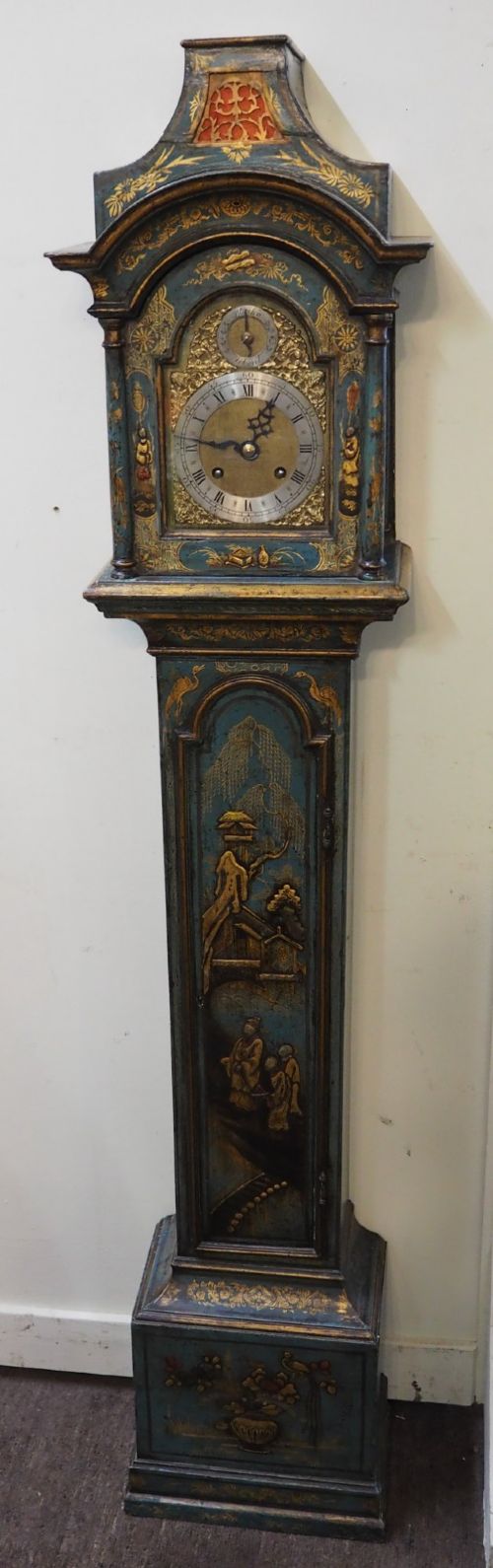
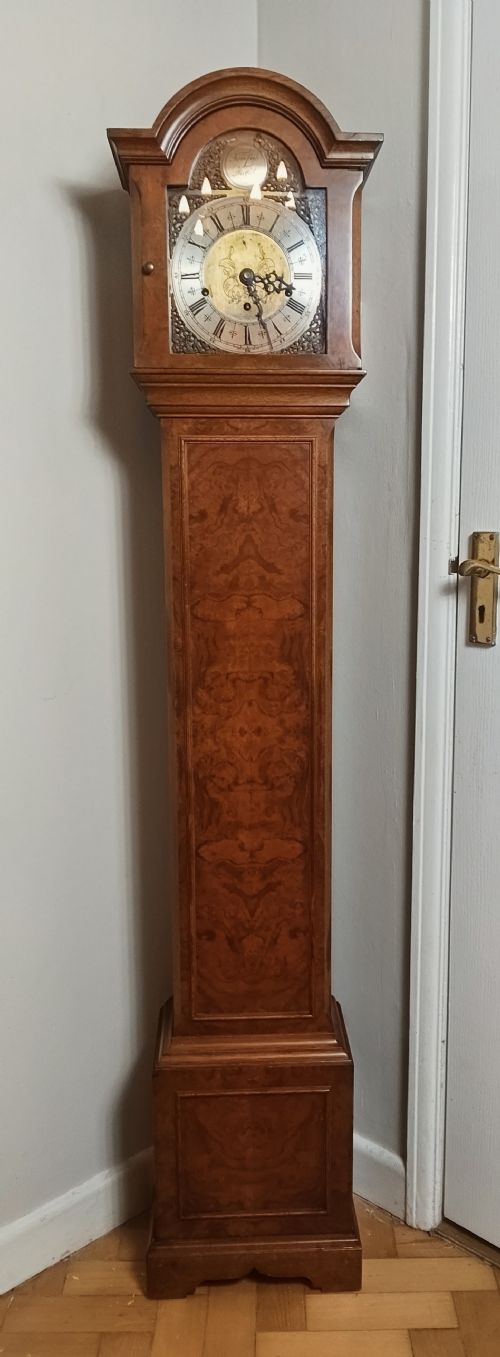
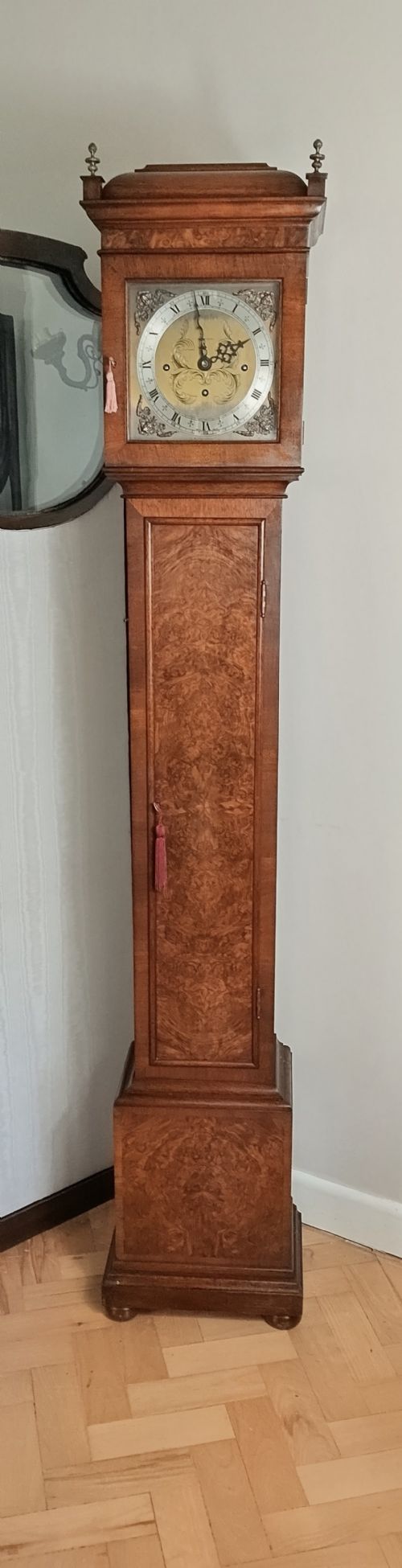
An antique grandmother clock provides the traditional striking movement and slender silhouette of a full-size longcase clock in a reduced height, usually appearing in Edwardian, Victorian, and late nineteenth-century forms. These pieces stand as smaller domestic timekeepers rather than monumental hall clocks, often following Georgian Revival or Chippendale style idioms.
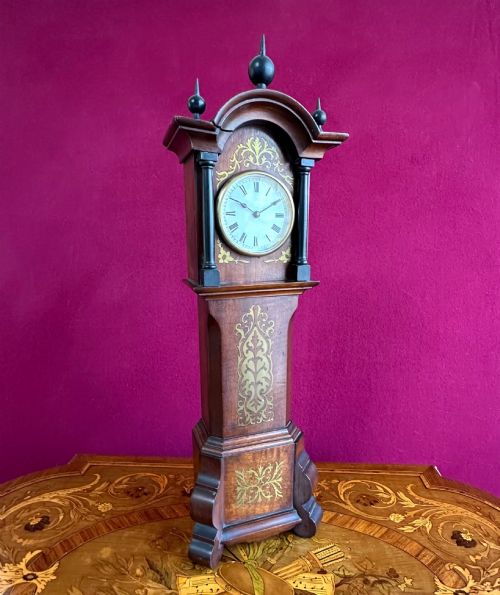
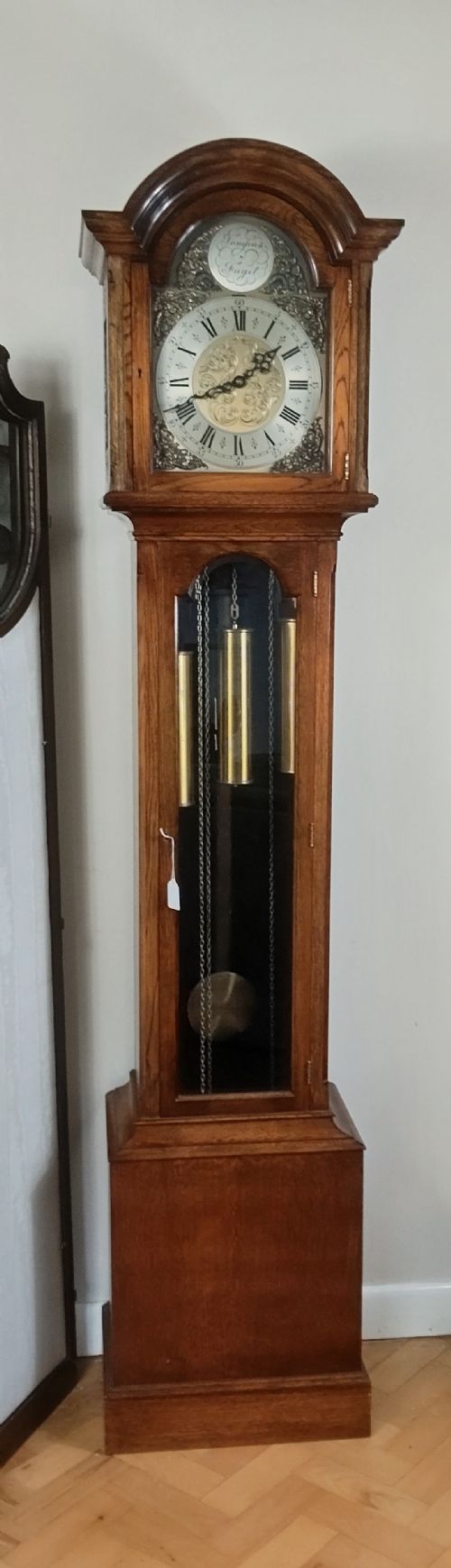
The selection ranges from Edwardian mahogany inlaid examples and walnut miniatures to robust oak eight-day chiming versions and seventeenth-century style models. Makers such as Dent of London, Mappin and Webb, Waring and Gillow Ltd Liverpool, and John Bagshaw and Sons Liverpool appear in the records alongside unsigned pieces.
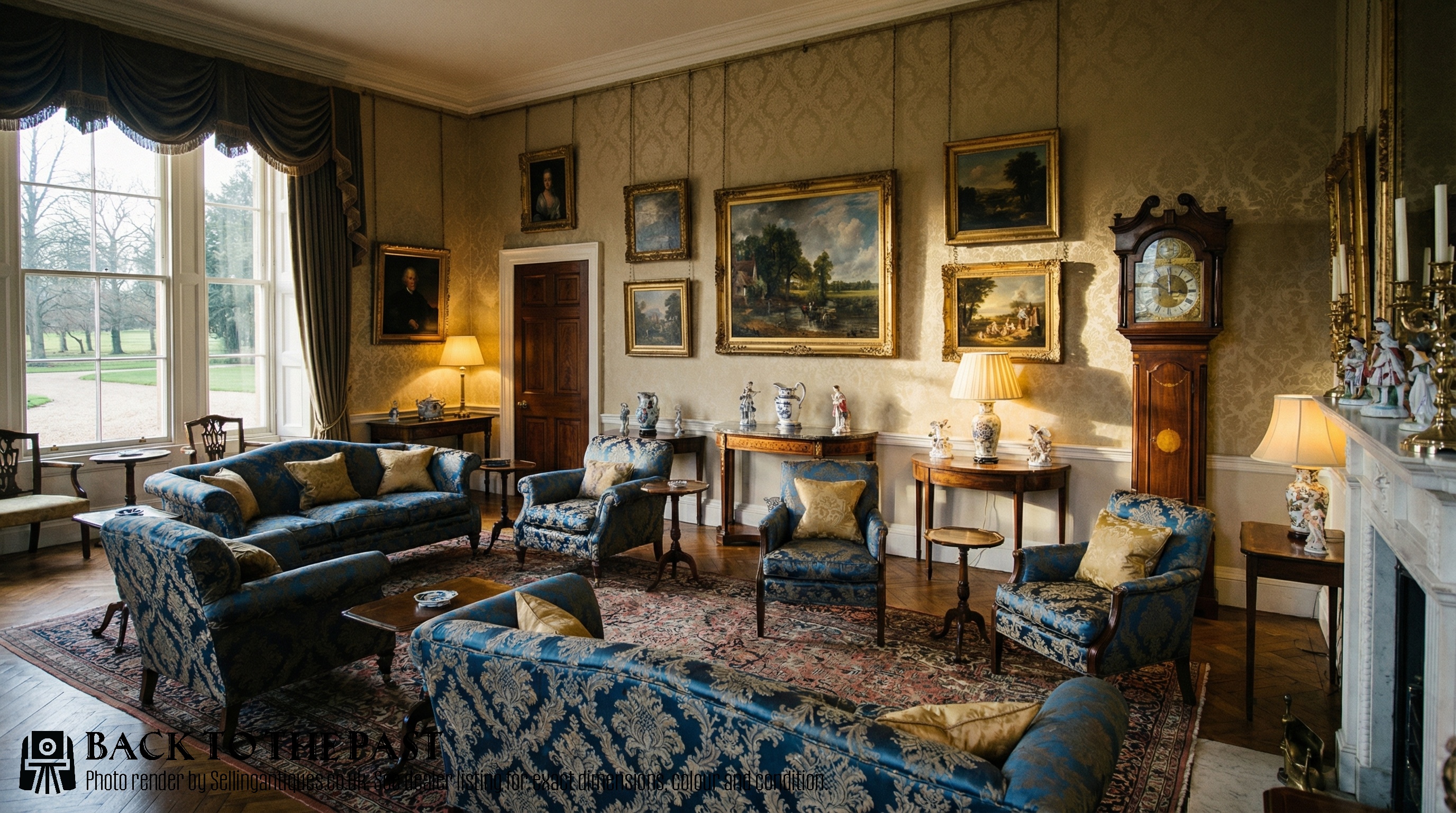
Makers constructed these scaled-down longcase clocks to fit the lower ceiling heights and cosier rooms of nineteenth and early twentieth-century homes while retaining the brass dials, chiming mechanisms, and glazed doors of their taller predecessors.
How they were made
Workshops housed eight-day movements, chiming systems playing on tubes or bells, and regulators within these fitted wooden housings. The construction demands precise joinery to maintain vertical stability in a narrow trunk while allowing easy access to the weights, pendulum, and dial.
Retail Price Guide 2026
Typical UK retail prices for grandmother clock, calculated from the Sellingantiques database of over a million retail prices indexed since 2003. This retail price guide relies exclusively on Sellingantiques data; no external sources or auction records are used, so the figures do not describe the wider market.
Some miniature clocks contain five tubular bells that turn an ordinary hallway into a private cathedral every quarter hour.
What varies in quality
The distinction between standard domestic examples and top-tier pieces rests on the selection of timber, such as burr walnut or figured flame mahogany, and the crispness of carved details or marquetry inlay. Maker attribution to established firms like Waring and Gillow or Mappin and Webb elevates an example above unrecorded workshop production.
Complexity of the movement also divides the range, separating simple time-only pieces from sophisticated eight-day models with Westminster chimes playing on multiple tubes or bells. The proportion and balance of the miniature case relative to a full-size longcase determine the visual success of the piece.
Dent of London·Mappin and Webb·John Bagshaw and Sons·Waring and Gillow Ltd Liverpool
The Antique Grandmother Clock Glossary
- Longcase clock
- A tall pendulum clock enclosed in a wooden case standing directly on the floor. These tall timepieces date back centuries before smaller domestic versions emerged.
- Grandmother clock
- A miniature version of the traditional longcase clock, typically standing under six feet tall. This scaled-down form gained popularity during the Victorian and Edwardian periods.
- Chiming movement
- A clock mechanism that sounds the quarters and hours using bells, gongs, or metal tubes. Eight-day versions require winding roughly once a week.
- Regulator
- A precision pendulum clock designed for high accuracy. Edwardian examples in mahogany showcase this specialised horological focus.
Frequently Asked Questions
How tall is a grandmother clock?
These miniature longcase clocks generally stand between five and six feet tall, noticeably shorter than standard grandfather clocks which often exceed six and a half feet.
This reduced stature allowed Victorians and Edwardians to place tall case timekeepers in rooms with standard ceiling heights without overwhelming the interior space.
Do these clocks chime?
Many examples feature eight-day movements capable of playing Westminster chimes on gongs, bells, or metal tubes.
Simpler models indicate time without striking, while chiming versions require both the going and striking trains to be wound periodically.
Which woods appear most often?
Mahogany, oak, and walnut dominate the surviving examples, often enhanced by flame mahogany veneer, burr walnut, or satinwood inlay.
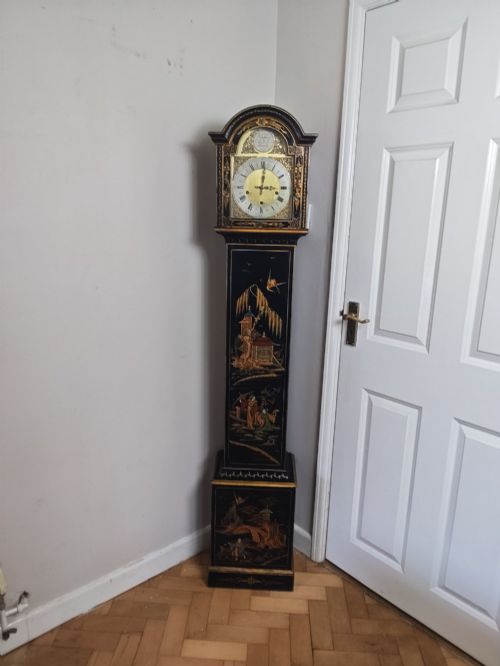
Chinoiserie painted finishes and polychrome decorations also occur on select Edwardian and revival pieces.
How do I date a grandmother clock?
Dating relies on combining stylistic clues such as Chippendale revival carving or Edwardian marquetry with the mechanical signatures found on the brass dial.
Named retailers and makers recorded on the dial or movement backplate provide firm benchmarks for the period of manufacture.