


Edwardian Inlaid Clock
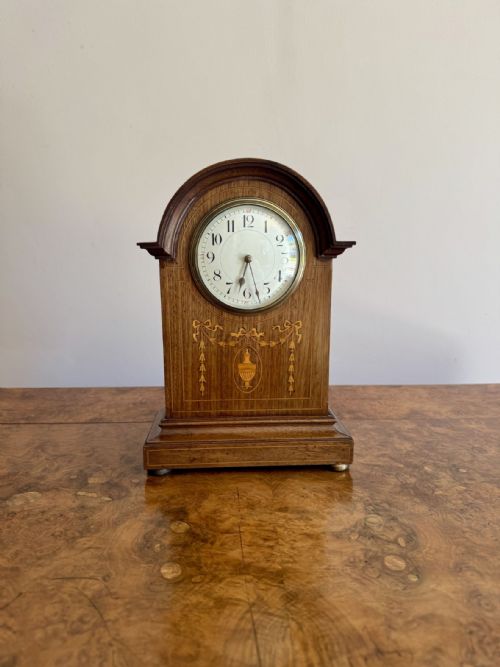
An edwardian inlaid clock brings domestic timekeeping together with delicate woodwork, offering a warm focal point for a mantelpiece or hallway.
Edwardian Inlaid Clock
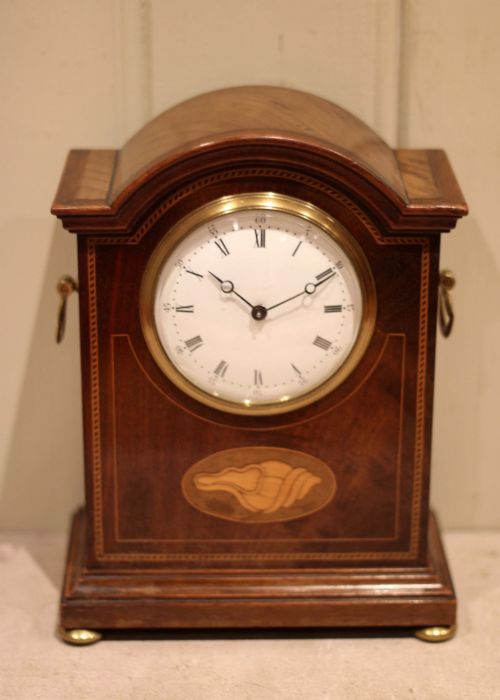
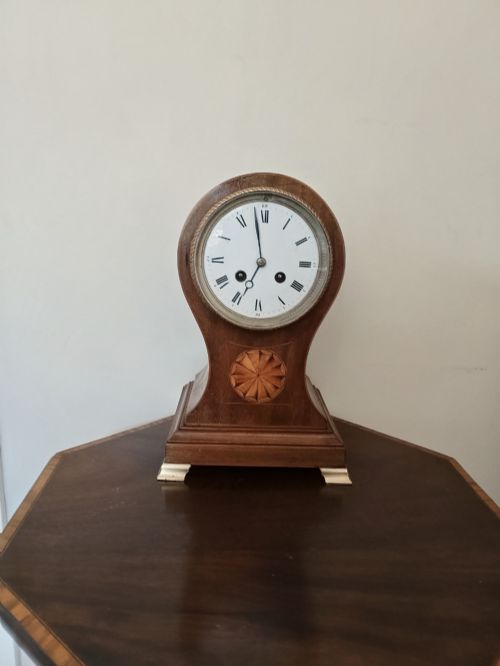
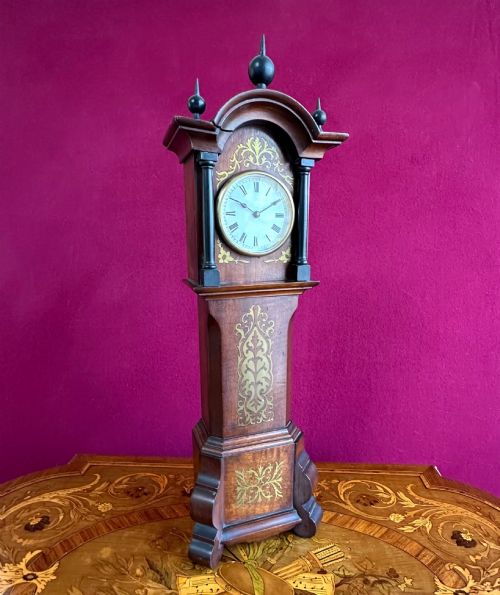
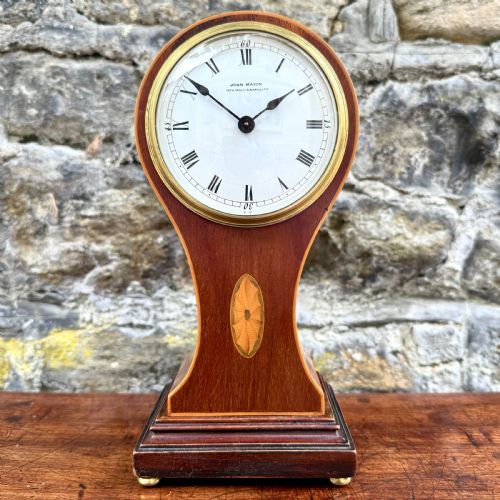
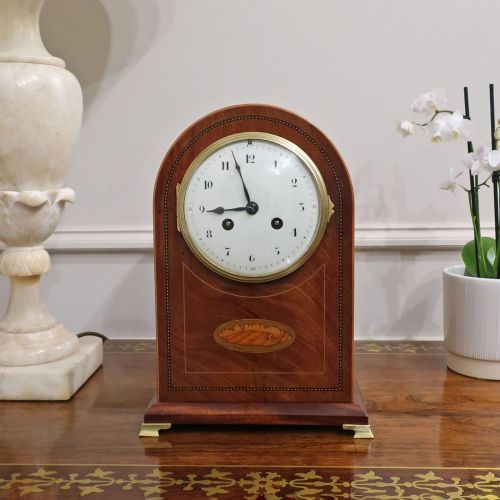
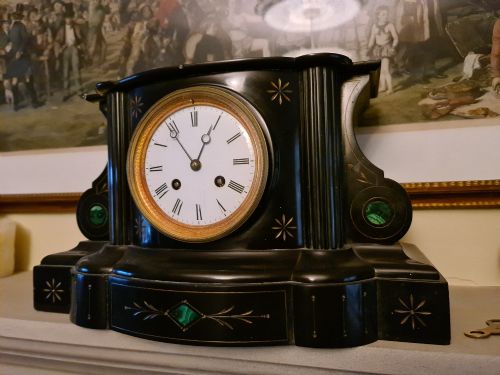
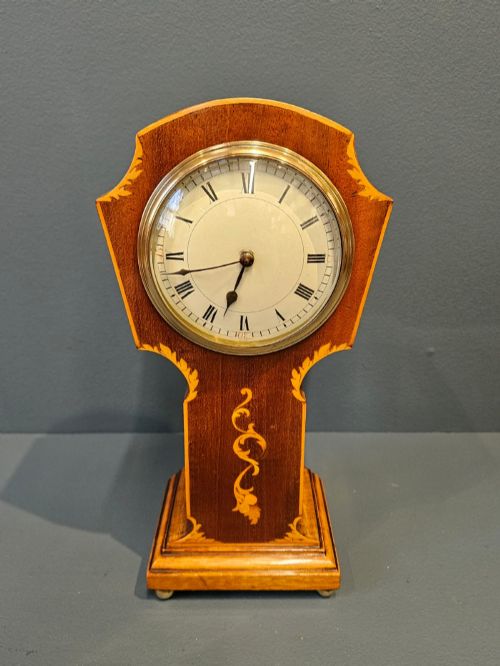
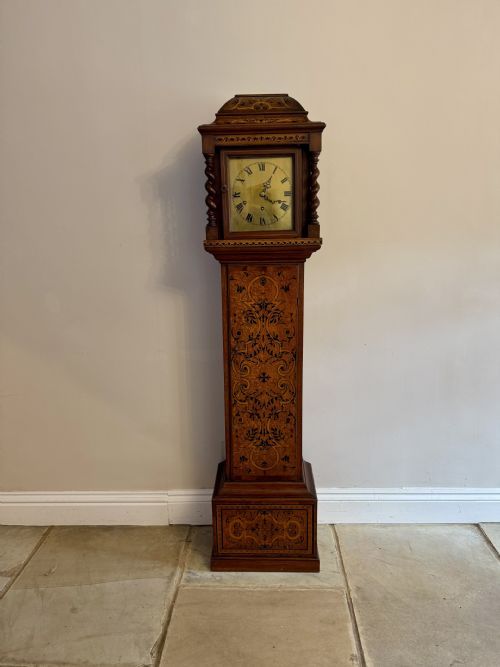
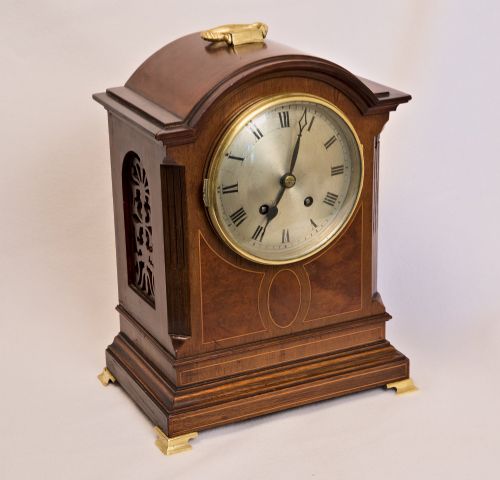
When you search for an edwardian inlaid clock, you encounter timepieces designed primarily as mantel clocks, alongside taller longcase clocks and smaller table formats. The prevailing version on this page is the mahogany mantel clock decorated with subtle marquetry or bandings.
Makers housed these movements in architectural shapes ranging from balloon and arched tops to bracket and NAPOLEON HAT profiles. Alongside standard domestic models, you find occasional variations featuring French or German movements.
The aesthetic bridges late Victorian formality and the flowing lines of Art Nouveau, sometimes incorporating floral motifs, shell patterns, or classical garlands. These pieces served both practical timekeeping and decorative display in period interiors.

Materials and Construction
Cabinetmakers built the foundational carcasses predominantly from mahogany, occasionally utilising rosewood, oak, or fruitwood. They selected these timbers for their stability and grain depth.
Decoration relied on contrasting veneers such as satinwood, boxwood, and various fruitwoods to create intricate floral, shell, or geometric inlays. Brass fittings, including dials, bezels, and feet, provided structural accents and functional contrast.
Movements ranged from simple timepieces to eight-day striking and chiming systems, paired with enamel, silvered, or brass dials protected by glazed doors.
Edwardian Inlaid Clock Retail Price Guide 2026
Typical asking prices for edwardian inlaid clock among the pieces listed under this phrase on Sellingantiques today, from the lower quarter to the upper quarter. They describe what is for sale here now, not the wider market.
Listings feature mahogany as the primary timber, complemented by satinwood inlay, brass fittings, and enamel dials across Edwardian mantel and longcase formats.
Quality Variations
The standard of cabinetwork separates basic production from superior examples. Finely cut inlay, precise mitre joints, and balanced timber selection distinguish high-grade pieces.
Movement quality dictates long-term performance, with well-engineered English fusee mechanisms or signed German and French movements commanding greater appreciation than generic alternatives. The crispness of dial lettering and the weight of cast brass bezels further indicate the original tier of manufacture.
Proportion and symmetry in the inlaid motifs demonstrate the skill of the artisan, where crisp execution of satinwood and boxwood banding elevates the overall presence.
W. Burton·W & H·Dent of London·Junghans·Mappin & Webb·Benson of London
The Edwardian Inlaid Clock Glossary
- Fusee
- A conical pulley used in spring-driven clocks to equalize the driving force as the mainspring unwinds. This mechanism helps maintain consistent timekeeping.
- Marquetry
- The art of applying pieces of veneer to a structure to form decorative patterns and pictures. It differs from inlay by assembling the pattern on a veneer background before fixing it.
- Balloon clock
- A mantel clock housed in a case shaped like a hot air balloon, curving outward from a narrow base to a rounded top. This style gained popularity during the late nineteenth and early twentieth centuries.
- Banding
- A narrow strip of contrasting wood veneer used to frame panels or edges on furniture and clock cases. It highlights the structural lines of the timber.
- Bracket clock
- A portable spring-driven clock historically designed to sit on a wall bracket or table. Many Edwardian examples retain the name despite resting directly on mantelpieces.
Edwardian Inlaid Clock: Frequently Asked Questions
How do I wind my clock safely?
Use the appropriate key and turn it gently in the correct direction until you feel resistance. Avoid over-winding, as this can damage the mainspring.
Keep the winding key in a consistent place near the clock so it remains readily available for weekly maintenance.
What is an eight-day movement?
An eight-day movement requires winding approximately once a week to maintain continuous operation. This type offered greater convenience to Edwardian households compared to daily-wound alternatives.
Many mantel and longcase clocks from this period utilised this system for reliable timekeeping.
How should I clean the wood case?
Dust the mahogany or rosewood surface regularly with a soft, dry cloth. Avoid commercial liquid polishes that build up residue over time.
Apply a microcrystalline wax occasionally to protect the timber and preserve the satinwood inlay without harming the finish.
Why does my clock gain or lose time?
Changes in temperature and humidity affect the metal components and the wooden case, altering the pendulum length or spring tension. Most mechanical movements feature a regulation nut on the pendulum to adjust the speed.
Allow the clock to settle in a stable environment away from direct drafts before making small adjustments.
Can these clocks run on furniture with uneven surfaces?
Uneven placement causes the escapement to beat irregularly, which eventually stops the pendulum. Ensuring the mantelpiece or shelf is level resolves this issue.
Listen to the tick; an even 'tick-tock' rhythm confirms the clock stands properly balanced.