





Mahogany Grandmother Clock
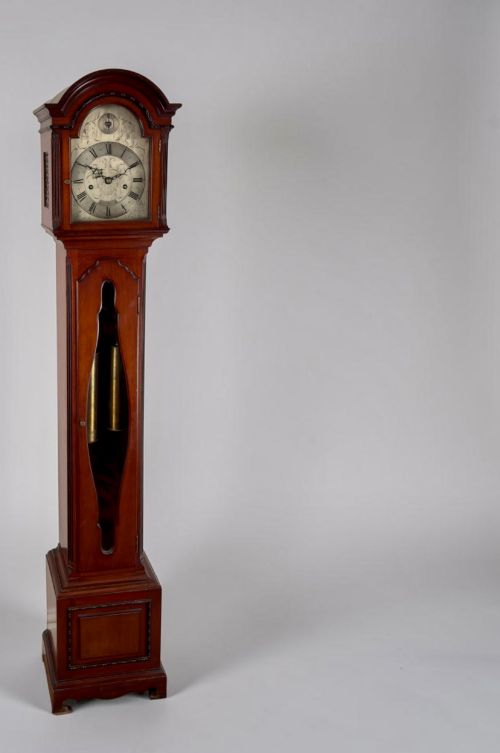
A mahogany grandmother clock brings the presence of a full-size longcase into a smaller room.
Mahogany Grandmother Clock
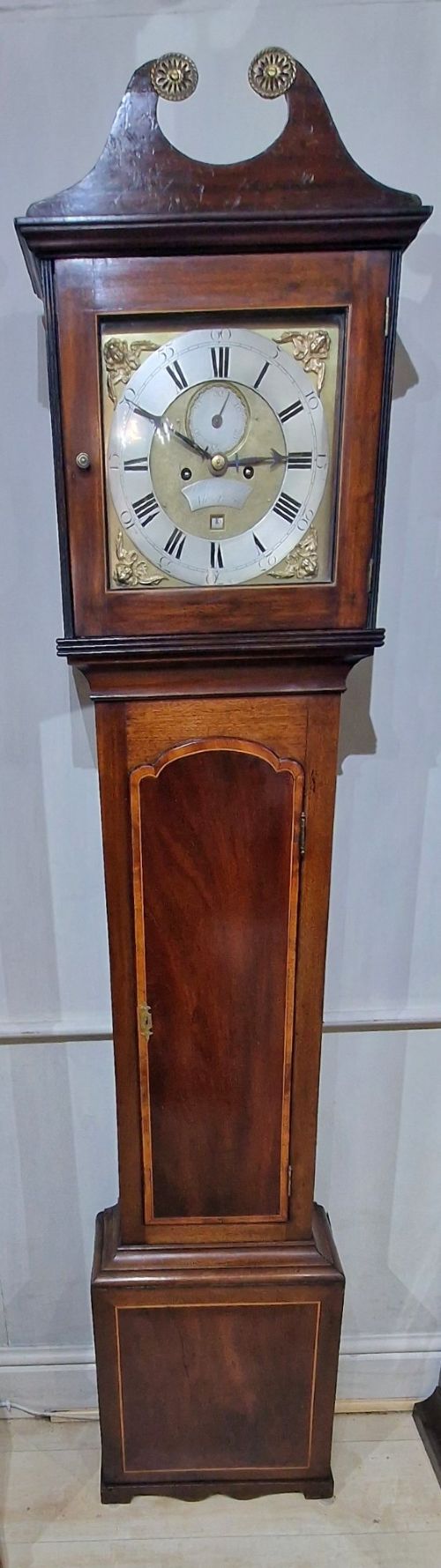
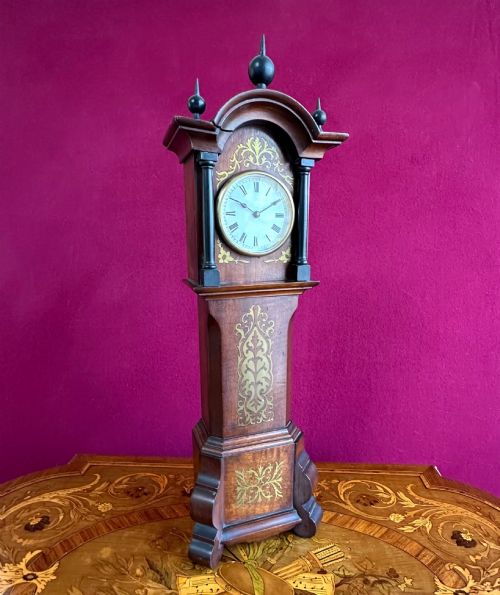
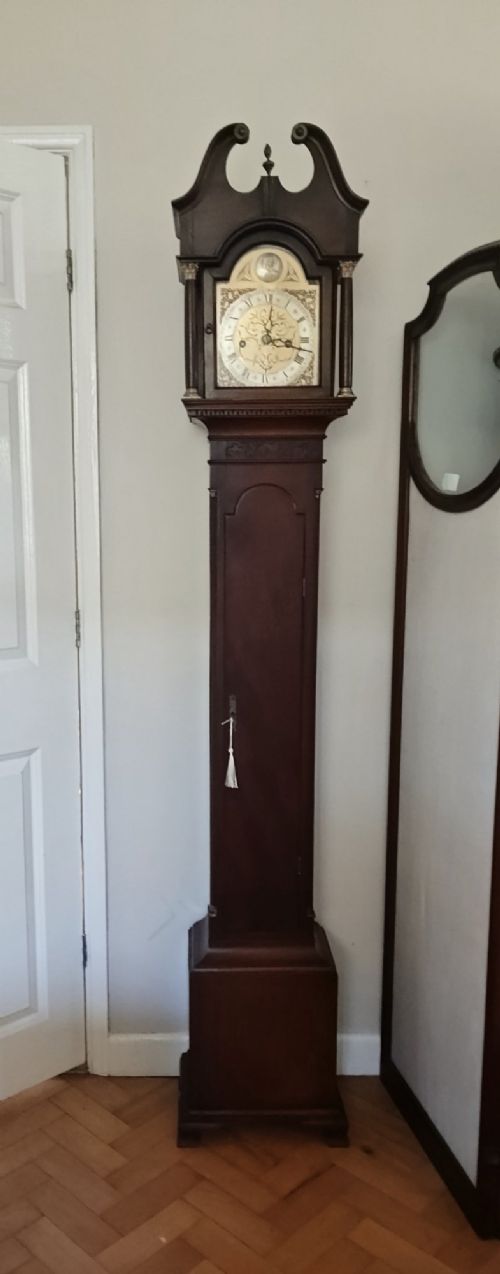
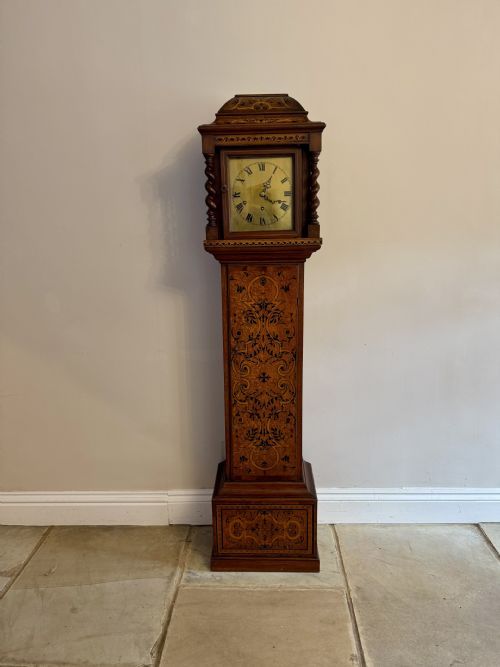
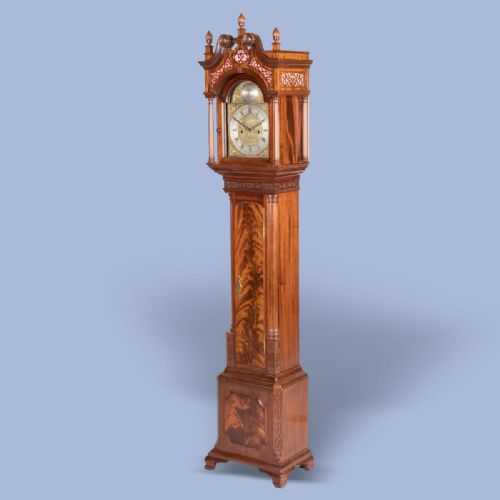
A mahogany grandmother clock is a scaled-down longcase clock, typically standing lower than a traditional grandfather clock while retaining the classic hood, trunk, and base proportions. You are most likely to meet Edwardian and early twentieth-century examples on this page, alongside pieces stretching back through the nineteenth century to the Georgian and Regency periods. The form appears in styles ranging from plain classical cases to Chippendale Revival, Edwardian inlaid designs, and occasional Chinoiserie.
How They Were Made
Cases are constructed primarily from mahogany, occasionally utilising flame mahogany veneers, walnut, or satinwood inlay, fitted with glass panels to the hood and trunk door. The timber is shaped into slender proportions, sometimes carved in the Chippendale style or decorated with marquetry.
Mechanically, these clocks house brass movements driven by steel components, ranging from eight-day timepieces to weight-driven quarter-chiming and triple-tune musical systems.
Mahogany Grandmother Clock Retail Price Guide 2026
Typical asking prices for mahogany grandmother clock among the pieces listed under this phrase on Sellingantiques today, from the lower quarter to the upper quarter. They describe what is for sale here now, not the wider market.
Some models feature an automaton rocking ship that moves in time with the motion of the clock.
What Varies in Quality
Quality rests in the harmony of the case proportions and the ambition of the movement within. The finest examples combine well-figured mahogany timber, precise cabinetwork such as satinwood inlay or carved detail, and complex musical or chiming movements by noted makers.
Simpler time-only clocks in plain mahogany sit at the other end of the scale, relying on their domestic utility and slender dimensions rather than elaborate mechanical or decorative work.
Gillett and Johnston·Dent of London·JJ Elliot·Waring and Gillow·Gustav Becker
The Mahogany Grandmother Clock Glossary
- Longcase clock
- A tall pendulum clock enclosed in a wooden case consisting of a hood, trunk, and base. These pieces are often referred to interchangeably as grandfather, grandmother, or dwarf clocks depending on their height.
- Grandmother clock
- A miniature version of the longcase clock, generally standing under six feet tall. They were produced in quantity during the Edwardian period and the early twentieth century.
- Fusee
- A conical pulley used in clock movements to maintain an equal pull on the train as the mainspring unwinds. This mechanism helps the clock maintain accurate timekeeping throughout its running period.
- Quarter chiming
- A movement arrangement that plays a sequence of notes on bells or gongs at the quarters of the hour. The Westminster tune is the most common variation seen in these musical clocks.
- Marquetry
- Decorative inlay work using various tinted woods to form pictorial patterns on the surface of the case. It is frequently encountered on Edwardian mahogany examples.
Mahogany Grandmother Clock: Frequently Asked Questions
How tall is a mahogany grandmother clock?
These miniature longcases generally stand noticeably lower than standard grandfather clocks, often measuring between six and seven feet in height.
Their reduced proportions make them suitable for rooms with lower ceilings where a full-size tall case would dominate the space.
What is the difference between a grandfather and grandmother clock?
The primary distinction lies in overall height and scale, with grandmother clocks offering a more slender and compact presence.
Both share the traditional three-part longcase architecture of hood, trunk, and base.
How do I wind an eight day chiming movement?
Eight day movements require winding via the dial holes using a matching key every week to keep the going and chiming trains operational.
Care should be taken not to overwind the springs or weights depending on whether the mechanism is spring-driven or weight-driven.
Where should I place a grandmother clock in my home?
These clocks suit hallways, landings, or principal reception rooms where their proportions can be appreciated without obstruction.
They should be positioned against a stable interior wall away from direct sunlight and heavy draughts to protect the mahogany case and keep the pendulum beating evenly.