



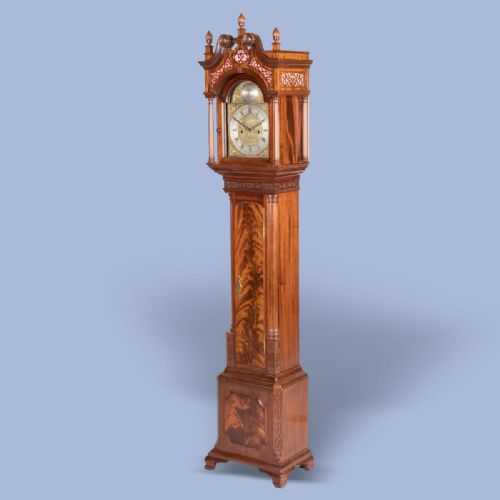

Edwardian Grandmother Clock
An edwardian grandmother clock offers the presence of a full-size longcase in a scaled-down proportion suited for smaller rooms.
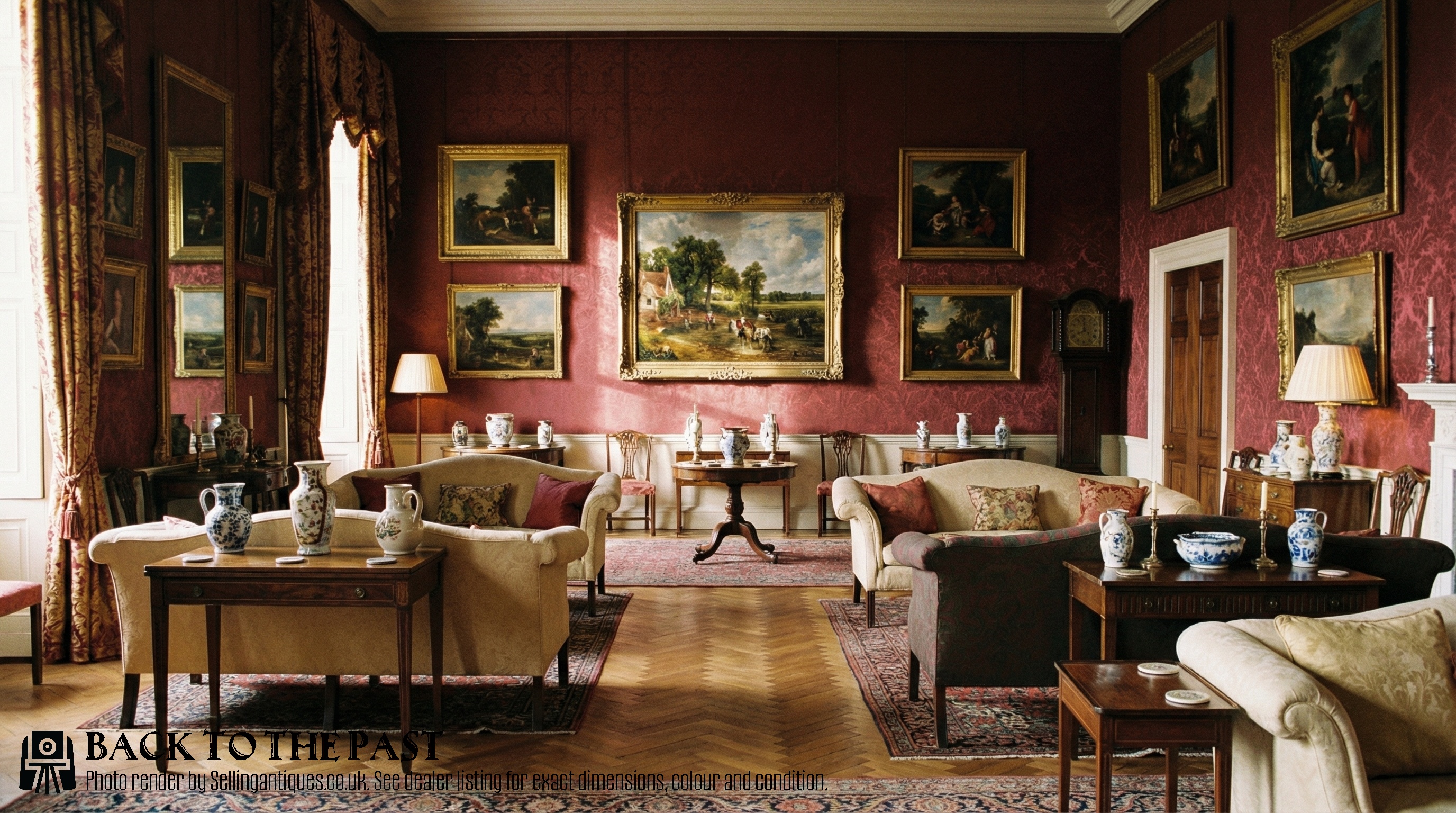
Edwardian Grandmother Clock
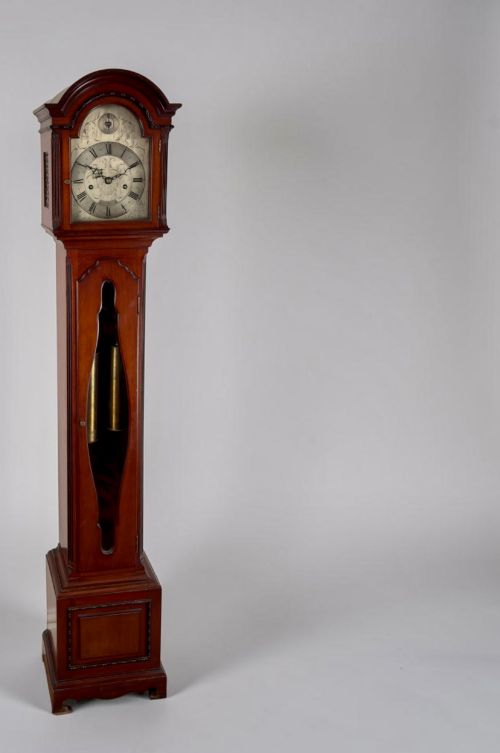
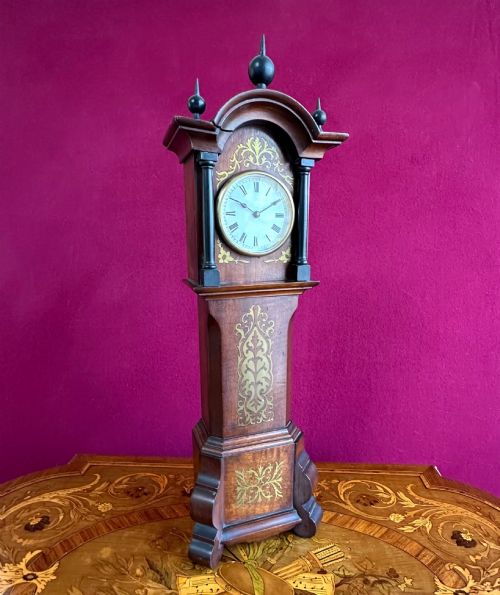
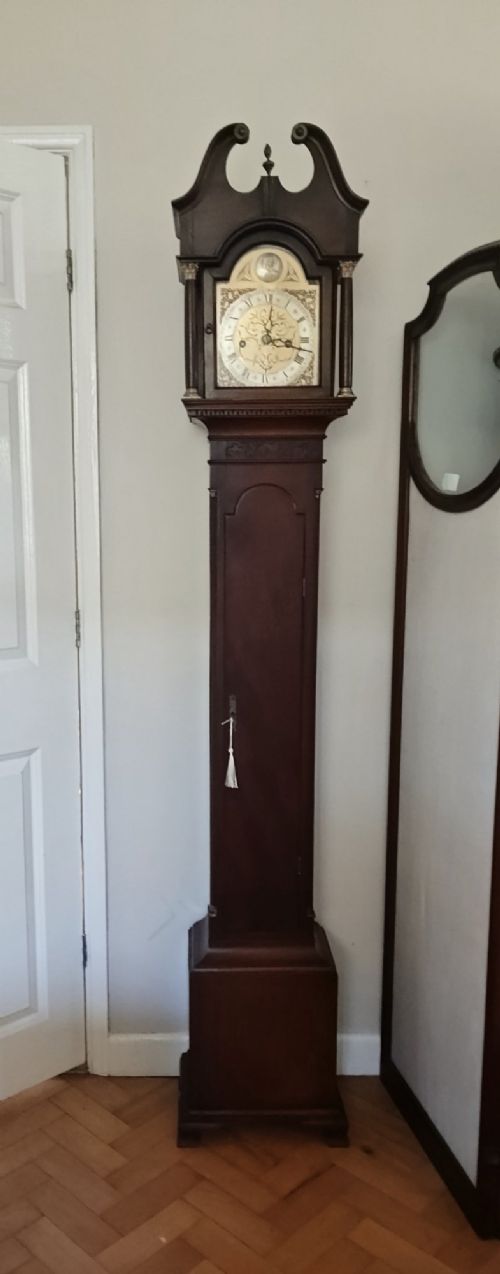
An edwardian grandmother clock is a small longcase timepiece produced primarily during the early decades of the twentieth century. These scaled-down clocks share the proportions and mechanics of traditional tall clocks while occupying less floor space.
Most examples date from the Edwardian period or the surrounding decades of nineteen hundred to nineteen twenty. They appear in forms such as miniature longcase clocks, petite grandfathers, and dedicated grandmother clocks.
The objects combine slender wood cases with brass dials, glass doors, and weight-driven or spring-driven movements. They serve as functional timekeepers that fit domestic spaces with lower ceilings.
How they were made
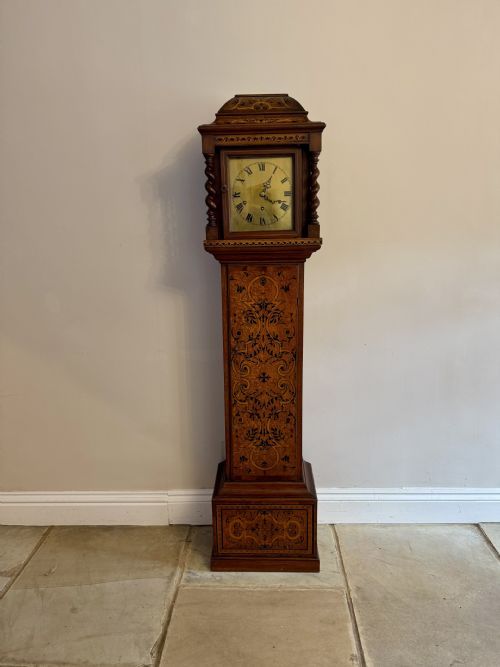
Cases are constructed from timbers such as mahogany, oak, walnut, and satinwood, frequently enhanced with marquetry, string inlay, or barley twist hood columns. The joinery and timber selection mirror the cabinetmaking standards of the period.
Movements incorporate brass dials, steel components, and glass panels to house intricate chiming mechanisms, including quarter-chiming and Westminster chime systems. Master horologists assembled these works to run reliably across eight-day or triple-weight formats.
Edwardian Grandmother Clock Retail Price Guide 2026
Typical asking prices for edwardian grandmother clock among the pieces listed under this phrase on Sellingantiques today, from the lower quarter to the upper quarter. They describe what is for sale here now, not the wider market.
Several makers fitted these miniature towers with mellow-sounding chimes capable of turning a quiet hallway into a miniature cathedral.
What varies in quality
The distinction between standard and superior pieces rests in the execution of the casework and the complexity of the movement. Examples with musical capabilities, triple-weight chiming trains, or elaborate marquetry inlay represent higher tiers of craftsmanship.
Cabinet timber selection also sets pieces apart, with figured mahogany, burr walnut, and satinwood detailing indicating elevated workshop production. The precision of the brass dial and the refinement of the chime further separate ordinary models from workshop highlights.
Gillett and Johnston of Croydon·Harrods·Dent of London·Mappin and Webb·JJ Elliot of London·Cottell Brothers Swindon
The Edwardian Grandmother Clock Glossary
- Grandmother clock
- A small longcase clock standing shorter than a traditional grandfather clock. These pieces maintain full mechanical movements within compact proportions.
- Longcase clock
- A tall pendulum clock enclosed in a wooden case that stands directly on the floor. The weight-driven movement hangs within the trunk.
- Quarter chiming
- A clock mechanism that sounds musical notes or chimes every fifteen minutes. This system often plays tunes such as the Westminster quarters before striking the hour.
- Marquetry
- Decorative veneer work arranged in intricate patterns on the wood surface. Craftsmen used contrasting timbers to create pictorial or geometric designs.
- Barley twist
- A carved spiral column decorating the hood or sides of the clock case. This turning style appeared frequently on oak and mahogany Edwardian models.
Edwardian Grandmother Clock: Frequently Asked Questions
How tall is an edwardian grandmother clock?
These clocks generally stand lower than traditional grandfather clocks, designed specifically to fit standard domestic ceilings without dominating a room.
Their reduced height makes them adaptable for placement in hallways, sitting rooms, and spaces where full-size longcase clocks prove too imposing.
Do these clocks chime?
Many examples feature mechanical chiming movements, ranging from simple hour strikes to intricate quarter-chiming systems that play recognizable tunes.
Some versions utilise triple-weight trains to power both the timekeeping and the musical mechanisms across multiple days.
What woods were used for the cases?
Cabinetmakers utilised traditional timbers including mahogany, oak, and walnut, frequently selecting figured grains or adding satinwood inlay.
Decorative elements such as marquetry panels and twisted hood columns appear across various examples from the period.
How do I wind the clock?
Weight-driven and spring-driven movements require regular winding using a matching key or by pulling up the internal weights depending on the specific mechanism.
Keeping to a consistent schedule ensures the pendulum maintains accurate time and the chiming sequence remains synchronized.