
Mahogany Standing Clock
A mahogany standing clock brings deep timber and precise mechanics together, marking time in tall cases from the eighteenth and nineteenth centuries.
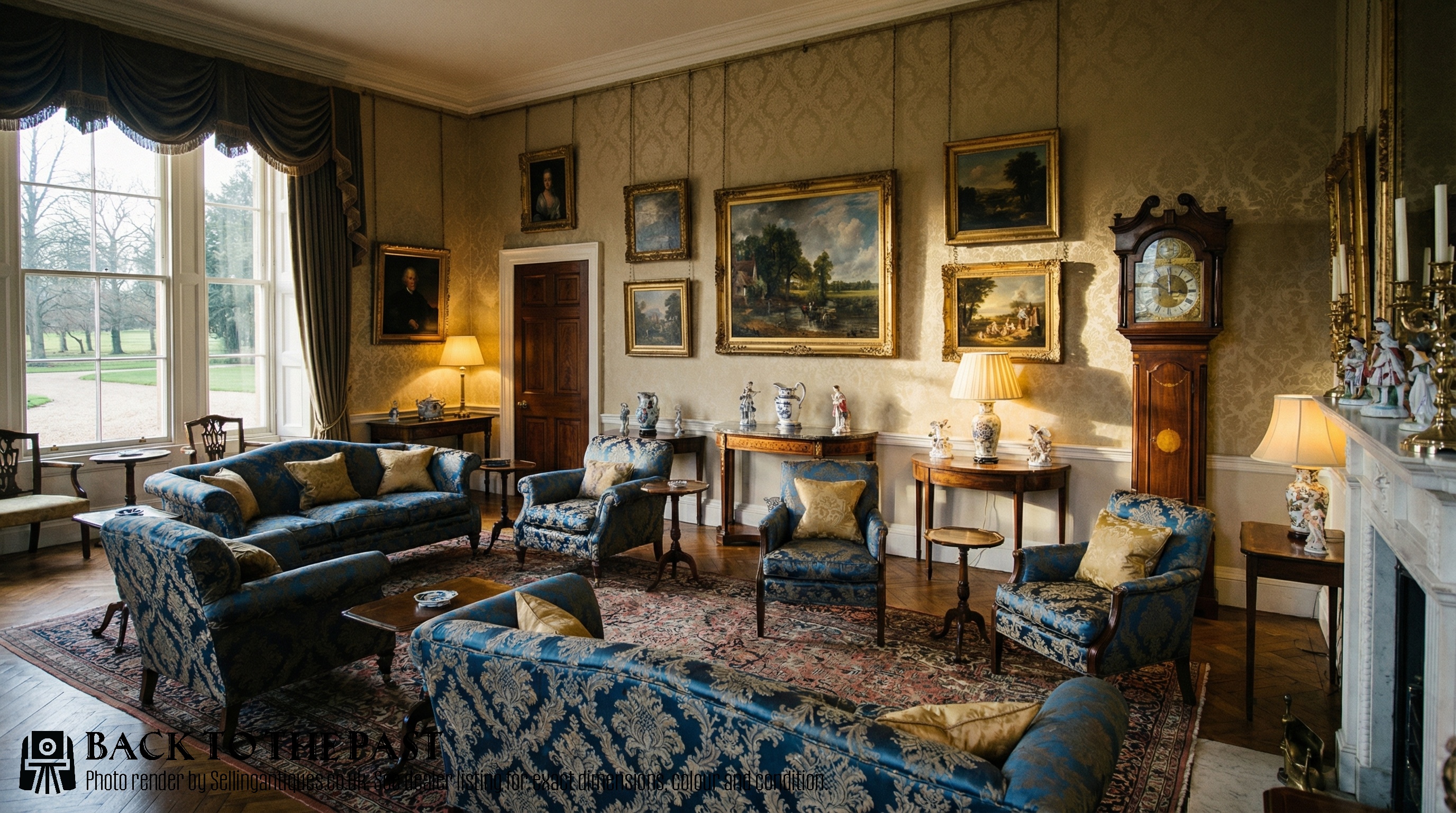
Mahogany Standing Clock
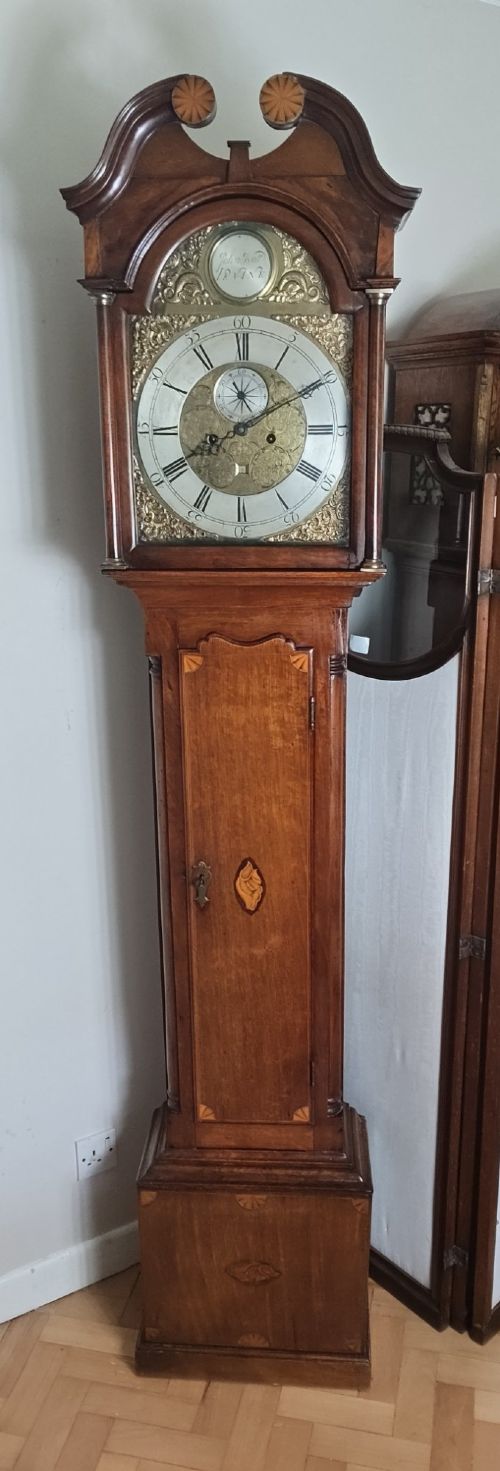
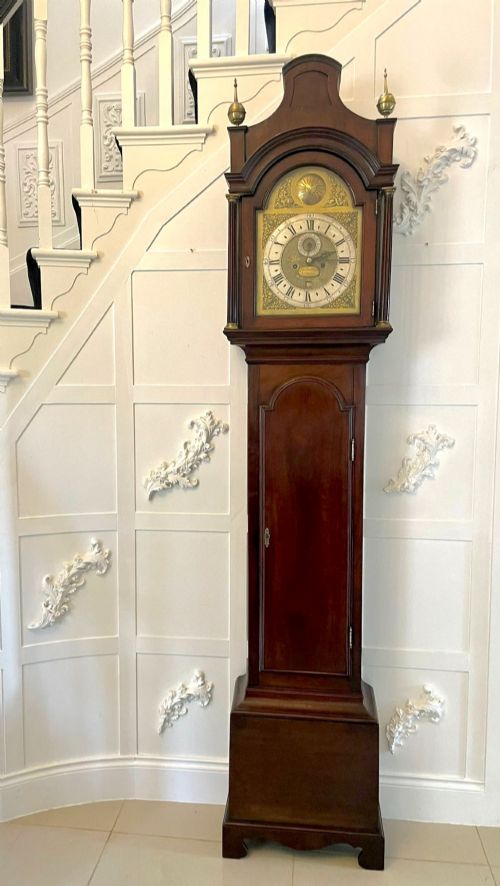
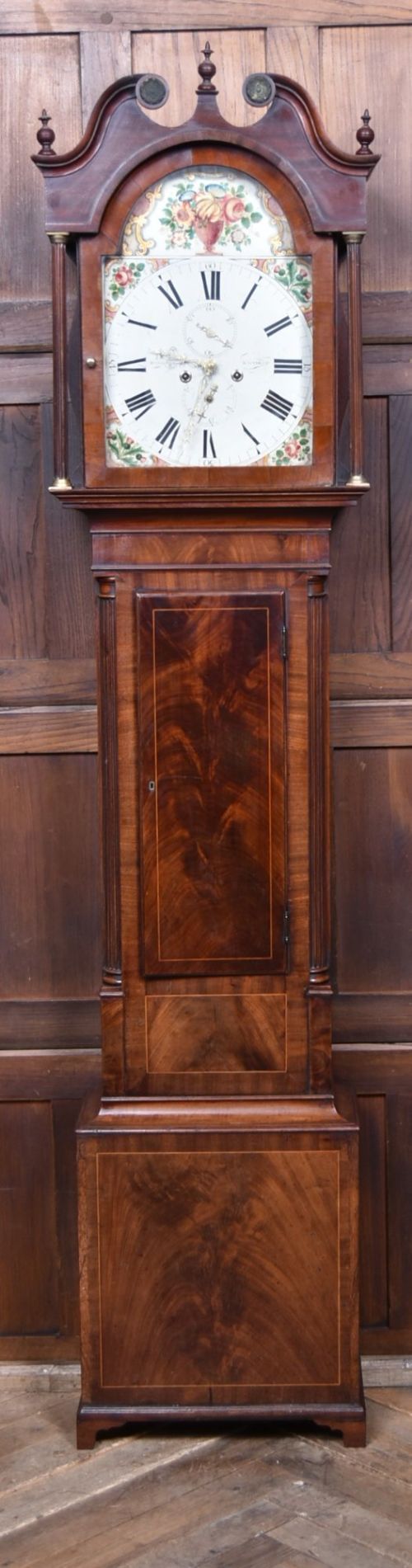
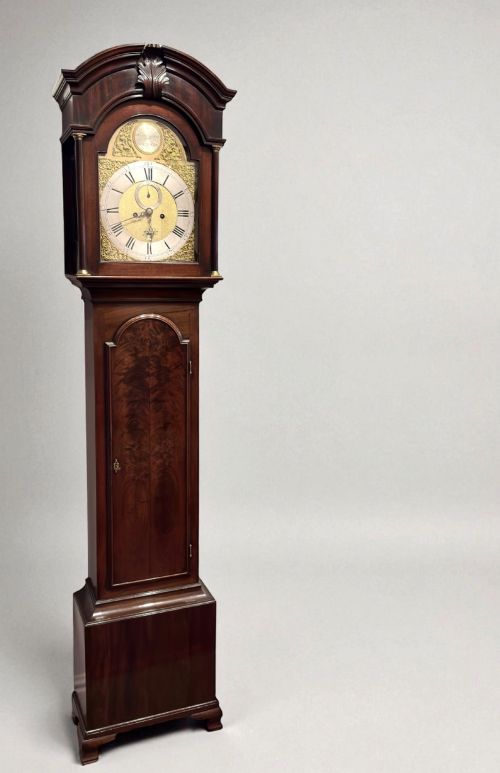
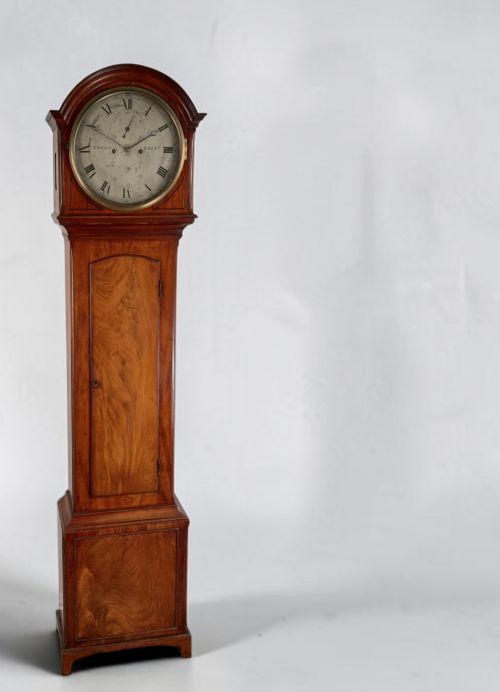
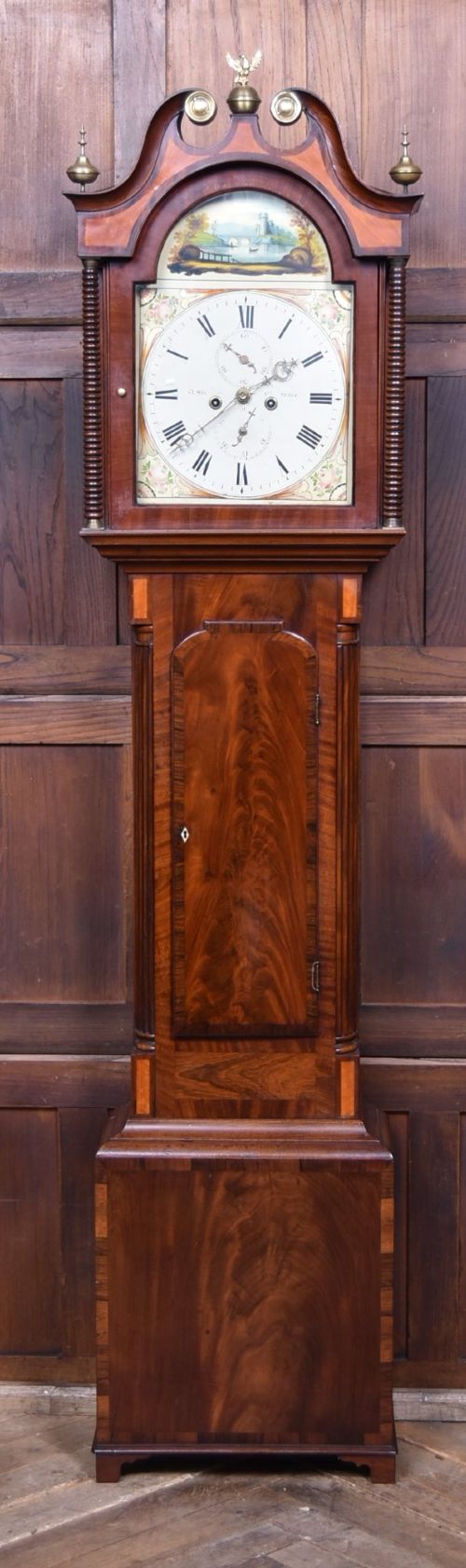
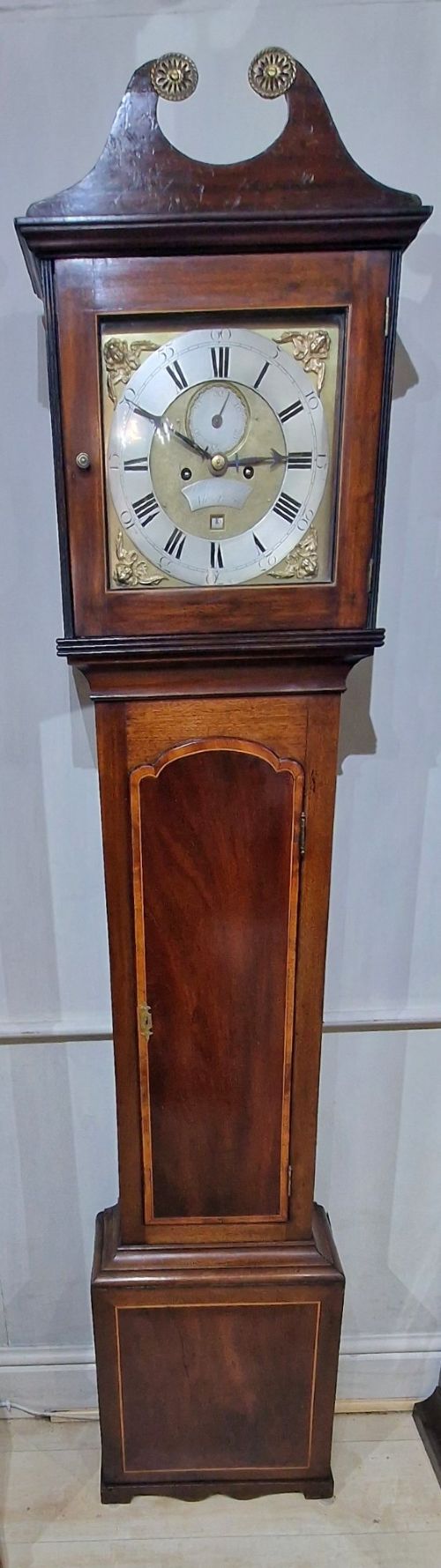
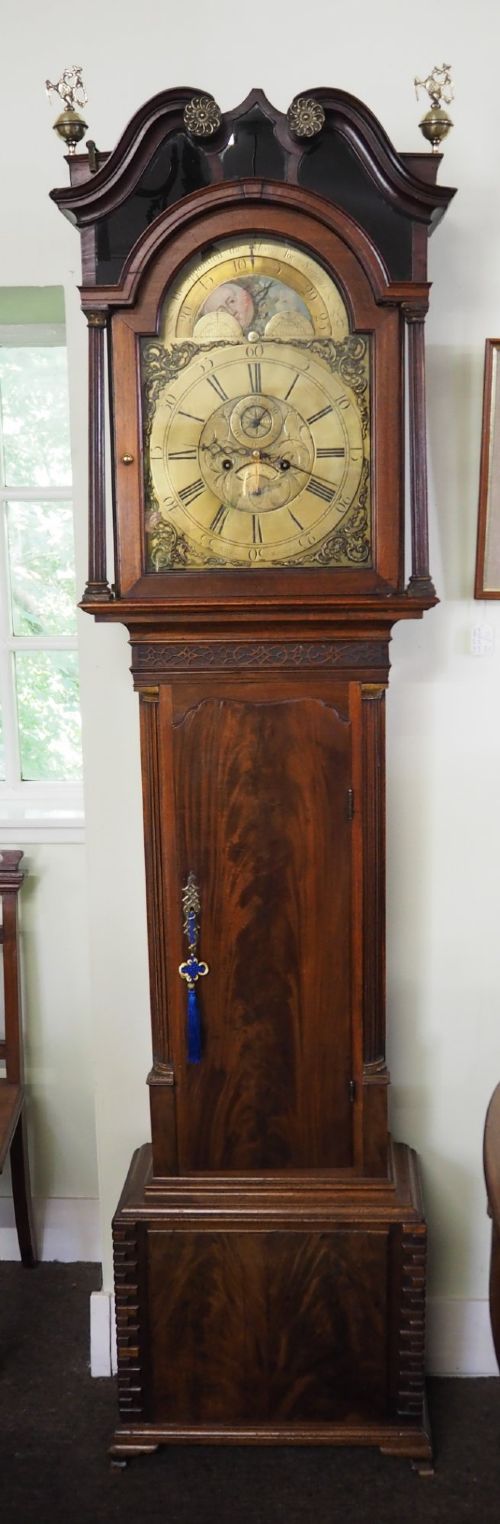
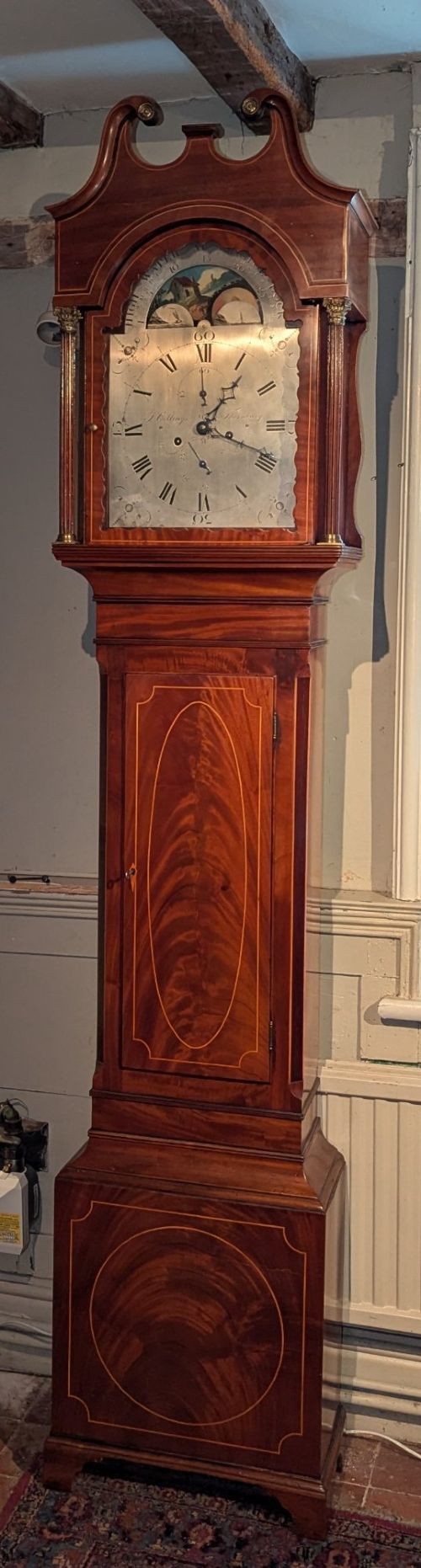
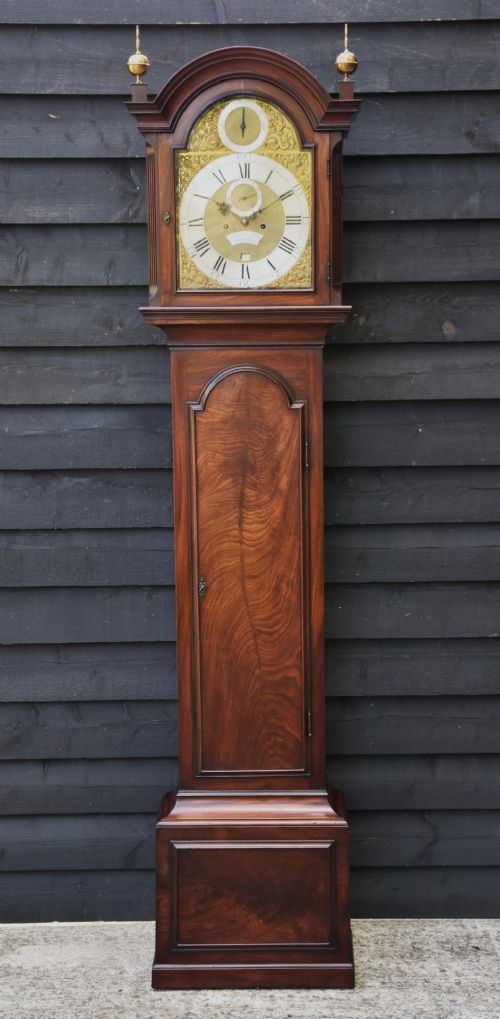
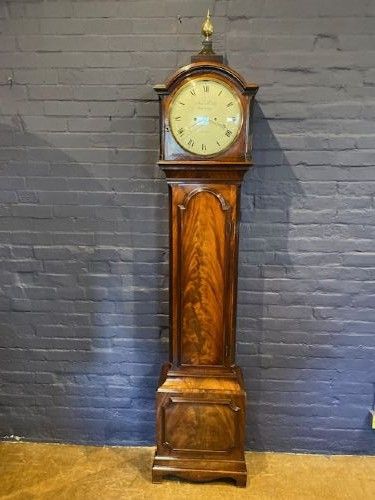
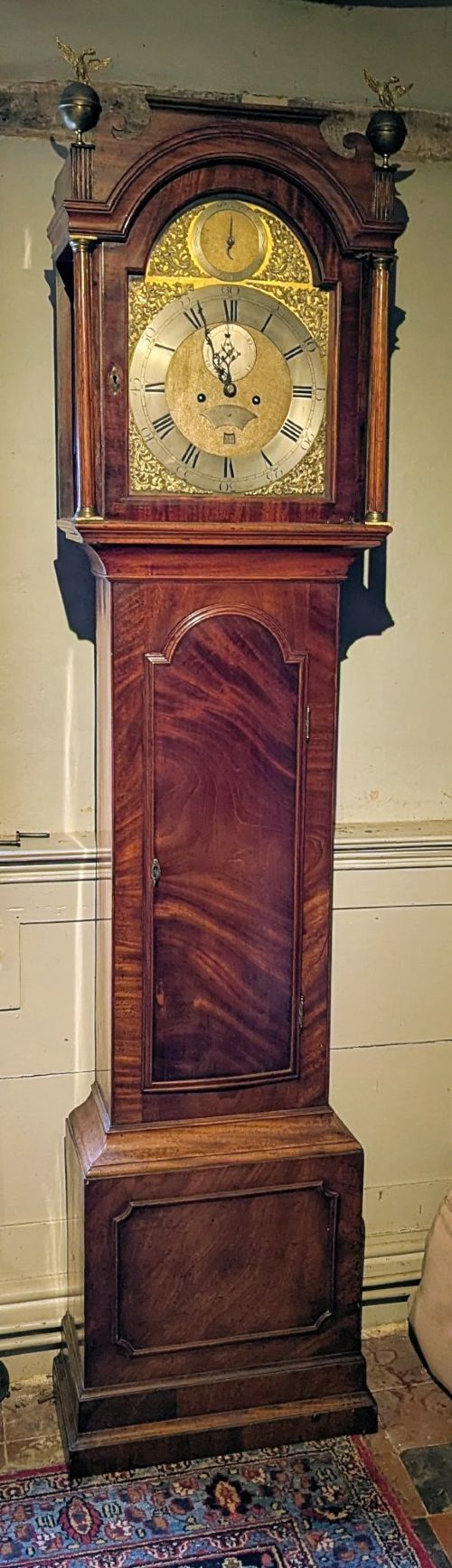
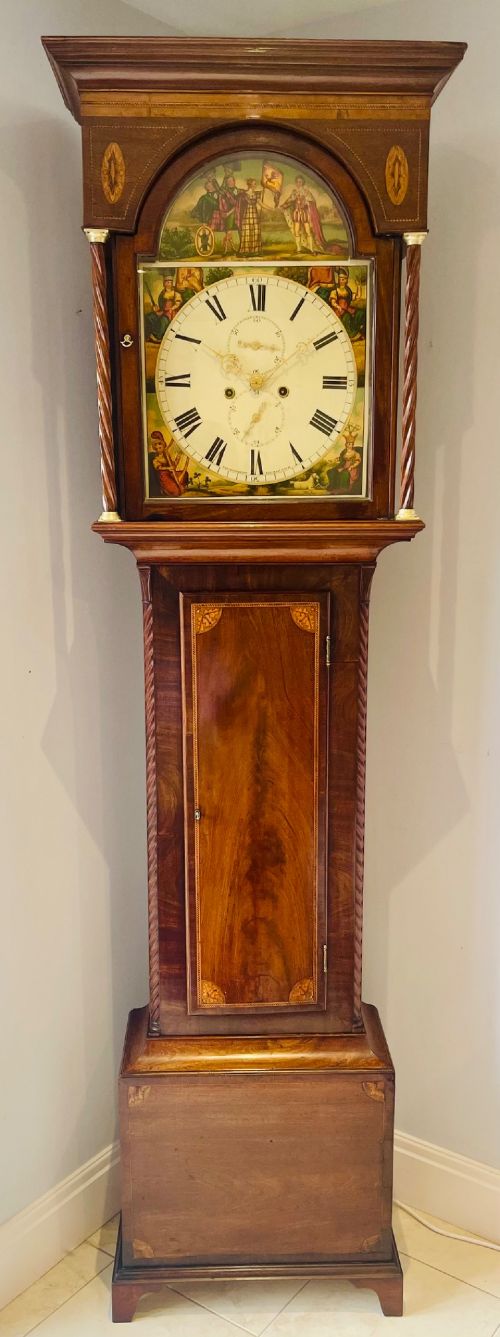
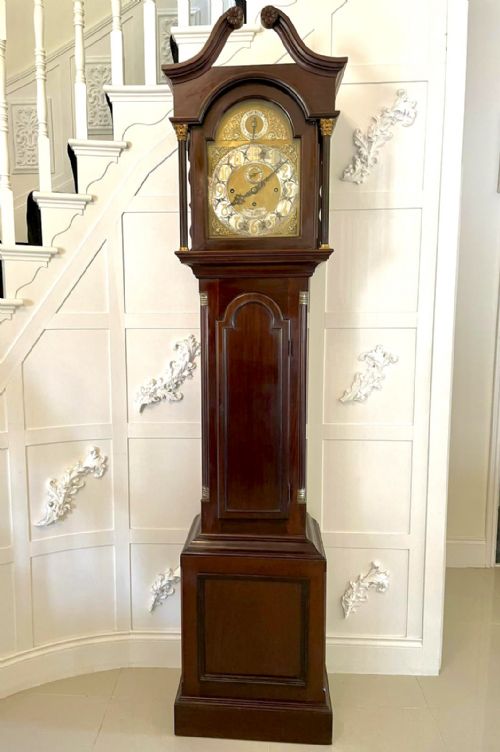
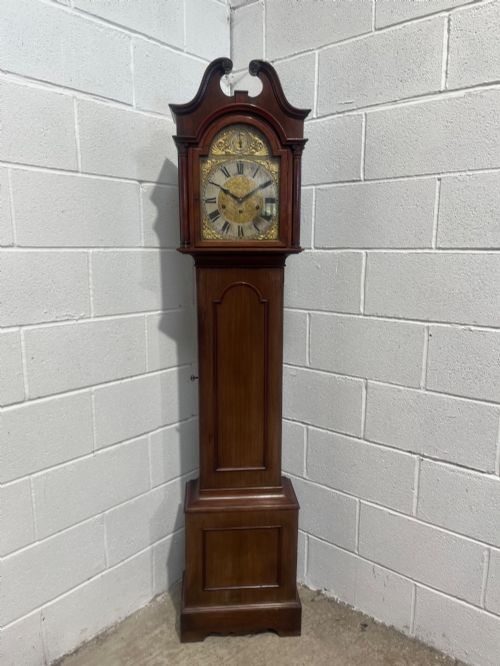
When buyers search for a mahogany standing clock, they encounter tall floor-standing timepieces commonly known as longcase or grandfather clocks. These tall cases house weights and pendulums behind glass doors, often featuring painted iron or brass dials.
The pieces on this page span several eras, originating predominantly from the Georgian and Victorian periods, alongside Edwardian and later twentieth-century examples. Scottish regional variants from towns such as Aberdeen, Edinburgh, and Montrose appear frequently alongside English London-made pieces.
Forms range from full-sized grandfathers down to smaller grandmother clocks and slim miniature longcase versions. They stand in hallways and principal rooms, serving as functional timekeepers built from figured timbers.
Materials and Construction
Cabinetmakers utilised solid mahogany and flame mahogany veneers over secondary timbers such as oak, often adding satinwood stringing and marquetry inlay. Brass and steel form the intricate gear trains and movements inside.
Dials combine painted iron or brass chapter rings with subsidiary seconds and calendar circles, protected beneath flat or arched glass panes.
Mahogany Standing Clock Retail Price Guide 2026
Typical asking prices for mahogany standing clock among the pieces listed under this phrase on Sellingantiques today, from the lower quarter to the upper quarter. They describe what is for sale here now, not the wider market.
Some provincial clock faces feature horses painted alongside the moon roller, offering a charming touch of local personality.
Quality and Proportion
Cabinet work defines the upper tiers, where figured flame mahogany and crisp marquetry inlay show deliberate selection by the maker. Proportion matters immensely, separating elegant slim cases from heavy or clumsy proportions.
Movements signed by notable provincial or London makers carry greater weight than unmarked anonymous machinery. The integration of specialised complications like moon rollers, musical chimes, or strike-silent functions elevates a piece.
Charles Shuckburgh·James McCabe·Benjamin Taylor·Edward Shepley
The Mahogany Standing Clock Glossary
- Longcase clock
- A tall pendulum clock enclosed in a wooden case standing directly on the floor. These towers protect the delicate weight-driven mechanism from drafts and dust.
- Grandmother clock
- A smaller, more slender version of the traditional longcase clock. They occupy less floor space while retaining full mechanical movements.
- Moon dial
- A rotating disc showing the phases of the moon through an arched aperture on the clock face. This complication required skilled gear cutting to track the lunar month accurately.
- Flame mahogany
- Timber cut from the fork of the mahogany tree where the branch meets the trunk, producing a distinctive rippled, flame-like grain pattern. Cabinetmakers used these veneers symmetrically on door panels.
- Paterae
- Small circular decorative reliefs carved or inlaid into furniture surfaces. They often appear on the swan neck pediments or trunk doors of Georgian cases.
Mahogany Standing Clock: Frequently Asked Questions
How do I wind a longcase clock?
Most eight-day movements require the heavy brass weights to be drawn up using a winding key every week. Care must be taken not to overwind the mechanism.
Pendulum regulation is managed via a small nut on the pendulum rod, turning it up or down to correct timekeeping gains or losses.
Where should I place a standing clock?
These tall timepieces require a stable, dry interior wall away from direct sunlight and heavy foot traffic vibrations. A level floor ensures the pendulum swings evenly without catching.
Securing the tall wooden trunk to the wall using discreet brackets prevents accidental tipping, particularly in homes with children or pets.
How do I identify a Georgian movement?
Georgian clock faces typically display hand-engraved brass chapter rings with subsidiary seconds dials and maker signatures. The cabinet work relies on solid mahogany or early veneers without modern fixings.
Movements from this era were entirely handmade by skilled regional or metropolitan clockmakers, showing individual tool marks rather than mass-produced uniformity.
What is the difference between a grandfather and a grandmother clock?
Grandfather clocks stand tall, typically measuring six to seven feet in height with substantial proportions designed for principal hallways. Grandmother clocks measure significantly shorter and possess slender, delicate proportions.
Both house identical weight-driven or spring-driven pendulum mechanisms, but the scaled-down cabinetry of the grandmother clock suits smaller rooms.