
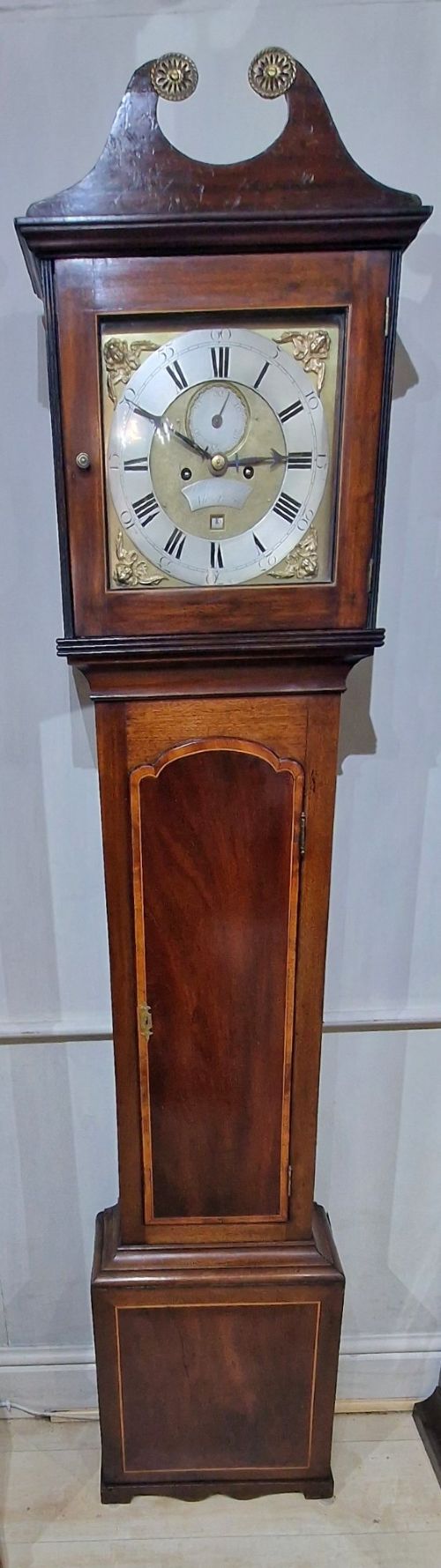
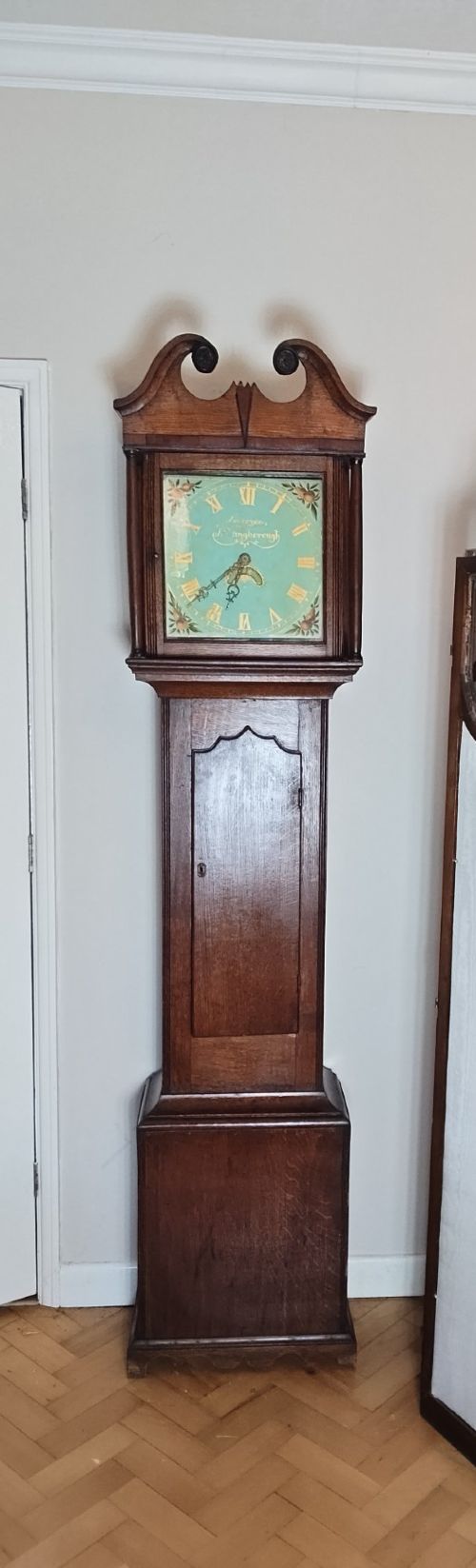
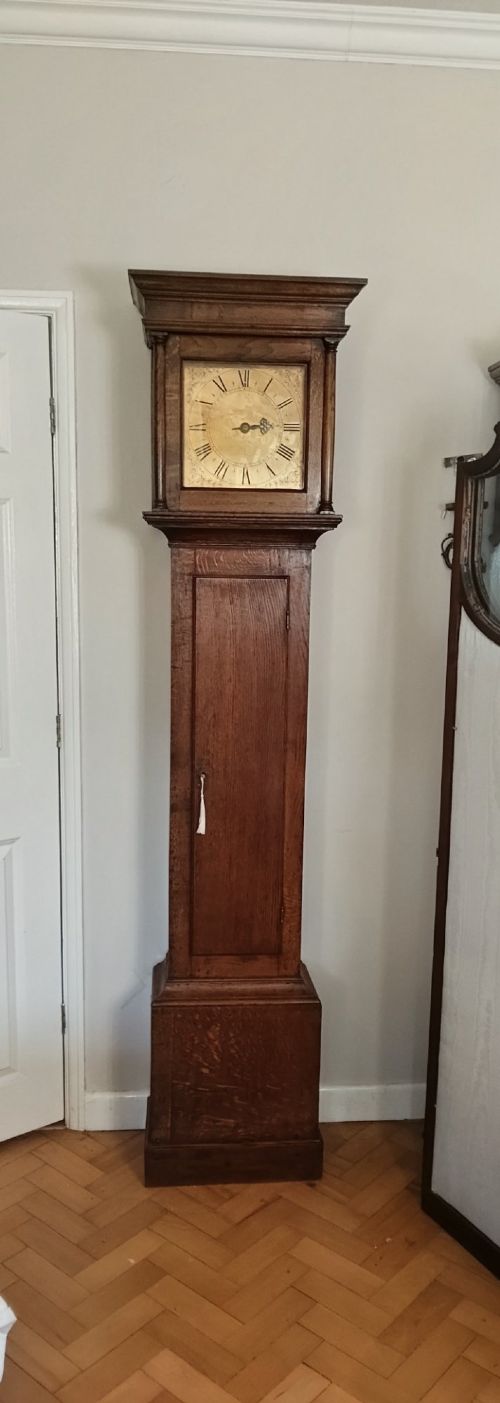
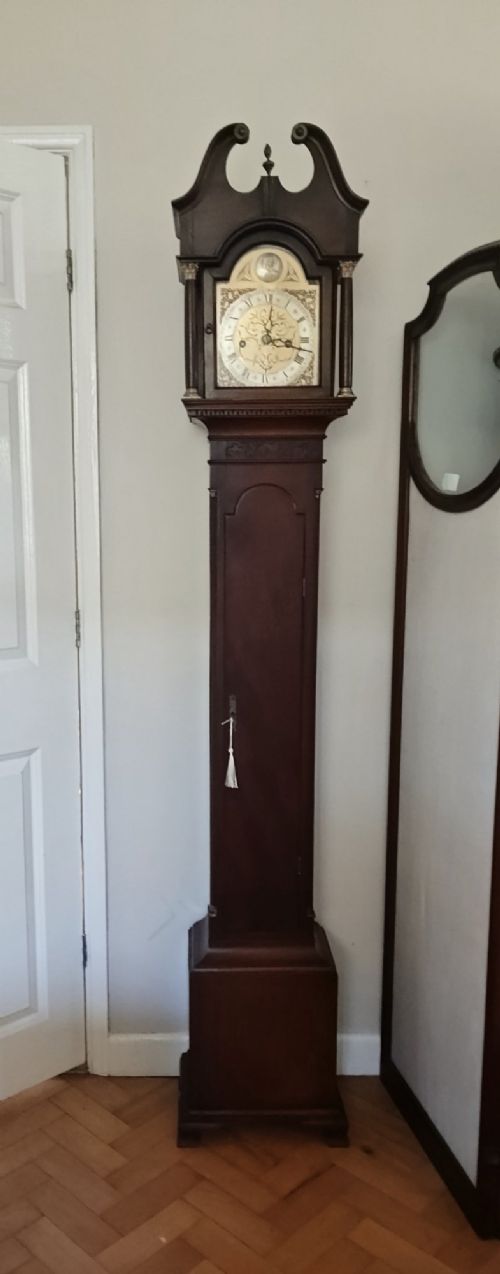



Small Longcase Clock
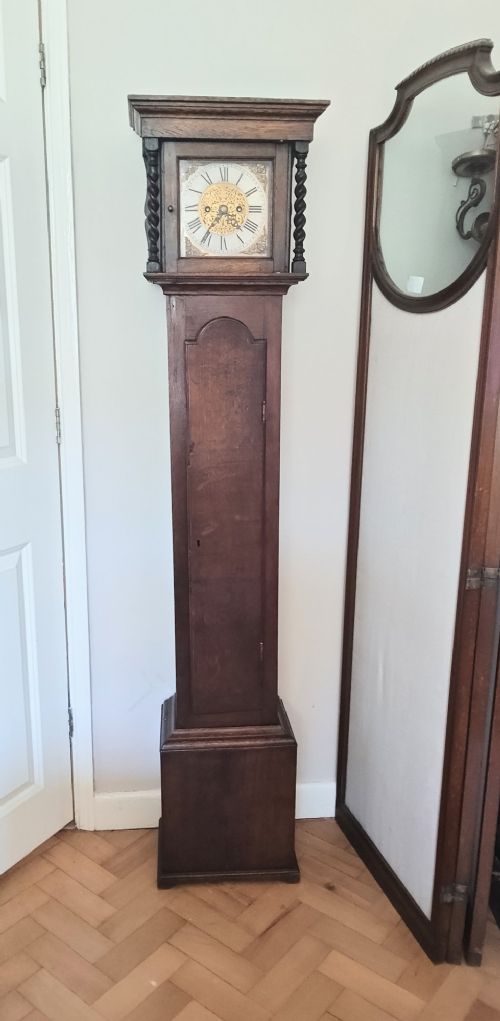
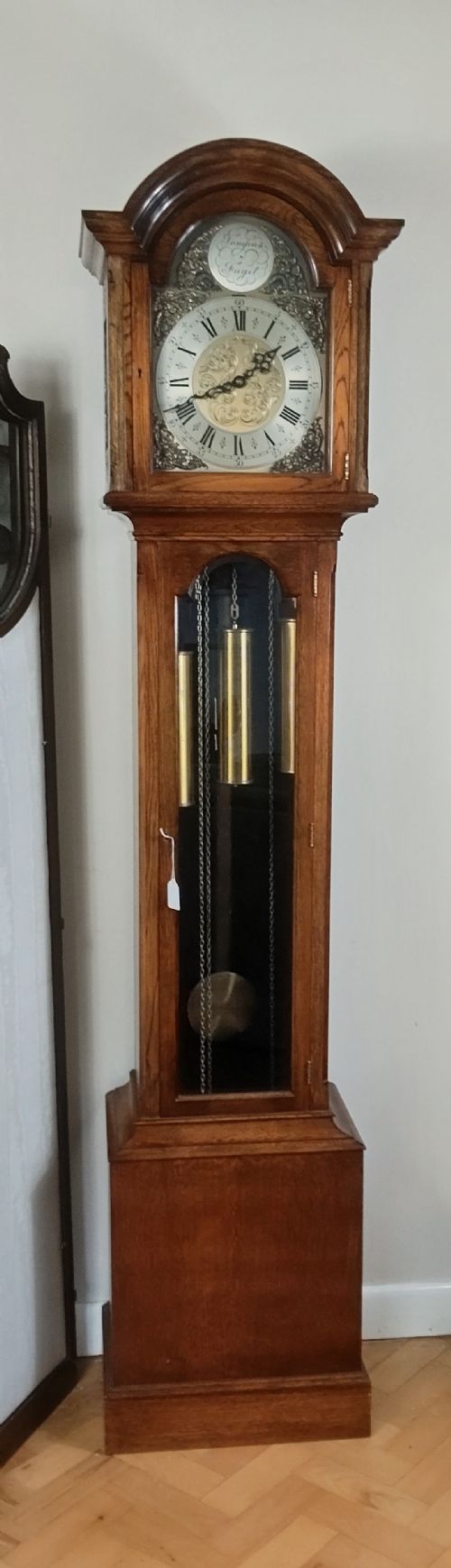
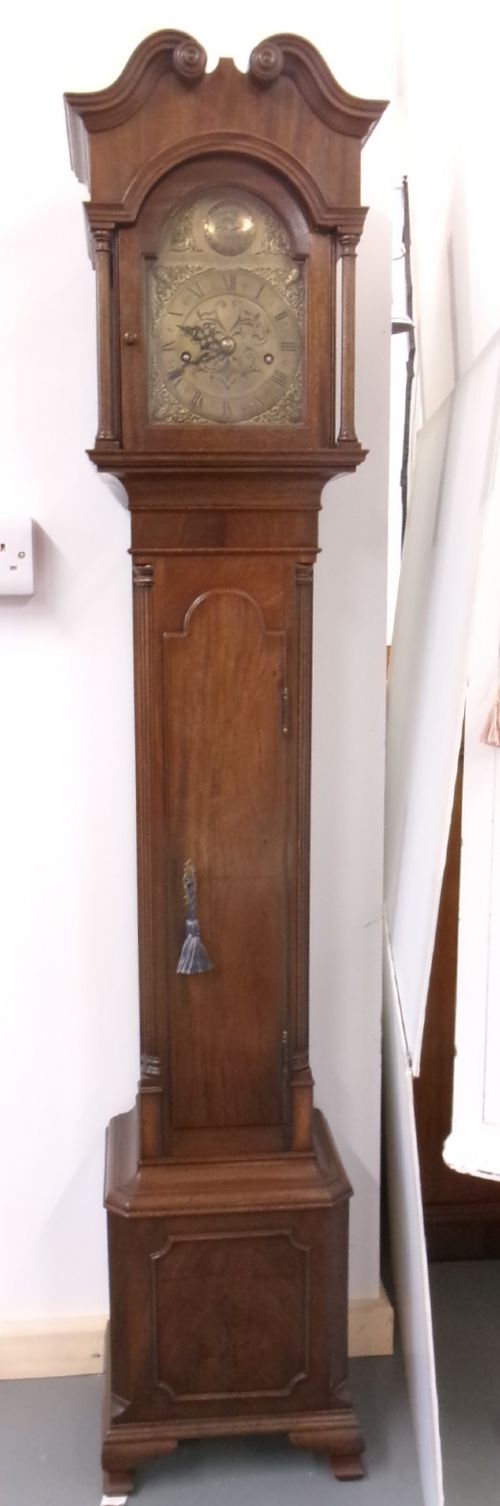
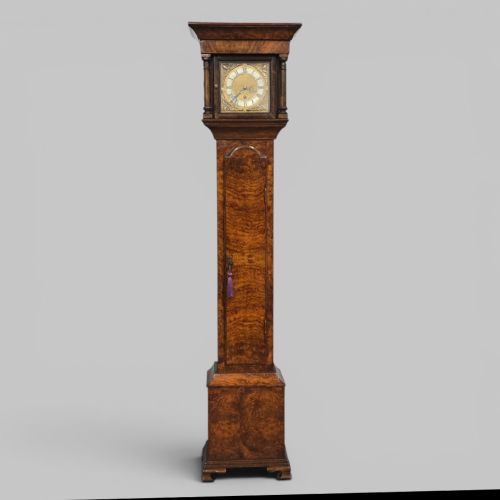
A small longcase clock brings the presence of a traditional floor clock into rooms where ceiling height or floor space is limited.
Identifying a small longcase clock
A small longcase clock delivers the traditional presence of a taller grandfather or grandmother clock within reduced proportions, often measuring below seventy inches in height. These compact timepieces appear across several periods including Georgian, Edwardian, and the early twentieth century, offering a scaled-down housing for weight-driven movements.
Oak and mahogany form the primary timbers for these cases, frequently styled in Georgian or Chippendale aesthetics with details such as brass dials, glass doors, and ebonised wood accents. Examples range from simple time-only movements to complex musical and chiming versions with multiple weights.
Makers recorded on these pieces include regional clockmakers such as John Morse of Malmesbury and William Robb of Montrose, alongside later makers. Buyers encounter forms described as grandmother clocks, regulators, and musical quarter-chiming variations.
Materials and construction
Cabinetmakers utilised solid timbers like oak and mahogany to build the narrow trunks and hoods, incorporating glass panels for dials and trunk doors, and brass for movement components, dials, and bezels. Iron and ebonised wood appear in specific mechanical or decorative elements.
Clockmakers fitted weight-driven mechanical movements into the upper hoods, ranging from standard time-only and strike-silent mechanisms to triple-weight systems with musical chimes on gongs or bells.
Retail Price Guide 2026
Typical UK retail prices for small longcase clock, calculated from the Sellingantiques database of over a million retail prices indexed since 2003. This retail price guide relies exclusively on Sellingantiques data; no external sources or auction records are used, so the figures do not describe the wider market.
Judgments of quality
Quality rests in the harmony of proportion between the compact case and the dial, alongside the complexity of the internal movement, whether a simple thirty-hour train or a triple-weight musical chime. The choice of cabinet timber, such as well-figured mahogany or richly patinated oak, dictates the visual distinction of the piece.
Finer examples integrate regional maker signatures, subsidiary dials like moon phases or silent levers, and intricate case details such as astragal glazing or barley twist columns, separating standard production from exceptional workshop output.
Brysons of Edinburgh·John Morse of Malmesbury·William Robb of Montrose·Samuel Liddell Old Swinford·James Leigh·Robert Hinmers Edinburgh·Summerhayes of Ilminster
The Small Longcase Clock Glossary
- Grandmother clock
- A term applied to a small longcase clock, typically shorter than a traditional grandfather clock.
- Astragal glazing
- Glass divided into small panes by wooden or metal bars within the trunk door.
- Regulator
- A precision timepiece designed for high accuracy, often featuring a simplified dial arrangement.
- Strike/silent lever
- A mechanism allowing the striking train of the clock to be silenced at night.
- Moon dial
- A subsidiary dial displaying the phases of the moon alongside the standard time.
Frequently Asked Questions
What is a small longcase clock?
A small longcase clock is a scaled-down floor-standing timepiece, often referred to as a grandmother clock, designed to fit rooms with lower ceilings while retaining a weight-driven movement.
These pieces measure under seventy inches in height and appear in various period styles including Georgian and Edwardian.
How do I tell an 18th-century clock from a later one?
Eighteenth-century examples often display simpler oak or mahogany cases with square brass dials, reflecting the Georgian period of their origin.
Later Edwardian or 19th-century pieces may introduce more complex chiming mechanisms, alternative dial treatments, and different proportions.
Where should I place a small longcase clock?
Because of their reduced height, these clocks suit hallways, studies, and living rooms where standard grandfather clocks would overwhelm the space.
Ensure the floor is level and the clock is properly secured to the wall if necessary to keep the pendulum swinging evenly.
What do musical and chiming movements involve?
Musical movements use multiple weights, often two or three, to power mechanisms that play tunes or quarter chimes on bells, rods, or gongs.
Simpler versions indicate time only or feature a basic hour strike with a silent lever.