
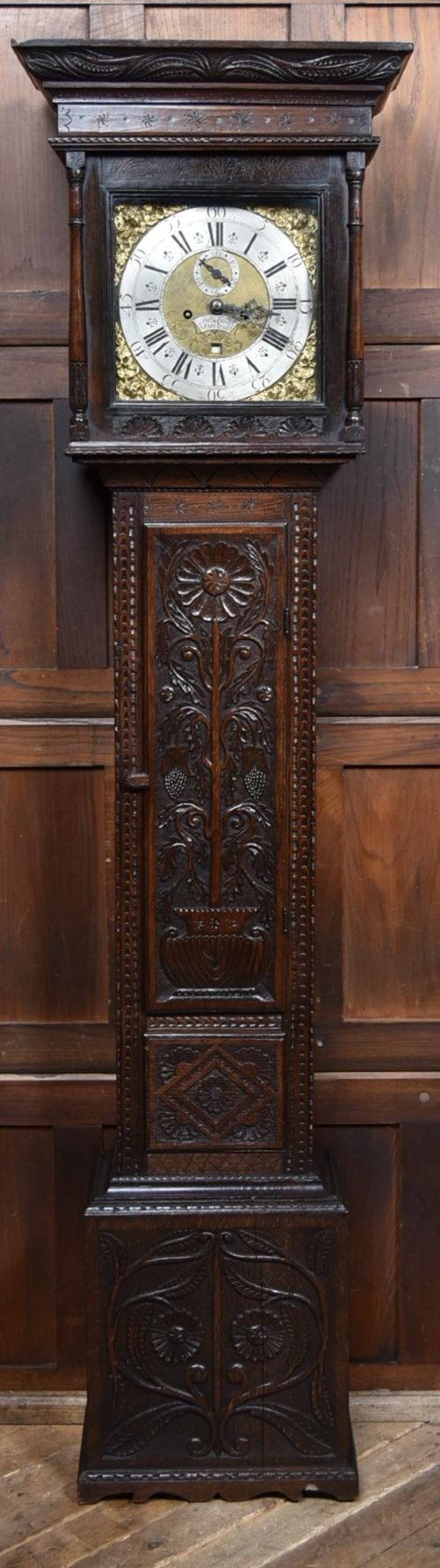
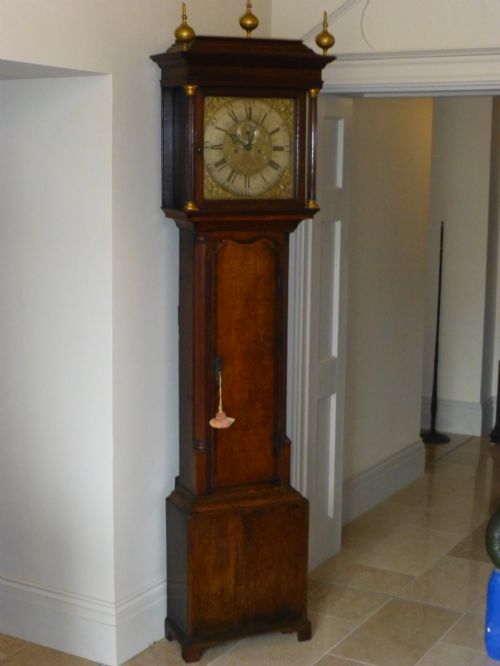
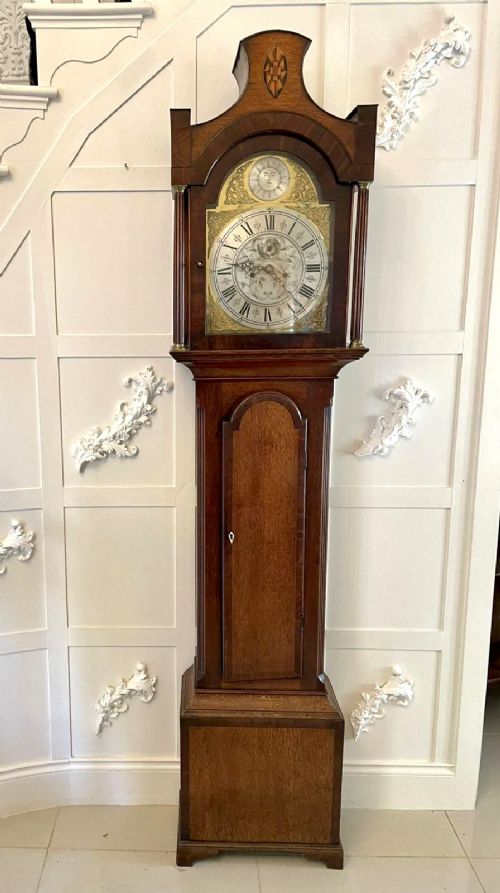
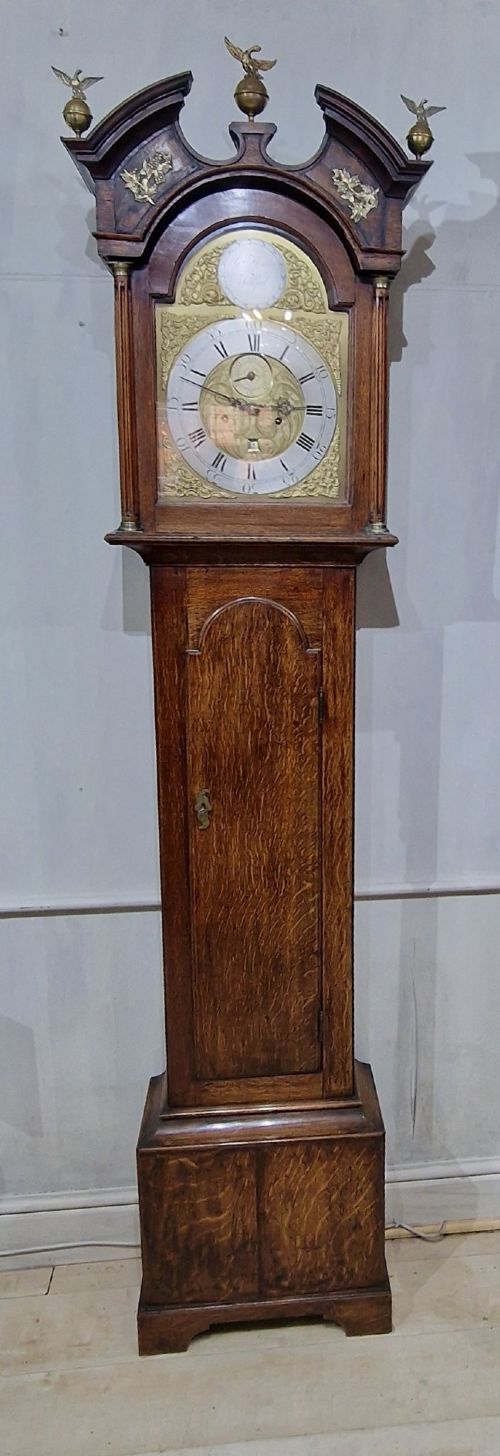
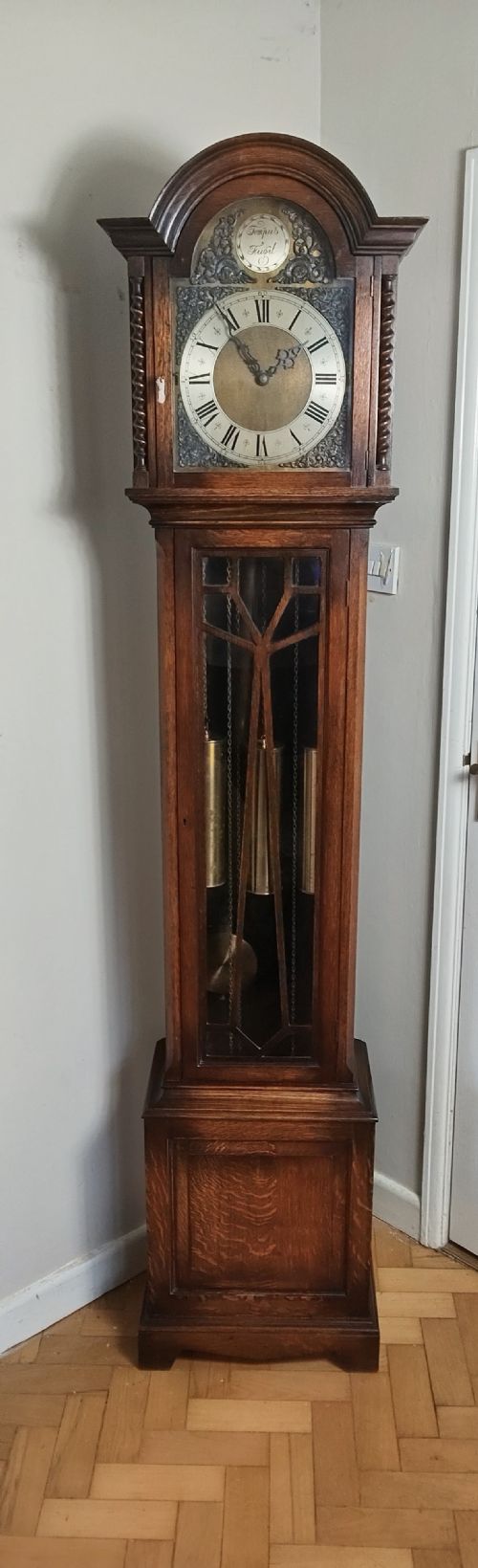
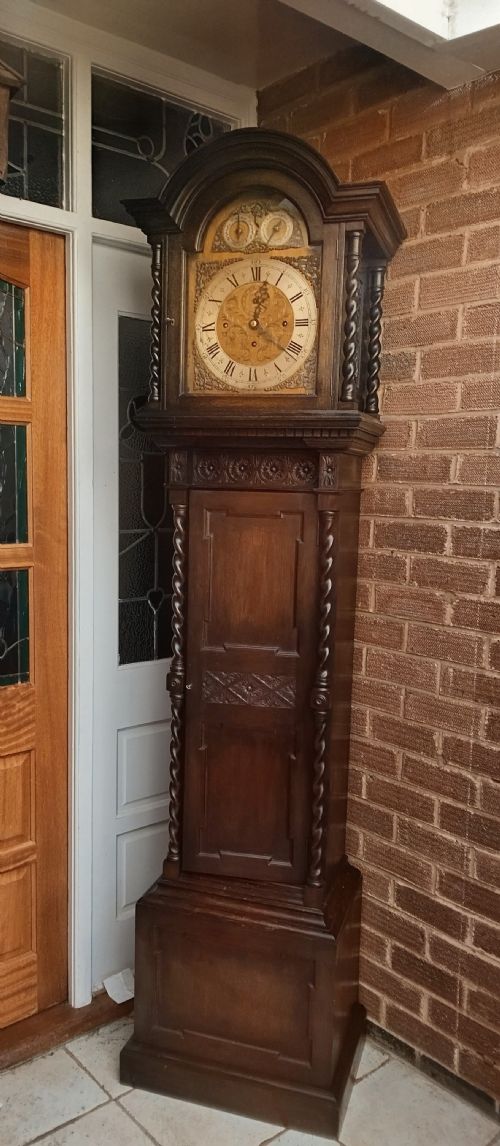
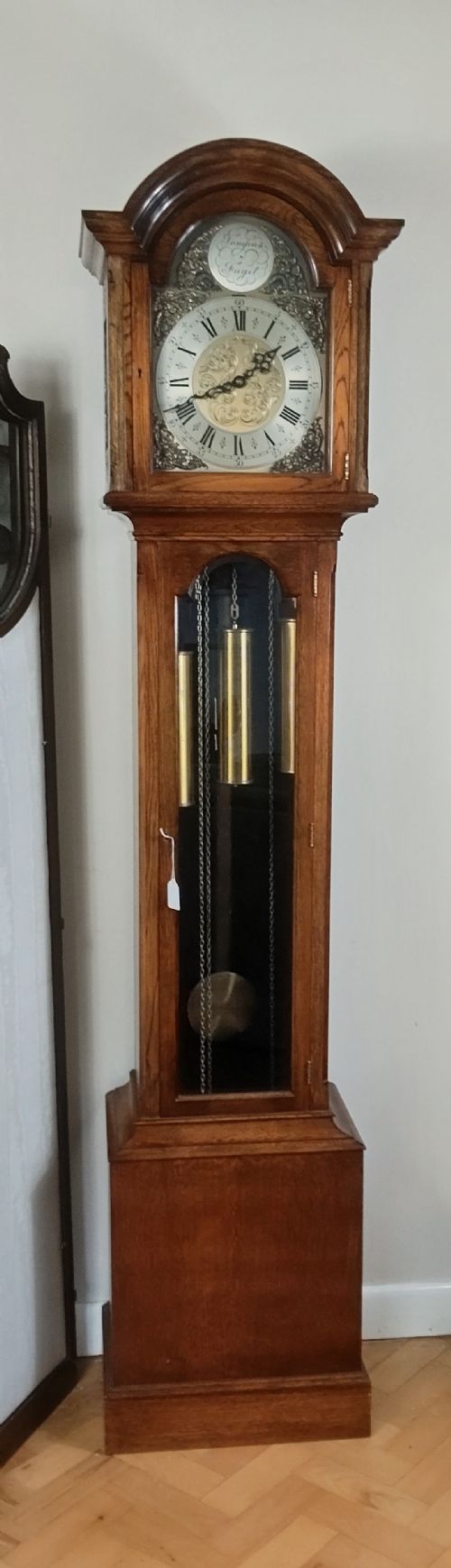


Traditional Oak Longcase Clock
A traditional oak longcase clock brings a steady mechanical heartbeat and rich timber grain into a room, marking time just as it did centuries ago.
What traditional oak longcase clocks are
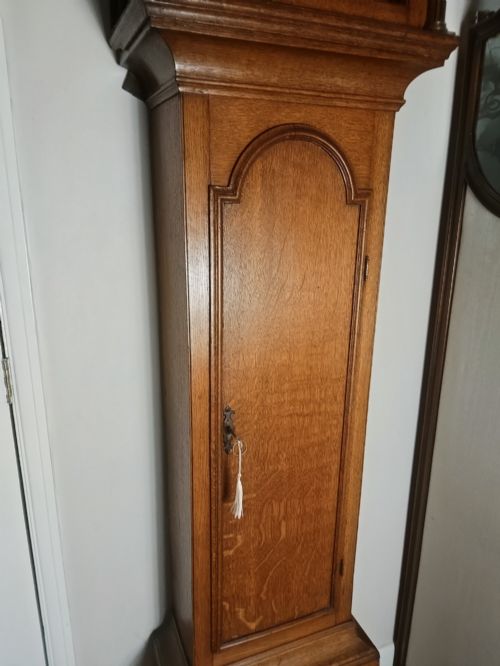
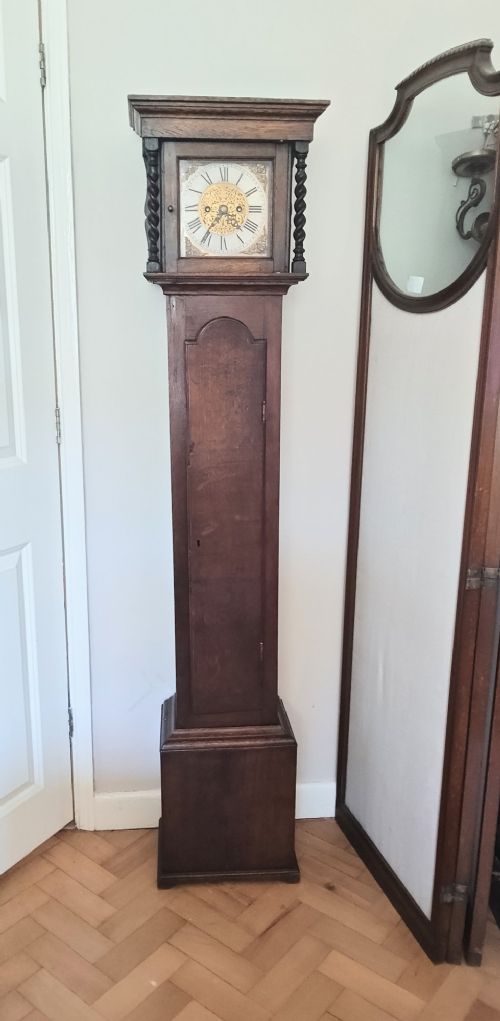
When you search for a traditional oak longcase clock, you encounter tall floor-standing timepieces dating from the Georgian, 18th century, and Regency periods. These upright wooden cases house precision movements designed to measure hours and minutes with heavy hanging weights and swinging pendulums.
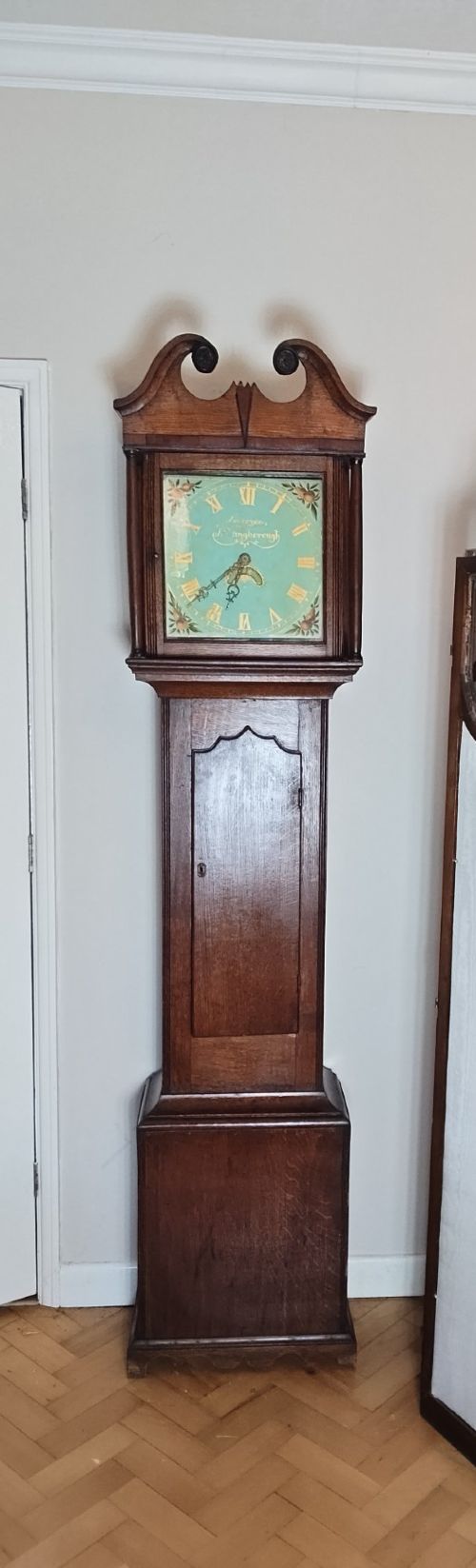
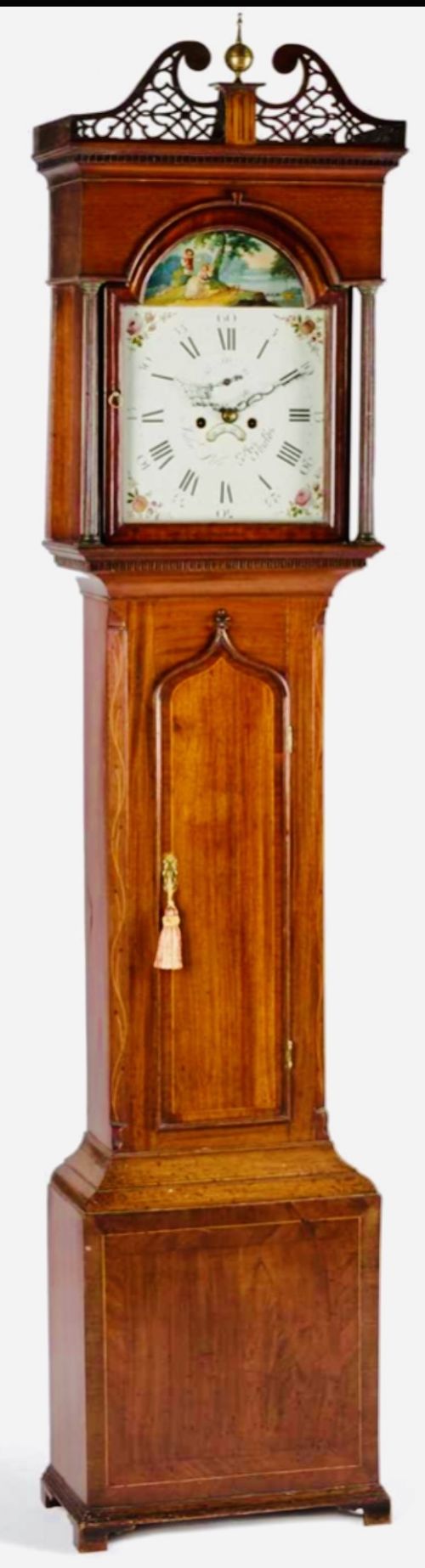
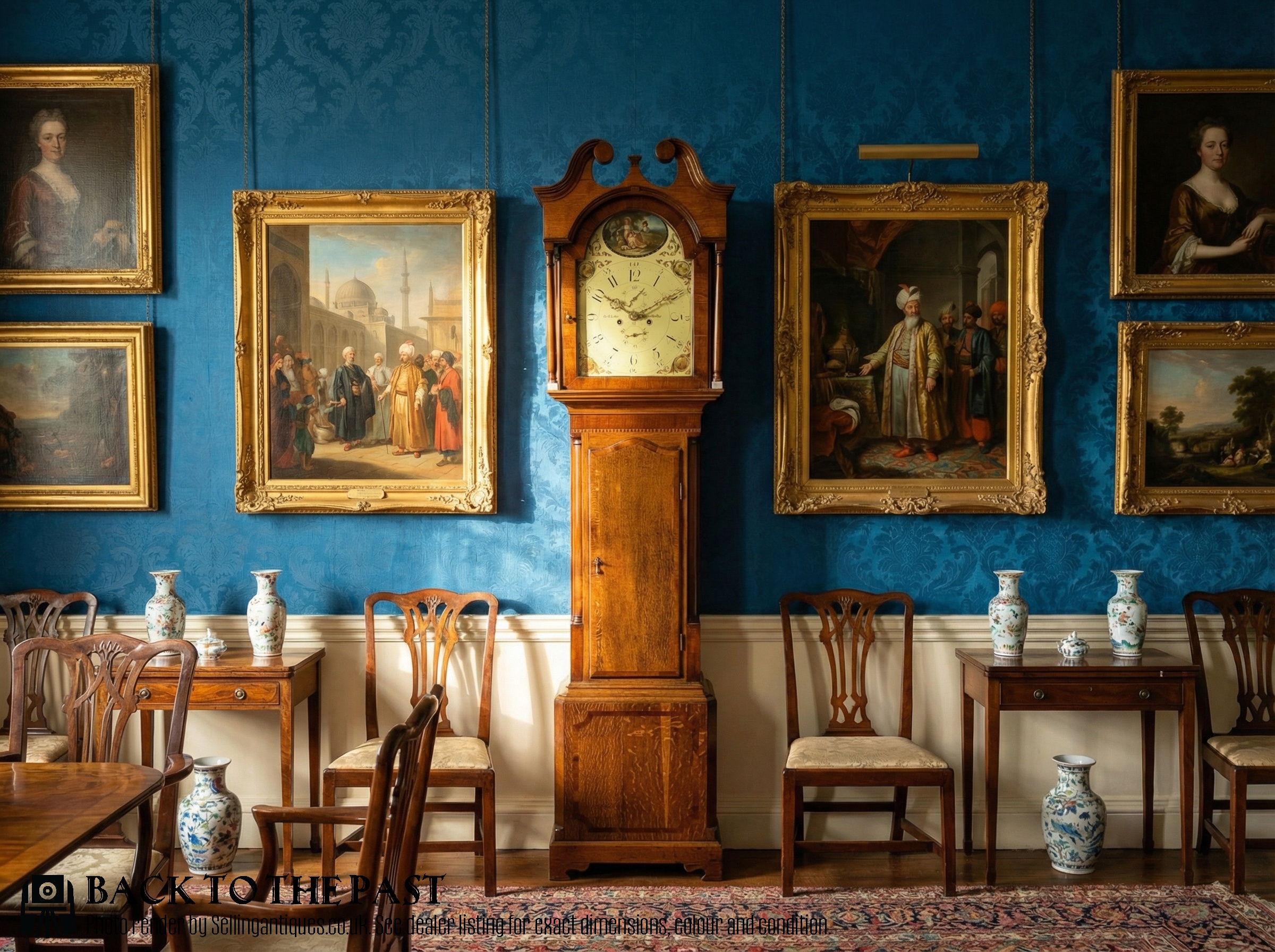
The versions most commonly met on this page feature sturdy oak construction, often displaying handsome crossbanding in mahogany or distinctive painted dials in shades like duck egg blue. They vary in mechanism from thirty-hour movements to complex eight-day systems that require weekly winding.
How they were made
Cabinetmakers built these tall cases predominantly from solid oak timber, frequently applying mahogany crossbanding to enrich the door panels and hoods. Glazed doors protect the delicate metal and brass dials while allowing a clear view of the moving hands.
Clockmakers fitted brass, steel, and iron components within the wooden trunks to drive the gear trains. Painted or brass dials carry the hours and minutes, signed by makers such as Richard Midgley of Halifax on the thirty-hour and eight-day movements.
Retail Price Guide 2026
Typical UK retail prices for traditional oak longcase clock, calculated from the Sellingantiques database of over a million retail prices indexed since 2003. This retail price guide relies exclusively on Sellingantiques data; no external sources or auction records are used, so the figures do not describe the wider market.
Listings span the Georgian, 18th century, and Regency periods, utilising oak, mahogany, brass, and glass.
What varies in quality
The distinction between standard examples and finer pieces lies in the crispness of the oak grain and the sophistication of the dial work. Regency and George III makers who integrated brass chapter rings or painted dials with secondary decoration achieved a higher level of visual harmony.
Proportion and cabinetwork also separate the ordinary from the exceptional. Cases with balanced mahogany crossbanding and well-proportioned hoods show a superior level of regional joinery.
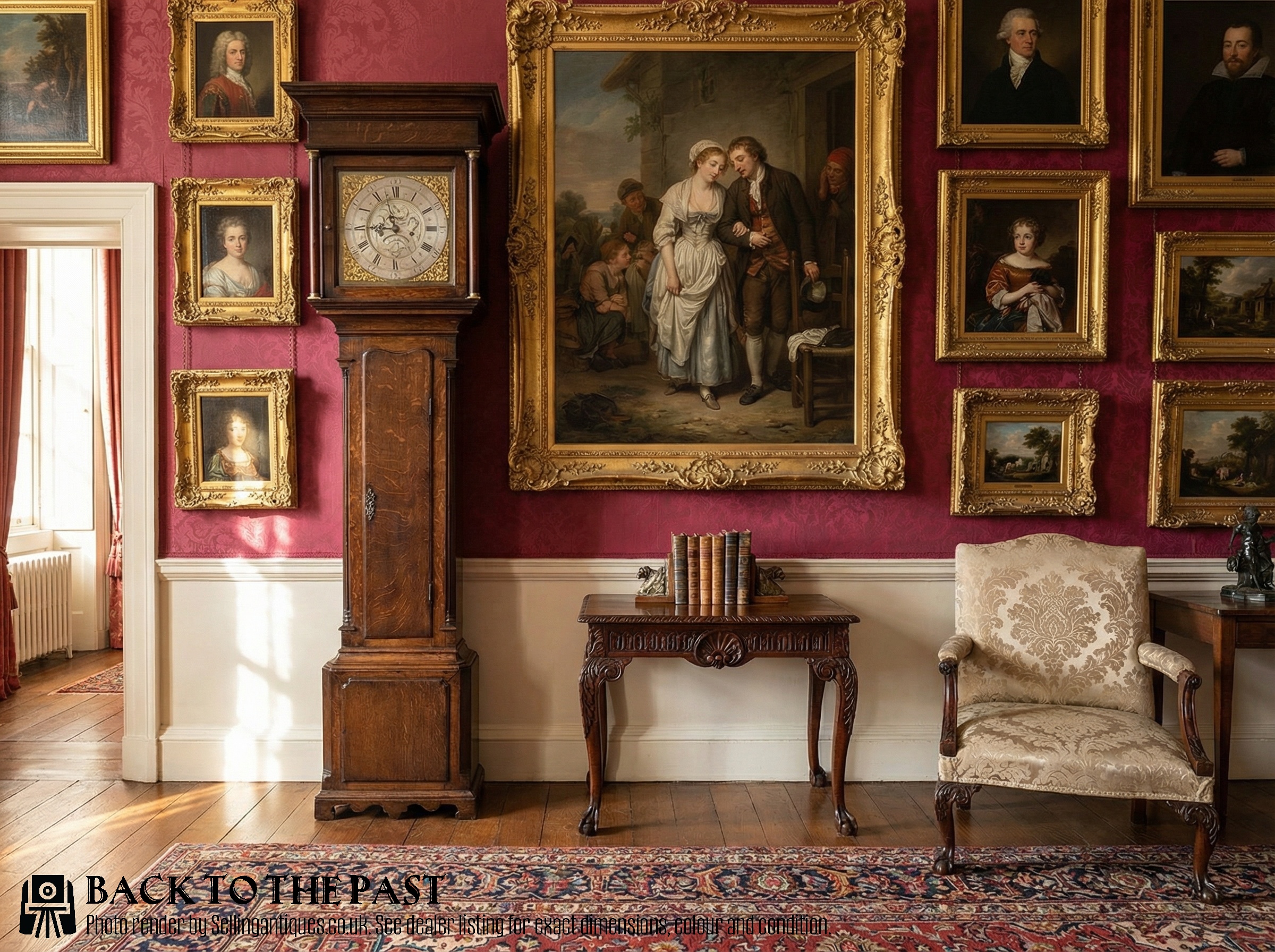
Richard Midgley of Halifax
The Traditional Oak Longcase Clock Glossary
- Longcase clock
- A tall pendulum clock enclosed in a wooden case that stands directly on the floor. These pieces are also known colloquially as grandfather clocks.
- Crossbanding
- A decorative technique where thin veneer strips are laid across the grain direction of the primary timber, commonly seen in mahogany on these oak cases.
- Eight day
- A clock movement that runs for approximately eight days before the weights must be manually pulled up again.
- Thirty-hour
- A simpler movement that requires winding every single day. These clocks typically use a single weight to drive both timekeeping and striking functions.
Frequently Asked Questions
How often do they need winding?
Thirty-hour movements require attention every day, whereas eight-day movements need their weights pulled up once a week.
Keeping to a regular routine ensures the pendulum maintains a steady beat.
Where should I place a longcase clock?
Position the piece against a sturdy interior wall on a level floor to keep the pendulum swinging evenly.
Avoid damp areas and direct sunlight to protect the oak timber and dial paint.
How do I tell Georgian and Regency clocks apart?
Georgian examples generally display heavier proportions and classic architectural hood designs from the eighteenth century.
Regency pieces often introduce refined dial decorations and different cabinet details characteristic of the early nineteenth century.
What timber was used for the cases?
Oak serves as the primary material for the tall trunks and hoods across these listings.
Cabinetmakers occasionally added mahogany crossbanding to create contrast and visual depth.