
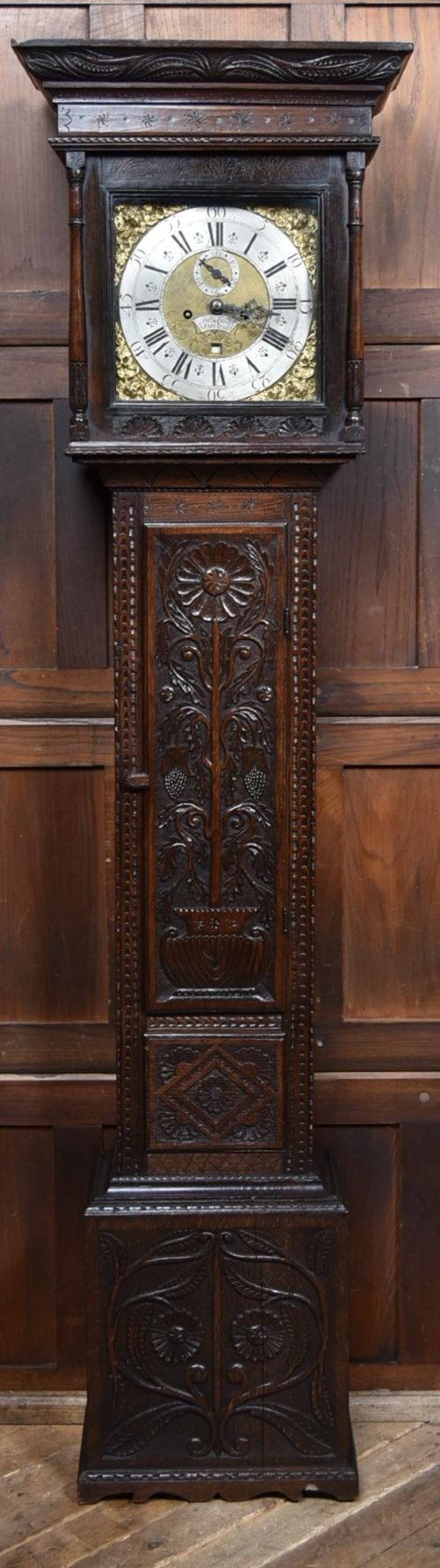
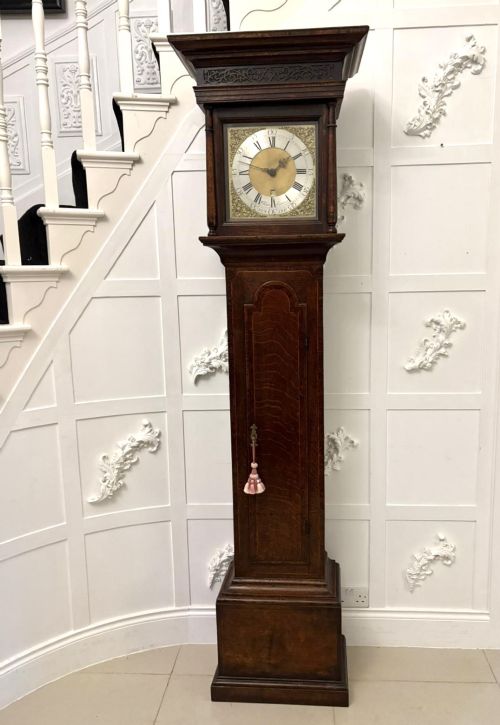
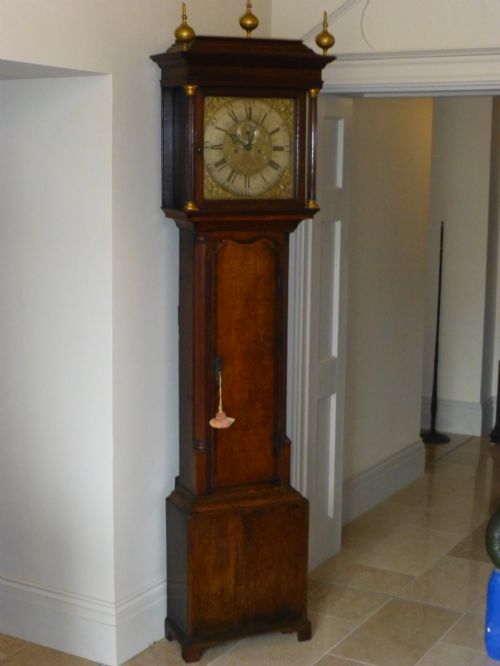
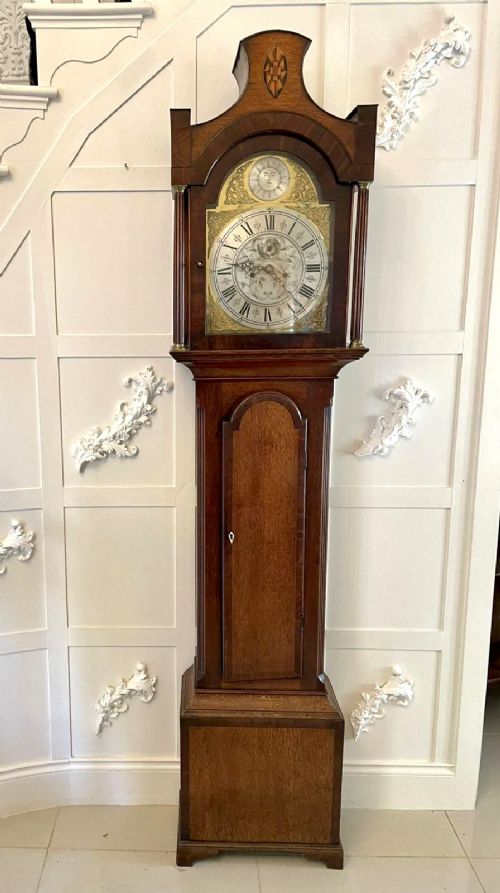



Brass Face Grandfather Clock
A brass face grandfather clock brings the steady rhythm of past centuries into a room, combining architectural presence with mechanical precision.
Brass Face Grandfather Clock
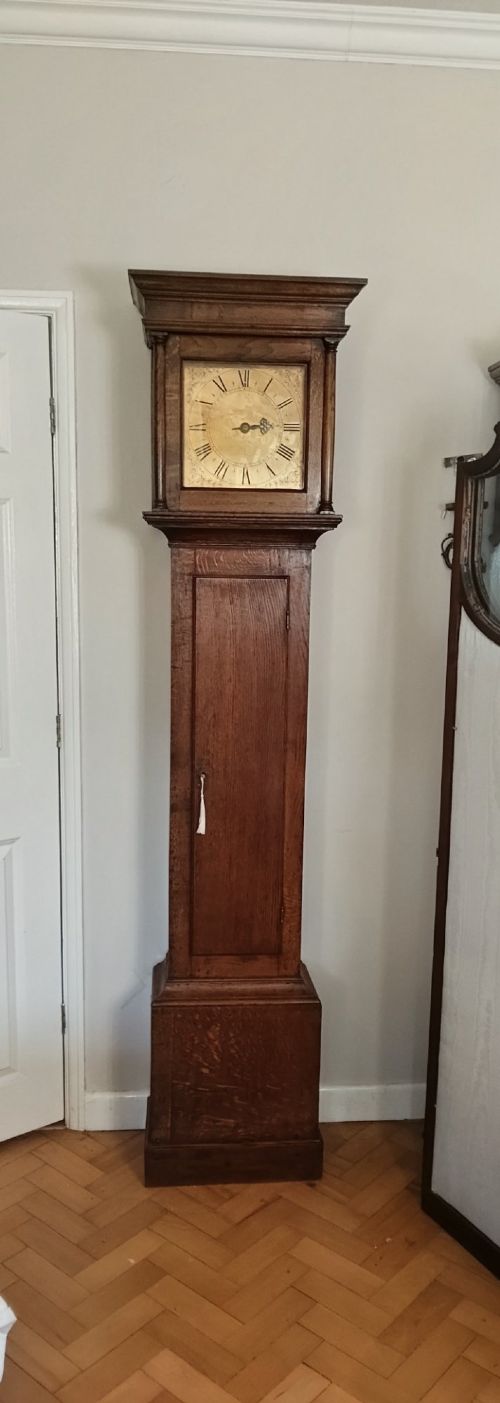
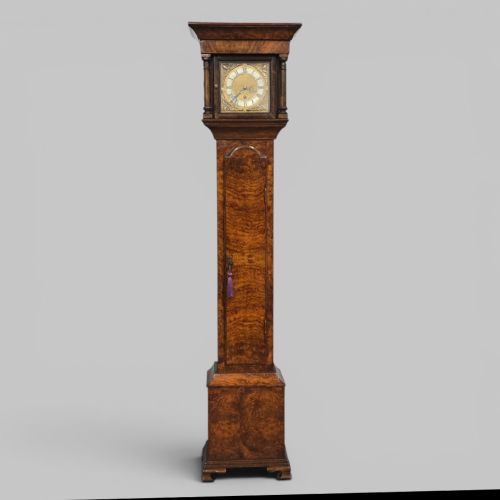
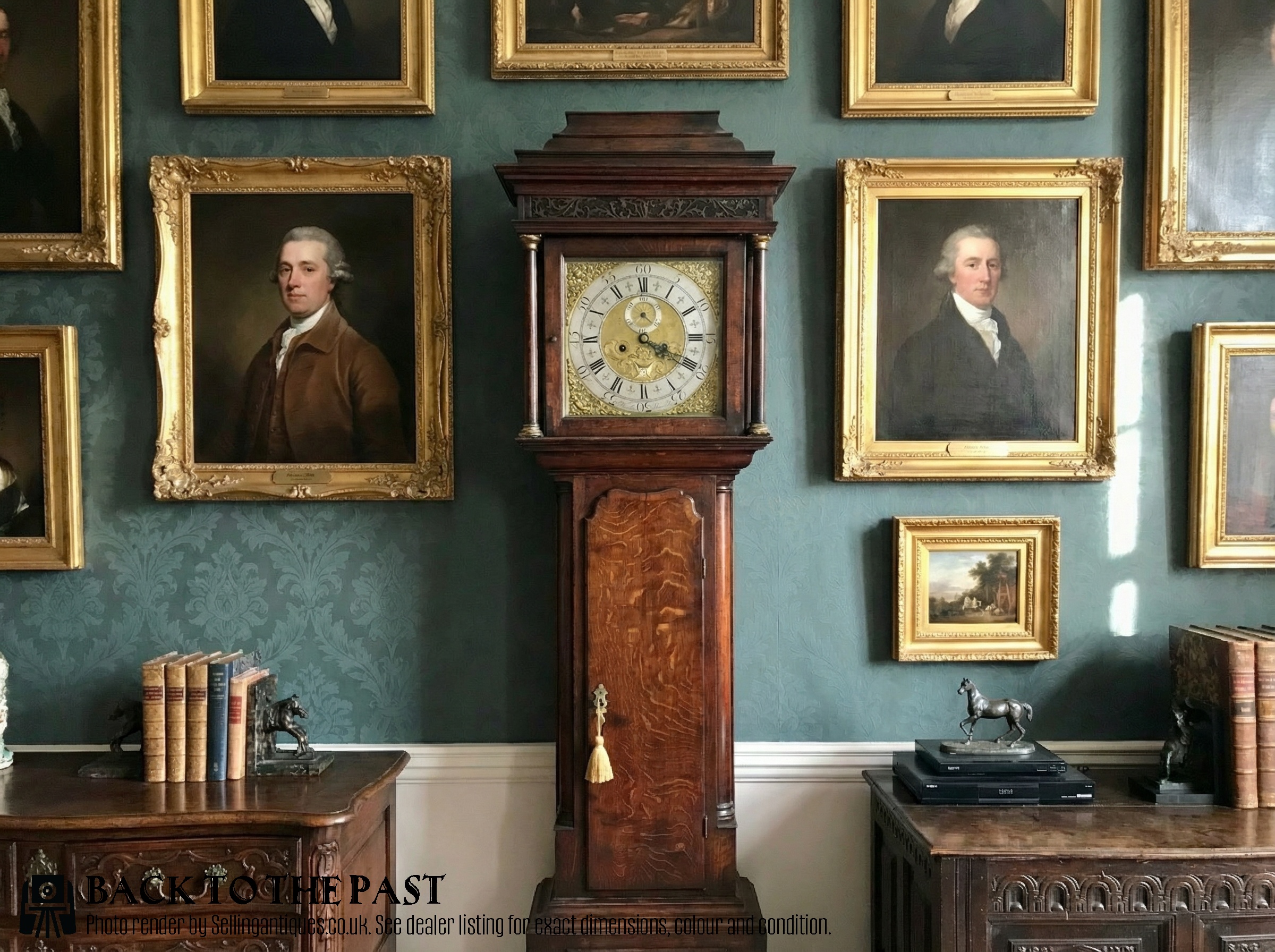
A brass face grandfather clock, also known as a longcase clock, stands as a tall wooden case enclosing a weight-driven movement and a brass dial. These timepieces served as the primary domestic timekeepers through the Georgian and Victorian eras, marking hours and often dates or lunar cycles in British homes.
Buyers browsing this selection will most frequently encounter eighteenth-century and Georgian examples housed in oak or mahogany. Smaller variants such as grandmother and granddaughter clocks from the twentieth century also appear, alongside individual dials and movements.
Origins span English, Scottish, and Irish provincial workshops, reflecting regional preferences in cabinetmaking and dial engraving. The proportion ranges from robust country oak cases to refined metropolitan mahogany proportions.
Materials and construction
Cabinetmakers constructed the tall cases principally using native timbers like oak and mahogany, occasionally incorporating walnut, burr oak, or flame veneer highlights. These woods were seasoned, joined, and polished to protect the movement housed within the trunk and hood.
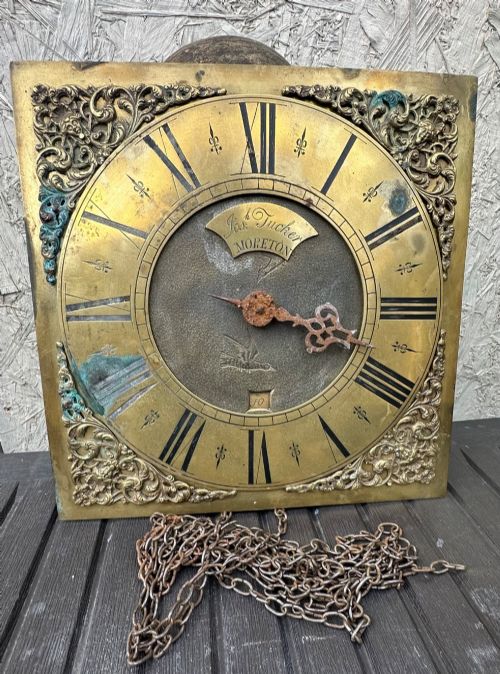
The dials combine hammered or rolled brass sheets with cast brass spandrels in the corners, finished with engraved chapter rings for the hours and minutes. Steel forms the intricate gear trains, pinions, and springs inside, while glass protects the delicate face behind the hood door.
Brass Face Grandfather Clock Retail Price Guide 2026
Typical asking prices for brass face grandfather clock among the pieces listed under this phrase on Sellingantiques today, from the lower quarter to the upper quarter. They describe what is for sale here now, not the wider market.
Listings feature oak and mahogany predominantly, alongside walnut cases housing brass dials signed by regional makers from Georgian through Edwardian periods.
Distinctions in quality
Quality rests upon the crispness of the brass dial engraving and the originality of the movement matched to its case. Finer examples display signed dials by recognised provincial or metropolitan makers, paired with cabinetwork showing thoughtful proportions and restrained carving.
The marriage of dial and case over generations influences desirability, as does the complexity of the mechanism, such as eight-day durations or lunar phase indicators. Cases retaining their original surface patination and proportion command greater appreciation among collectors.
Jn° Smith Macclesfd·Smith of Chester·Joseph Gibson Ecclefechan·William Betagh Dublin·David Morice Auchtermuchty·Samuel Young Nantwich·John Pollard Crediton·Richard Northen·Robert Thomson Bo-ness·James Draycot Wells·Standring of Bolton·George Clapham Whitton·Jonathan Blake Fulham·William Lister·John Douglas Galston·Newman of Norwich
The Brass Face Grandfather Clock Glossary
- Longcase clock
- A tall pendulum clock enclosed in a wooden case designed to rest directly on the floor. These instruments utilise gravity-powered weights suspended by lines or chains.
- Spandrel
- The ornamental corner piece mounted on a clock dial outside the chapter ring. These cast brass decorations evolved in style from delicate foliate scrolls to rococo designs depending on the period.
- Chapter ring
- The circular ring on a clock dial bearing the numerals for the hours and minutes. They are typically silvered brass to contrast against the yellow brass dial plate.
- Lunar moonphase
- A mechanical display on the dial tracking the phases of the lunar month. It utilises a rotating disc behind an arched aperture above the main chapter ring.
- Grandmother clock
- A smaller, more slender version of the traditional longcase clock produced predominantly during the twentieth century. They fit modern ceiling heights while retaining traditional weight-driven or spring movements.
Brass Face Grandfather Clock: Frequently Asked Questions
How do I wind an eight day grandfather clock?
Winding requires inserting a key into the winding holes on the brass dial and turning it steadily until the internal weights reach the top of their descent. Care must be taken not to overwind the mechanism.
Most eight-day movements need this attention once a week, ideally on the same day to maintain consistent timekeeping habits.
Where should I place a longcase clock in my home?
Position the clock against a solid interior wall away from direct sunlight, heating vents, and exterior doors where temperature swings might affect the wood and metal. A stable, level floor ensures the pendulum swings evenly.
Avoid high-moisture rooms like kitchens, as damp air causes the iron and steel components to oxidize and timber to swell.
How can I tell the age of a brass face clock?
Dating relies on stylistic clues in the brass dial, such as the shape of the spandrels, the engraving style of the maker's signature, and whether the dial is square or arched. Case architecture and timber choice also offer strong chronological markers.
Signatures on the dial often point to recorded provincial clockmakers whose active working decades are documented in trade directories.
What is the difference between a grandfather and a grandmother clock?
The primary distinction lies in overall height and proportion, with grandfather clocks standing tall and commanding while grandmother clocks offer a much more slender, reduced scale. Grandmother clocks generally date from the twentieth century.
Both house similar mechanical principles, but the smaller variant suits domestic spaces with restricted vertical clearance.