
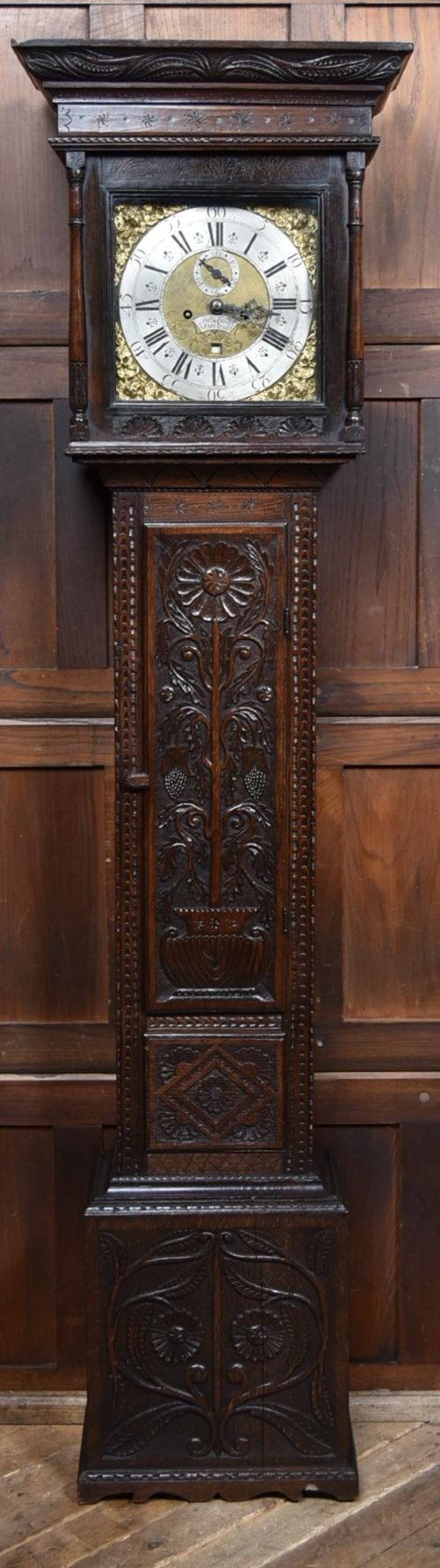
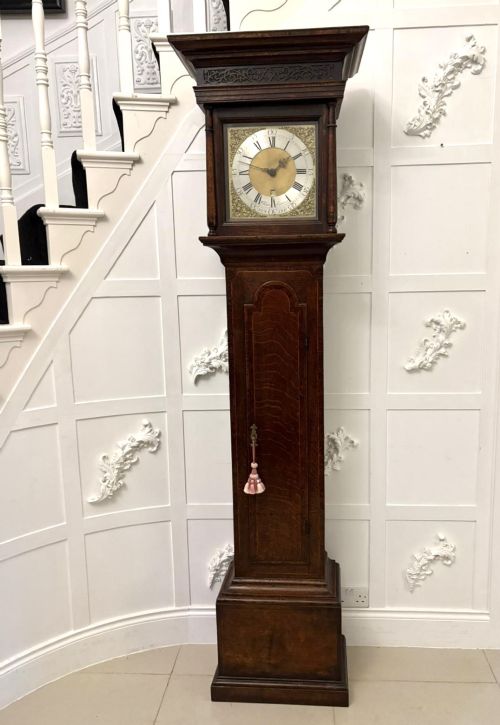
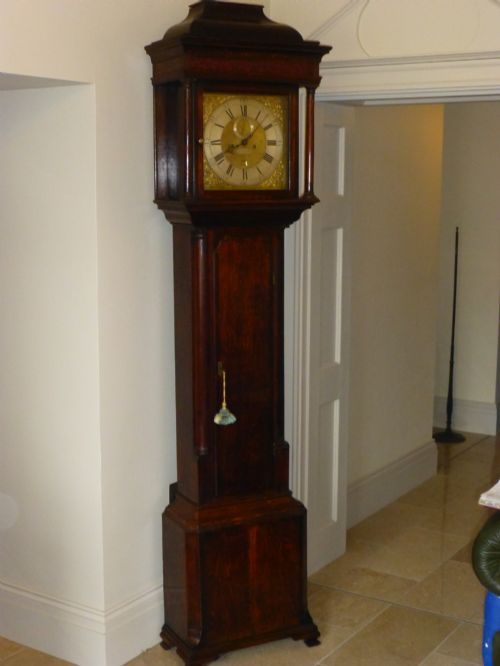
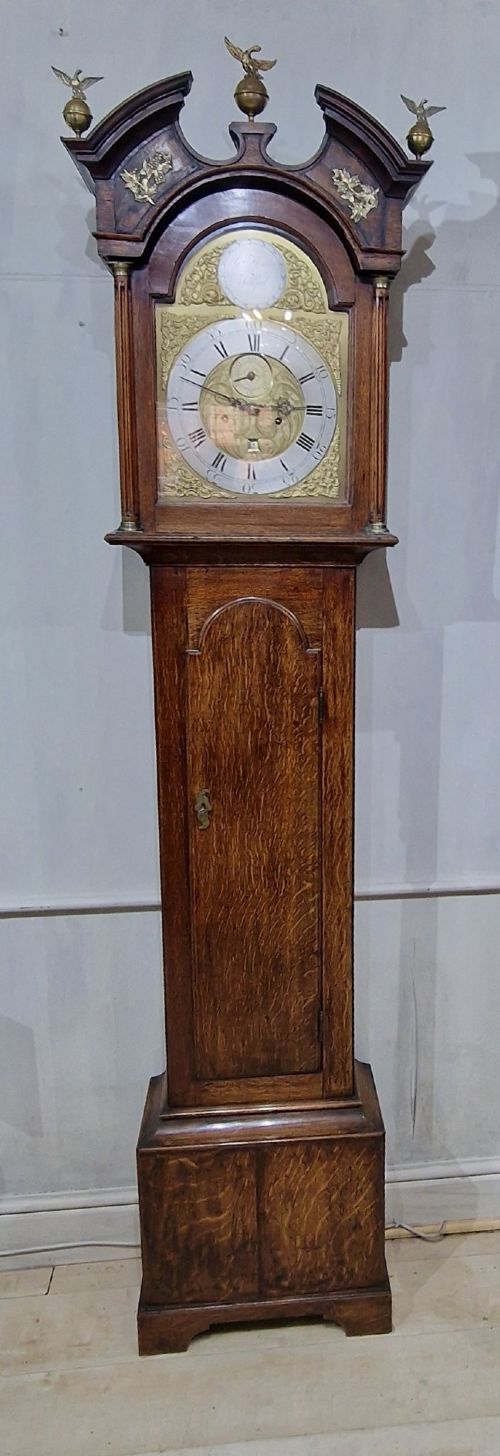
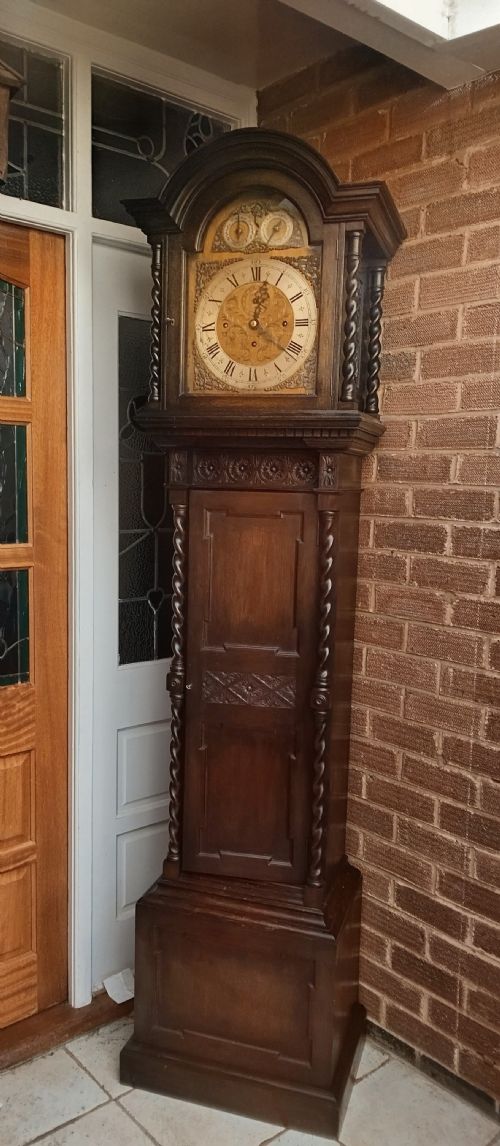
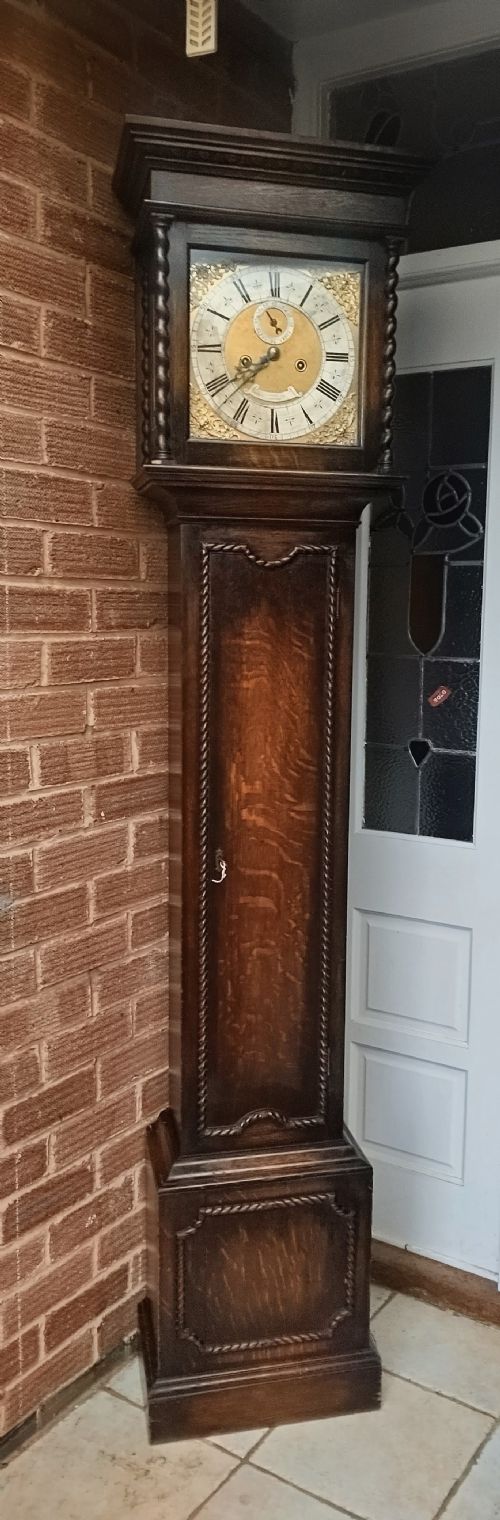


Carved Oak Floor Clock
These carved oak floor clock pieces are substantial timekeepers in timber, built to stand in the hall and mark the hours.
What these pieces are
When you search for a carved oak floor clock, you encounter tall timekeepers spanning the eighteenth century through to the interwar period of nineteen thirty. These upright pieces appear as longcase or grandfather clocks, housed in timber cases that often display carved decoration upon the wood.
The examples recorded here include brass-faced clocks from the seventeen fifties and the eighteenth century alongside Victorian revivals and later twentieth-century forms. German manufacturing also contributes an Art Deco carillon design dating from nineteen twenty-five.
Most entries combine timber cases with brass dials, while certain specimens incorporate tubular bells or multiple melodies. The variety ranges from traditional George III regional work to substantial late Victorian carved housings and separate clock cases.
How they were made
Makers constructed these tall cases primarily from oak, utilising the timber's strong grain for structural height and decorative carving. Glazed panels protect the dial face, while brass forms the principal material for the working clock faces and interior movements.
Dial construction involves engraved or polished brass plates, often complemented by cast brass spandrels in the earlier styles. Carving is applied directly to the oak cabinetry, particularly on Victorian and later revival iterations.
Retail Price Guide 2026
Typical UK retail prices for carved oak floor clock, calculated from the Sellingantiques database of over a million retail prices indexed since 2003. This retail price guide relies exclusively on Sellingantiques data; no external sources or auction records are used, so the figures do not describe the wider market.
One German patent clock from nineteen twenty-five plays four separate carillon melodies inside its carved Black Forest oak case.
What varies in quality
Distinction across the range lies in the depth and crispness of the oak carving upon the case, alongside the sophistication of the dial work. Earlier eighteenth-century examples display hand-engraved brass faces signed by regional makers, whereas later twentieth-century pieces incorporate complex chime systems like tubular bells or four carillon melodies.
The architectural integrity of the oak trunk and the preservation of the original brass dial elements determine the standing of each piece. Simpler uncarved cases contrast with heavily ornamented Victorian revival housings and German patent movements.
The Carved Oak Floor Clock Glossary
- Longcase clock
- A tall, freestanding pendulum clock enclosed in a wooden case, commonly known as a grandfather clock. These standing timekeepers typically measure over six feet in height.
- Brass face
- The metal dial plate forming the front of the clock, usually engraved with numerals and decorated with brass spandrels in the corners. These faces often bear the signature of the maker.
- Carillon
- A mechanism fitted to certain clocks that plays multiple melodies or tunes using bells. This musical capability appears in twentieth-century variants.
- Tubular bells
- Cylindrical metal tubes suspended inside the clock case that are struck by hammers to produce deep chime notes. They replace traditional flat bell gongs in larger architectural movements.
- Spandrel
- The ornamental corner piece affixed to the dial of a clock outside the chapter ring. These cast brass motifs often help indicate the period of the piece.
Frequently Asked Questions
How do I tell an 18th-century clock from a Victorian one?
Eighteenth-century examples typically feature simpler, proportioned oak cases with engraved brass dials signed by regional makers. Victorian iterations often display heavier, deeper carved ornamentation upon the timber.
Examining the style of the carving and the construction of the oak trunk reveals the period of manufacture. Earlier pieces rely on proportion and engraved brass work, whereas later revivals favour dense surface decoration.
Where should I place a floor clock in my home?
These tall timekeepers suit hallways, landings or principal rooms with sufficient ceiling height to accommodate their upright proportions. Positioning them away from direct heat sources protects the oak timber.
Ensure the floor surface is level so the pendulum swings freely and keeps accurate time. Stable placement prevents the tall case from leaning.
What is the difference between a longcase and a grandfather clock?
The terms describe the same tall, freestanding clock format using a weight-driven pendulum movement enclosed in a wooden case. Longcase is the traditional horological term used by makers.
Grandfather clock became the popular domestic descriptor following the nineteenth-century song. Both names refer to the identical upright furniture form.
How do chiming mechanisms vary across these clocks?
Earlier models rely on standard bell strikes for the hours, while later twentieth-century versions incorporate complex carillon patents or tubular bells. These mechanical additions allow the clock to play multiple melodies.
Examining the interior reveals whether the sound is produced by traditional bells or suspended metal tubes. This complexity generally increases with the date of manufacture.