
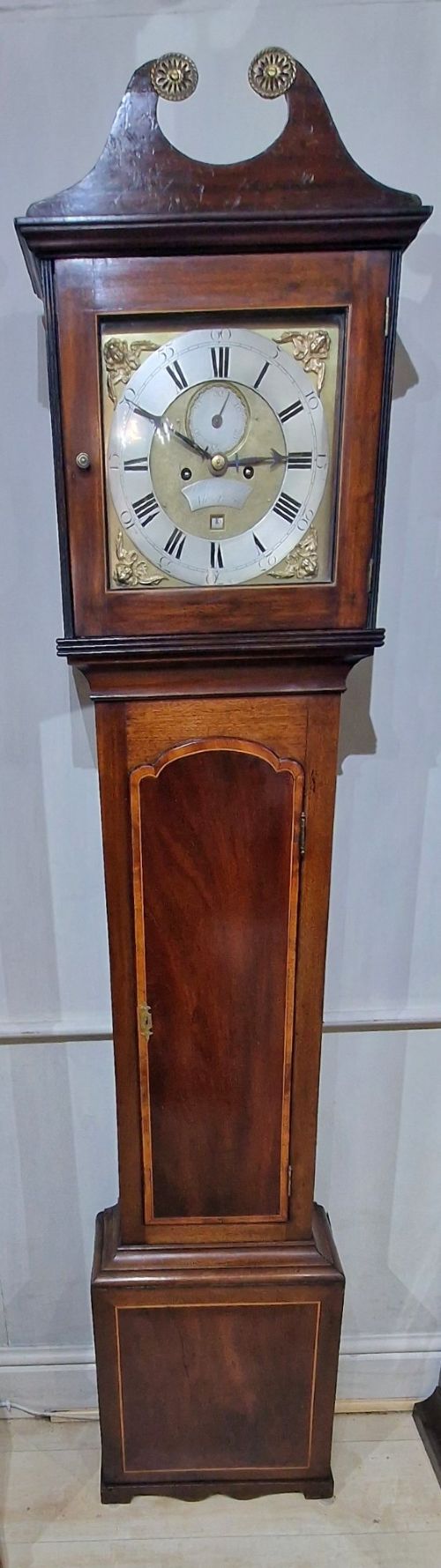
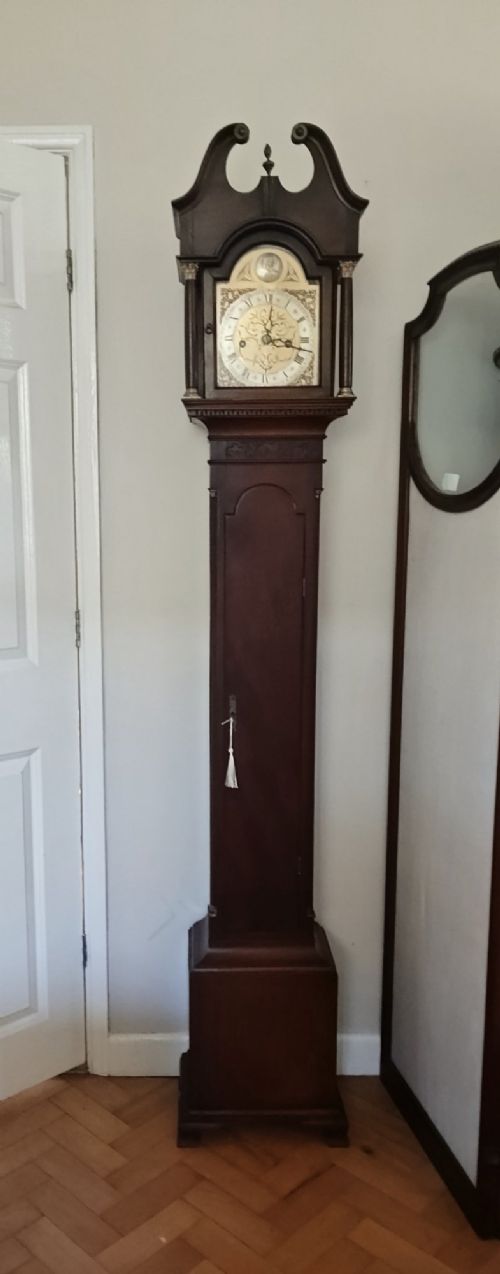
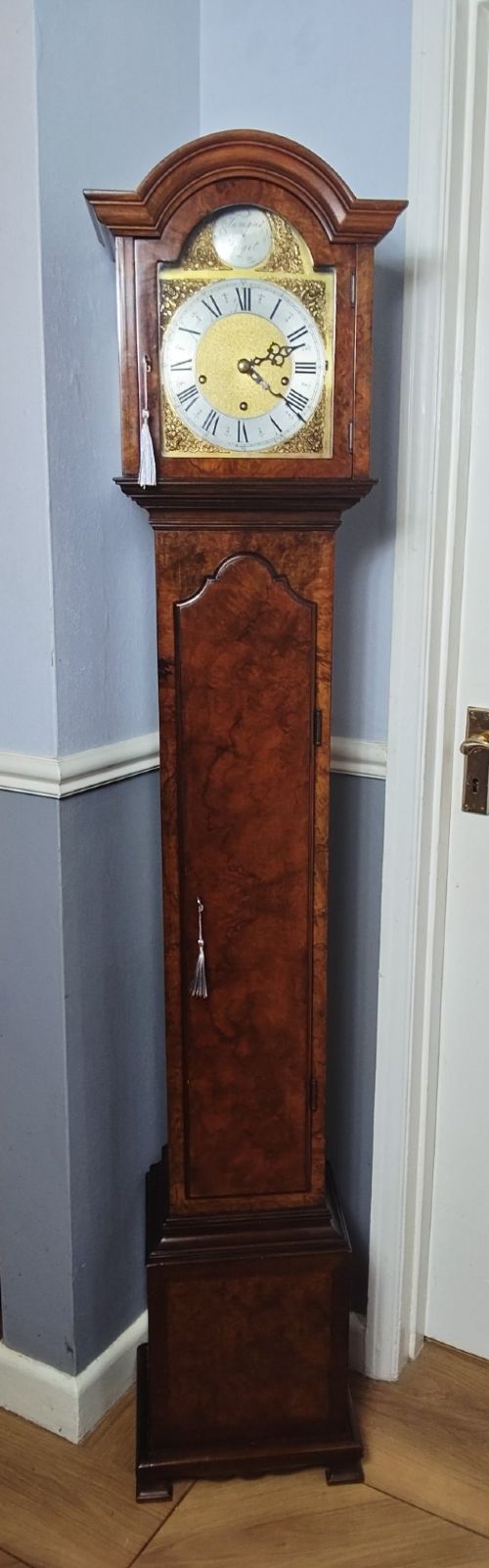
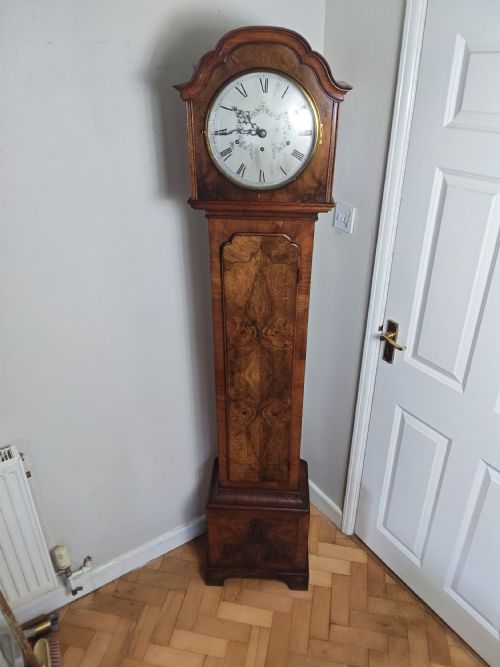
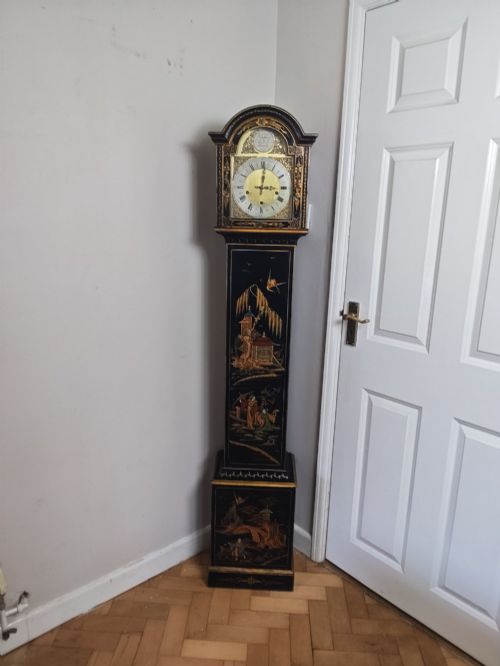
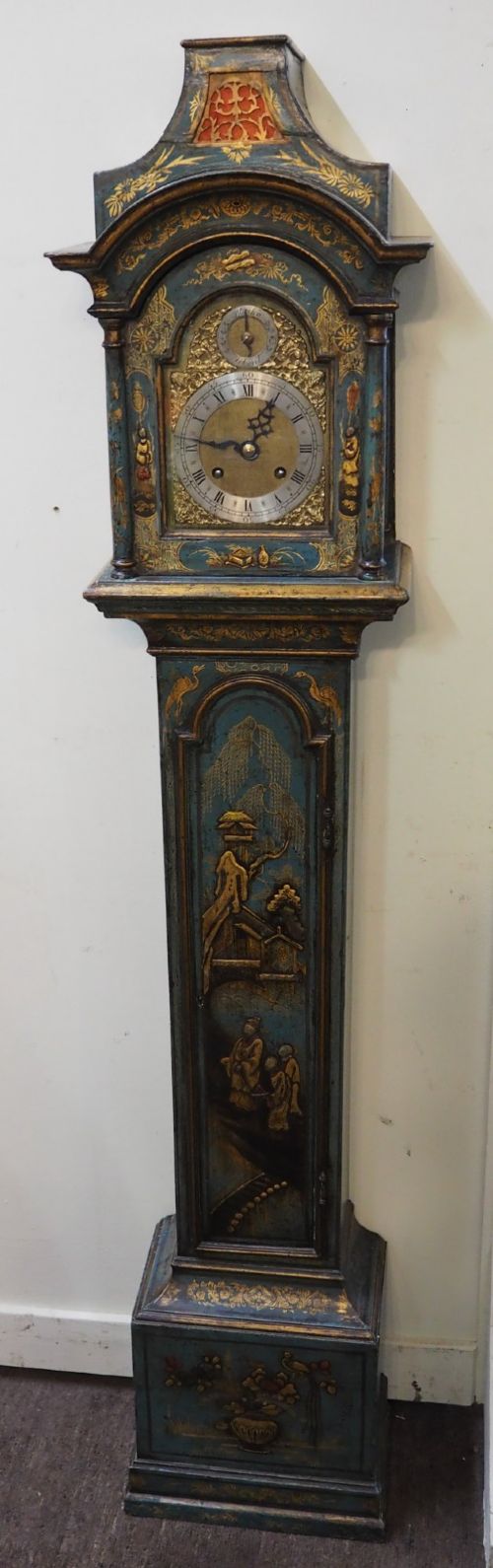


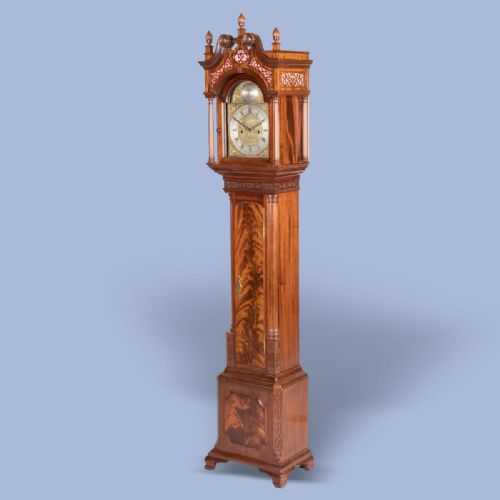


Georgian Grandmother Clock
A georgian grandmother clock is a smaller longcase clock offering the presence of a full-size floor clock in reduced proportions.
Georgian Grandmother Clock
When you search for a georgian grandmother clock, you are looking at scaled-down tallcase timepieces that measure under the height of a standard floor clock. The examples met on this page range from early Georgian periods through the nineteenth century and into later revival styles of the 1920s and 1930s.
These clocks appear in various timber forms, including mahogany, walnut, burr walnut, oak, and pine, alongside decorative lacquered finishes. Many follow traditional proportions or incorporate revival details from the Chippendale and Queen Anne styles.
The selection includes musical movements, quarter-chiming variants, and simpler thirty-hour or eight-day mechanisms housed in narrow cases designed for smaller rooms. Makers such as Dent of London, Waring & Gillow, and regional clockmakers like John Reynolds appear across the records.
How they were made
Cabinetmakers constructed the slender cases using solid woods and veneers of mahogany, walnut, burr walnut, oak, and pine, often incorporating glass door panels to view the pendulum and weights. Lacquered surfaces, gold leaf detailing, and Chinoiserie artwork appear on specialised decorative models.
Clockmakers fitted brass dials and precision mechanical movements inside these compact housings, ranging from simple thirty-hour weight-driven trains to complex twin fusee or triple-weight musical mechanisms that chime melodies like Westminster.
Georgian Grandmother Clock Retail Price Guide 2026
Typical asking prices for georgian grandmother clock among the pieces listed under this phrase on Sellingantiques today, from the lower quarter to the upper quarter. They describe what is for sale here now, not the wider market.
Listings feature woods spanning mahogany, walnut, burr walnut, oak, and pine, alongside decorative blue lacquer and gold leaf finishes.
What varies in quality
The sophistication of the movement largely determines the standing of a piece, separating basic time-only or thirty-hour mechanisms from intricate quarter-chiming musical systems with multiple weights or fusee gearsets.
Cabinetwork quality rests on the selection and figuring of timber veneers, such as burr walnut or figured mahogany, and the fidelity of revival detailing such as Chippendale or Queen Anne style carving.
Robb Montrose·Waring & Gillow Ltd·Henry Smith of Petersfield·John Reynolds·Dent of London
The Georgian Grandmother Clock Glossary
- Longcase clock
- A tall freestanding weight-driven timepiece with a pendulum, commonly known as a grandfather clock. Smaller variants are often termed grandmother clocks.
- Fusee
- A conical pulley used in clock movements to maintain an even pull as the driving spring unwinds. This mechanism improves timekeeping accuracy.
- Quarter chiming
- A movement complication that sounds the quarter hours on bells or gongs. Many examples play specific tunes such as Westminster chimes.
- Thirty-hour
- A clock movement designed to run for just over a single day before requiring manual winding. These systems typically use a single weight or spring.
Georgian Grandmother Clock: Frequently Asked Questions
What is a grandmother clock?
A grandmother clock is a scaled-down version of a traditional tallcase or grandfather clock. These timepieces are built to a reduced height while retaining the mechanical layout and architectural presence of larger floor clocks.
They emerged to fit rooms with lower ceilings or narrower wall spaces where a standard longcase clock would overpower the interior scale.
How do I wind the clock?
Winding depends on whether the movement uses weights or a spring-driven fusee mechanism. Weight-driven clocks require the weights to be gently pulled up using a key or crank.
Care must be taken not to overwind spring mechanisms or pull weight chains too rapidly, as this can strain the internal gear train.
Where should I place it?
These slender clocks suit hallways, landings, studies, or principal reception rooms where floor space is limited. They require a stable, level surface against a solid wall to ensure the pendulum swings freely.
Keeping the clock away from direct sunlight and strong temperature fluctuations helps protect the timber case and lacquer finishes.
How do I tell periods apart?
Dating relies on examining cabinet construction, timber choice, dial design, and movement technology. Early Georgian pieces often feature simpler oak or mahogany cases with brass dial plates.
Later revival examples from the 1920s and 1930s frequently utilise figured burr walnut veneers and complex quarter-chiming musical mechanisms.