
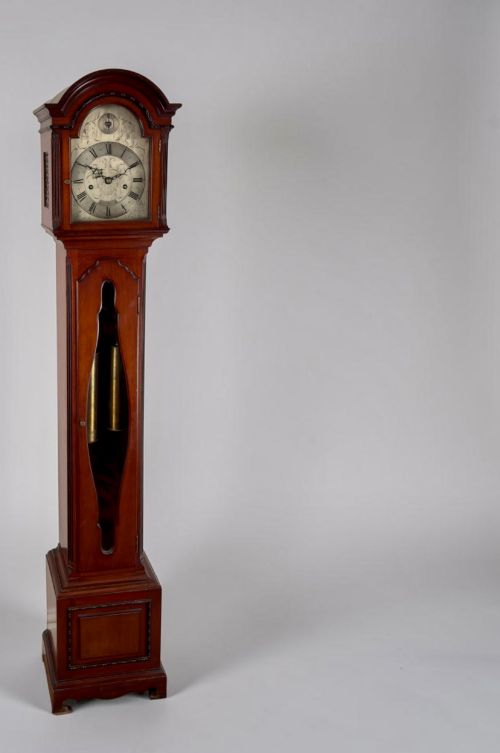
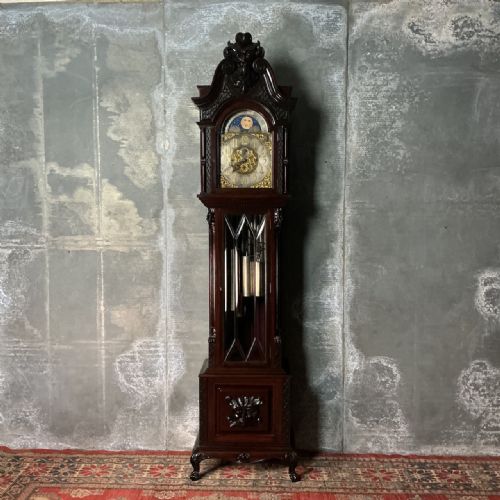
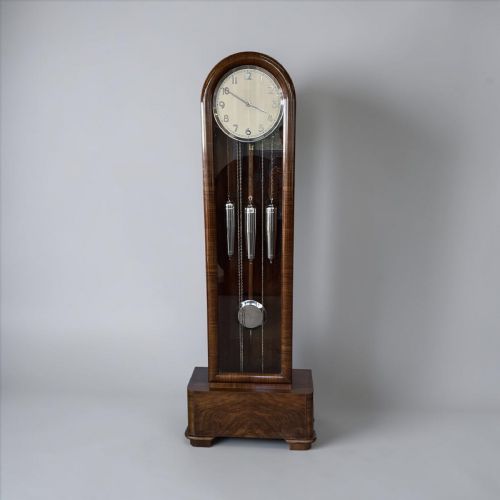
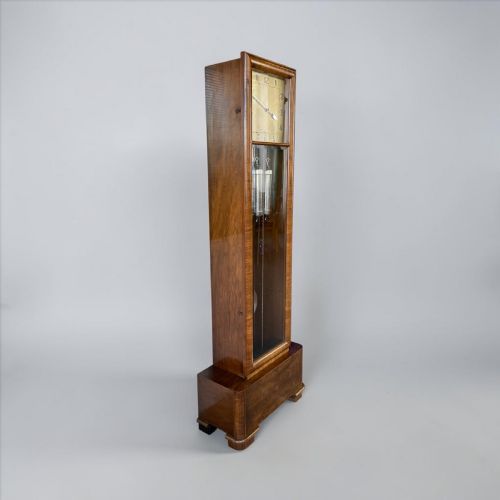
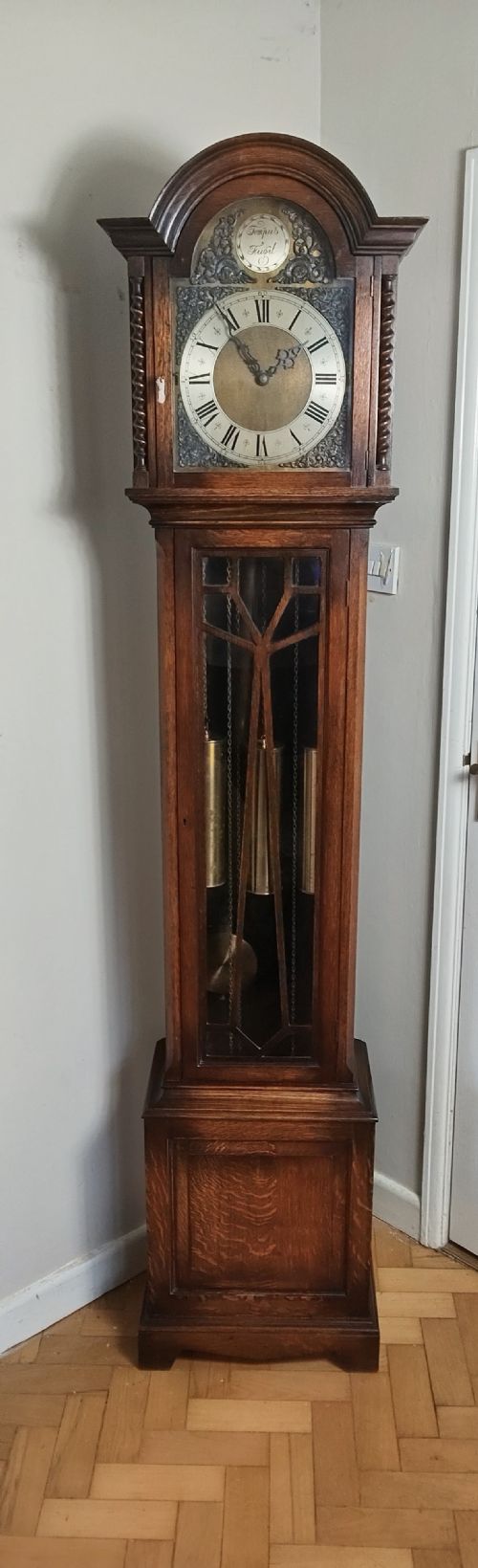
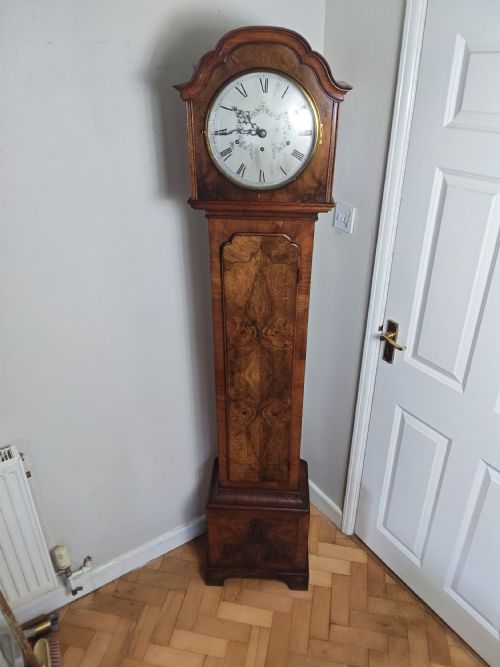
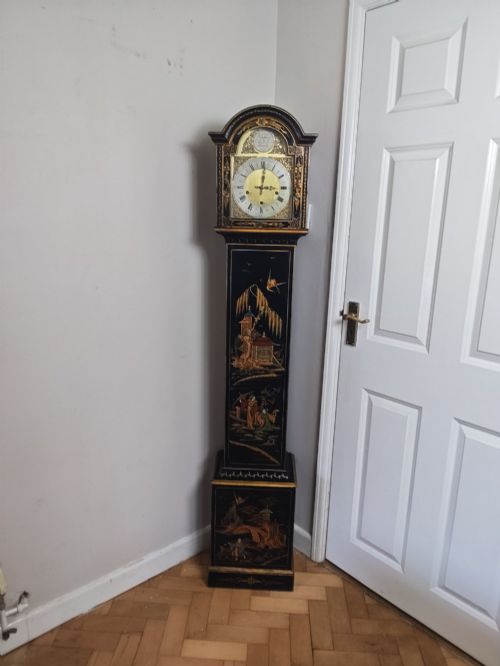
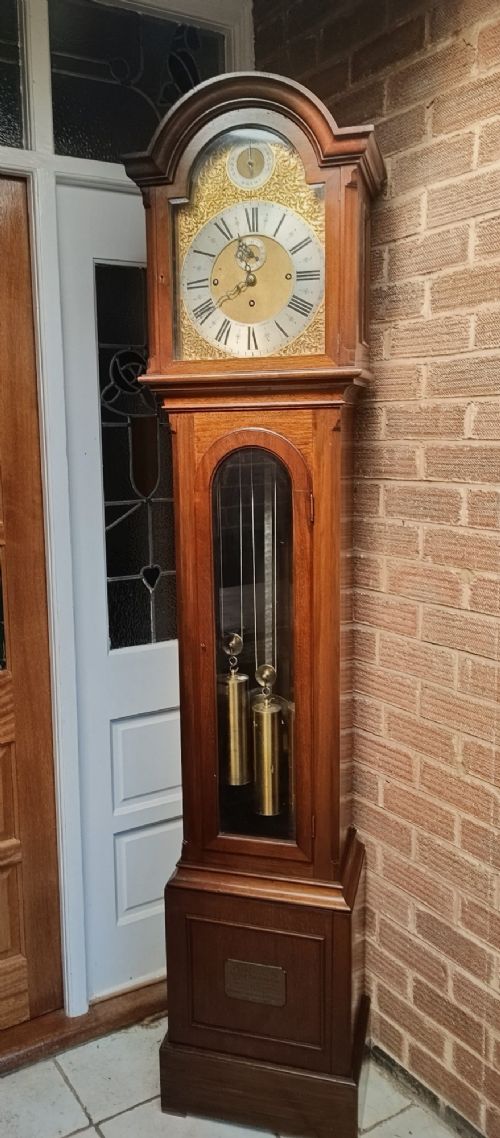
Chime Longcase Clock
A chime longcase clock marks the hours with familiar melodies, bringing mechanical precision and architectural presence into a room.

Chime longcase clocks
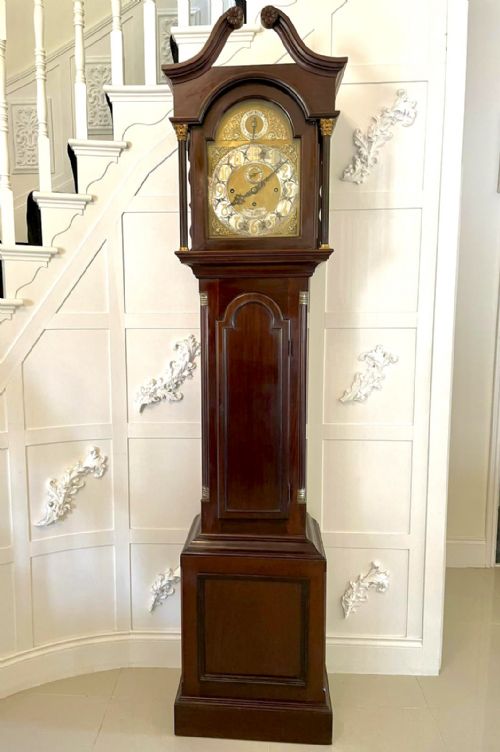
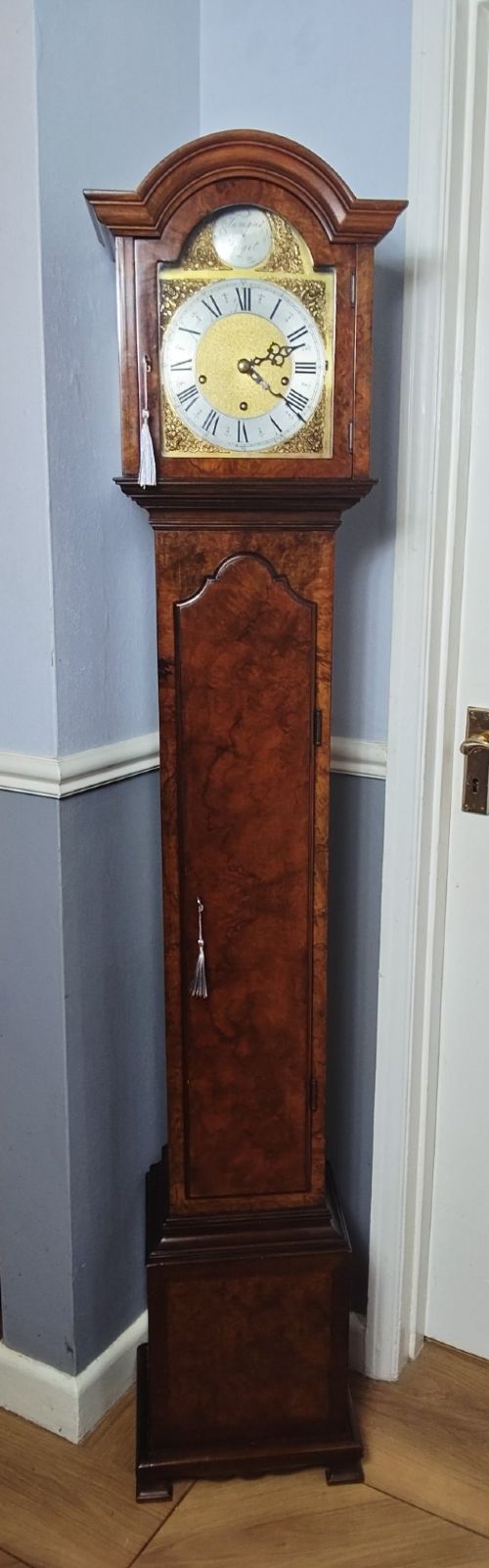
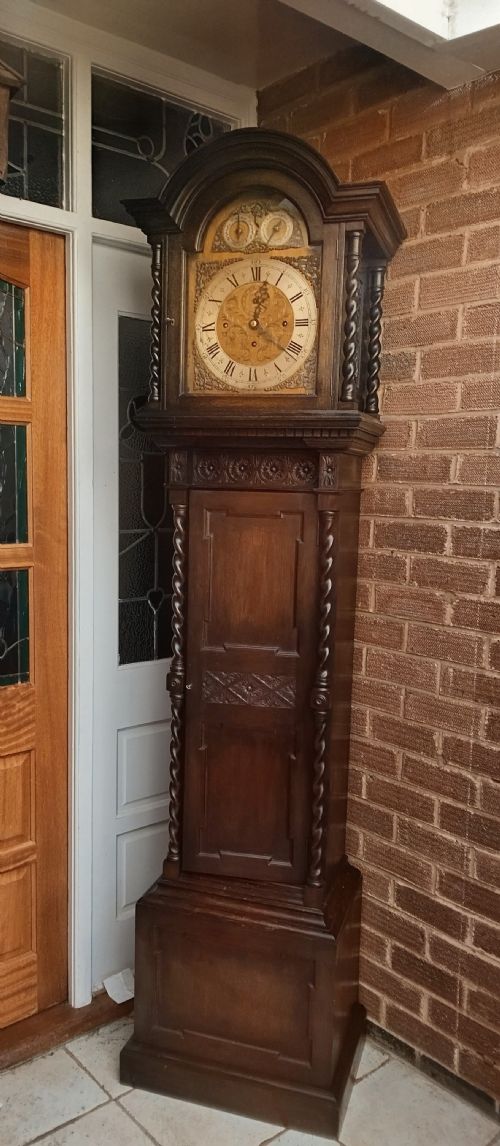
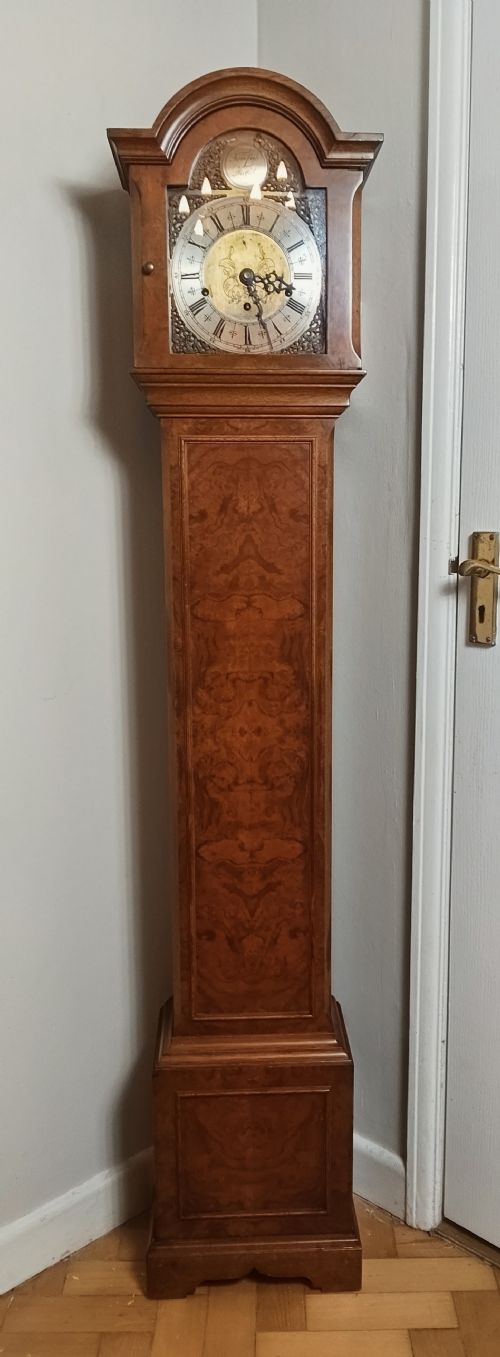
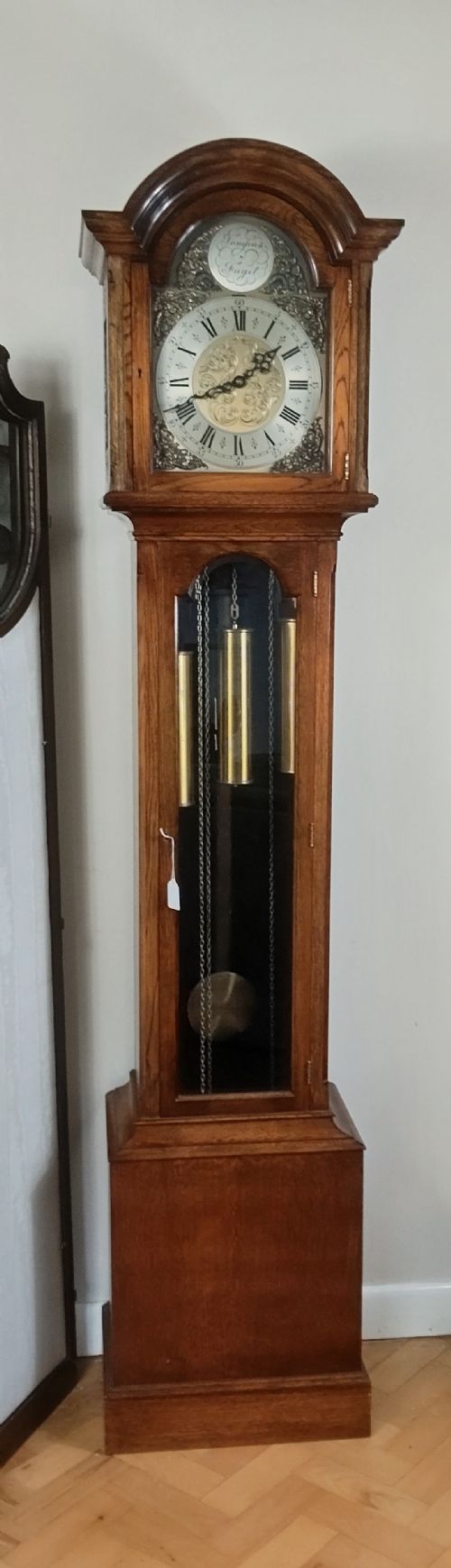
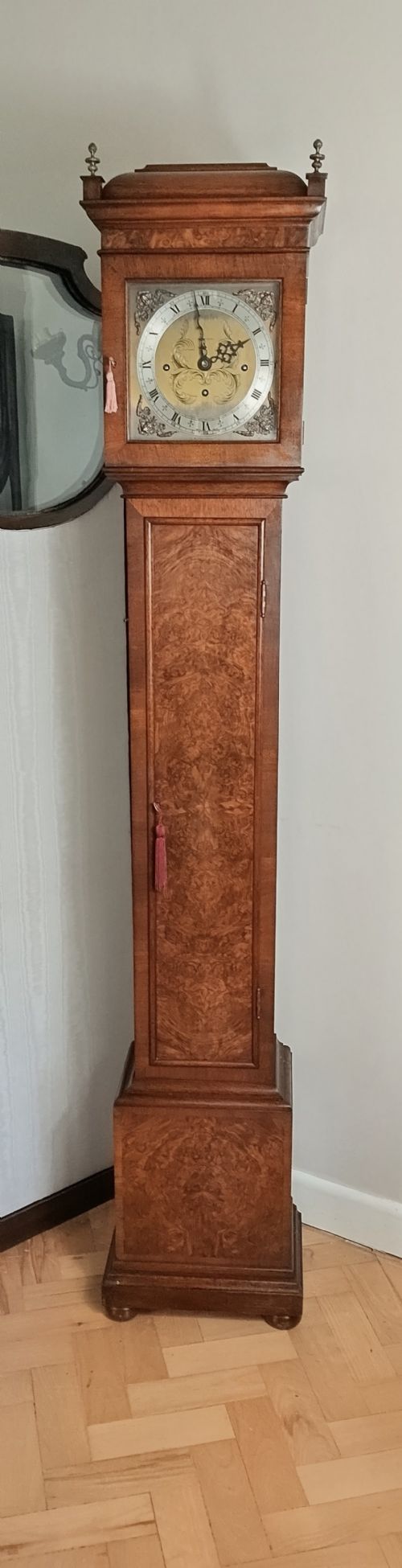
A chime longcase clock combines a tall wooden case with a weight-driven or spring-driven movement capable of playing musical quarter chimes. These timepieces appear in smaller proportions as grandmother or petit grandfather clocks, alongside full-sized grandfather examples.
The selections span the early twentieth century, specifically from nineteen hundred through to nineteen sixty. Styles range from plain oak and figured walnut to decorative Art Deco designs and revival periods.
Most examples originate from English workshops or incorporate reliable German movements housed in domestic timber cases. Buyers encounter everything from simple hour strikers to complex triple-chime mechanisms.
Materials and construction
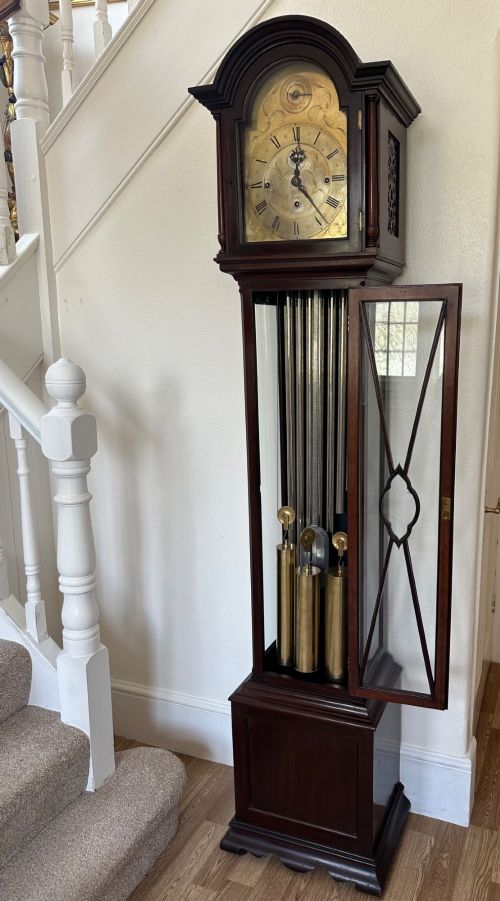
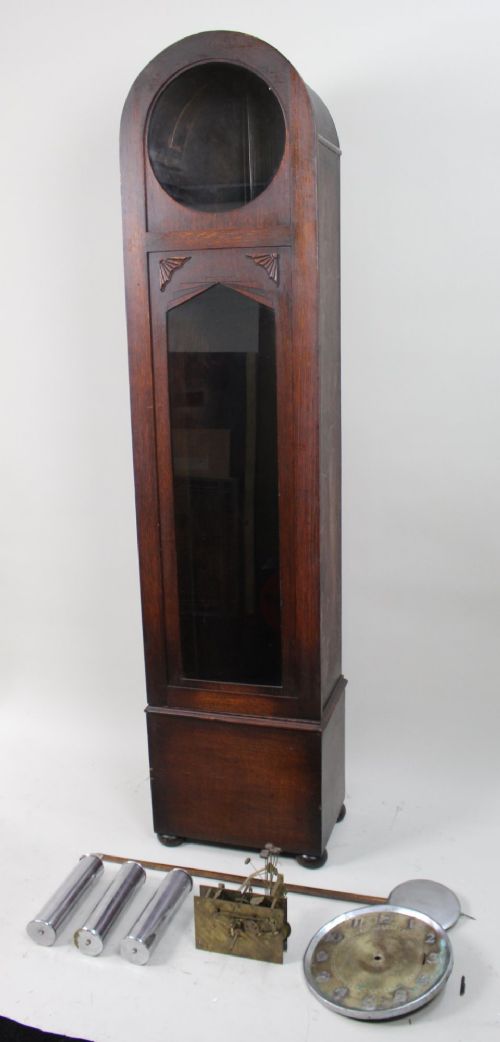
Cabinetmakers built these tall cases predominantly in solid oak, mahogany, and walnut, frequently applying burr walnut veneers or figuration to the trunk doors. Glass panels and astragal glazing protect the dial while allowing visibility of the swinging pendulum and weights.
Clockmakers fitted brass movements with intricate gear trains, deadbeat escapements, and multiple gongs or rods to produce Westminster, Whittington, or St Michael melodies. Dials often include auxiliary indicators such as chime-silent levers and subsidiary seconds.
Retail Price Guide 2026
Typical UK retail prices for chime longcase clock, calculated from the Sellingantiques database of over a million retail prices indexed since 2003. This retail price guide relies exclusively on Sellingantiques data; no external sources or auction records are used, so the figures do not describe the wider market.
Several clocks offer video demonstrations upon request, proving that even Victorian and Edwardian machinery enjoys showing off its musical repertoire online.
Judging quality
Quality rests in the acoustic resonance of the chimes and the engineering complexity of the movement, distinguishing single-train strikes from triple-weight musical mechanisms. Finer examples feature robust movements by known retailers or specialist makers alongside substantial cabinet timber.
Cabinet proportion and timber selection set the better pieces apart, particularly where figured burr walnut or detailed architectural mouldings define the case. Well-executed dials with crisp silvering and legible chapter rings complete the superior build.
ELLIOTT·HARRODS·Norland of England·Camerer Cuss·Maples·Winterhalder
The Chime Longcase Clock Glossary
- Grandmother clock
- A smaller version of the traditional longcase clock, typically standing under six feet tall while housing a full mechanical movement. These compact pieces suit smaller domestic spaces.
- Westminster chime
- A musical sequence of four notes played on the quarters of each hour, originating from the bells of the Palace of Westminster. Clockmakers adopted this tune widely for domestic chiming movements.
- Triple chime
- A movement mechanism capable of playing three distinct melodies, such as Westminster, Whittington, and St Michael. Owners select the desired tune via a small dial lever.
- Astragal glazed
- A glass door divided into smaller panes by wooden glazing bars, offering a view of the interior weights and pendulum. This technique appears frequently on Edwardian and Art Deco cases.
- Chime-silent
- A dial option allowing the owner to silence the quarter chimes and hour strikes during the night. The mechanism disengages the hammers while the clock continues to keep time.
Frequently Asked Questions
How do I wind a chime longcase clock?
Winding involves using a small crank key to pull up the suspended weights inside the trunk or to wind the spring barrels behind the dial. Care must be taken not to overwind the movement.
Most eight-day movements require this attention once a week, keeping the pendulum swinging steadily and the gear train under proper tension.
What is the difference between grandfather and grandmother clocks?
Grandmother clocks are shorter in height than traditional grandfather clocks, usually measuring between five and six feet tall. They emerged as popular domestic furnishings during the early twentieth century.
Despite their reduced stature, these smaller clocks frequently house the same complex quarter-chiming movements found in their larger predecessors.
Can I silence the chimes at night?
Many models feature a specialised dial lever marked chime and silent. Selecting this option lifts the hammers away from the gongs so the clock runs quietly.
The timekeeping train continues to function normally while the striking mechanism rests until morning.
How do I set the time safely?
Moving the minute hand forward allows the gear train to complete its chime sequences naturally without jamming the internal levers. Turning the hands backward risks damaging the striking rack.
Allowing the clock to strike fully after each quarter hour prevents synchronization errors between the dial and the bells.