
Vintage Mahogany Clock
A vintage mahogany clock brings warmth and mechanical precision to a room, offering rich timber grain alongside the steady ticking of a traditional movement.
Understanding the Vintage Mahogany Clock
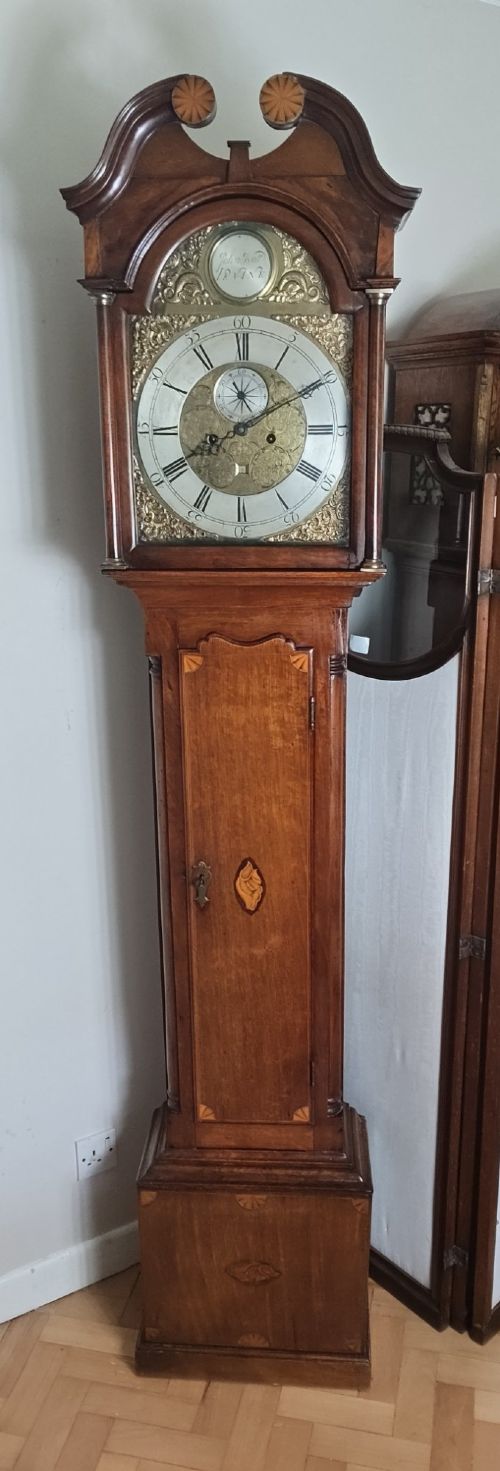
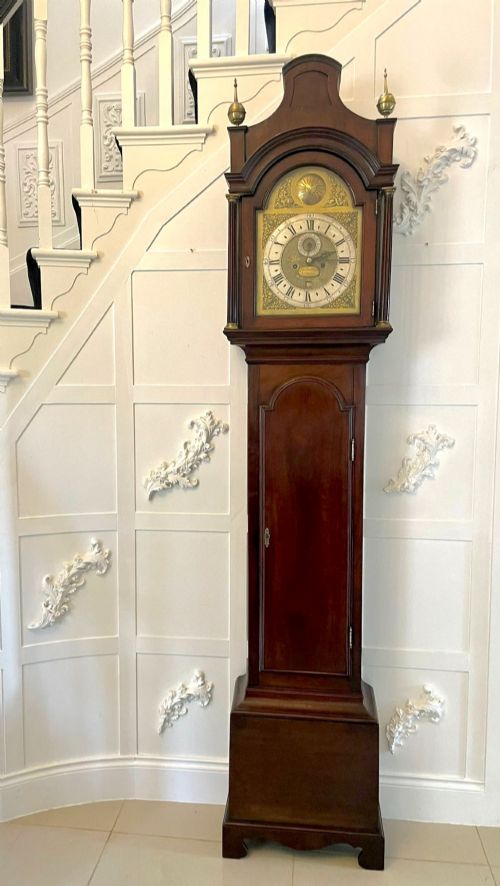
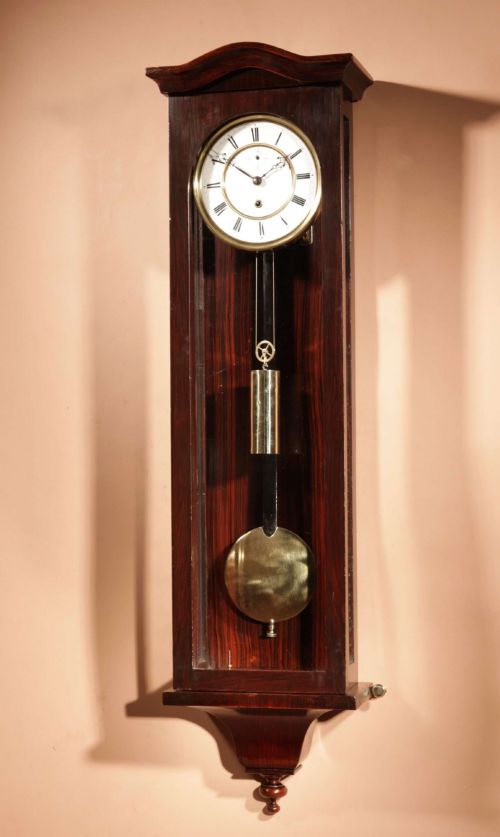
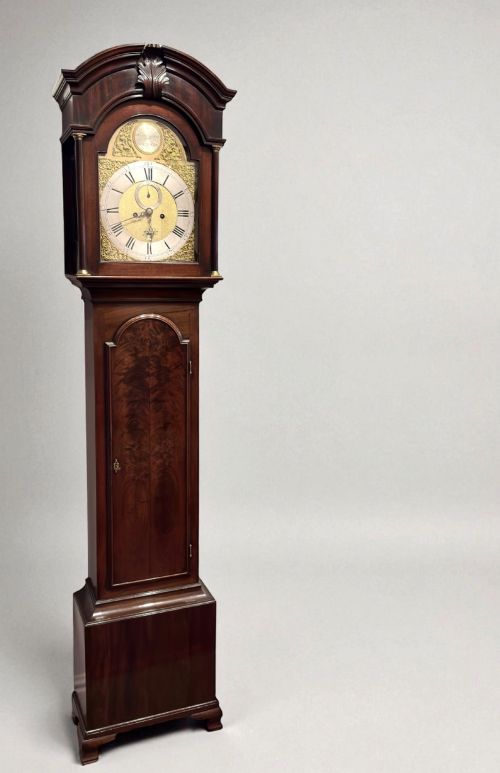
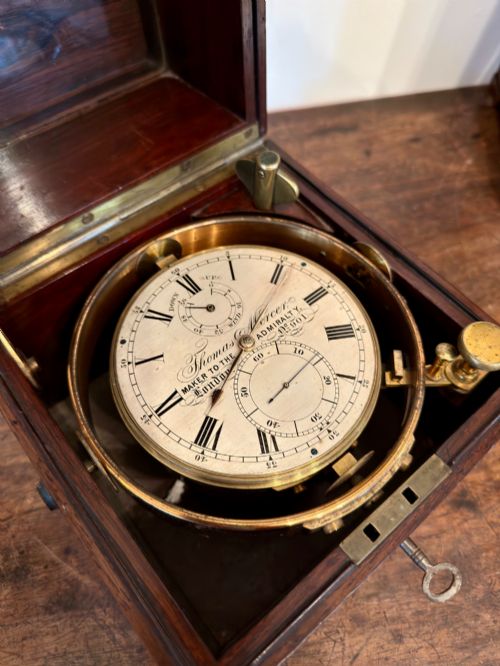
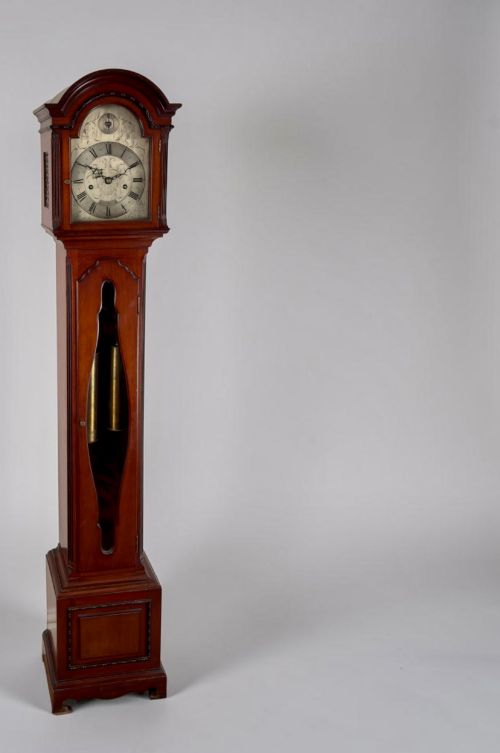
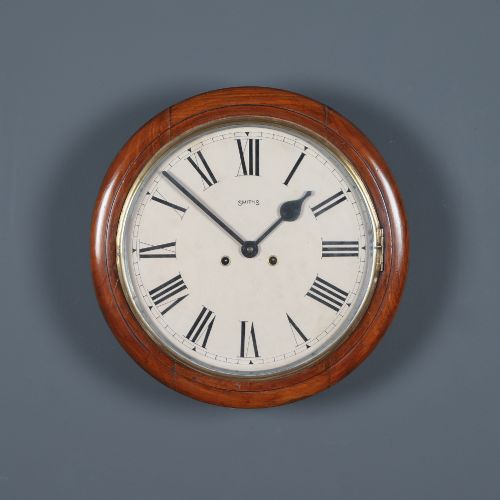
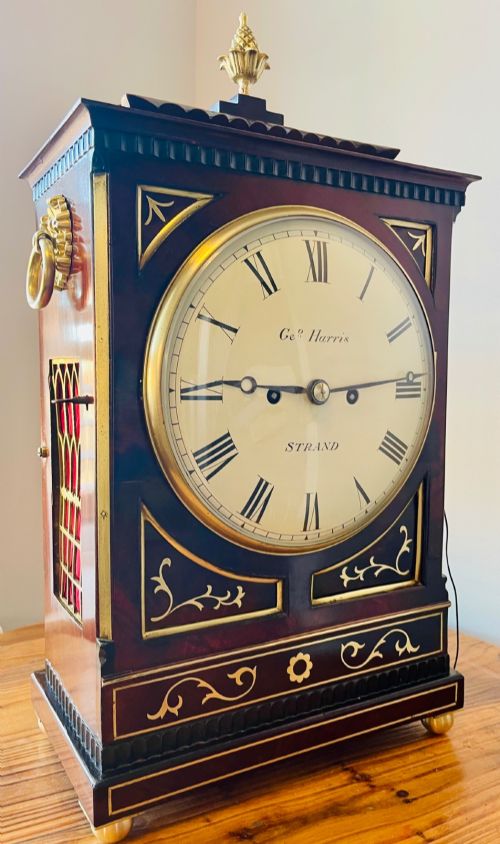
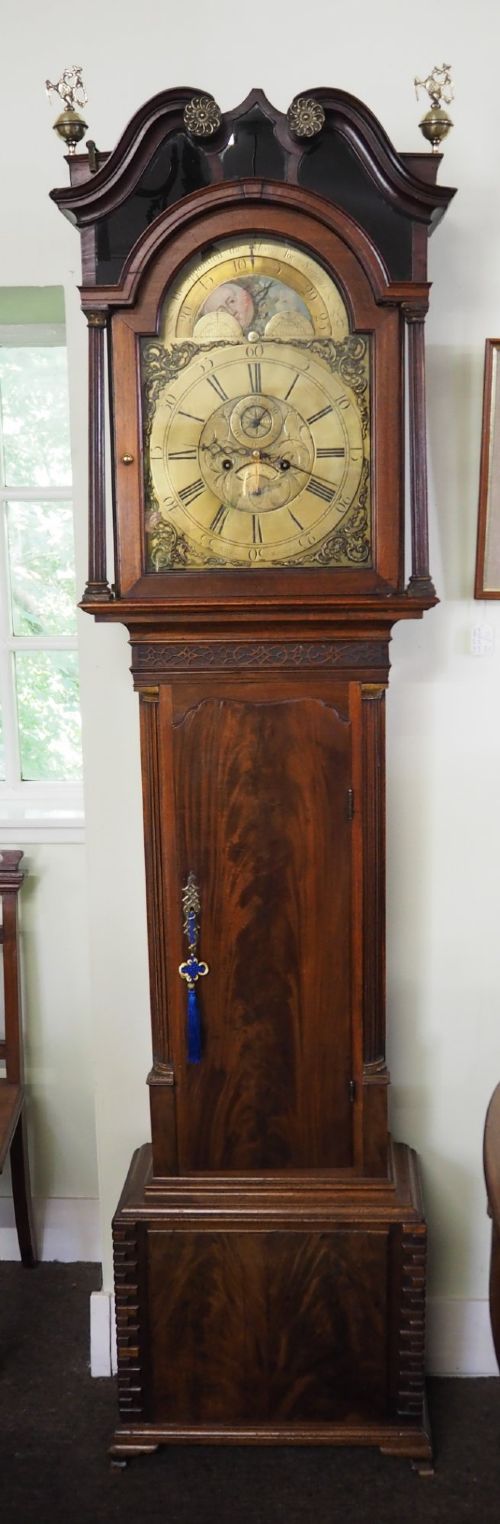
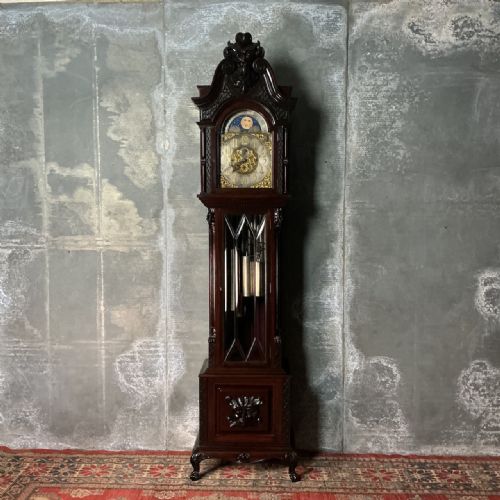
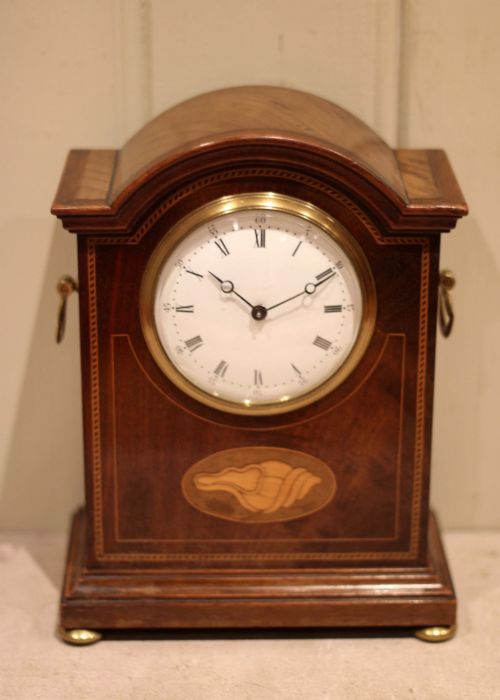
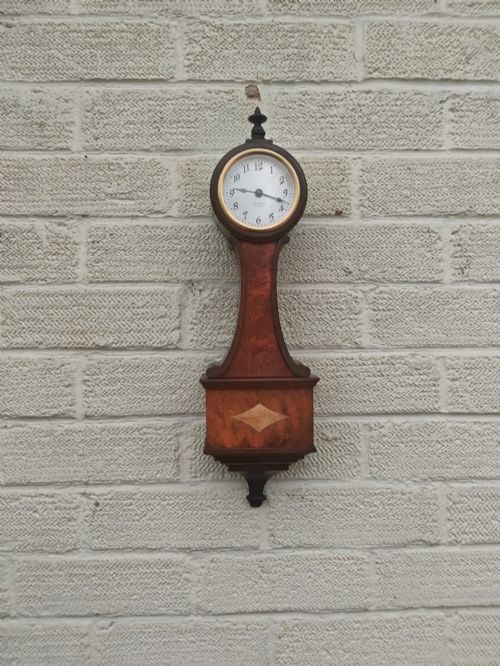
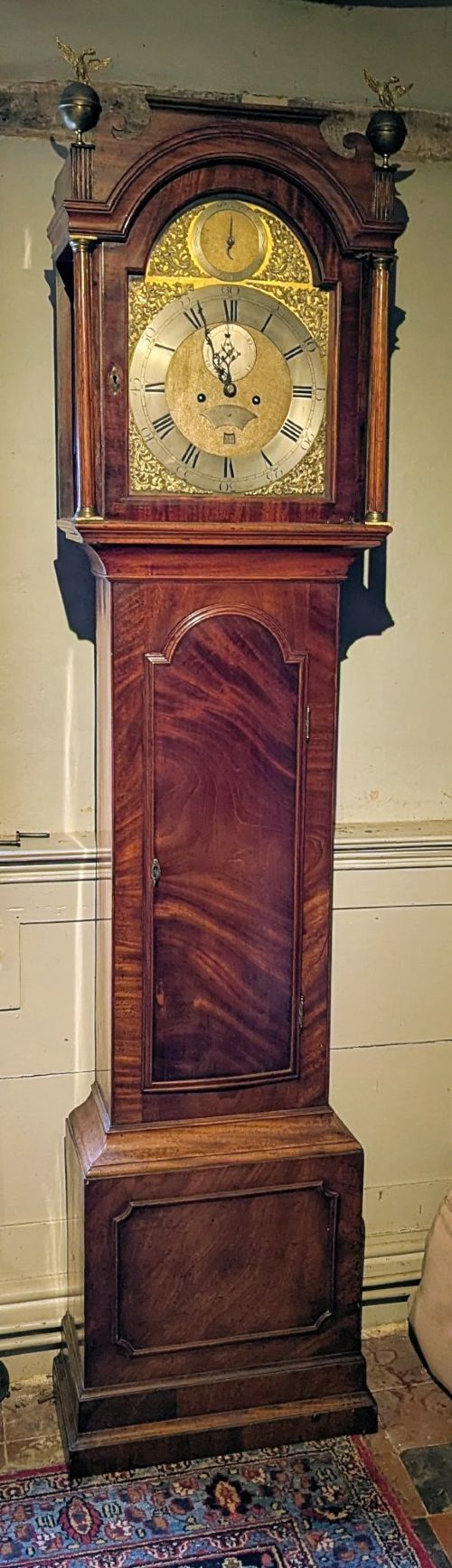
A vintage mahogany clock spans multiple centuries of horological design, taking forms from robust railway dials and bracket clocks to tall floor-standing grandfather pieces. The selection includes wall clocks, mantel clocks, and grander longcase formats shaped by Georgian, Victorian, Edwardian, and Continental tastes.
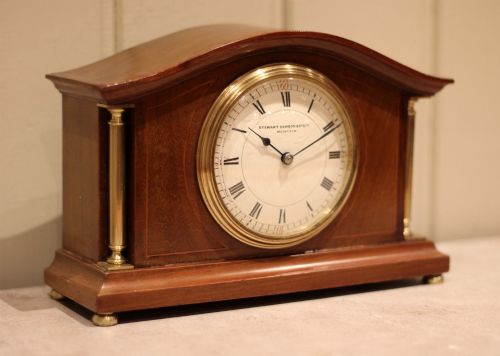
Buyers frequently encounter Edwardian mantel clocks and Victorian wall dials on this page, alongside earlier Georgian bracket designs and French Louis XIV style pieces. Timber cases show deep reddish-brown tones, occasionally accented with satinwood inlay, glass viewing panels, and brass bezels.
Domestic interiors benefit from these timepieces by pairing functional timekeeping with sculptural cabinet work. Whether housing a fusee movement or a simple timepiece mechanism, each clock reflects the prevailing style of its period of origin.
Materials and Construction
Cabinet makers utilised solid mahogany and polished veneers over secondary timbers to build sturdy clock housings. Cases feature glazed doors and brass bezels to protect the dial, sometimes incorporating delicate satinwood stringing for visual contrast.
Internal mechanisms rely on brass plates and wheels, driven by weight-driven systems, spring power, or fusee movements designed to maintain even tension. Dials use painted metal, enamel, or engraved brass fitted with delicate hands and protective glass covers.
Retail Price Guide 2026
Typical UK retail prices for vintage mahogany clock, calculated from the Sellingantiques database of over a million retail prices indexed since 2003. This retail price guide relies exclusively on Sellingantiques data; no external sources or auction records are used, so the figures do not describe the wider market.
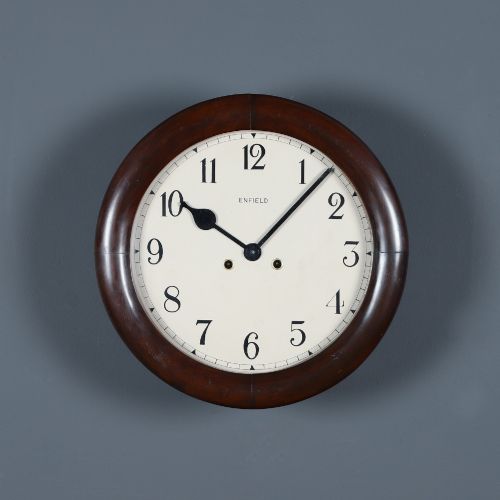
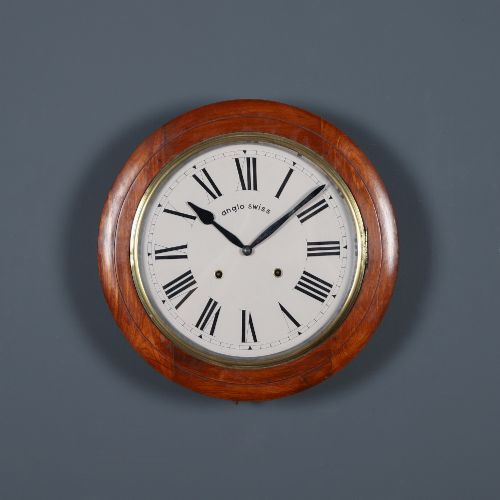
Railway clocks kept strict time for Victorian commuters, enduring decades of vibration and coal smoke in busy ticket offices.
Assessing Quality and Craftsmanship
The division between standard production and superior work lies in the sharpness of the cabinet detailing and the precision of the internal movement. Finer examples display carefully selected mahogany grain, crisp mouldings, and signed brass movements by established makers.
Proportion and material integrity dictate the standing of a piece, where secondary woods are neatly hidden and brass components show careful finishing. Original dials and uncompromised mechanical parts elevate a clock far beyond versions with replaced components or crude repairs.
Perigal Duterrau·E.J. Goodfellow Wadebridge
The Vintage Mahogany Clock Glossary
- Fusee
- A conical pulley used in clock movements to equalise the decreasing power of a driving spring as it unwinds. This mechanism helps the clock maintain consistent timekeeping accuracy.
- Bracket clock
- A portable clock originally designed to sit on a wall bracket or a shelf. These pieces often feature fine wooden cases with carrying handles on top.
- Timepiece
- A clock that indicates the time of day but lacks a striking mechanism or chiming train. It is a simpler mechanical arrangement focused solely on recording hours and minutes.
- Longcase clock
- A tall freestanding pendulum clock, commonly known as a grandfather or grandmother clock. The long wooden trunk protects the hanging weights and pendulum.
Frequently Asked Questions
How do I wind a mechanical clock?
Most spring-driven or weight-driven clocks require a specialised key or pull to tension the mainspring or lift the weights. Care must be taken not to overwind the mechanism.
Consult the specific movement type before applying pressure to the winding arbor to avoid damaging internal gears.
Where should I place a wall clock?
Wall-mounted clocks need a secure fixing directly into wall studs or solid masonry to support their weight and vibration. Level hanging ensures the pendulum beats evenly.
Avoid placing them in damp areas or in direct sunlight that might dry out the mahogany veneer.
How do I identify a Victorian clock?
Victorian clocks often display heavier proportions, robust mahogany cases, and specific dial treatments associated with nineteenth-century railway or domestic use. Fusee dials and American wall clock formats are common from this era.
Examining the construction methods and interior movement stamps helps confirm the nineteenth-century origin.
Can these clocks run on modern walls?
Mechanical clocks require a stable, plumb surface so the pendulum can swing with uniform momentum. Modern partition walls may need reinforcement to prevent vibration from stopping the beat.
Regular adjustment of the pendulum regulation nut corrects any minor gains or losses in time.