
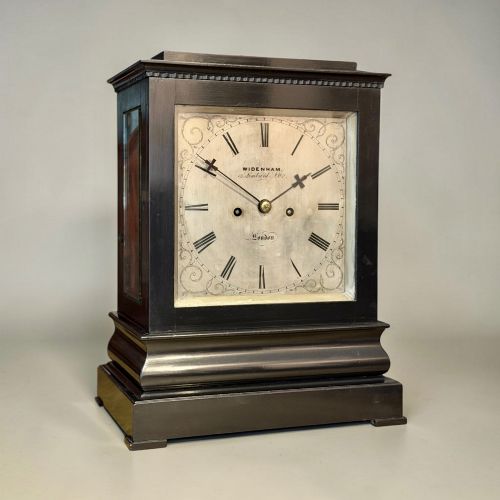
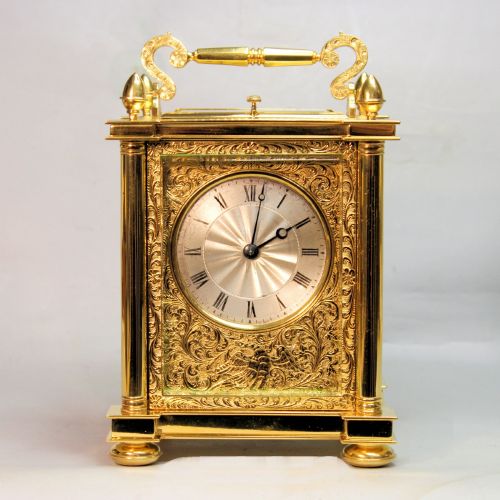
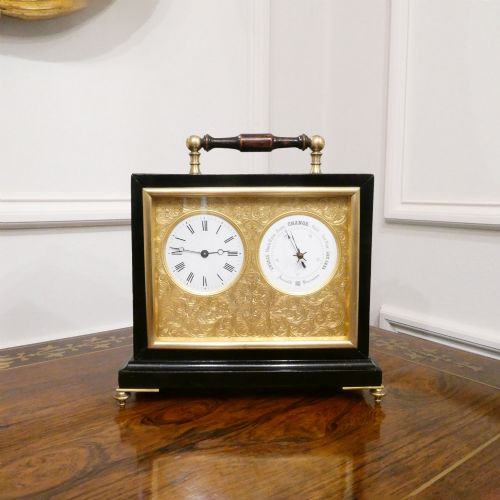
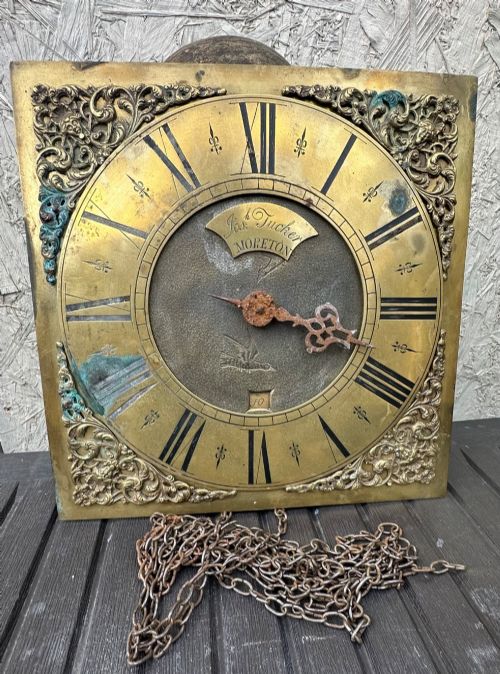
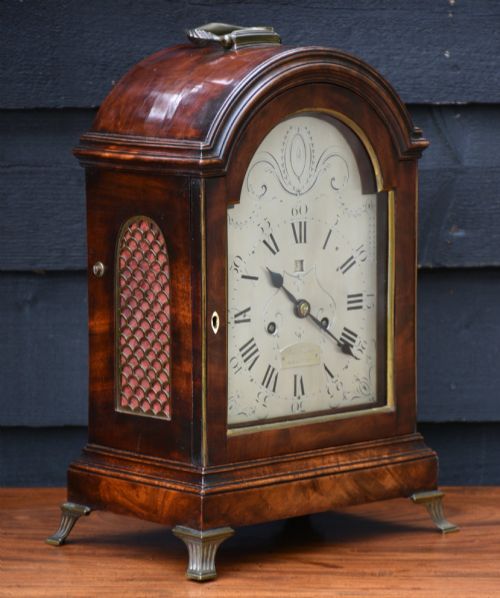
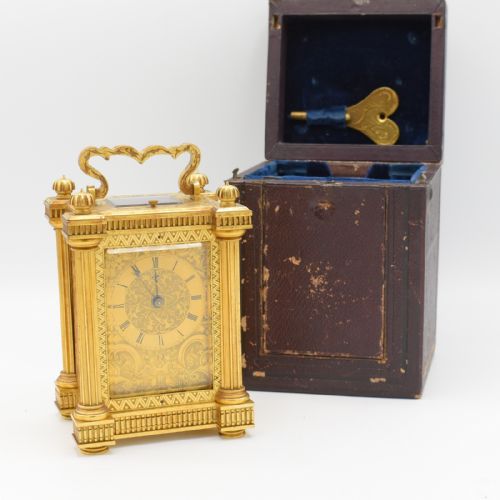


Engraved Dial Clock
These engraved dial clock pieces offer the traditional brass and glass craftsmanship collectors value for period interiors.

What an engraved dial clock is
An engraved dial clock combines timekeeping with detailed surface decoration across several centuries of British and continental production. When you search for an engraved dial clock, you encounter forms ranging from heavy brass lantern clocks to elaborate carriage clocks and tall mahogany longcase clocks.
The pieces appearing on this page span the 17th Century, 18th Century, 19th Century, and 20th Century, including Victorian and Regency designs. You find mantel clocks, lantern clocks, and grandfather longcase clocks rendered in materials such as brass, gilt brass, steel, mahogany, glass, enamel, leather, and lead.
Lantern clocks often display traditional English origins with brass frameworks and prominent bells, while French Louis XIV style or carriage formats showcase gilt brass and glass housings. The dial itself provides the primary visual focus through fine hand engraving surrounding the roman or arabic numerals.

Materials and construction methods
Makers utilised heavy brass and gilt brass for frames, bezels, and dial plates, often combining steel for internal gears and springs. Mahogany timber forms the structural cases for larger mantel and longcase examples, while glass panels protect delicate escapements in carriage clocks.
Enamel serves for painted chapters or subsidiary dials, and lead or leather appears in specific structural or protective roles within older movements. Artisans engraved brass dial plates by hand using sharp gravers to cut decorative foliage, maker signatures, and chapter rings into the metal surface.
Retail Price Guide 2026
Typical UK retail prices for engraved dial clock, calculated from the Sellingantiques database of over a million retail prices indexed since 2003. This retail price guide relies exclusively on Sellingantiques data; no external sources or auction records are used, so the figures do not describe the wider market.
Some travellers apparently needed to hear the time so badly they trusted delicate glass carriage clocks to bumpy horse-drawn roads.
Distinctions in execution
The refinement of the hand engraving across the brass dial plate separates standard production from superior work. Crisp, deep lines in the foliage and clear lettering indicate a skilled hand compared to shallow, mechanical scoring.
Material selection and movement complexity also define the grade of the piece. Solid mahogany cases, heavy gilt brass frames, multiple bells for quarter striking, and signed movements by known makers represent the higher tiers of the range.
John Spershott of Titchfield·John Waller of Preston·Howell and James London·Mappin and Webb·Charles Frodsham and Holingue Freres·Frodsham and Baker London·Mathias Bauerle Peerless·Richard and Co·Geo Tarratt of Leicester
The Engraved Dial Clock Glossary
- Lantern clock
- An early brass chamber clock driven by weights or springs, featuring an open bell on top and four corner posts. This form originated in the seventeenth century and often displays engraved decoration on the front dial plate.
- Carriage clock
- A portable spring-driven timepiece developed for travel, enclosed in a brass and glass case. These items frequently feature finely engraved gilt masks surrounding the enamel or brass dial.
- Longcase clock
- A tall pendulum clock housed in a wooden case, also known as a grandfather clock. The listings include examples in mahogany with engraved brass dials and musical chiming movements.
- Repeater
- A complicated clock mechanism that strikes the hours and quarters when a cord or lever is activated. This function allowed owners to check the time in the dark.
- Escapement
- The internal mechanism that controls the release of gear train energy to maintain the pendulum or balance wheel motion. Quality in this assembly ensures reliable timekeeping.
Frequently Asked Questions
What is an engraved dial clock?
An engraved dial clock is a timepiece featuring decorative metalwork cut directly into the face surrounding the numbers. These items encompass brass lantern clocks, glass carriage clocks, and wooden longcases.
Craftsmen used sharp tools to create floral patterns, maker signatures, and border details on the brass plates. This decorative technique appears across multiple centuries of European clockmaking.
How do lantern clocks work?
Lantern clocks operate using either falling weights or internal spring drives housed within a brass frame. They typically sit on wall brackets or table feet and display a prominent bell on top.
The movement drives both the hands on the engraved dial and the striking train that rings the hours. Many examples from the seventeenth and eighteenth centuries utilise single hands or dual bell arrangements.
Where were carriage clocks placed?
Carriage clocks were originally designed for travellers to carry in protective leather cases during journeys. Their spring-driven movements allowed them to keep time without relying on a fixed pendulum.
In domestic settings, they served as portable mantel timepieces that could move easily between rooms. The glass panels let owners view the ticking escapement from multiple angles.
How do I identify a 17th century piece?
Seventeenth-century items often take the form of brass lantern clocks with classical corner posts and pierced frets. Their dials feature single hands and engraved chapter rings rather than complex enamel faces.
Makers from this era frequently signed their work directly onto the brass dial plate. The construction relies heavily on hand-finished brass components rather than standardised factory parts.
What is a quarter striking movement?
A quarter striking movement sounds bells at each quarter hour in addition to tolling the full hour count. This added mechanical complexity required extra gear trains and hammers inside the case.
Clocks with this feature, such as certain lantern and grandfather models, offer richer acoustic feedback. The extra bells are visible or housed within the upper structure of the clock.