


17th Century Clock
When you handle a 17th century clock, you hold the early domestic mechanics that measured hours by brass and weight.
17th Century Clock
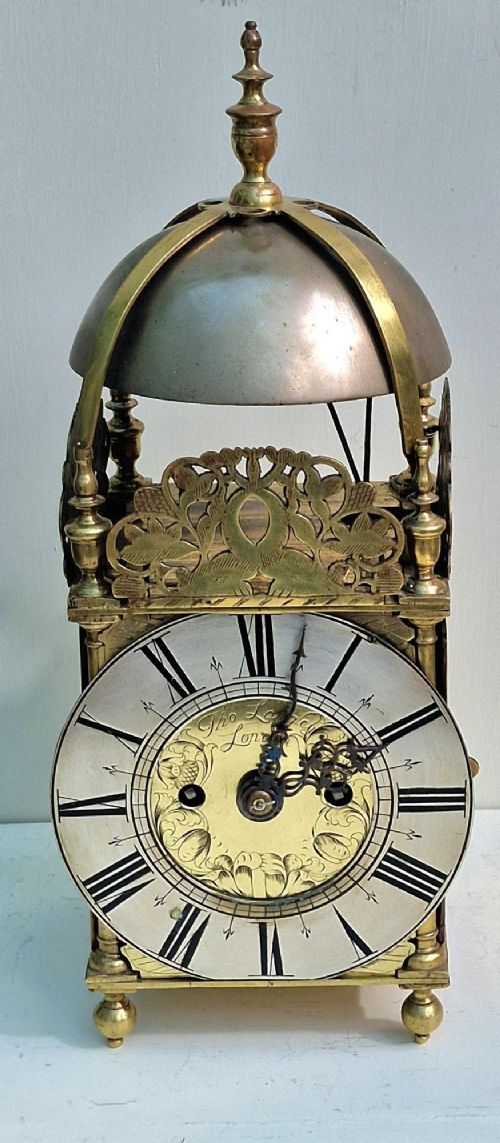
The most common formats met on this page include brass lantern clocks and walnut or oak longcase clocks. Many examples display regional English origins from makers working in London, Oxfordshire, and Yorkshire.
How they were made
Horologists constructed these movements primarily from brass, iron, and steel, assembling gears and escapements by hand. Casemakers enclosed these mechanisms in timber frames using oak, walnut, ebony, and burr elm.
Cabinetmakers decorated wooden surfaces with floral marquetry panels, silver mounts, and gilded brass fittings. Lantern versions relied on cast brass plates and strapped brass frames designed to hang upon walls or rest upon brackets.
17th Century Clock Retail Price Guide 2026
Typical asking prices for 17th century clock among the pieces listed under this phrase on Sellingantiques today, from the lower quarter to the upper quarter. They describe what is for sale here now, not the wider market.
Listings feature movements housed in ebony, walnut, oak, and burr elm.
What varies in quality
The standard of a movement rests upon the crispness of its wheel-cutting and the originality of its anchor or verge escapement. Finer examples retain their original matching brass chapters, engraved dial work, and signed brass backplates.
Cabinet work demonstrates divergence through the depth of marquetry inlay, the figuring of walnut or ebony veneers, and the integrity of proportion in the hood and trunk.
Thomas Langley·John Spershott·Jonathon Lowndes·John Pepys·Joseph Windmills·William Speakman·Nathaniel Pyne·Edin Burgis·Samuel Tinham·Peter Closon·James Ogden Senior·Henry Jones·William Clement·Joseph Saer·William Noke·John Welsh·Peter Wise·John Drew·John Clowns·John Knibb·James Wood·Thomas Dyde·Ignatius Huggeford·John Ebsworth·John Alyward
The 17th Century Clock Glossary
- Lantern clock
- An early domestic timepiece constructed from brass with an open weight-driven or spring-driven movement. These wall-hanging clocks typically feature engraved chapter rings and single hands.
- Longcase clock
- A tall floor-standing timekeeper housed in a wooden trunk with a weighted movement. Often referred to as a grandfather clock, this form emerged during the late seventeenth century.
- Marquetry
- A decorative technique employing wood veneers and contrasting timbers to create floral or geometric patterns. Cabinetmakers applied this craft extensively to seventeenth-century walnut clock cases.
- Basket top
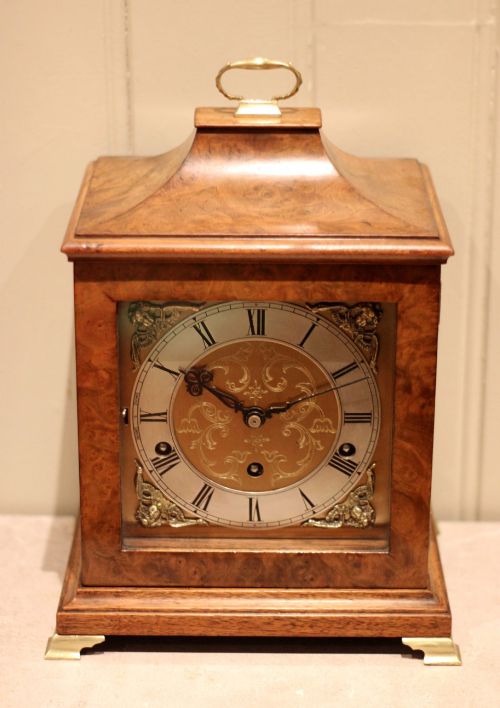
- A flattened architectural dome surmounting the timber case of a portable table clock. This distinctive shape often incorporates cast brass carrying handles.
- Verge escapement
- An early mechanical mechanism that regulates the speed of a clock by controlling the swing of a pendulum or balance. This component forms the heart of seventeenth-century timekeeping.
17th Century Clock: Frequently Asked Questions
How do lantern clocks function?
Lantern clocks operate through weights suspended on cords or chains that pull down to drive the internal gear train. The upward pull of the weight rotates wheels regulated by an escapement.
Originally designed to hang on wall spikes by a hoop and spurs, these timepieces could also rest upon wooden brackets. Most examples striking the hours employ an external bell mounted on top of the brass frame.
Where were these clocks made?
Makers produced these timepieces in urban workshops across England, with London serving as the primary centre of horological innovation. Provincial centres such as Oxford, Salisbury, and York also housed skilled smiths and clockmakers.
London makers supplied wealthy patrons with ebony table clocks, while regional craftsmen built robust brass lanterns and oak longcases for local gentry. Signatures engraved upon the brass dial plates record these distinct geographic origins.
How should I care for one?
Caring for an antique timekeeper requires stable room temperatures away from direct sunlight and damp air. Professional horologists should service the mechanical movement every few years to clean old oils and prevent wear on the brass pivots.
Wind weight-driven and spring-driven mechanisms gently without over-tensioning the cordage or barrels. Careful handling preserves the delicate original escapements and aged timber surfaces.