

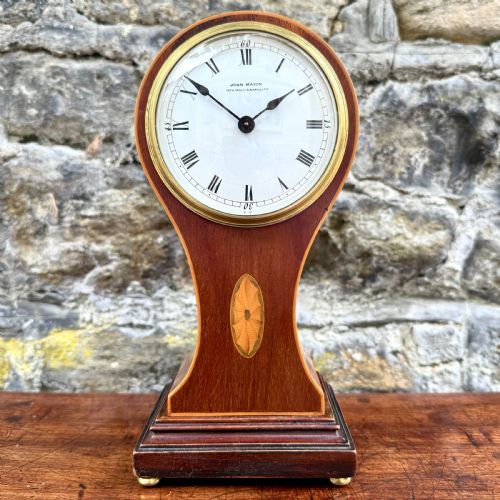
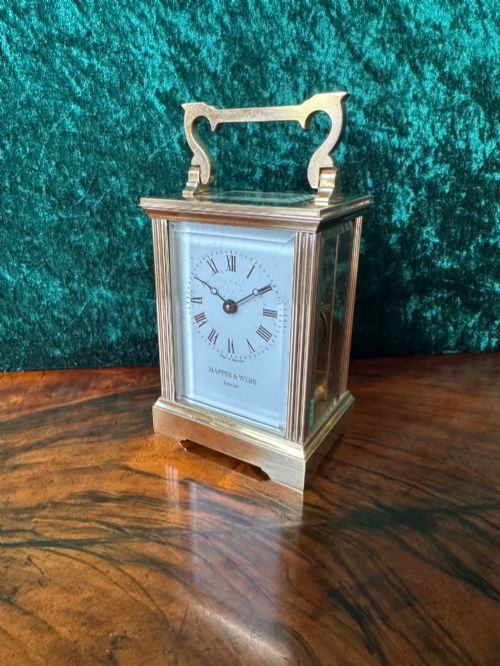

Vintage Brass Desk Clock
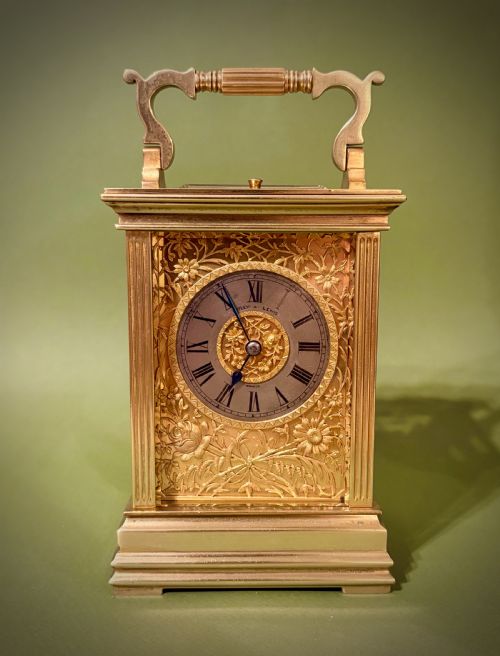
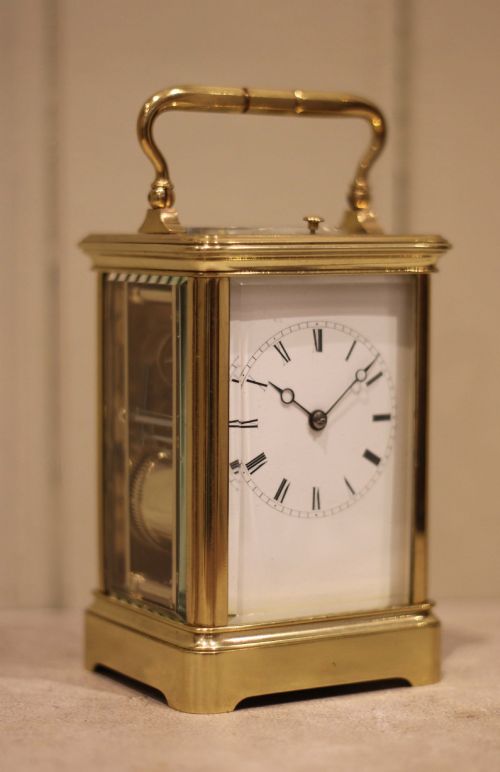
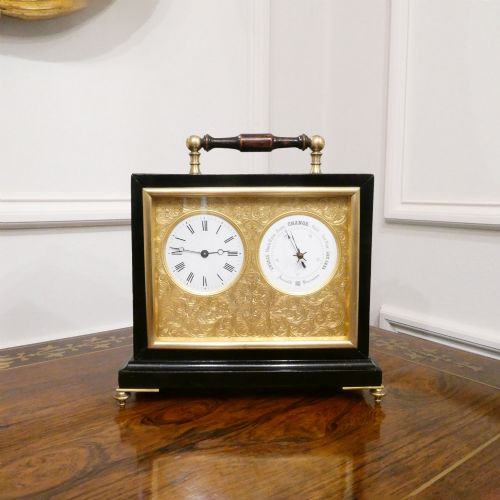
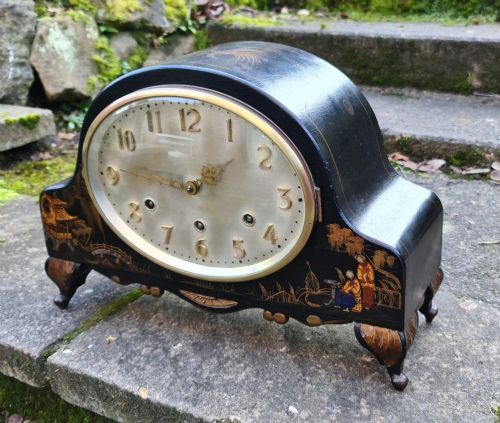
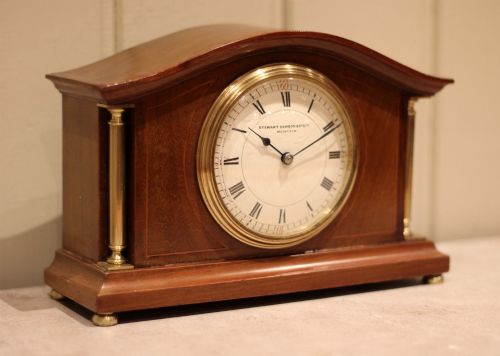
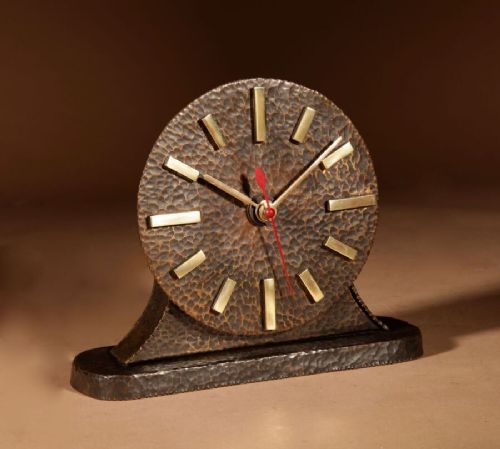
A vintage brass desk clock sits ready to anchor a study, combining mechanical precision with the warm reflection of polished metal.

Vintage Brass Desk Clock
Originating largely from French workshops and English makers, these objects served both domestic utility and travel needs. The inventory spans straightforward timepieces to complex striking and repeating mechanisms enclosed in gilt brass or ormolu cases.

How they were made
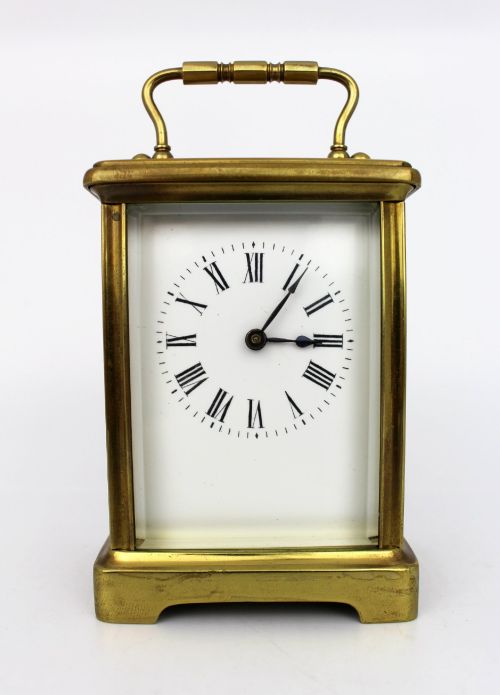
Constructors utilised heavy cast and rolled brass to form the structural framework of the cases, frequently applying a gilt finish or polishing the metal to a bright sheen. Bevelled glass windows were then fitted into the sides and top to allow an unobstructed view of the internal gear train and escapement.
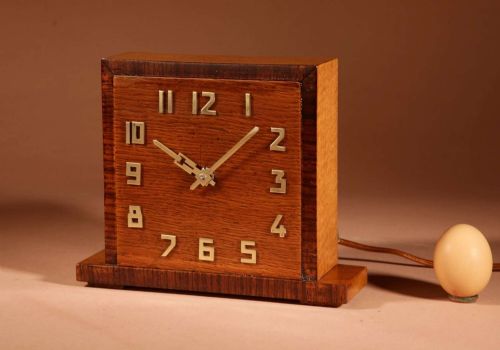
Movements relied on intricate brass wheels, steel pinions, and coiled steel springs, often paired with enamel dials featuring Roman or Arabic numerals. Secondary materials such as mahogany, oak, rosewood, and bakelite appeared in the supporting bases and surrounding surrounds, particularly in Edwardian and Art Deco designs.
Vintage Brass Desk Clock Retail Price Guide 2026
Typical asking prices for vintage brass desk clock among the pieces listed under this phrase on Sellingantiques today, from the lower quarter to the upper quarter. They describe what is for sale here now, not the wider market.
Listings feature brass, glass, enamel, and mahogany across Victorian, Edwardian, and Art Deco periods.
What varies in quality
The distinction between standard production and superior execution lies in the depth of hand-engraving on the brass case and the complexity of the internal movement. Clocks featuring repeating strikes, platform escapements with jewelled bearings, and original travel cases demonstrate a higher grade of craftsmanship.
The clarity and thickness of the bevelled glass panels, the weight of the cast brass housing, and the crispness of the enamel dial markings further separate everyday timepieces from masterwork productions.

Henri Jacot·Mappin and Webb·Walker and Hall·Richard Winter·Barber and North
The Vintage Brass Desk Clock Glossary
- Carriage clock
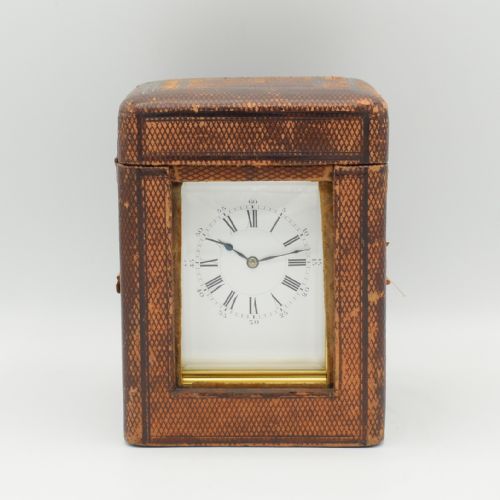
- A small, portable spring-driven clock designed for travellers, featuring a handle on top and glass panels on all sides. These pieces often came fitted into protective leather travel cases.
- Platform escapement
- The tiny horizontal assembly containing the balance wheel and hairspring, mounted visibly on top of the movement. This innovation allowed portable clocks to keep accurate time regardless of orientation.
- Repeating movement
- A mechanical complication that causes the clock to chime the last hour or quarter-hour upon pressing a button or pendant. This mechanism was especially useful during dark nights before electric lighting.
- Ormolu
- Finely ground high-carat gold mercury-gilded onto a bronze or brass base object. This technique imparts a rich, warm metallic lustre to decorative clock cases.
- Doucine case
- A clock case featuring a distinctive double-curved concave moulding profile along the top cornice. The shape reflects classical architectural influence adapted for domestic furnishings.
Vintage Brass Desk Clock: Frequently Asked Questions
How often do these clocks need winding?
Most traditional mechanical desk clocks utilise an eight-day spring movement requiring attention roughly once a week. Some smaller timepieces or thirty-hour models require daily winding to maintain continuous operation.
Ensuring consistent tension on the mainspring helps preserve accurate timekeeping across the winding cycle.
Can these clocks be used for travel today?
While carriage clocks were originally built for transit in protective leather cases, modern transit can subject fragile balance wheels and vintage escapements to sharp jolts. Most owners today prefer to keep them stationary on a desk or mantelpiece.
Gentle handling remains essential if moving the clock between rooms.
What is a platform escapement?
A platform escapement is a self-contained regulating unit placed on top of the clock movement, replacing the traditional pendulum found in wall clocks. This ingenious adaptation enabled portable clocks to function accurately while sitting on a moving carriage or desk.
It is often visible through the glass top panel of a carriage clock.
How do I identify the period of a brass clock?
Stylistic cues such as heavy gilding and floral engraving often point to Victorian or nineteenth-century French origins, whereas cleaner geometric lines indicate an Art Deco influence from the 1930s. Examining the shape of the case, the style of the numerals, and any maker signatures helps narrow down the decade of production.
Makers frequently stamped serial numbers and movement marks on the backplate.