
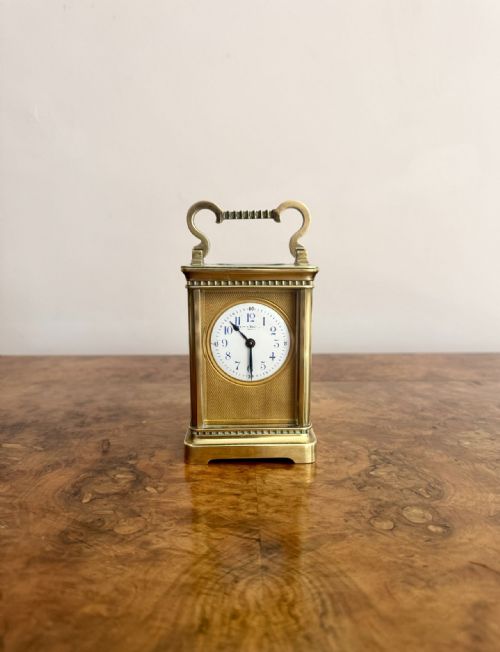
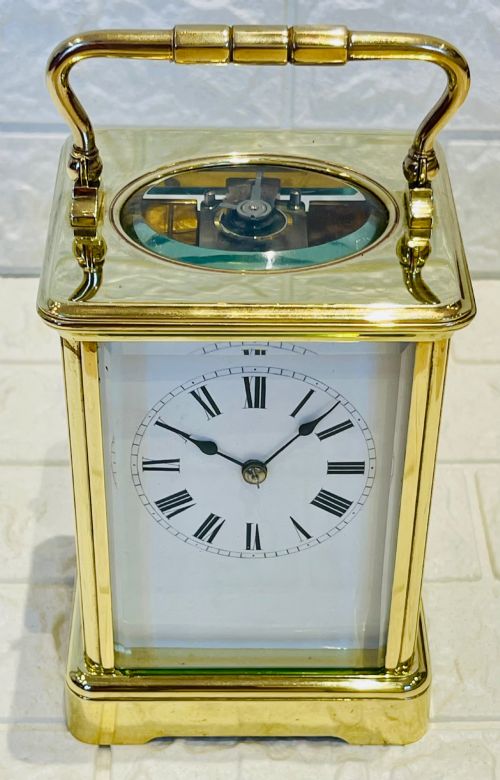
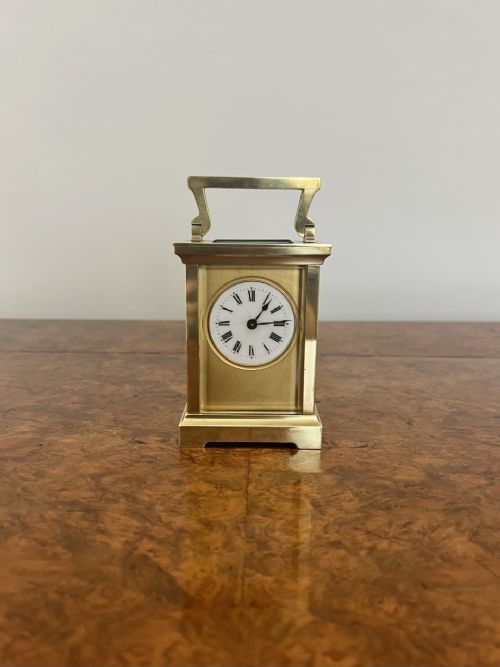


Polished Brass Clock
A polished brass clock brings the steady tick and bright metal of the Victorian and Edwardian eras straight into a room.
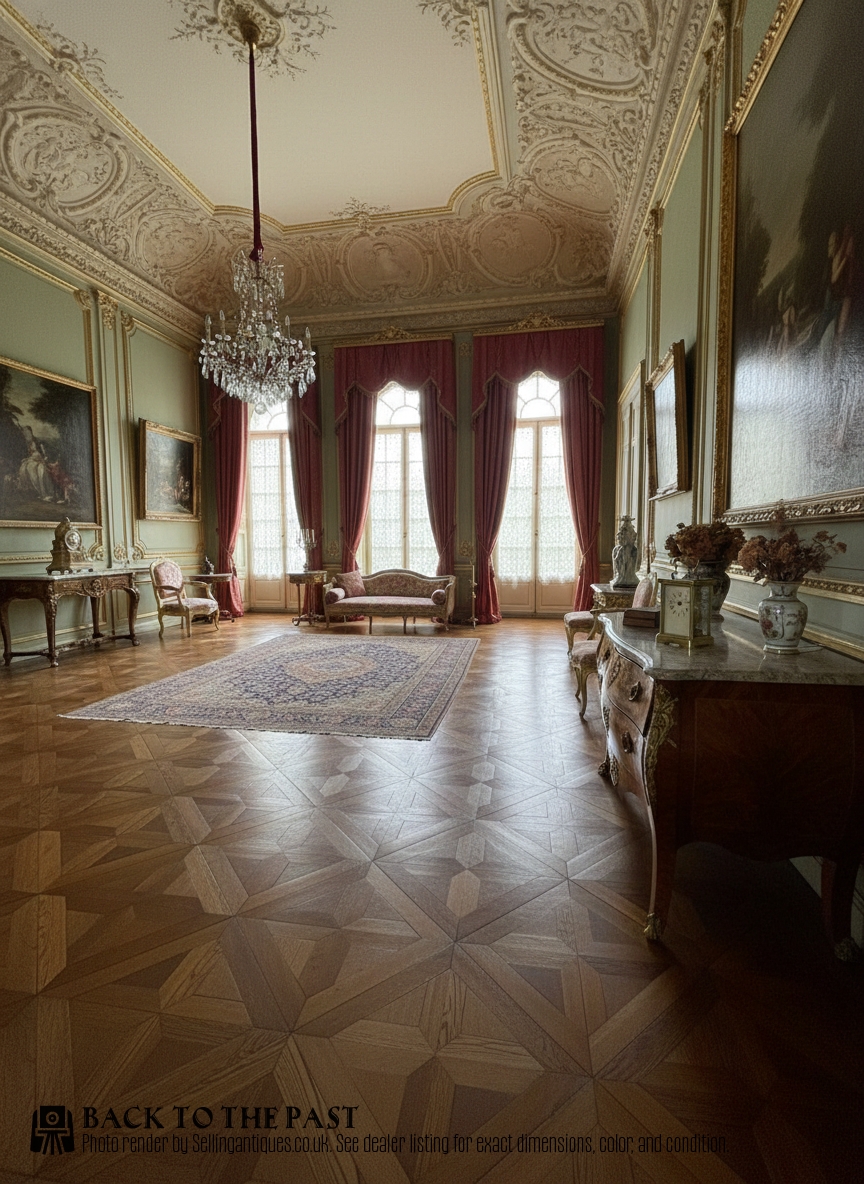
Polished Brass Clock
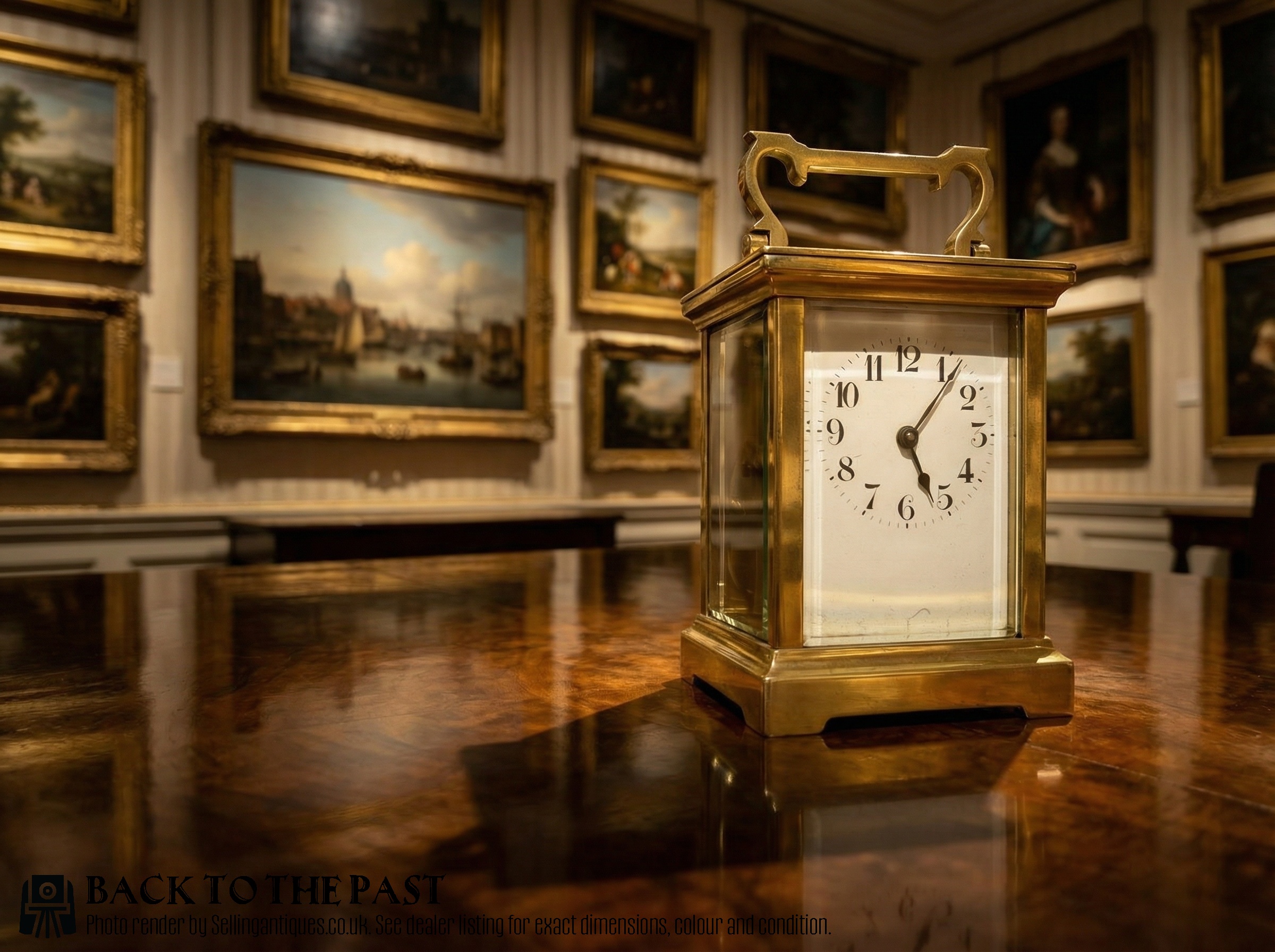
A polished brass clock is typically a heavy, portable timepiece built to sit on a mantelpiece or travel in a fitted leather case. When searching for a polished brass clock, buyers encounter predominantly carriage clocks alongside occasional wall-hung maritime timepieces.
The selections span from the mid-nineteenth century through to the mid-twentieth century, capturing periods such as the Victorian and Edwardian eras. French makers feature heavily among the surviving carriage clocks, often housed in traditional brass frames with glass panels.
Most examples rely on brass as the primary material, frequently complemented by white enamel dials and steel components within the movement. Miniature versions appear alongside standard sizes, offering the same mechanical complexity on a smaller scale.

How they were made
Makers constructed these timepieces using heavy cast and rolled brass frames secured around transparent glass panels to showcase the internal mechanism. Enamel dials were meticulously fired and painted with Roman or Arabic numerals, then fitted behind protective bevelled glass bezels.
The mechanical movements combined brass wheels and plates with tempered steel springs and pinions to drive the gear train and striking mechanisms. Polishing the brass surfaces to a bright finish completed the exterior before casing the clock for transport or display.
Polished Brass Clock Retail Price Guide 2026
Typical asking prices for polished brass clock among the pieces listed under this phrase on Sellingantiques today, from the lower quarter to the upper quarter. They describe what is for sale here now, not the wider market.
The listed items span multiple decades, incorporating Victorian and Edwardian periods alongside mid-century maritime wall clocks.
What varies in quality
The tier of a clock depends largely on the reputation of the maker or retailer whose name appears on the dial or movement backplate. Workshops such as Drocourt or established retailers like J C Vickery represent a higher standard of horological craftsmanship.
Complexity also dictates the standing of a piece, separating simple time-only models from those featuring eight-day movements, striking trains, alarm functions, or repeating capabilities. The crispness of the brass casting and the refinement of the case design further distinguish finer examples.
T. Martin & Co·Dwerrihouse & Bell·Drocourt·J C Vickery·Folkard & Son Brighton
The Polished Brass Clock Glossary
- Carriage clock
- A portable spring-driven timepiece designed for travelling during the eighteenth and nineteenth centuries. These clocks typically feature a rectangular brass case with glass sides.
- Corniche case
- A classical brass carriage clock case style characterised by columns at the four corners and a stepped top and base. This design provides a sturdy housing for the movement and dial.
- Gorge case
- A stepped architectural brass carriage case shape featuring multiple recessed moulding lines around the top and bottom frames. It represents a refined housing style often found on better French movements.
- Enamel dial
- A metal dial face covered in a fused glass powder coating that produces a smooth, white surface. Black painted numerals are subsequently baked onto this bright background.
- Striking clock
- A timepiece equipped with an additional gear train that chimes the hours or quarters on a bell or gong. These movements require separate winding barrels for the time and strike functions.
Polished Brass Clock: Frequently Asked Questions
Are these clocks suitable for daily use?
These mechanical timepieces function reliably when properly serviced and set on a stable, level surface. Regular maintenance by a clockmaker helps keep the vintage brass gears running smoothly.
Avoid placing them in direct sunlight or areas subject to heavy vibrations to protect the delicate internal springs.
How do I tell Victorian clocks from Edwardian ones?
Victorian models often display heavier cast brass framing and traditional white enamel dials with bold Roman numerals. Edwardian pieces can exhibit slightly more restrained proportions or miniature sizing.
Maker signatures and registration numbers stamped on the backplates also help anchor specific pieces to their respective decades.
What is a repeating carriage clock?
A repeating carriage clock includes a mechanism that chimes the last elapsed hour and quarter on demand. Pressing a button on top of the case activates this function without disturbing the running time.
This complication allowed owners to check the hour in a dark room during the nineteenth century.