




Corniche Case Clock
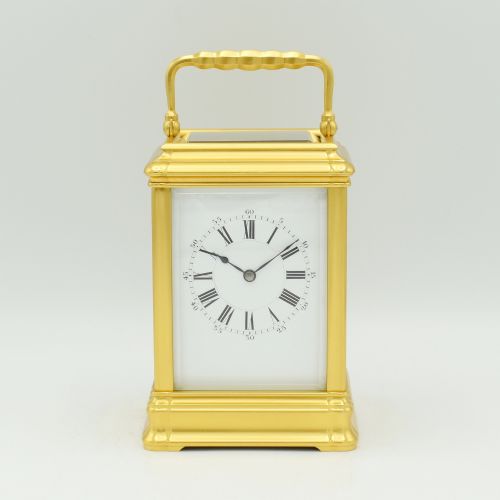
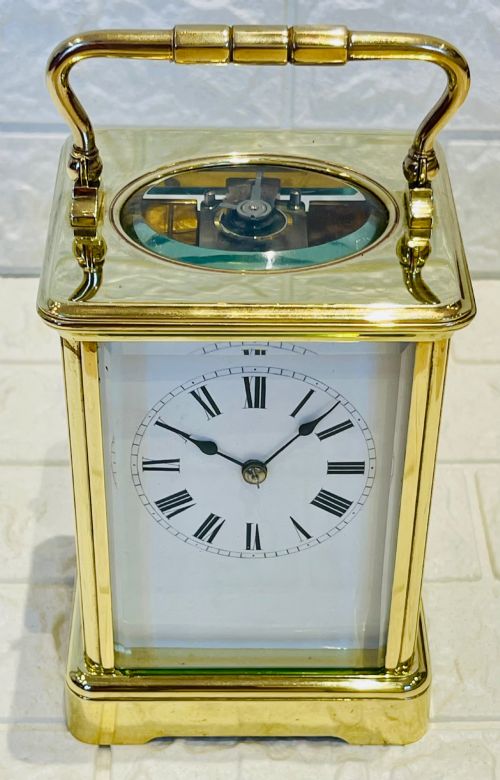
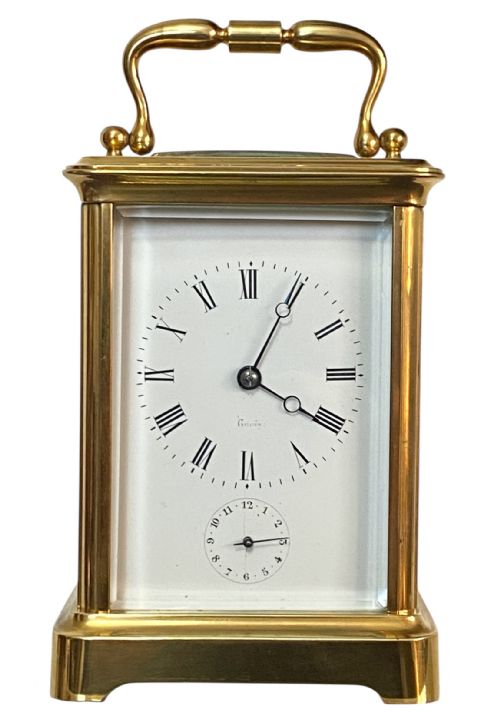
Corniche case clock designs are portable timekeepers housed in distinctive pillared brass frames with bevelled glass, prized for their mechanical intricacy and elegant proportions.
Corniche Case Clock
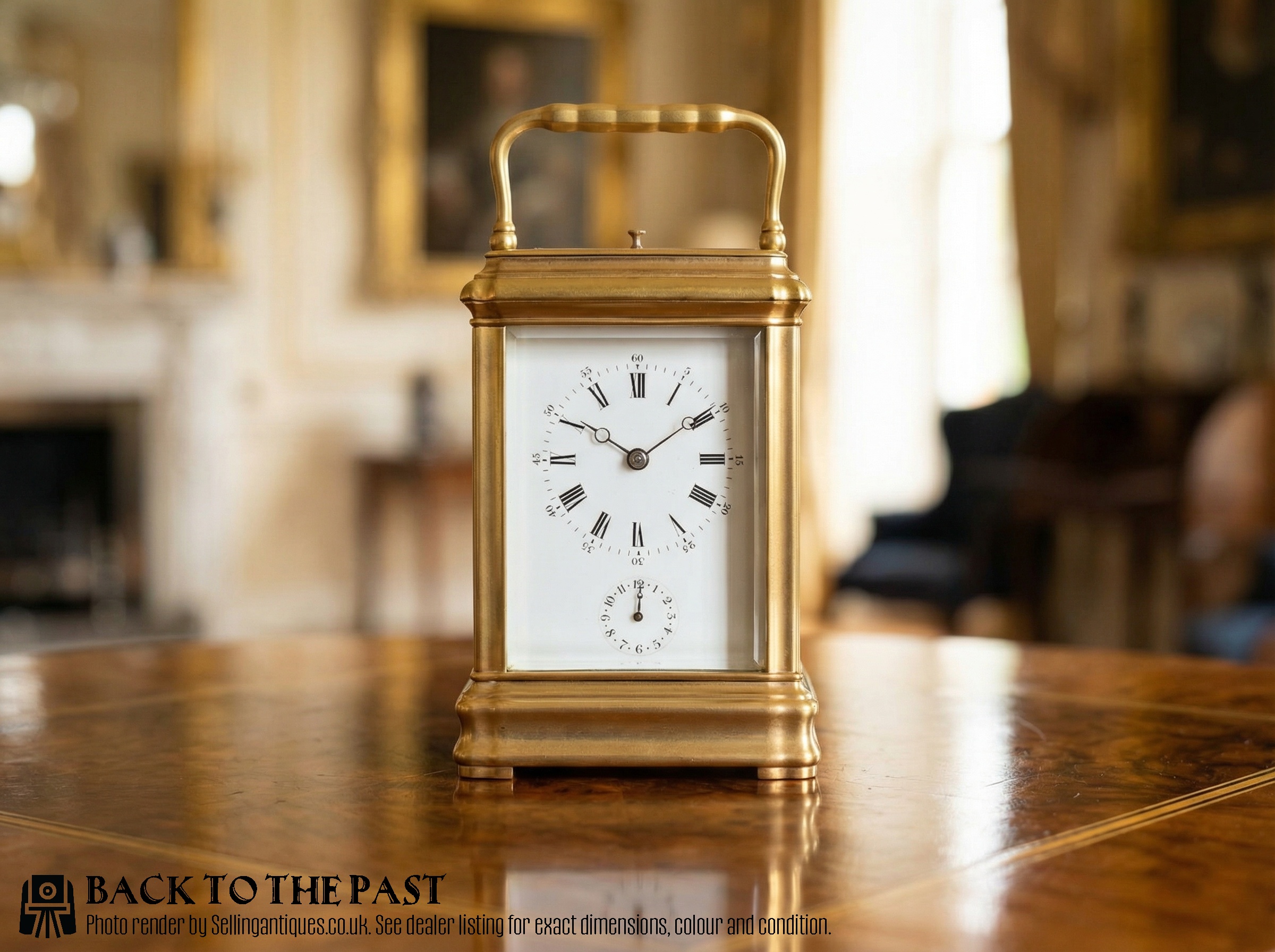
A corniche case clock is a form of carriage clock defined by its architectural brass framework featuring columns at the corners and a flat top supporting a handle. These pieces emerge predominantly from nineteenth-century French workshops, spanning the Victorian era through to nineteen hundred. Collectors encounter variations ranging from simple timepieces to complex examples featuring striking, repeating and alarm mechanisms.
The objects on this page showcase diverse scales, from standard mantel variants to miniature models designed for travel, frequently accompanied by original leather travelling cases. The overarching style reflects French nineteenth-century manufacturing, where precision mechanics met refined domestic utility. Buyers find both unsigned examples and those bearing the signatures of notable makers on their movements and dial plates.
Materials and Construction
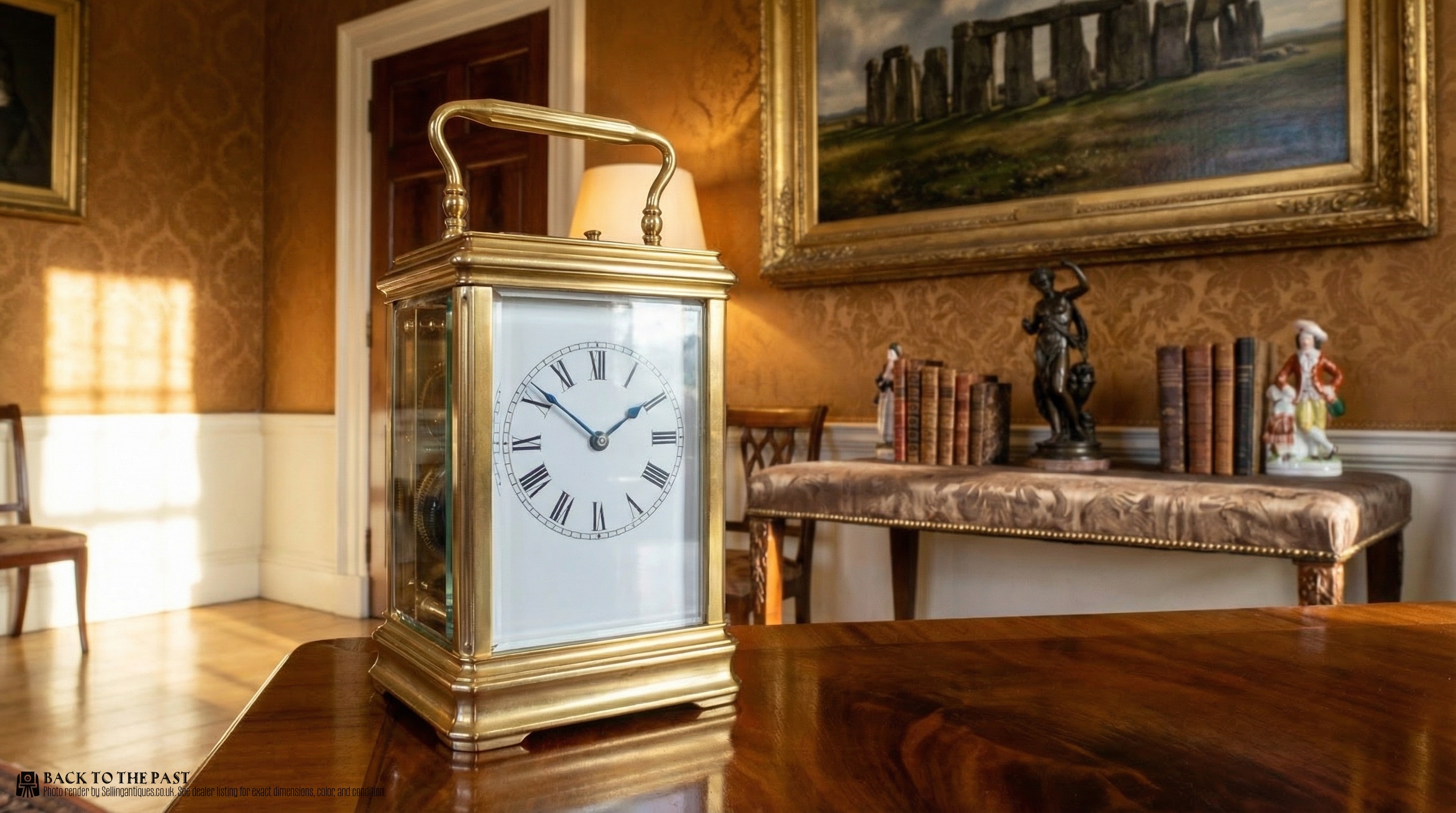
Makers constructed these housings from brass, gilt brass and gilt bronze, creating sturdy metallic shells designed to protect the delicate movement within. Bevelled glass panels inserted into the front, sides and top allowed unobstructed views of the escapement and gear train from multiple angles. Enamel served as the primary material for white dial faces, upon which numerals and maker inscriptions were painted in dark pigments.
Movements relied on eight-day spring-driven mechanisms, incorporating platforms for balance wheels rather than pendulums to ensure timekeeping accuracy during transit. Gilt finishes were applied to enhance the visual warmth of the metal frames, while steel components within the gear trains were polished and tempered to reduce friction. Leather was utilised for outer protective cases, lined with velvet or silk to cushion the brass housings.
Corniche Case Clock Retail Price Guide 2026
Typical asking prices for corniche case clock among the pieces listed under this phrase on Sellingantiques today, from the lower quarter to the upper quarter. They describe what is for sale here now, not the wider market.
Movements across these pieces incorporate eight-day durations, striking trains, repeating functions and alarm complications.
Distinctions in Quality
Superior quality in these timekeepers is demonstrated by the complexity of the internal movement and the crispness of the exterior casting. Pieces featuring quarter-striking, petite-sonnerie, alarm functions and push repeat mechanisms represent higher tiers of horological achievement than simple timepieces. The weight and thickness of the gilt brass or bronze casing further distinguish premium specimens from standard production models.
The integration of signed components elevates the standing of a piece, particularly when signatures on the backplate match those on the dial and key. The survival of auxiliary items, such as numbered matching keys and original leather travelling cases, indicates careful preservation and enhances the integrity of the object.
Henri Jacot·DROCOURT·Baveux·James Grohé·Richard & Co
The Corniche Case Clock Glossary
- Corniche case
- A distinct rectangular carriage clock case style featuring rounded or columnar pillars at the four corners and a stepped flat top. This architectural form is characteristic of French nineteenth-century production.
- Carriage clock
- A portable spring-driven timepiece developed for travellers during the nineteenth century. These clocks utilise a balance wheel instead of a pendulum to maintain accuracy.
- Repeating mechanism
- A complication that allows the clock to repeat the last struck hour or quarters upon demand when a button or lever is pressed. This feature was particularly useful during the night.
- Petite-sonnerie
- A striking system that automatically chimes the hours and the quarters as they pass without repeating the previous hours. It represents a higher level of mechanical sophistication.
- Platform escapement
- The small, self-contained assembly housing the balance wheel and escapement in a carriage clock. It sits visibly within the upper part of the movement.
Corniche Case Clock: Frequently Asked Questions
How do I wind a carriage clock?
Winding requires a dedicated key inserted into the arbours located through the backplate of the movement. Care must be taken not to over-wind the mainsprings.
Most pieces run for eight days on a full wind, requiring a weekly routine to maintain continuous operation.
What is the push repeat function?
The push repeat button on the top of the case allows the owner to check the time in the dark. Pressing it causes the mechanism to chime the last elapsed hour and quarters.
This complication demonstrates the technical ambition of nineteenth-century French clockmakers.
Are miniature carriage clocks different?
Miniature versions utilise the same mechanical principles as standard models but condense the gear train into a smaller footprint. They were designed specifically for portability during travel.
Despite their reduced scale, many still incorporate alarm functions and gilt brass framing.
Why do some clocks have leather cases?
Original leather travelling cases protected the gilt brass frames and bevelled glass panels from knocks during journeys. They were tailored to fit the exact dimensions of the corniche case.
The survival of these outer cases adds significantly to the historical completeness of the object.