



French Striking Clock
A french striking clock brings nineteenth-century mechanical precision and domestic elegance into any room.
French Striking Clock
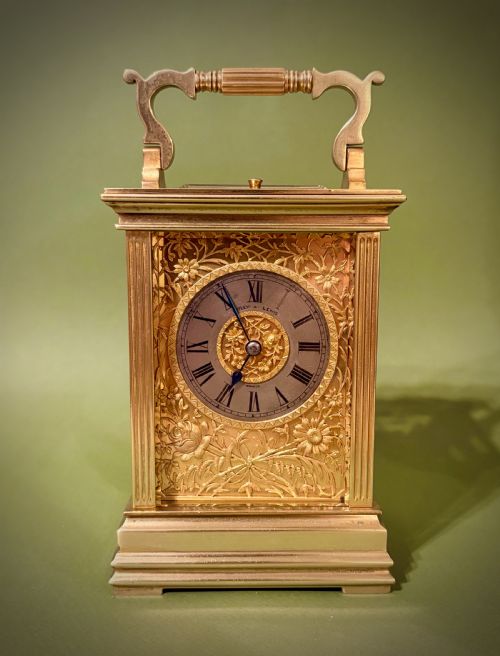
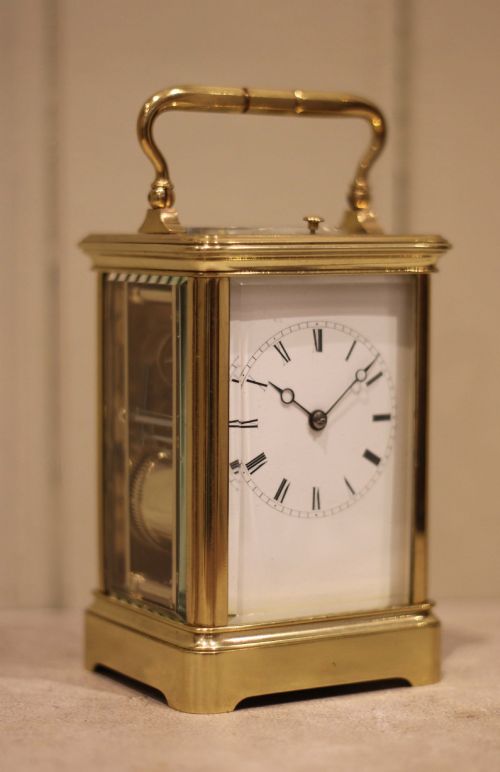
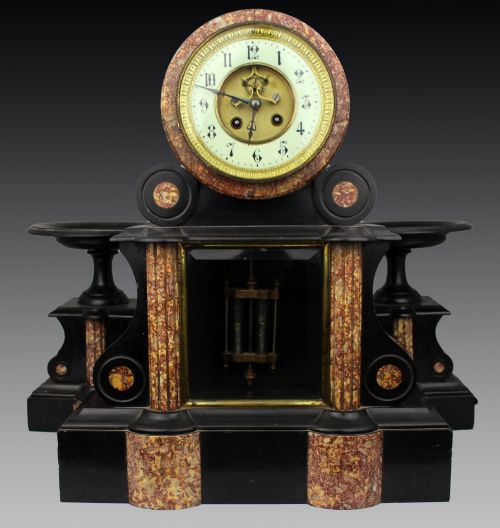
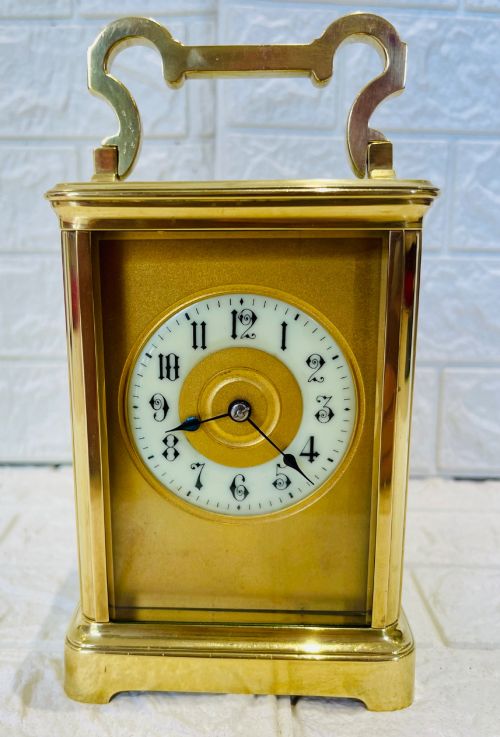
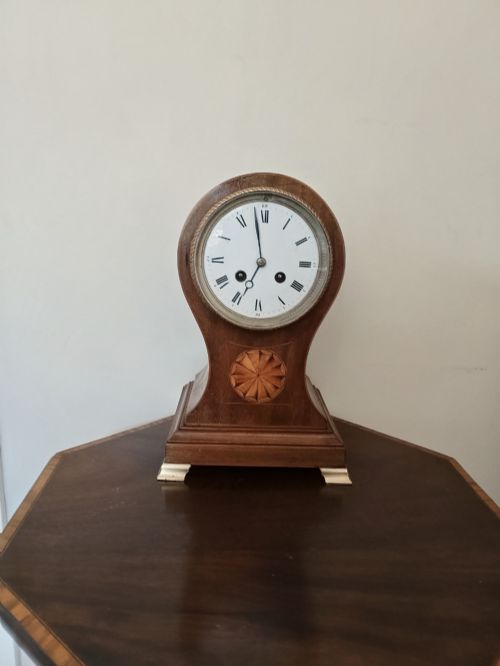
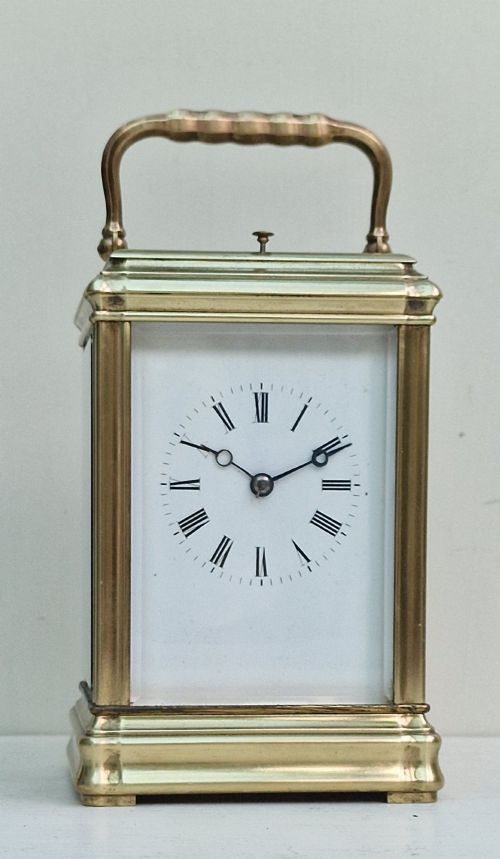
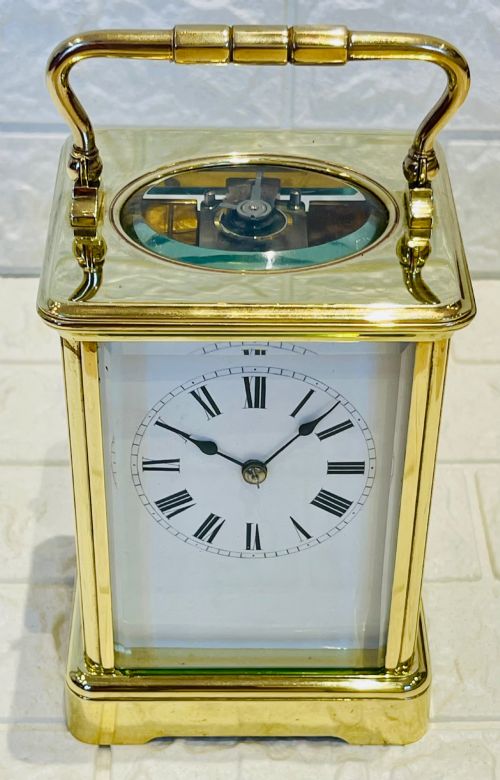
A french striking clock encompasses portable carriage designs, substantial marble mantel pieces, and four-glass bracket clocks produced primarily across the nineteenth century. Buyers searching this phrase meet portable brass carriage models most frequently alongside heavier mantel clock garnitures.
The selection ranges from simple travel timepieces to complex musical or repeating mechanisms housed in gilt brass, slate, mahogany, and ormolu. Victorian and Edwardian examples dominate the available styles, reflecting nineteenth-century manufacturing output.
Materials and construction
Makers utilised cast brass, gilt bronze, and ormolu for the structural housings, often combining bevelled glass panels with white enamel dials. Heavier architectural models employ black marble, slate, and mahogany inlays.
Movements rely on eight-day spring-driven gear trains operating with platform escapements or pendulum controls. Bell or gong striking mechanisms regulate the audible hour and half-hour counts.
French Striking Clock Retail Price Guide 2026
Typical asking prices for french striking clock among the pieces listed under this phrase on Sellingantiques today, from the lower quarter to the upper quarter. They describe what is for sale here now, not the wider market.
Listings feature brass, gilt brass, ormolu, marble, black slate, and mahogany materials across Victorian and Edwardian periods.
Markers of quality
Superior examples feature signed movements and backplates from recognised workshops, accompanied by original matching keys and fitted carrying cases. The crispness of the gilt brass casting and hand-painted enamel dial details dictate the upper tier.
Simpler unsigned movements housed in standard mass-produced brass frames occupy the entry level. The presence of complications like alarm functions or repeating strikes elevates a piece above standard time-only variants.
Japy Freres·Henri Jacot·Drocourt·Paul Garnier·Henry Marc·AD Mougin
The French Striking Clock Glossary
- Gorge case
- A stepped rectangular carriage clock case design with reentrant corners. This distinct housing style appeared frequently on mid-nineteenth-century travel clocks.
- Grande sonnerie
- A complex striking train that chimes the hours and quarters automatically on each quarter hour. Collectors prize this mechanism for its acoustic intricacy.
- Garniture set
- A mantel clock accompanied by matching side ornaments such as urns or candelabra. These sets created symmetrical decorative displays on nineteenth-century fireplaces.
- Platform escapement
- A miniature spring-regulated escapement mounted on a small platform inside carriage clocks. It allows portable clocks to keep accurate time while moving.
- Doucine case
- A clock case featuring a concave ogee-moulded top profile. This curved architectural detail adds subtle refinement to carriage clock silhouettes.
French Striking Clock: Frequently Asked Questions
How do I wind a carriage clock?
Insert the key into the winding arbor located on the underside or back plate of the movement. Turn it gently clockwise until you feel firm resistance.
Avoid over-winding the mainspring, as this can damage the internal teeth and prevent proper operation.
What is a repeating mechanism?
A repeating mechanism allows the clock to strike the last hour or quarter-hour on demand when a button or plunger is pressed. This feature was originally designed for checking the time in the dark.
It operates independently of the running gear train.
Where were these clocks made?
Most of these pieces originated in French workshops located in Paris or the Saint-Nicolas-d'Aliermont region. Skilled horologists produced movements and cases before exporting them across Europe.
Some English retailers later imported these movements and added their own signatures to the dial or back plate.
How do I tell periods apart?
Early nineteenth-century examples often feature heavier bronze or ormolu mounts with classical empire proportions. Later Victorian and 1900s pieces lean towards standard gorge cases and bevelled glass panels.
Maker marks and serial numbers stamped on the back plate also help narrow down the production decade.