




Brocot Escapement Clock
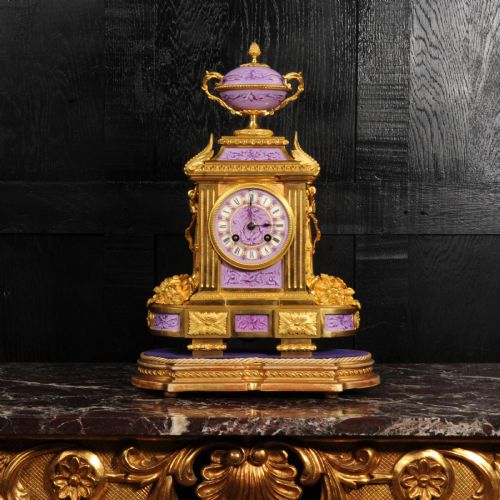
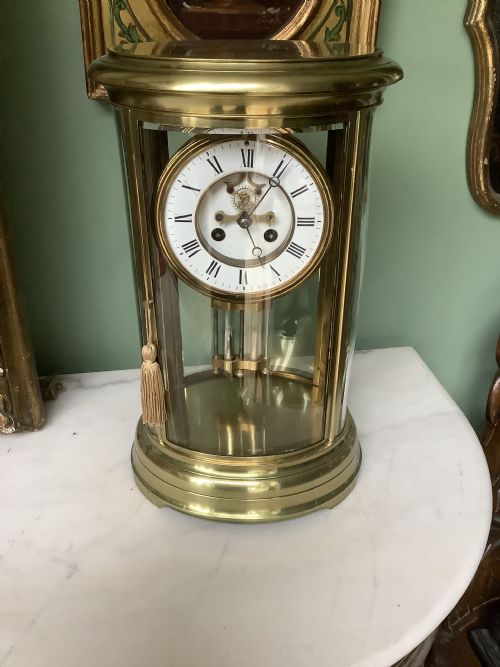
These heavy, glass-sided mantel pieces house the visible mechanical movement that makes a brocot escapement clock so satisfying to watch.
Brocot Escapement Clock
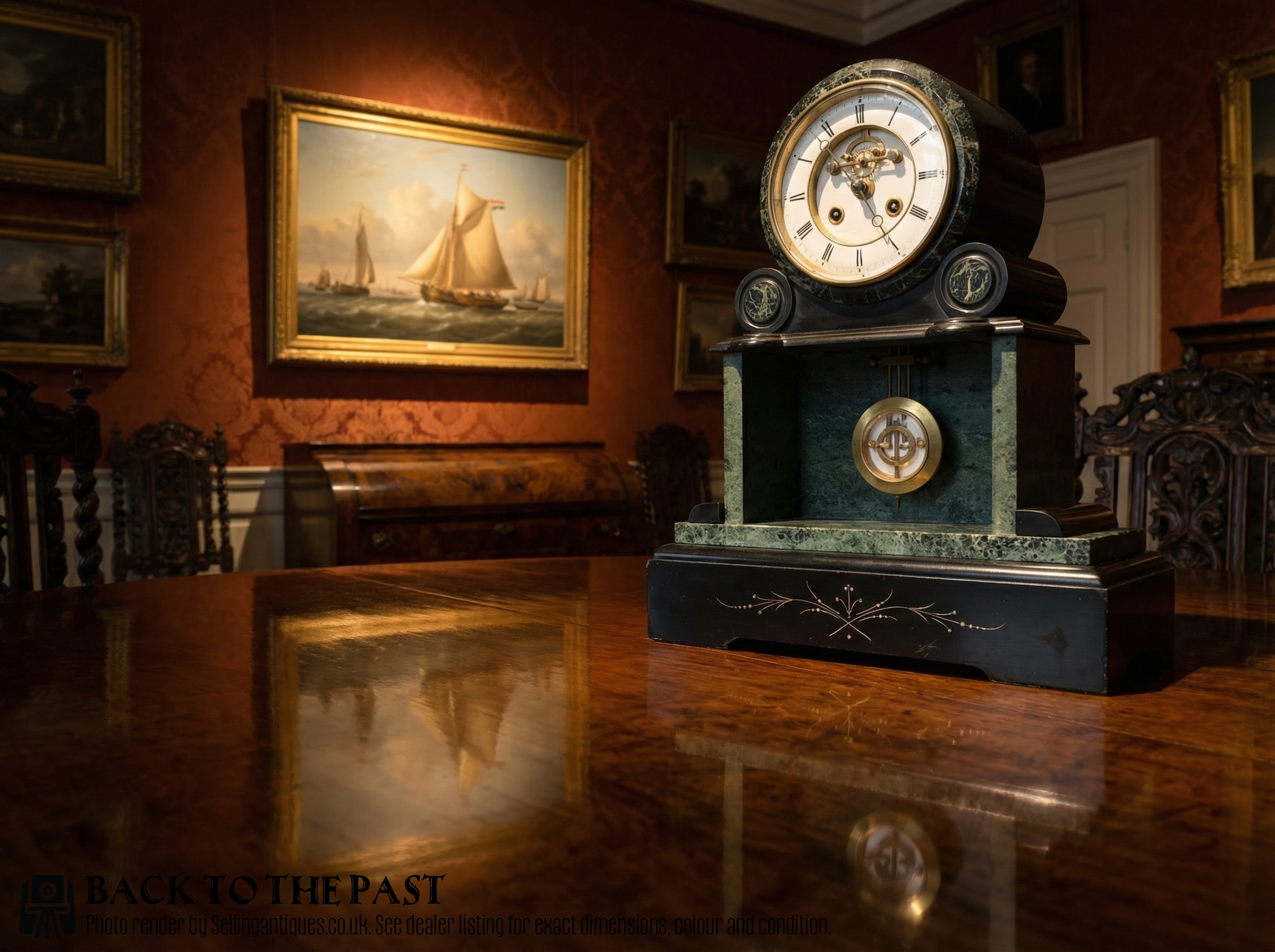
When you search for a brocot escapement clock, you encounter precision timepieces originating primarily in nineteenth-century France and Victorian Britain. The selection here leans heavily towards French four-glass mantel models alongside architectural slate and marble versions.
These mantle clocks range from compact domestic timepieces to large architectural ornaments featuring ships wheel pendulums or perpetual calendars. Most examples date from the eighteen sixties to eighteen eighties, reflecting the height of industrial clockmaking craftsmanship.
How they were made
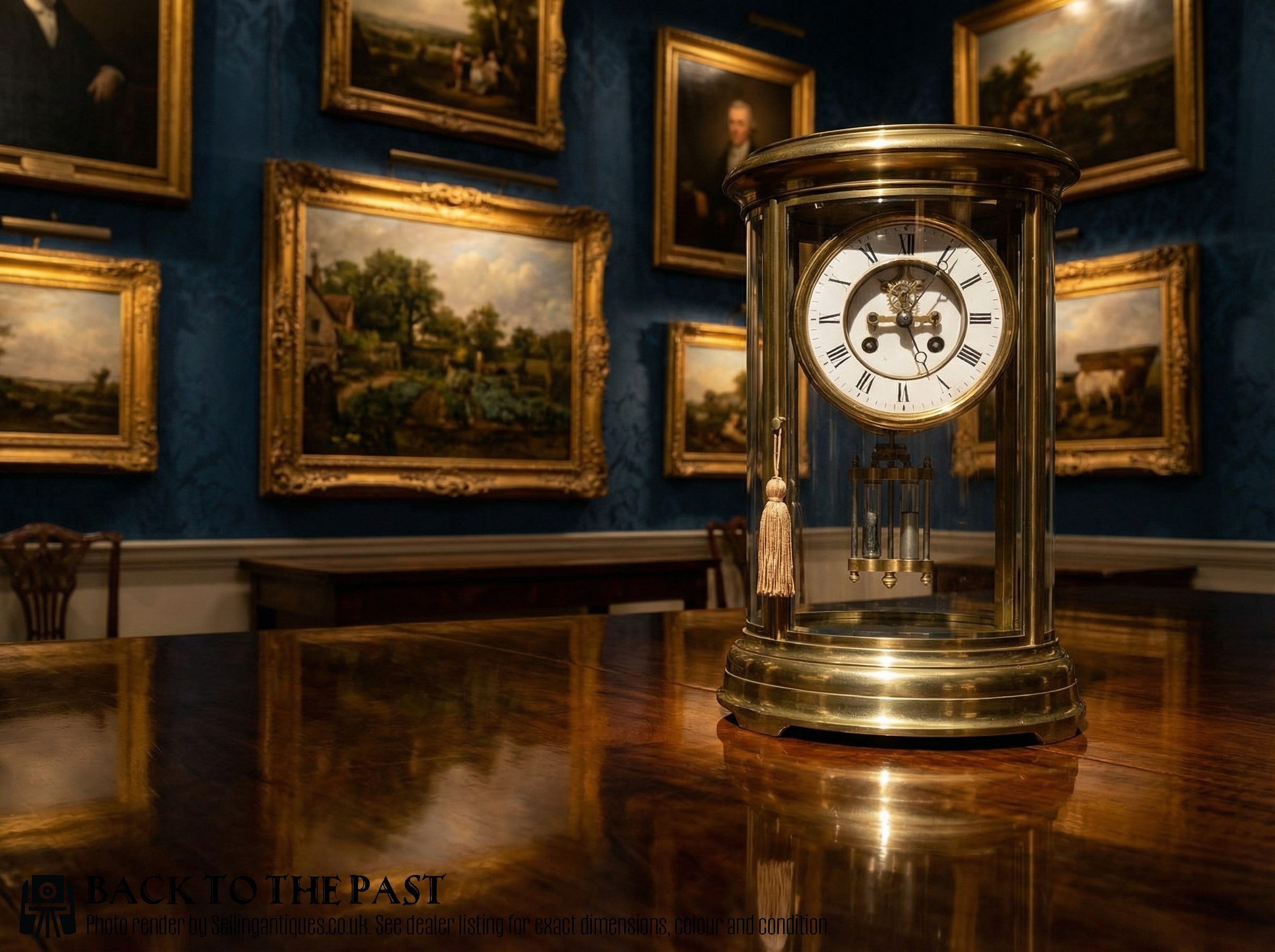
Maker workshops built these casings using substantial brass, gilt bronze, and ormolu, frequently pairing them with bevelled glass panels to expose the internal mechanism. Heavy black slate and polished marble formed sturdy architectural bodies for heavier striking movements.
Dial faces incorporate delicate white enamel with contrasting numerals, often sheltered behind curved or flat glassbezels. Metalwork components were cast, polished, and fire-gilt to achieve the deep metallic lustre seen across nineteenth-century French production.
Brocot Escapement Clock Retail Price Guide 2026
Typical asking prices for brocot escapement clock among the pieces listed under this phrase on Sellingantiques today, from the lower quarter to the upper quarter. They describe what is for sale here now, not the wider market.
Listings feature Victorian and nineteenth-century French pieces constructed from brass, slate, marble, glass, and ormolu.
What varies in quality
Quality reveals itself in the crispness of the cast ormolu mounts and the precision with which the heavy bevelled glass panels fit their brass frames. Finer specimens display superior finishing on the visible escapement pallet jewels and intricate engraving upon the dial plates.
The choice of materials also divides the range, with solid marble and gilt bronze housing complex calendar or one-year duration movements sitting above simpler slate or brass models. Original mercury or ships wheel pendulums elevate the decorative ambition of the piece.
Achille Brocot·Brocot
The Brocot Escapement Clock Glossary
- Brocot escapement
- A visible deadbeat escapement invented by Louis-Gabriel Brocot featuring pallet stones set with adjustable pins. This design allows for easy regulation of the pendulum without removing the clock movement from its case.
- Four-glass clock
- A freestanding mantel clock enclosed by four glass panels, typically bevelled, which provides an unobstructed all-round view of the pendulums and gear trains.
- Ormolu
- Finely chopped gold amalgamated with mercury and applied to a bronze base through heat diffusion. This traditional French technique creates a durable golden finish.
- Mantel clock
- A portable domestic clock designed to sit upon the shelf or mantelpiece above a fireplace. These objects often incorporate striking mechanisms to mark the hours.
- Slate
- A fine-grained metamorphic rock utilised extensively in nineteenth-century clockmaking for heavy architectural cases. It is frequently polished to resemble black marble.
Brocot Escapement Clock: Frequently Asked Questions
What is a brocot escapement clock?
It is a mechanical timepiece featuring a visible escapement mechanism invented by the Brocot family in France. The design exposes the pulsing pallets and regulating pins directly on the dial.
These clocks are typically housed in brass and glass cases or heavy stone bodies designed for nineteenth-century parlours.
How do four-glass clocks work?
Four-glass clocks utilise a skeletonised movement suspended between front and back plates, illuminated by glass panels on every side. This construction showcases the entire gear train and pendulum in motion.
Most examples rely on spring-driven or one-year duration movements requiring careful periodic winding with a matched key.
Where should I place a slate clock?
Slate and marble mantel clocks require a sturdy, level surface capable of supporting considerable weight. Fireplace mantels or heavy sideboards provide ideal structural support for these dense stone objects.
Keep them away from direct heat sources and damp environments to protect the delicate enamel dials and internal steel springs.
How do I identify a Victorian period clock?
Victorian and nineteenth-century French clocks display distinct architectural styling, ranging from ornate Rococo revival gilt bronze to severe classical slate porticos. Maker signatures and patent marks are frequently stamped onto the brass movement plates.
Examining the casting quality of the ormolu mounts and the thickness of the bevelled glass helps confirm the period of manufacture.