
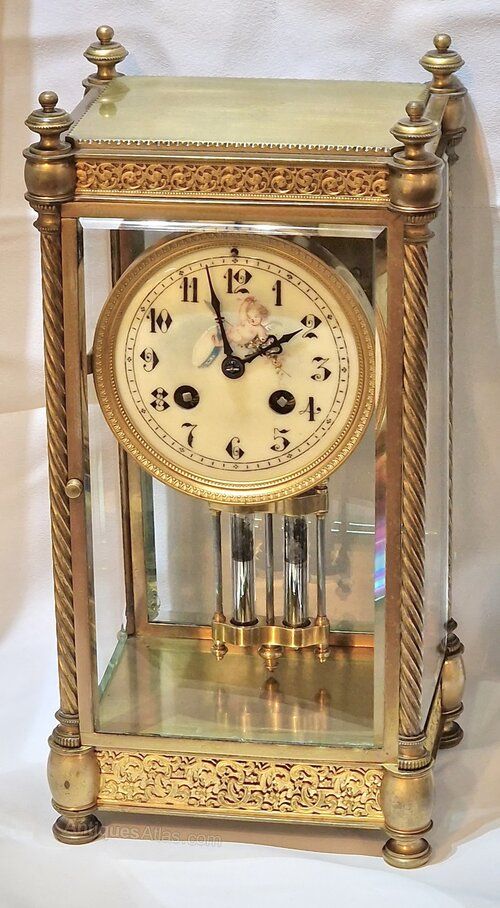


Victorian Four Glass Clock
A victorian four glass clock brings architectural light and mechanical rhythm into a room through bevelled panes.
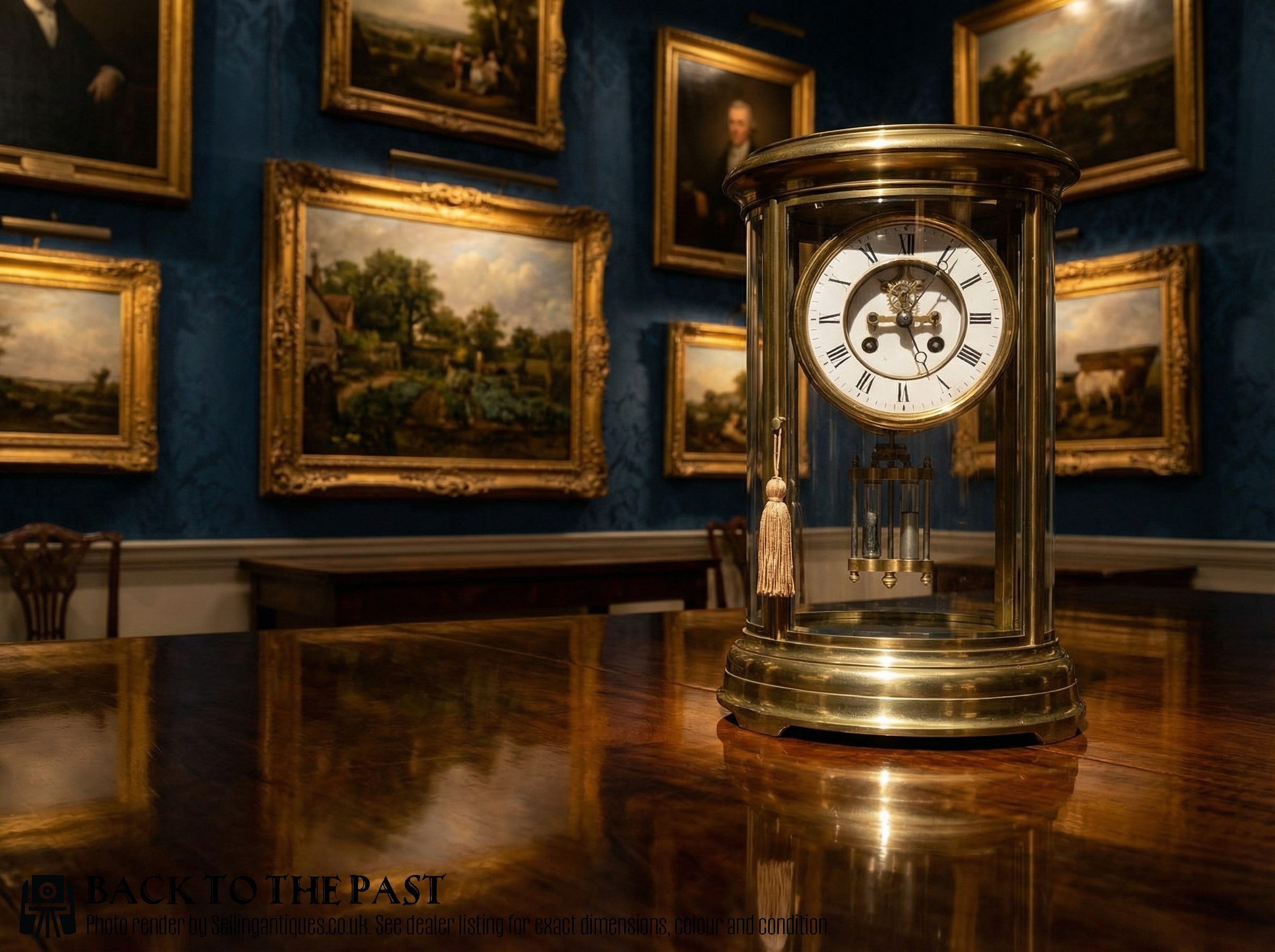
Victorian Four Glass Clock
A victorian four glass clock sits upright on mantelpieces and brackets, framed by brass or gilt bronze and enclosed by transparent panels on all four sides. These mantel clocks and timepiece forms often originate from French workshops working in the nineteenth century, alongside later Victorian adaptations.
Buyers encounter rectangular gorge cases, oval crystal regulators, and occasional marble or porcelain panelled variations. The transparent construction permits a full view of the moving escapement and pendulum from multiple angles within the room.
Materials and Construction
Makers built these pieces using heavy brass, gilt brass, gilt bronze, or ormolu frameworks to support four distinct panes of bevelled glass. Enamel dials, paste stones, and champleve or cloisonne enamel details frequently decorate the face and surrounding bezels.
Movements range from standard striking mechanisms to one-year duration movements and mercurial pendulums housed inside golden oak or rouge marble bases. Craftspeople fitted each glass panel precisely into the metal housing to protect the delicate gear train from dust.
Victorian Four Glass Clock Retail Price Guide 2026
Typical asking prices for victorian four glass clock among the pieces listed under this phrase on Sellingantiques today, from the lower quarter to the upper quarter. They describe what is for sale here now, not the wider market.
Listings feature brass, gilt bronze, onyx, rouge marble, and golden oak housings paired with bevelled glass and enamel dials.
Assessing Quality
The sophistication of the internal movement distinguishes standard models from exceptional examples, particularly when featuring one-year duration systems or specialised escapements. Heavier gauge gilt brass and crisply cast ormolu mounts elevate the architectural presence of the case.
The clarity and bevelling of the four glass panels, combined with the intricacy of painted enamel dials or champleve decoration, indicate the level of craftsmanship invested by the maker. Cases incorporating decorative elements such as cherub dials or ships wheel pendulums reflect specialised production.
W and H·Samuel Marti·John Massey
The Victorian Four Glass Clock Glossary
- Gorge case
- A stepped brass or gilt metal case style featuring a distinctive moulded top and base, common in French carriage and four glass clocks. This housing style provides robust support for the heavy bevelled glass panels.
- Crystal regulator
- A term often applied to four glass clocks featuring an oval or rectangular case designed to showcase the pendulum and movement entirely. These pieces emphasise transparency and uninterrupted light transmission.
- Mercurial pendulum
- A temperature-compensated pendulum using jars of mercury to maintain consistent timekeeping despite ambient heat changes. Collectors prize this sophisticated mechanism within Victorian library and mantel clocks.
- Champleve
- An enamelling technique where troughs are dug into a metal surface and filled with vitreous enamel before firing. This decorative method frequently appears on the dial surrounds and frames of late nineteenth-century models.
- Fusee
- A conical pulley used in clock movements to maintain even tension on the gear train as the mainspring unwinds. This mechanical addition ensures more accurate timekeeping throughout the duration of the wind.
Victorian Four Glass Clock: Frequently Asked Questions
How do these clocks function?
A victorian four glass clock operates via a spring-driven or weight-driven gear train regulated by a swinging pendulum. The transparent case allows light to pass through the movement, revealing the interaction of the escapement and gears.
Most examples require a key to wind the mainspring through the enamel dial. Striking models will sound the hours and half-hours on a gong or bell housed within the brass framework.
Where should I place one?
These clocks require a stable, level surface such as a mantelpiece, sideboard, or sturdy bracket to keep the pendulum swinging accurately. Placing them away from direct sunlight and drafts preserves the delicate enamel dials and metal finishes.
Because the four glass panels offer all-round visibility, positioning the piece where ambient light can pass through the case enhances its visual impact in a room.
How do I identify the period?
Makers marked movements and dials with workshop stamps, while stylistic cues like Rococo Revival ornamentation or neoclassical brass mounts indicate specific decades of the nineteenth century. Examining the construction of the brass frame and the thickness of the glass panels helps confirm Victorian production dates.
French makers exported many of these housings to British retailers, resulting in a blend of continental movement engineering and Victorian aesthetic preferences.
What maintenance do they need?
Periodic professional cleaning and oiling of the brass gear train ensures the movement continues to run without excessive friction. Dust inside the glass case should be cleared carefully using a soft brush to protect the enamel dial and delicate hands.
Setting the beat correctly upon initial placement prevents the pendulum from stalling. Professional handling is recommended for adjusting mercurial pendulums or complex striking trains.