




Brass Tabletop Clock
A brass tabletop clock brings mechanical precision to a desk or mantel, combining polished metal with glass and enamel dials.
Brass Tabletop Clock
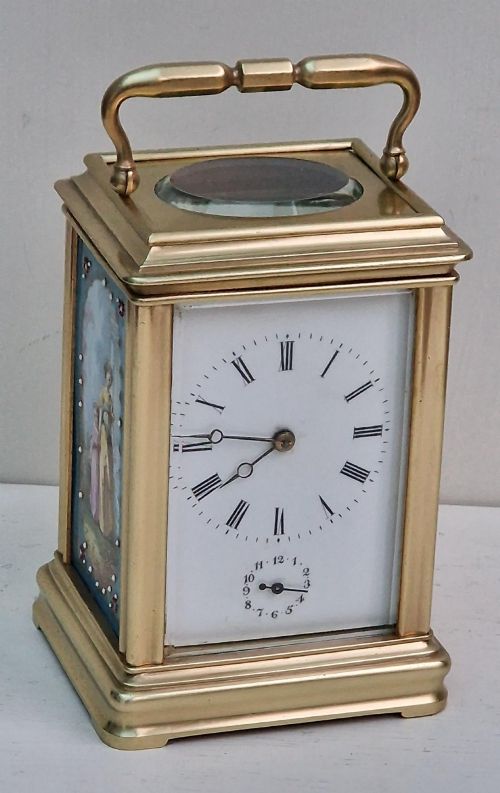
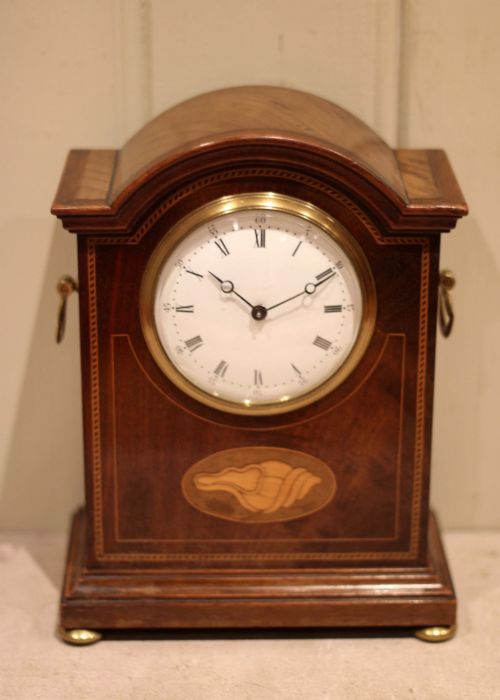
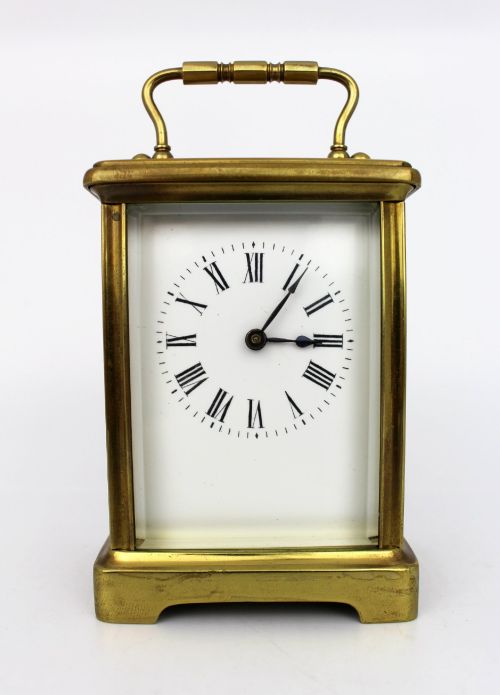
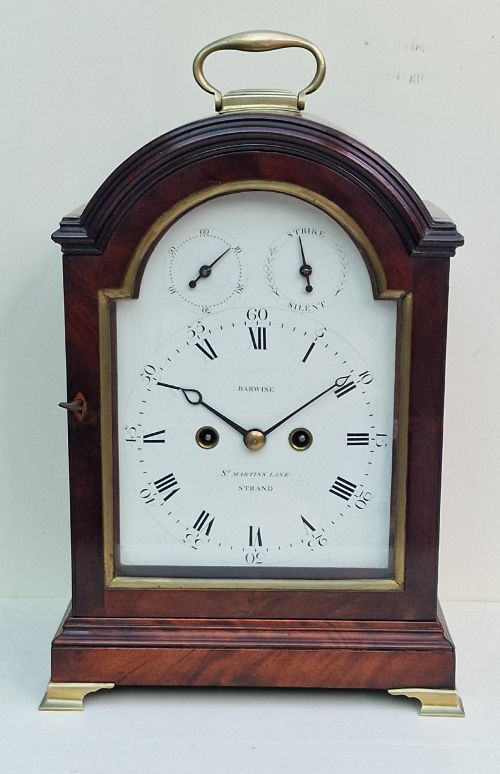
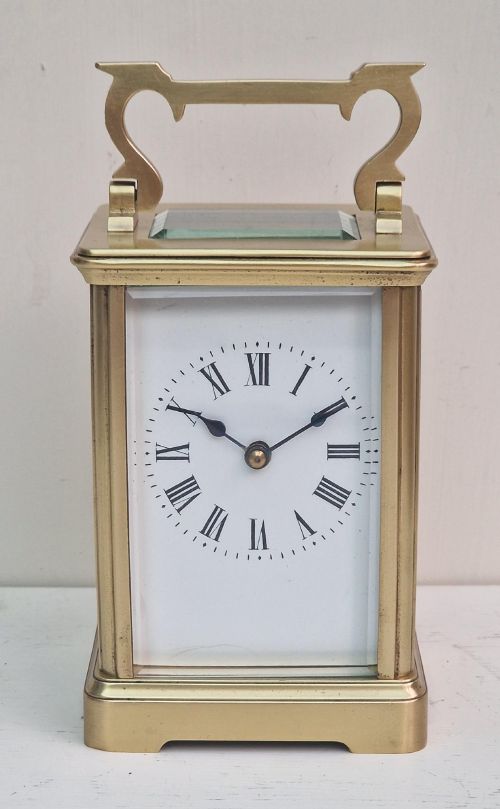
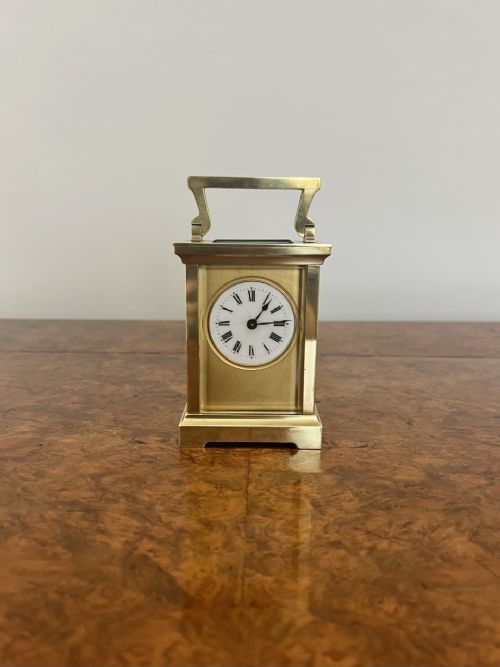
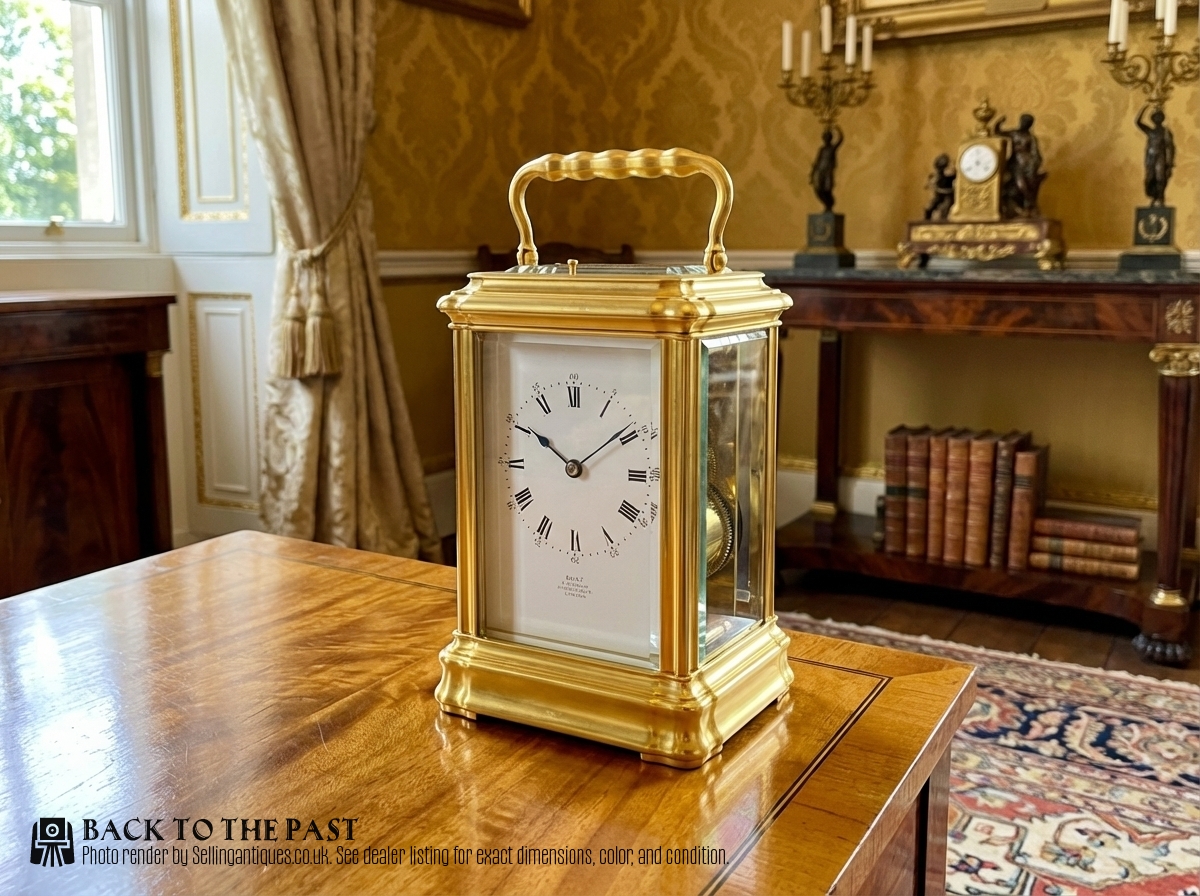
A brass tabletop clock spans portable travel timepieces, mantel designs, and small desk pieces produced across the nineteenth and twentieth centuries. The selection on this page leans heavily toward carriage clocks and mantel clocks originating from English and French workshops.
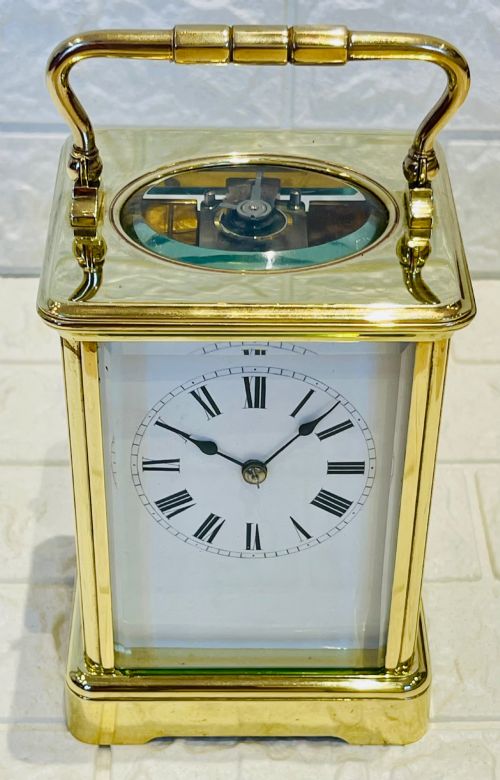
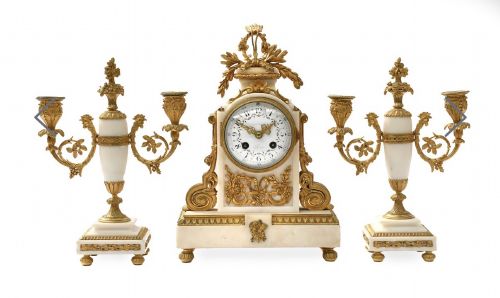
Makers housed these movements in brass, gilt bronze, ormolu, and inlaid mahogany or rosewood cases. Enamel dials and glass panels frequently protect the inner workings while allowing a clear view of the escapement and gear trains.
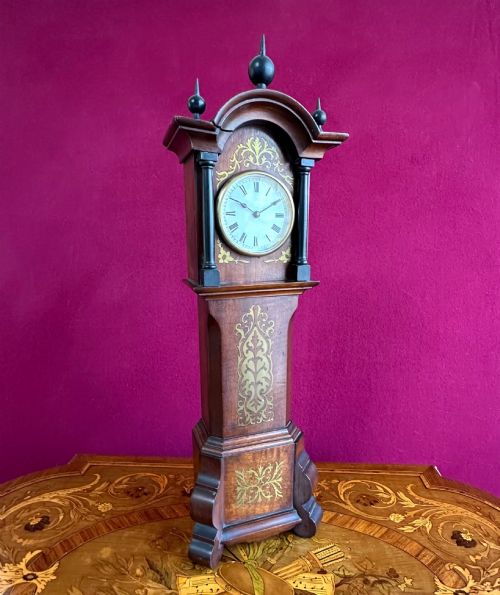
Styles range from restrained Edwardian and Victorian designs to elaborate French Rococo Revival and Art Deco creations. Collectors encounter formats varying from miniature longcase clocks to heavy striking carriage clocks with travel cases.
Materials and Construction
Craftsmen built these timepieces using heavy brass frames, often cast and subsequently gilt, polished, or combined with ormolu and bronze mounts. Dial faces utilise white enamel with distinct Roman or Arabic numerals, frequently signed by the maker.
Cabinets incorporate timber elements such as mahogany, rosewood, and walnut, sometimes enhanced with marquetry inlay or Chinoiserie decoration. Delicate glass panels enclose the movements, while champlevé enamel adds decorative colour to bezels and pillars.
Brass Tabletop Clock Retail Price Guide 2026
Typical asking prices for brass tabletop clock among the pieces listed under this phrase on Sellingantiques today, from the lower quarter to the upper quarter. They describe what is for sale here now, not the wider market.
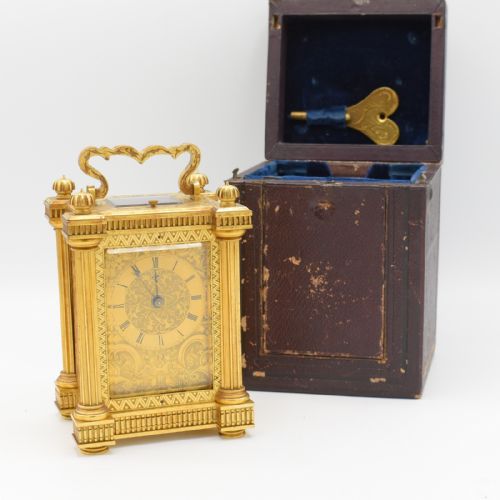
Some nineteenth-century travellers clearly refused to abandon punctuality, carrying heavy gilt-brass clocks enclosed in leather cases across continents.
Evaluating Quality and Craftsmanship
Superior examples distinguish themselves through the crispness of the brass casting, the depth of gilding, and the refinement of the movement. Signed movements by notable makers and repeat mechanisms that strike hours and quarters on demand command greater regard.
The integration of secondary materials, such as hand-painted porcelain panels or intricate champlevé enamel work, elevates a piece beyond standard production. Preserved travel cases and original glass shades further influence the standing of an antique clock.
Howell & James London·John Morley·Brunelot·Seller of Reading·Delépine-Barrois·Jaeger LeCoultre·Howell James Co
The Brass Tabletop Clock Glossary
- Carriage clock
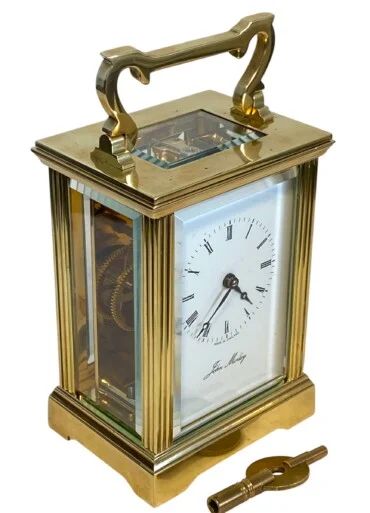
- A portable timekeeper designed for travel, housed in a brass case with glazed panels. These typically feature a folding handle at the top.
- Repeater
- A mechanical complication that strikes the hours and quarters when a lever or button is pressed. This function allowed users to check the time in darkness.
- Ormolu
- Gilded bronze produced by applying a finely ground gold-mercury amalgam to cast bronze. The technique yields a rich, warm metallic lustre on decorative clock mounts.
- Champlevé
- An enamelwork technique where troughs are hollowed out of a metal surface and filled with vitreous paste before firing. It frequently decorates the bezels and framing of late nineteenth-century pieces.
Brass Tabletop Clock: Frequently Asked Questions
What is the difference between a mantel clock and a desk clock?
Mantel clocks generally feature larger wooden or bronze cases designed to sit permanently on a fireplace surround or shelf. Desk clocks tend to be smaller, sometimes utilising easel struts for support.
Desk variants often incorporate silver mounts or leather backing, prioritizing portability for study or office use.
How should I care for an antique brass clock?
Keep the clock away from direct sunlight, heating vents, and damp environments to protect wooden cases and paper or enamel dial faces. Dust the exterior gently with a dry, soft cloth.
Avoid applying chemical metal polishes to gilt or lacquered brass surfaces, as this can strip the historic finish.
Why does my carriage clock have a platform escapement?
The platform escapement mounts the balance wheel and hairspring on a small removable platform visible through the glass top or front panel. This innovation allowed portable clocks to keep accurate time while moving.
It replaced the traditional pendulum, making travel clocks practical for journeys by carriage or train.