


Four Glass Clock
These four glass clock pieces display precision mechanics behind transparent panels, offering a clear view of oscillating pendulums and intricate gear trains.
The four glass clock form
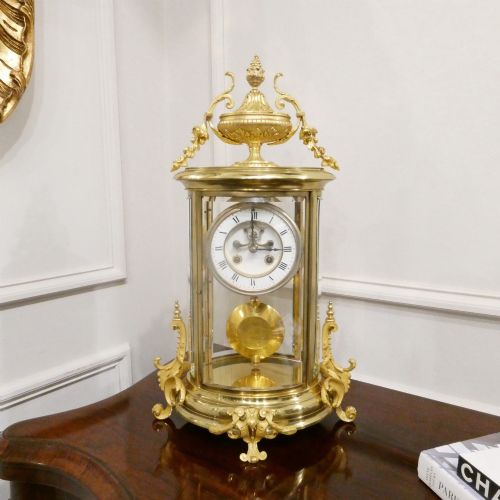
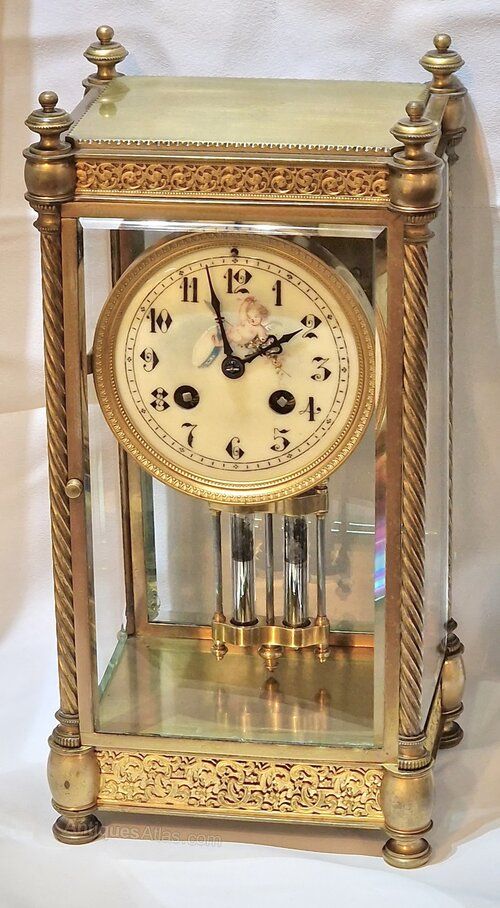
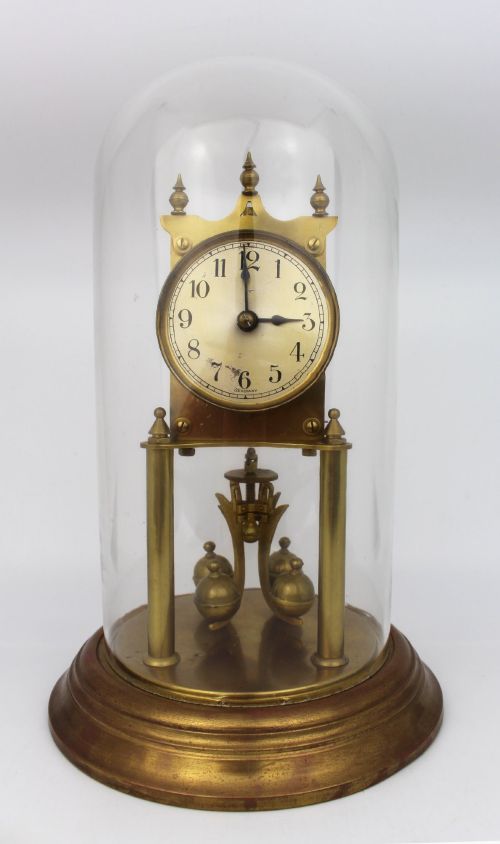
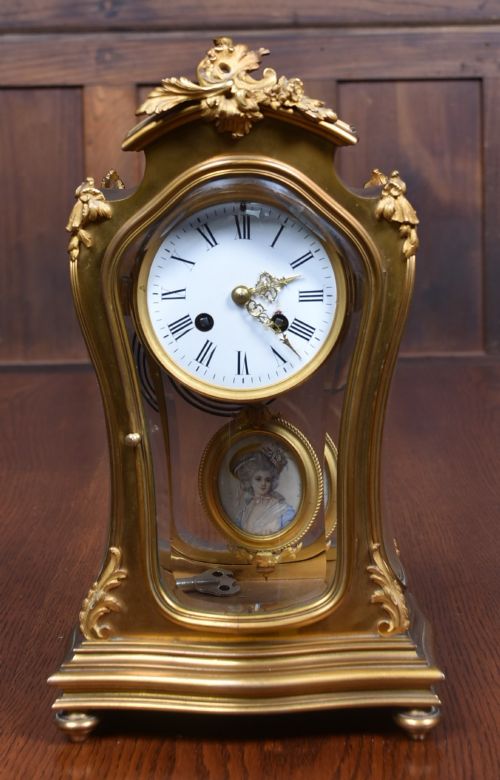
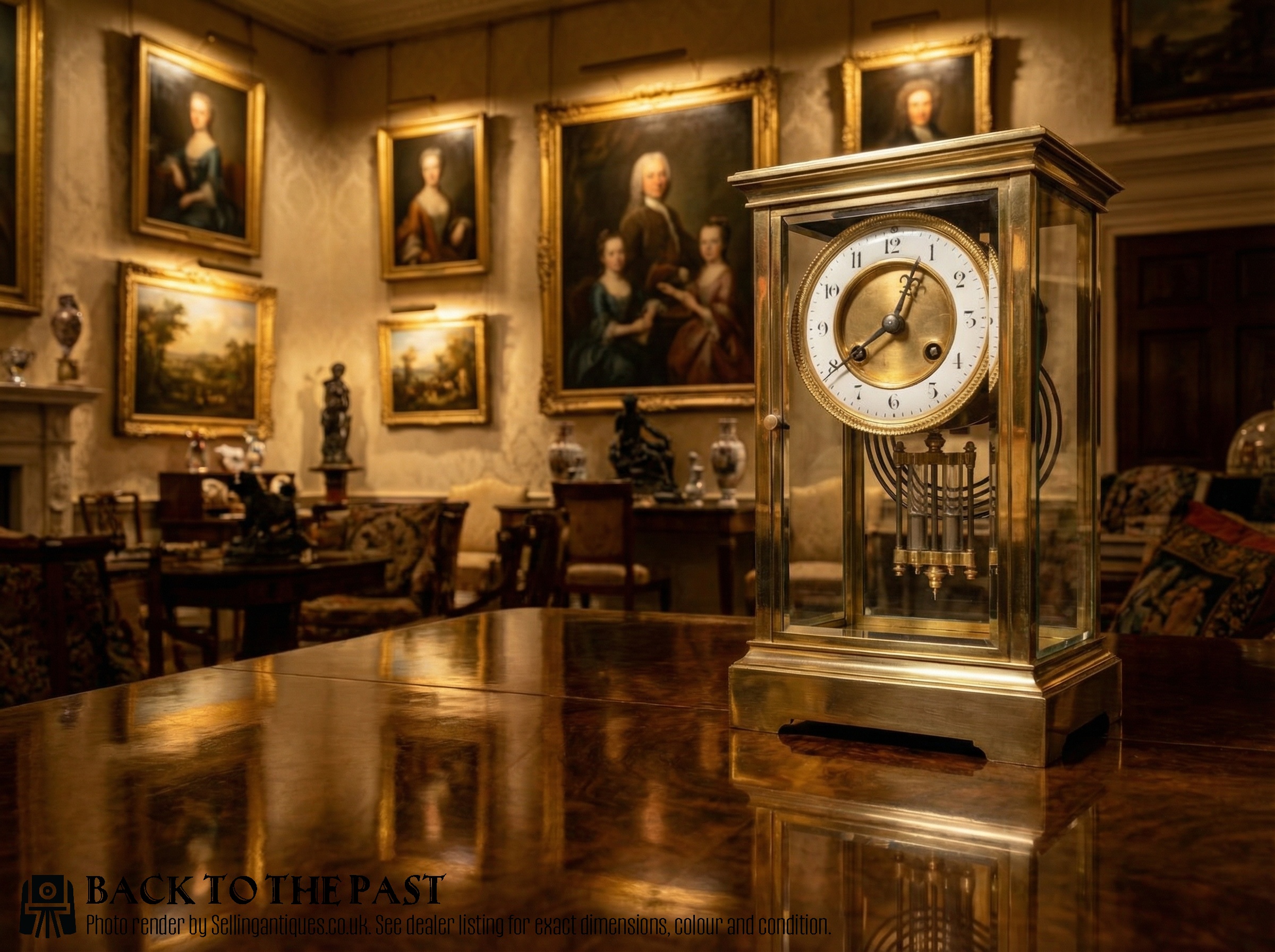
A four glass clock houses a mechanical movement within a brass, gilt brass or golden oak frame fitted with bevelled glass panes on all sides. This construction allows unimpeded observation of the escapement and pendulum from multiple angles within a room.
Victorian and nineteenth century French examples dominate this selection, ranging from standard mantel clocks to library timepieces and oval cased bracket clocks. Most pieces originate from French workshops or British makers utilising similar brass and glass architecture.
Materials and construction
Cases combine heavy cast brass or gilt brass frameworks with thick, bevelled glass panels secured tightly at the corners. Alternative materials such as golden oak, mahogany, green onyx and champleve enamel appear in specific regional and period variations.
Interiors utilise brass clockwork movements driven by single fusee setups, spring barrels or mercurial pendulums designed to compensate for temperature changes. Dials feature white enamel with Roman or Arabic numerals, often protected behind an additional glazed brass bezel.
Retail Price Guide 2026
Typical UK retail prices for four glass clock, calculated from the Sellingantiques database of over a million retail prices indexed since 2003. This retail price guide relies exclusively on Sellingantiques data; no external sources or auction records are used, so the figures do not describe the wider market.
The listings combine nineteenth century French brass cases with Victorian British oak, mahogany and ebonised wood examples.
Qualities of distinction
The sophistication of the movement and the presence of signed maker stamps elevate certain pieces above standard production models. Precision escapements, mercurial pendulums and bell or ting tang striking mechanisms represent higher tiers of horological skill.
Case finishing demonstrates craftsmanship through heavy mercury gilding on brass frames, hand-engraved dial masks, and expertly bevelled glass panes that fit flush into their brass rebates.
Samuel Marti·AD Mougin·John Massey·Vincenti·Tiffany and Co·Webster London
The Four Glass Clock Glossary
- Fusee
- A conical pulley connected to the mainspring by a chain or cord, designed to equalise the torque as the spring unwinds. This mechanism improves timekeeping accuracy throughout the running period.
- Champleve
- An enamelling technique where troughs are carved into a metal surface and filled with vitreous enamel powder before firing. The resulting panels adorn the brass bezels and columns of select mantel clocks.
- Escapement
- The mechanical linkage that restrains the gear train, releasing it at regular intervals to give an impulse to the pendulum. It produces the characteristic ticking sound of the clock.
- Mercurial pendulum
- A temperature compensating pendulum utilising glass jars filled with mercury. As heat expands the rod downwards, the mercury expands upwards within the jars, keeping the overall centre of gravity at a constant height.
Frequently Asked Questions
How do I wind a four glass clock?
Insert the matching winding key into the dial aperture and turn it gently clockwise until you feel firm resistance. Do not overwind the mainspring, as this can damage the internal gearing.
Ensure you support the clock case with one hand while winding to prevent accidental movement on the mantelpiece.
Why does the pendulum need regulating?
Changes in ambient temperature and mechanical wear can cause the clock to run slightly fast or slow over a period of days. Adjusting the small regulating nut beneath the pendulum bob alters its effective length to correct the timekeeping.
Raising the bob makes the clock run faster, while lowering it makes it run slower.
Where should I place a four glass clock?
Position the clock on a stable, level mantelpiece or bracket away from direct sunlight, draughts and damp areas. A secure surface ensures the pendulum swings evenly without catching on the internal frame.
Because the movement is visible from all four sides, placing the piece where light can pass through the glass enhances the visual effect.
How do I tell French and British clocks apart?
French examples from the nineteenth century frequently feature maker stamps such as Samuel Marti or AD Mougin on the movement backplate, often paired with champleve enamel or gorge cases. British versions tend to utilise fusee movements and materials like golden oak, mahogany or ebonised wood.
Examining the escapement and winding holes through the glass panels reveals these construction differences.