
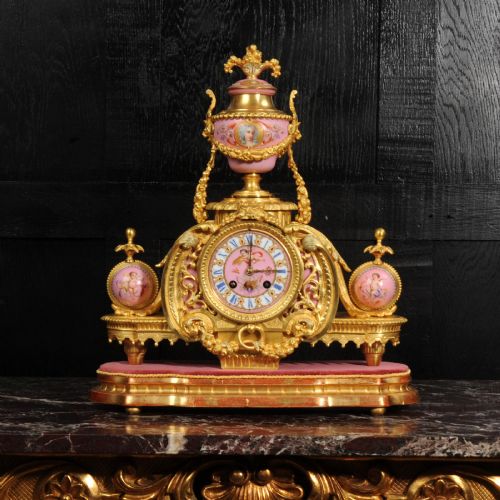

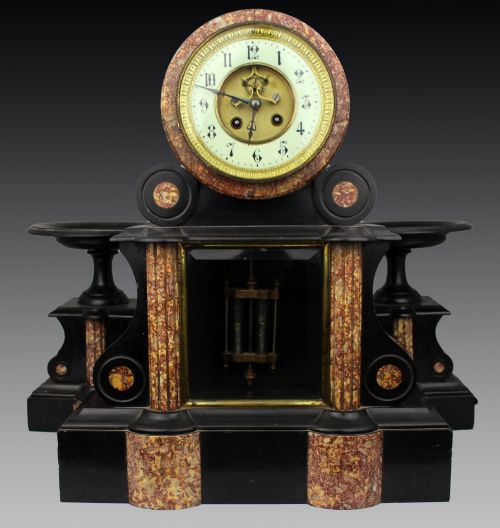
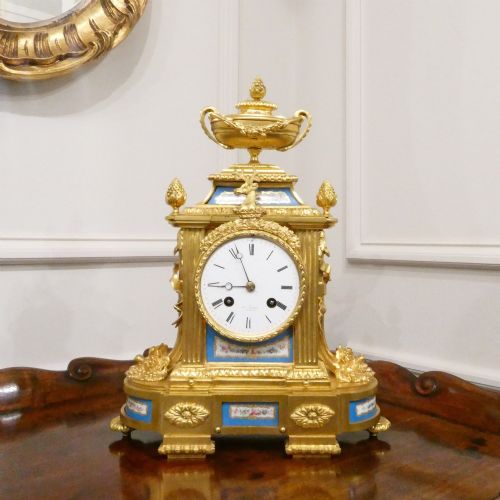
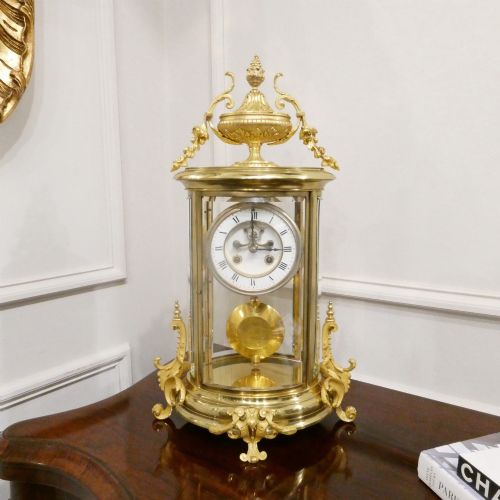
Pendulum Mantel Clock
These pendulum mantel clock pieces bring functional timekeeping and classical proportions to a room, offering mechanical movement housed in striking architectural frames.
What these pendulum mantel clocks are
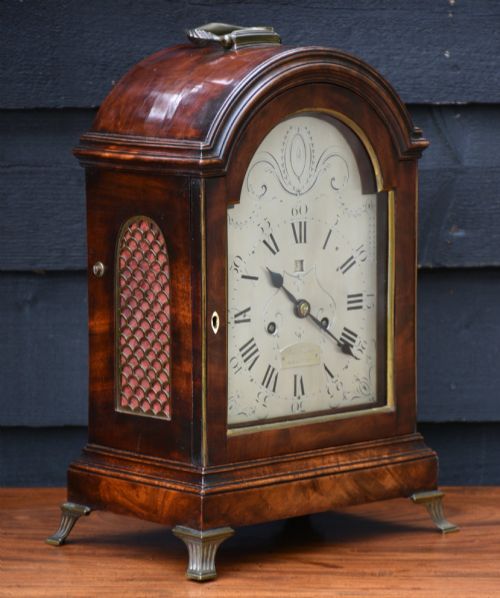
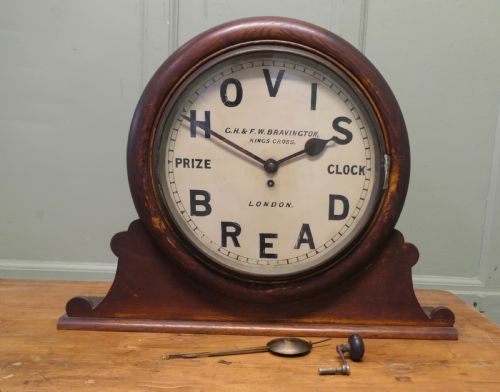
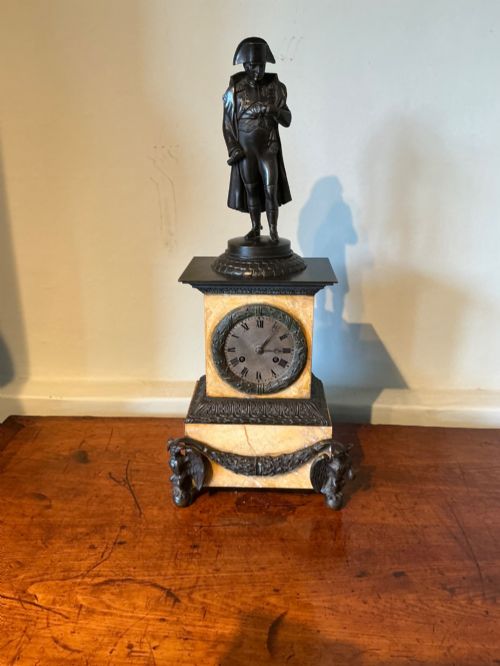
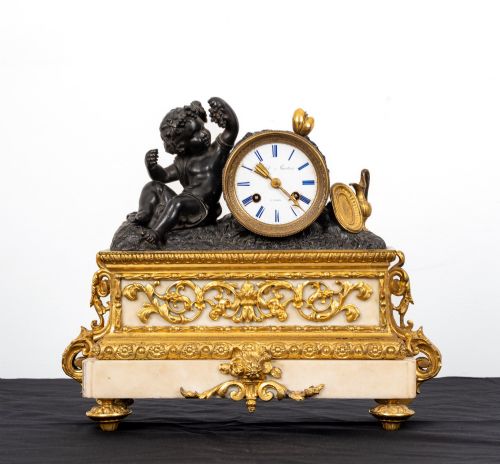
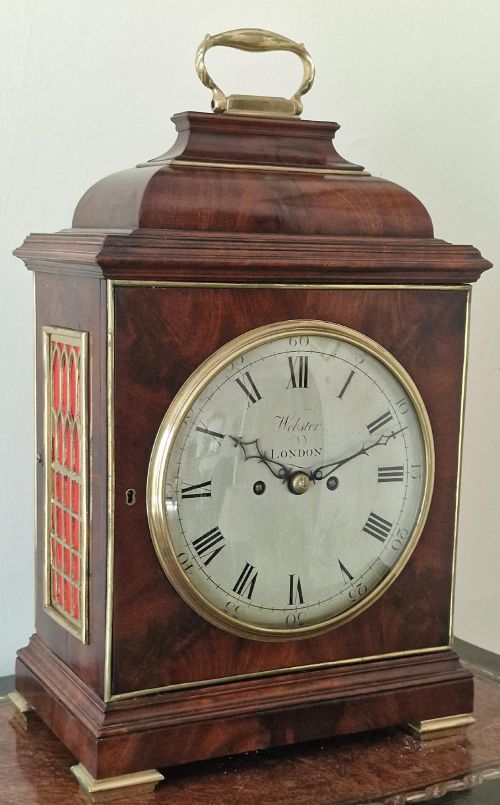
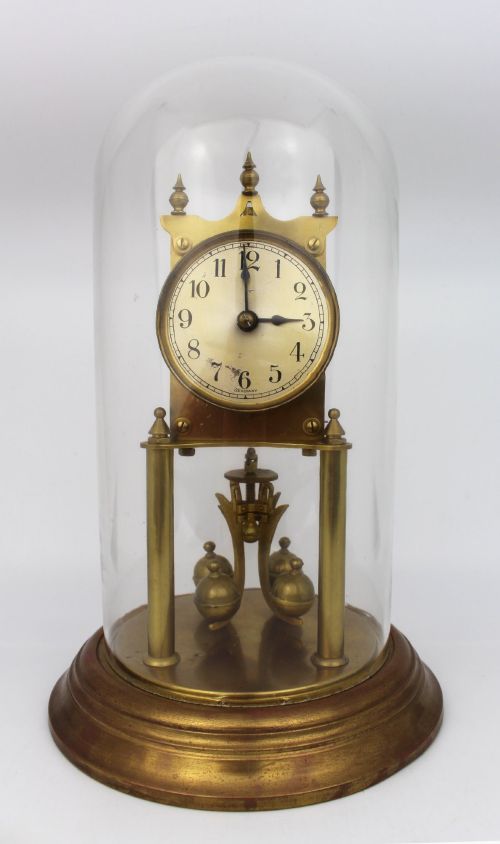
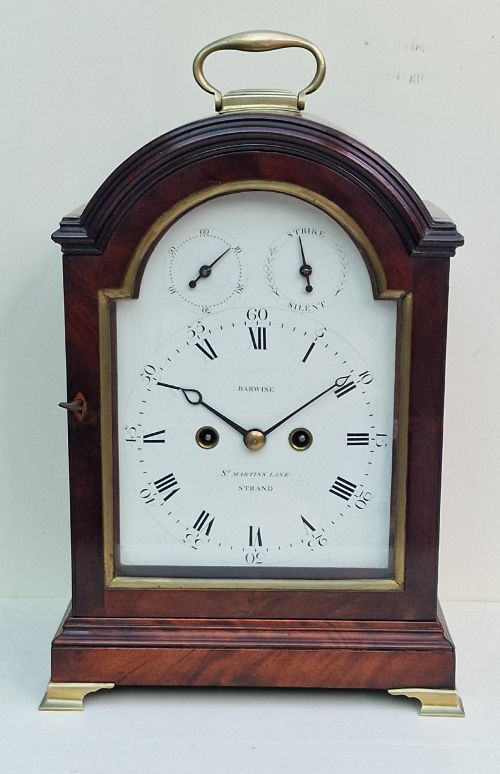
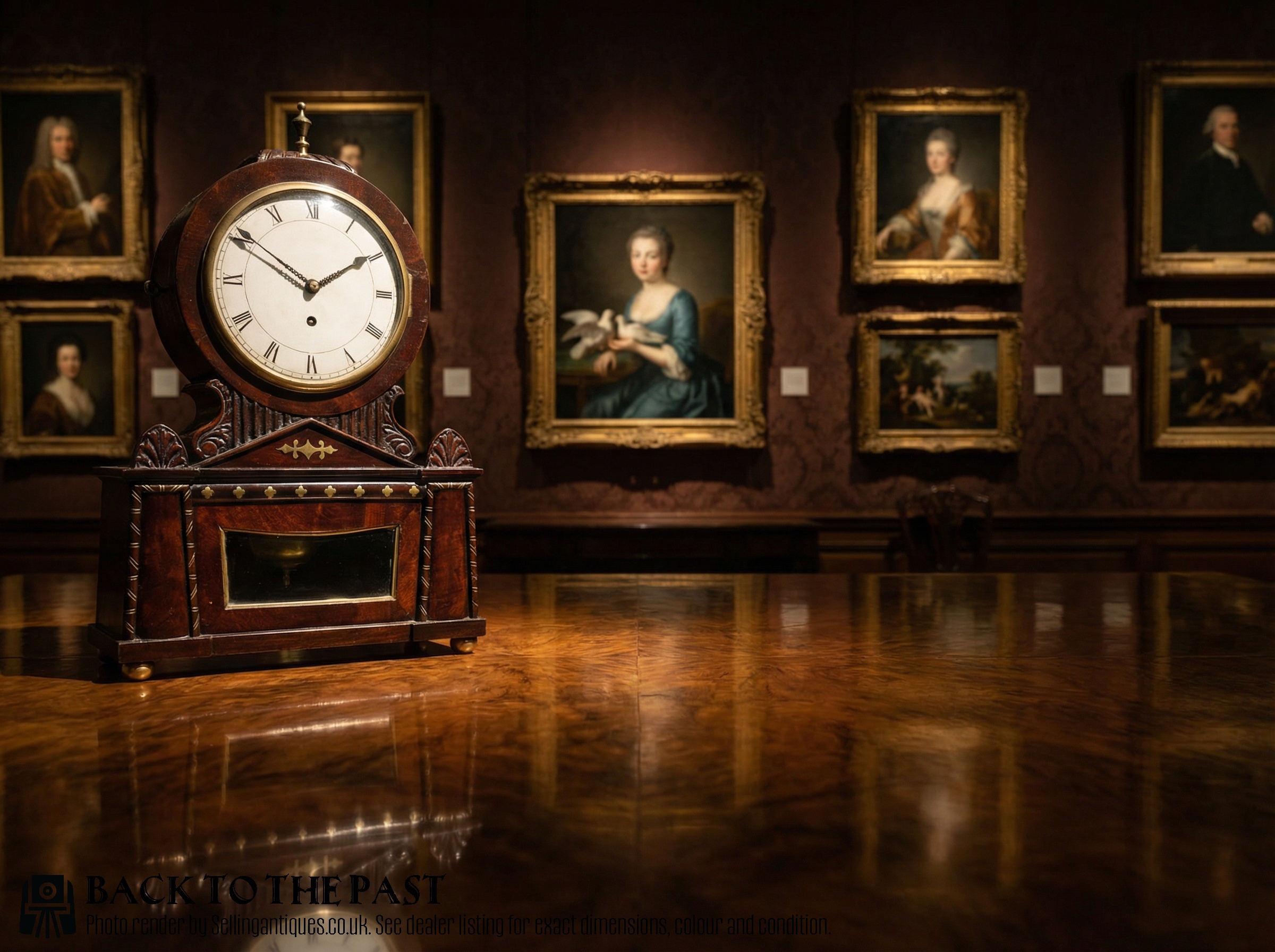
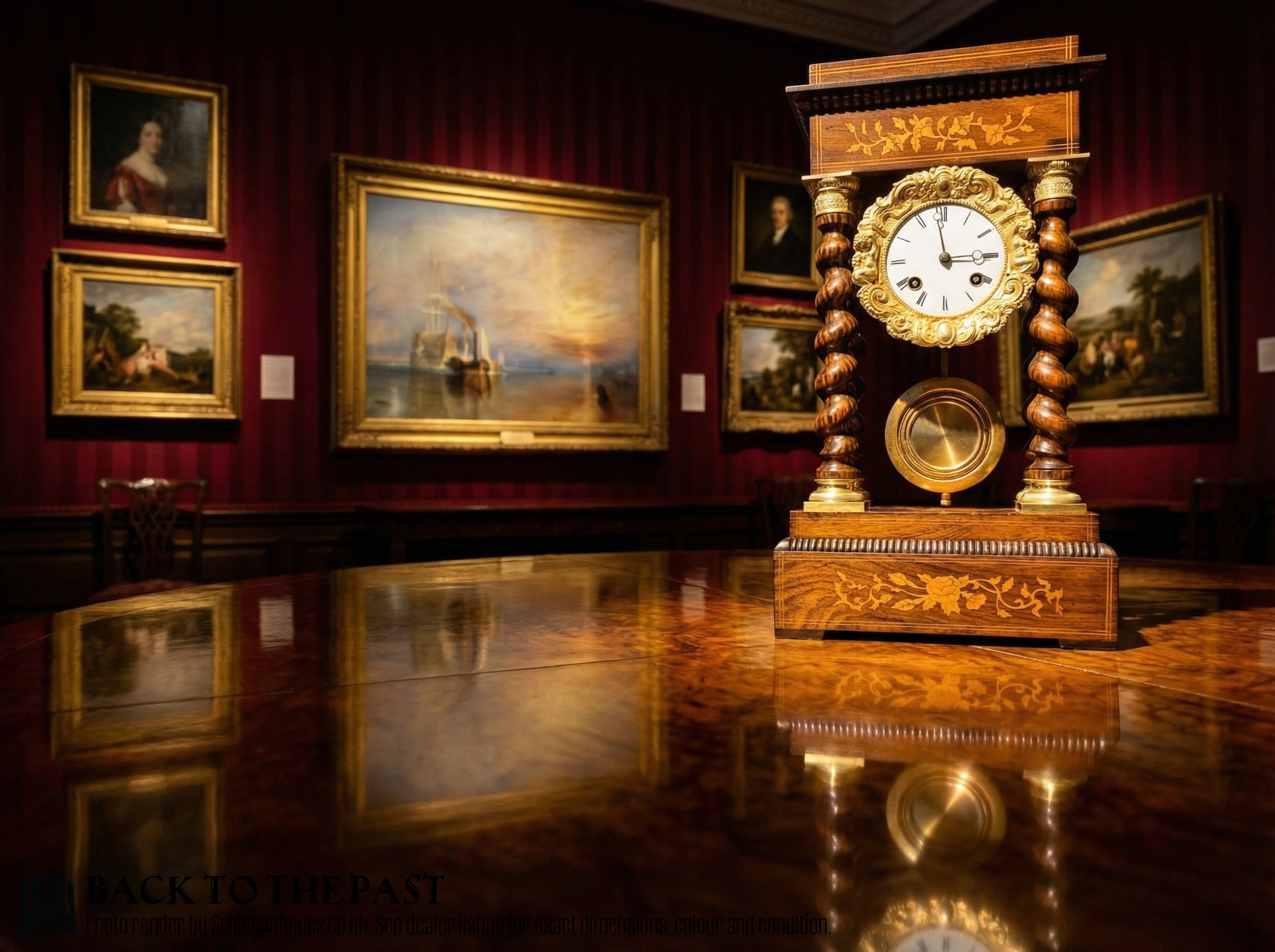
A pendulum mantel clock sits on a shelf or sideboard, driven by a mechanical movement regulated by a swinging pendulum. When buyers search for pendulum mantel clock, they are looking at diverse forms ranging from classical portico designs to architectural brass cases.
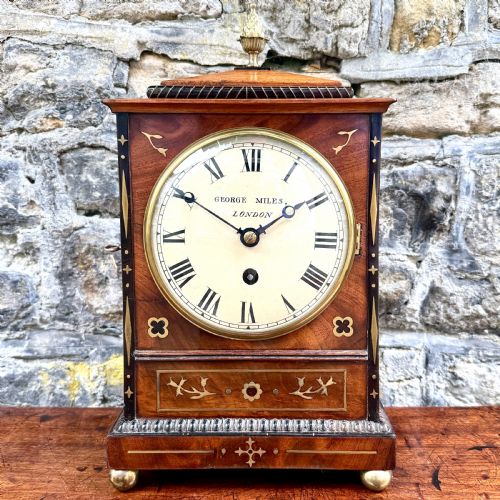
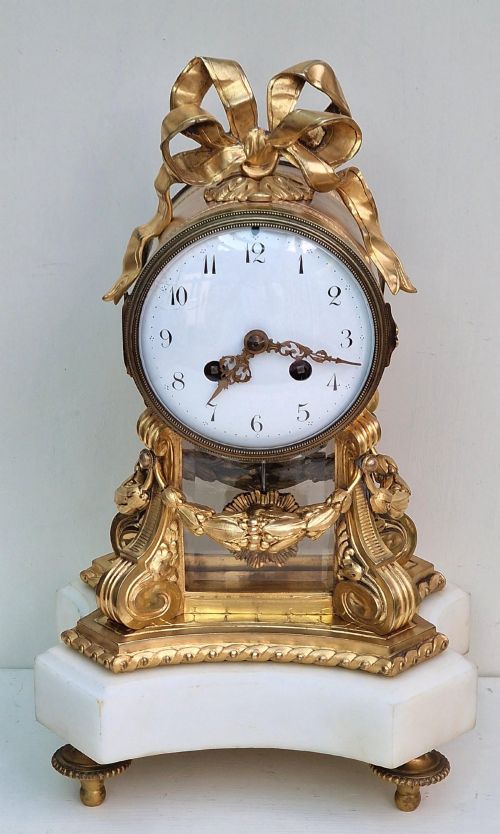
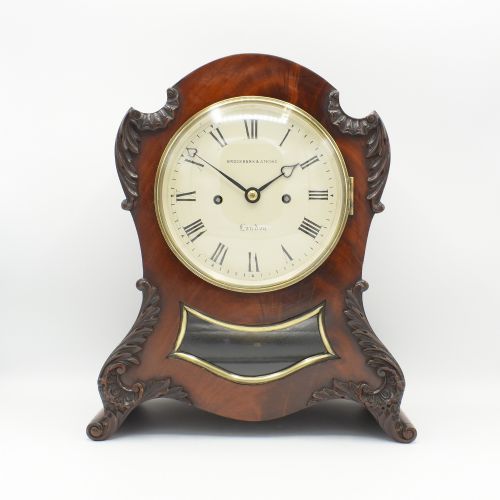
The pieces on this page span the Regency period through to 1910, encompassing French late 19th-century designs alongside English bracket and timepiece variations. These items combine practical horology with decorative cabinetry in wood, brass, and glass.
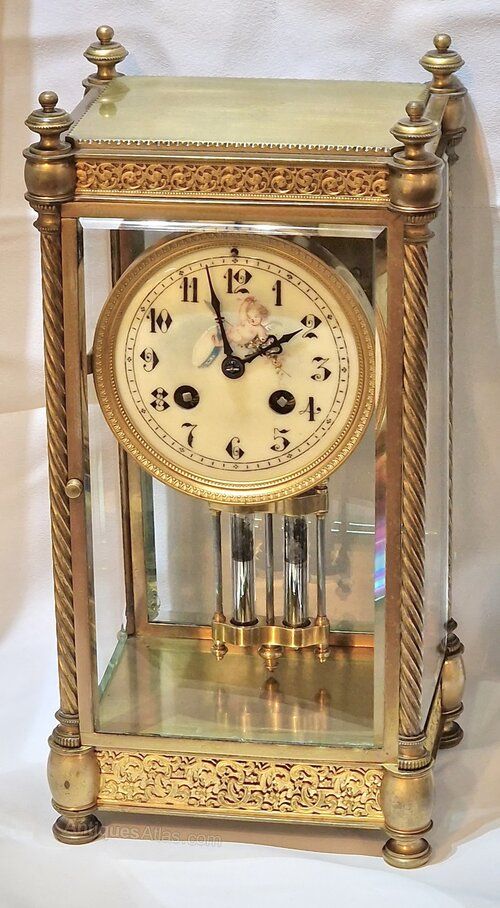
Most pieces encountered here display traditional proportions suited for interior placement, often featuring exposed mechanisms or glass panels that reveal the internal pendulum movement at work.
How they were made
The construction of these clocks involves precision metalwork combined with cabinetmaking in materials such as rosewood, mahogany, boxwood inlay, and gilt brass. Cases utilise bevelled glass panels and cast brass bezels to enclose the delicate gear trains.
Movements rely on traditional brass gear components, often incorporating fusee mechanisms, bell-striking functions, or visible escapements. Dials are frequently finished with enamel chapters and delicate hands, while decorative elements employ mercury-filled or sunburst pendulums.
Retail Price Guide 2026
Typical UK retail prices for pendulum mantel clock, calculated from the Sellingantiques database of over a million retail prices indexed since 2003. This retail price guide relies exclusively on Sellingantiques data; no external sources or auction records are used, so the figures do not describe the wider market.
Materials across these listings include rosewood, mahogany, boxwood inlay, brass, gilt brass, glass, and enamel.
What varies in quality
Quality reveals itself in the crispness of the cast brass work, the depth of the wood grain in rosewood and mahogany cases, and the complexity of the movement. Engraved details on brass plates and the refinement of enamel dials separate standard production from finer workshop output.
The sophistication of the pendulum mechanism also dictates standard, with mercury-filled pendulums and complex bell-striking trains representing advanced horological ambition compared to simpler timepieces.

Samuel Marti·Junghans
The Pendulum Mantel Clock Glossary
- Fusee
- A conical pulley used in clock movements to maintain even force as the mainspring unwinds. This device ensures more accurate timekeeping throughout the duration of the wind.
- Mercury pendulum
- A temperature-compensated pendulum using tubes of mercury to counteract thermal expansion. This keeps the effective length constant despite room temperature changes.
- Portico clock
- A monumental clock design supported by columns resembling a classical portico. These architectural pieces often feature prominent pendulums suspended between the uprights.
- Visible escapement
- A clock face design that leaves the escapement mechanism open to view on the dial. This allows the observer to watch the interaction of the pallet and escape wheel directly.
Frequently Asked Questions
How do I wind a pendulum mantel clock?
Wind the clock using the appropriate key inserted into the winding holes on the dial face, turning gently until resistance is met. Take care not to over-wind the mainspring.
Ensure the pendulum is securely hung before setting the hands to the correct time, moving the minute hand only in a clockwise direction.
Where should I place a mantel clock?
Place the clock on a stable, level surface such as a mantelpiece, sideboard, or bracket shelf to ensure the pendulum swings evenly. An uneven surface causes the beat to become erratic and the clock may stop.
Keep the piece away from direct sunlight, draughts, and damp areas to protect the wood case and delicate metal movements.
How do I set the pendulum swinging?
Gently push the pendulum to one side until you hear a regular tick-tock rhythm, then release it carefully. Avoid excessive force which can damage the suspension spring.
Listen closely to the beat; an even tick indicates the clock is sitting level and the suspension is properly centred.
What does a bell-striking mechanism do?
A bell-striking train sounds the hours and sometimes the half-hours on an internal metal bell using a small hammer. This acoustic feature adds an auditory dimension to the timekeeping.
Many French and English movements incorporate this function, requiring proper synchronisation of the countwheel or rack mechanism during setup.