
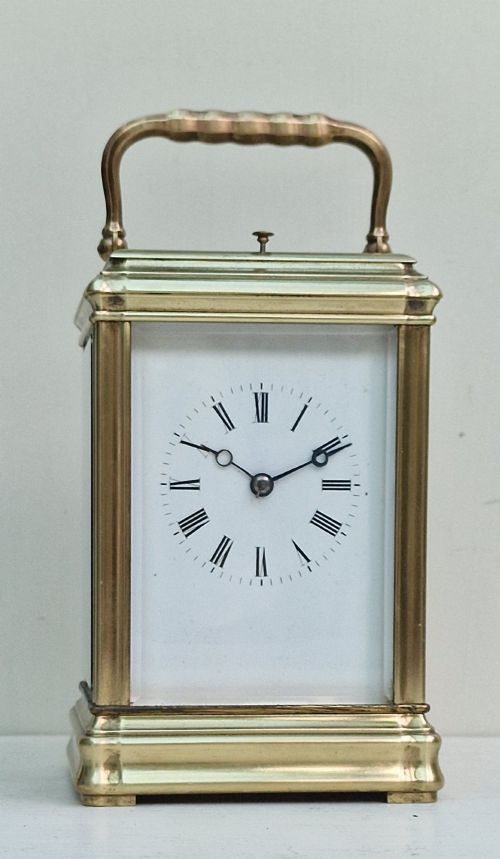


Gorge Case Clock
A gorge case clock represents the height of nineteenth-century horology, housing precision French mechanics within a distinctive stepped brass framework.

Gorge Case Clock
A gorge case clock is primarily a carriage clock or mantel clock featuring a stepped, stepped-top brass case framing glass panels. These pieces originate predominantly from the nineteenth century, reflecting French horological traditions of the period.
Most examples function as striking or repeating carriage clocks, often incorporating alarm mechanisms or grand sonnerie complications. The form appears regularly alongside related carriage clocks and four-glass mantel clocks within the nineteenth-century French tradition.
Makers housed these movements in robust brass or gilt bronze housings designed for portability and display. Collectors encounter both plain brass frames and versions decorated with fine hand engraving across the flat surfaces.
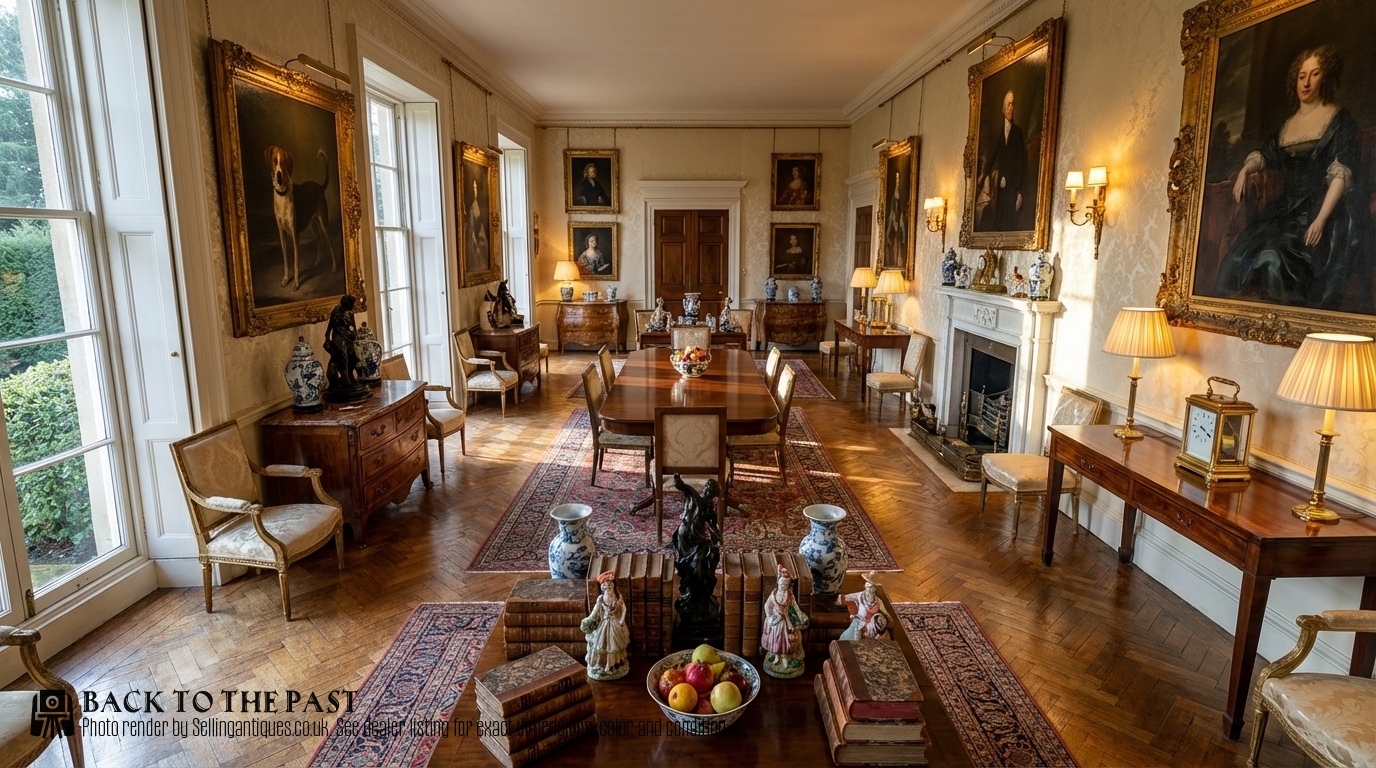
Markers of distinction
Quality rests heavily on the reputation of the maker and the complexity of the movement inside the brass frame. Signed works by established Parisian horologists command greater attention than unsigned pieces from the same era.
The degree of hand engraving across the gorge case alters the character of the object significantly. Plain brass examples contrast with fully engraved cases, while the presence of original fitted boxes and winding keys elevates the completeness of a piece.
Gorge Case Clock Retail Price Guide 2026
Typical asking prices for gorge case clock among the pieces listed under this phrase on Sellingantiques today, from the lower quarter to the upper quarter. They describe what is for sale here now, not the wider market.
Listings feature pieces spanning the nineteenth century, executed in brass, gilt bronze, and steel with enamel dials.
Drocourt·Samuel Marti·Dwerrihouse and Bell·Henry Jacot·Joseph Soldano·L Epee·Dent·E White·Le Roy and Fils·Payne and Co·Pons·Brunelot·Elkington·Caldwell Philadelphia·Margaine
The Gorge Case Clock Glossary
- Gorge case
- A stepped brass carriage clock case with a flat top and glazed panels. This distinct architectural framing distinguishes it from corniche or Anglaise cases.
- Striking
- A mechanism that sounds the hours and half-hours automatically on a bell or gong. The movement uses an internal count wheel or rack to regulate the count.
- Repeating
- A complication activated by pushing a button on top of the case to sound the last hour and quarters on demand. This was useful for telling time in dark bedchambers.
- Sonnerie
- A striking system that chimes the hours and quarters automatically as they pass, often featuring petite or grande sonnerie variations. Such movements represent advanced nineteenth-century craftsmanship.
- Enamel dial
- A metal face coated with fused glass powder, fired to create a smooth white surface with painted numerals. These dials provide a durable and legible display for the hands.
Gorge Case Clock: Frequently Asked Questions
How do I wind a gorge case clock?
Use the matching key on the winding arbors found at the back of the movement behind the rear glass door. Turn gently until resistance indicates the mainspring is fully tensioned.
Avoid over-winding to protect the historical springs. Most eight-day movements require attention weekly to maintain accurate timekeeping.
What is the difference between petite and grande sonnerie?
A petite sonnerie strikes the hours on the hour and chimes the quarters only when the hours change. A grande sonnerie chimes both the hours and the elapsed quarters at every quarter hour.
Both complications demand complex gear trains within the brass frame. They represent the upper tier of nineteenth-century carriage clock production.
Are original boxes common with these clocks?
Original leather or fitted wooden travel cases survive occasionally alongside the clocks. They protected the gilded brass exterior during nineteenth-century journeys.
Finding a piece complete with its original box and key adds significantly to the historical integrity of the object.
How should I clean the brass and glass?
Dust the bevelled glass panels softly with a dry microfibre cloth. Avoid harsh chemical polishes on the gilt brass frame to preserve the original surface finish.
Professional horological servicing is recommended for the internal movement every few years rather than amateur intervention.