
Gold Travel Clock
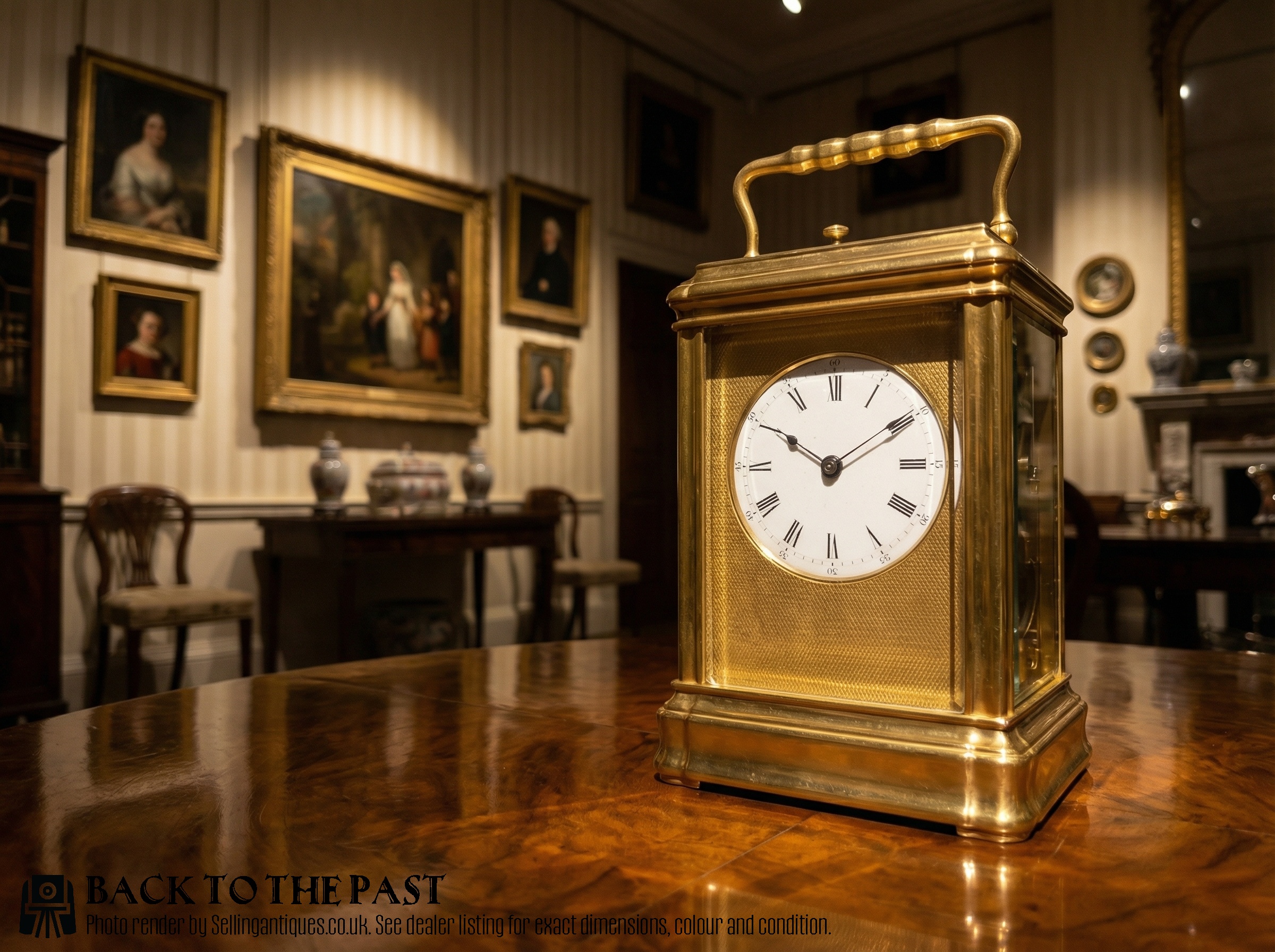
A gold travel clock is a portable timepiece designed for the journey, combining brass, gilt casing, and glass panels into a reliable companion.

Gold Travel Clock
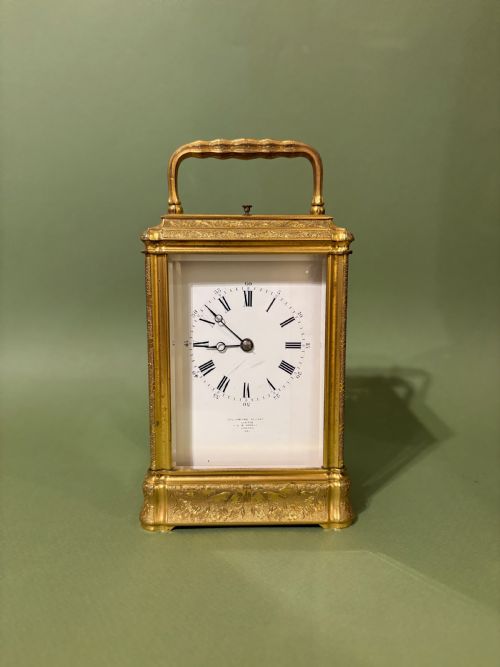
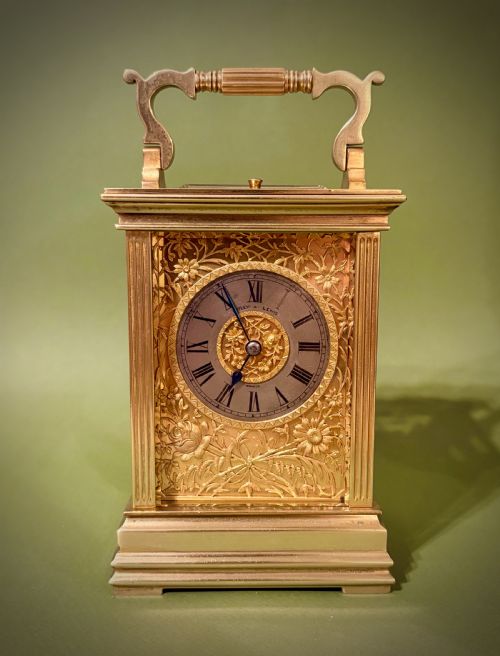
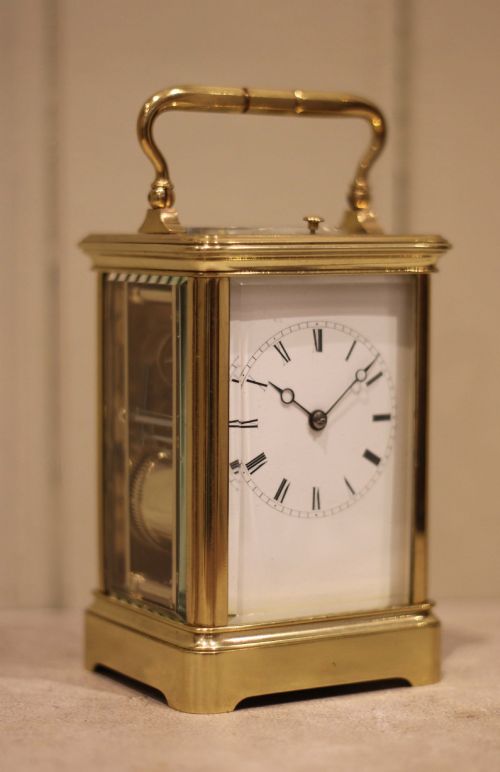
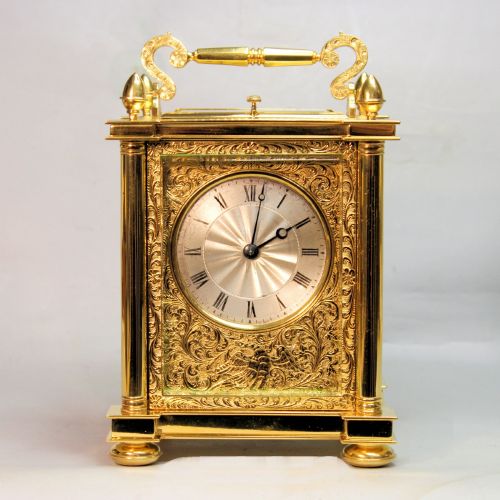
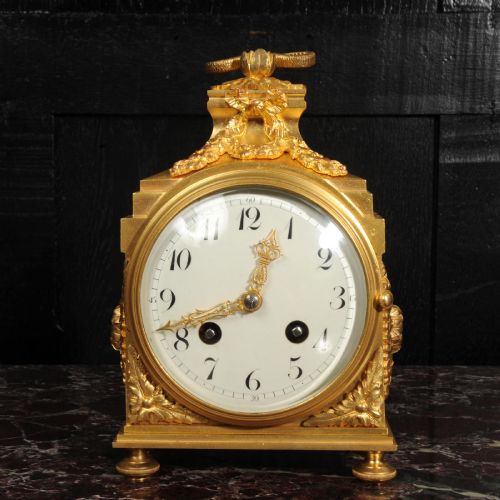
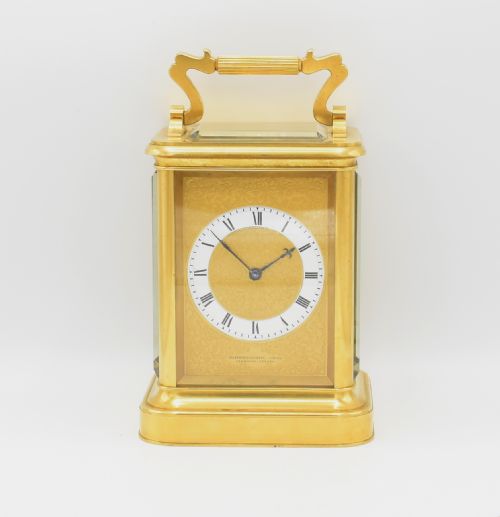
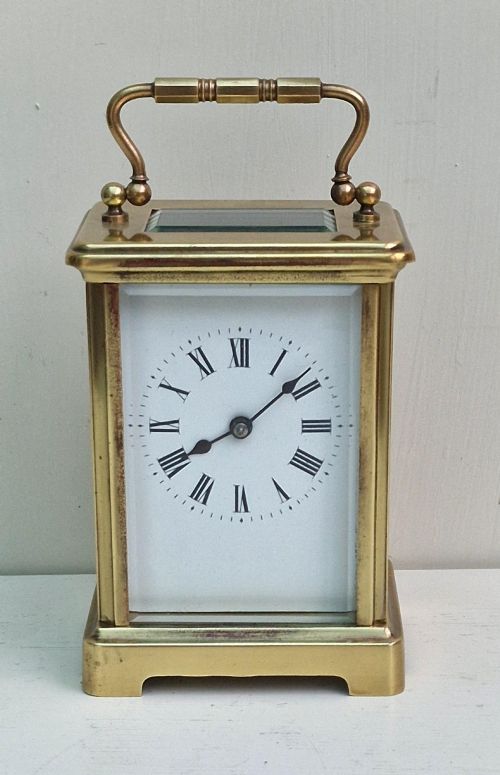
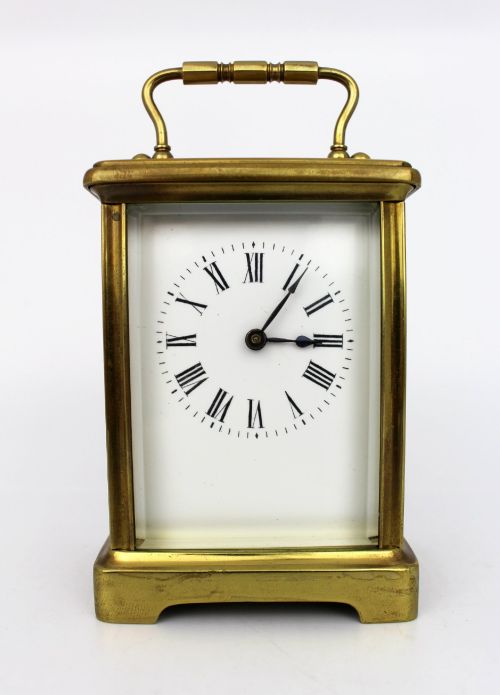
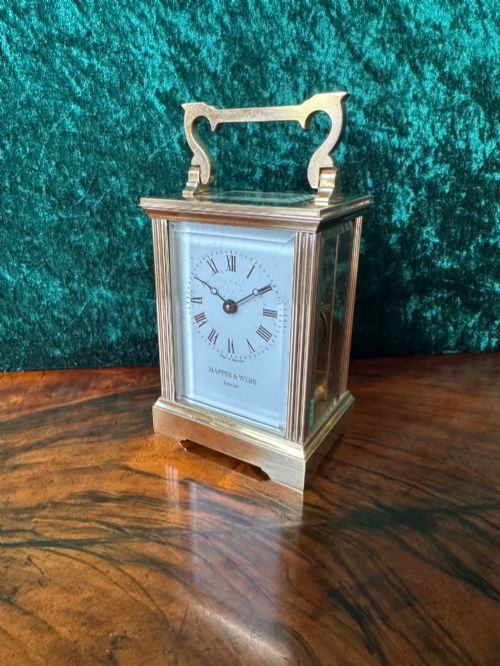
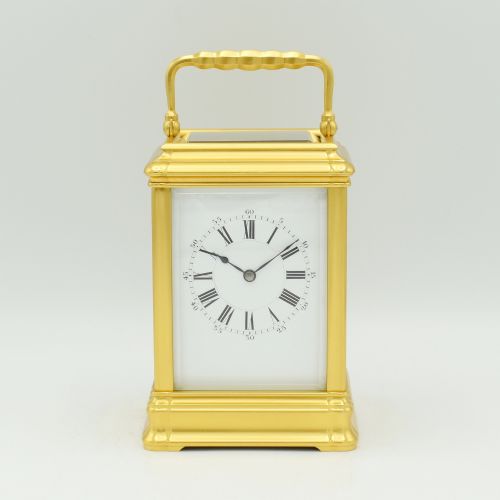
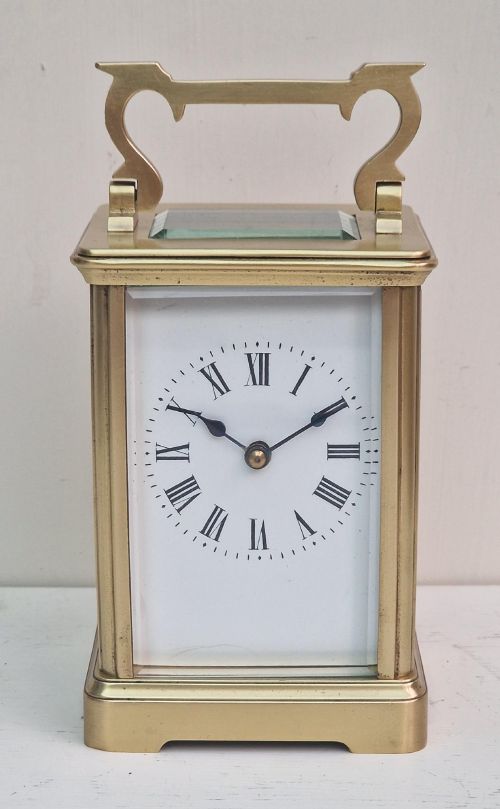
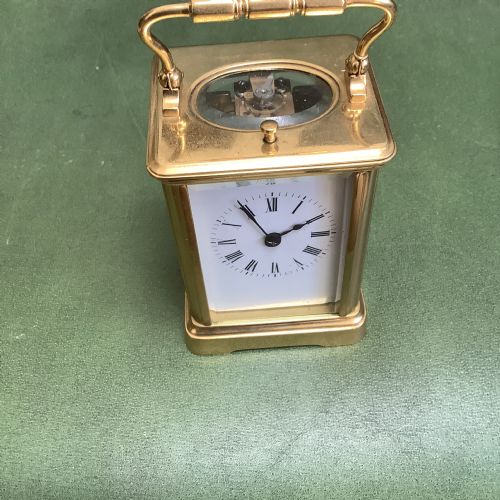
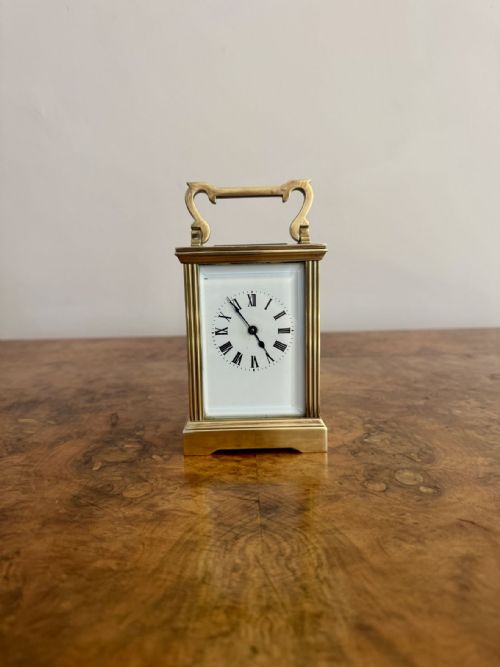
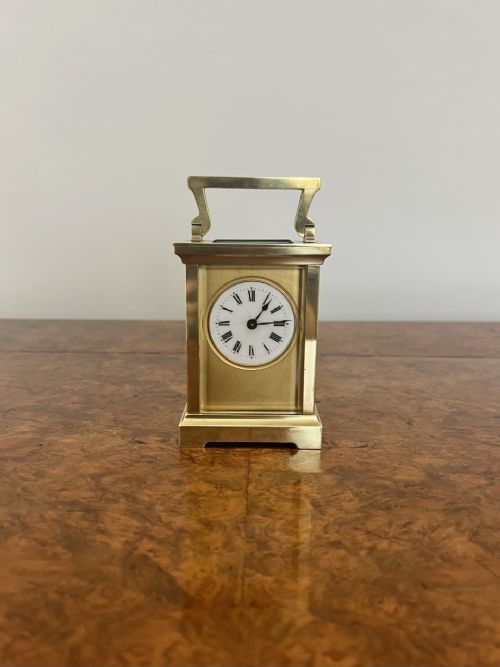
A gold travel clock bridges the gap between domestic mantelpieces and portable horology, taking the form of carriage clocks and pocket-sized desk pieces. Buyers searching for a gold travel clock encounter brass and gilt brass frames enclosing glass panels that reveal the mechanical movement within.
Most examples originate from the nineteenth century and the Edwardian period, with French workshops producing the majority of surviving pieces alongside English makers. These objects served travellers on coaches and trains, requiring robust construction paired with decorative elegance.
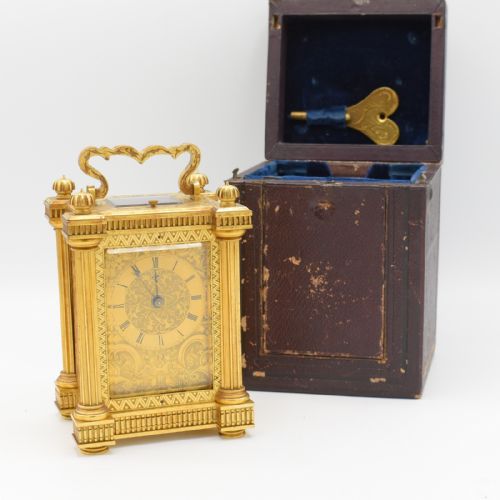
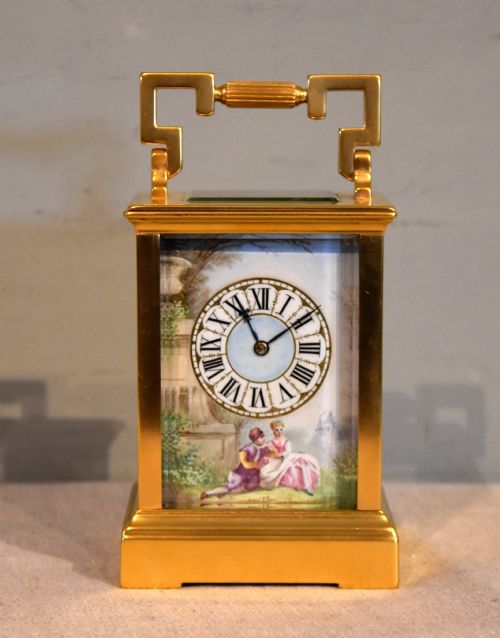
The format ranges from miniature carriage clocks intended for packing to substantial striking and repeating models housed in leather travel cases. Enamel dials and silvered metal details frequently complement the gilt housing.
Materials and Construction
Maker workshops utilised brass, gilt bronze, and ormolu to form the structural cases, often finishing the surfaces with fire gilding or engraving. Glass panels fitted into the top and sides allowed light to reach the escapement and dial.
Movements incorporate steel components, brass wheels, and occasionally porcelain dial plaques, driven by spring barrels rather than hanging weights. Leather outer cases protected the gilt brass chassis during transit.
Gold Travel Clock Retail Price Guide 2026
Typical asking prices for gold travel clock among the pieces listed under this phrase on Sellingantiques today, from the lower quarter to the upper quarter. They describe what is for sale here now, not the wider market.
Some nineteenth-century travellers relied on an alarm function to wake them in coaching inns long before hotel wake-up calls existed.
Evaluating Quality and Craftsmanship
Distinction across these timepieces lies in the complexity of the movement and the crispness of the case engraving. Grand sonnerie or repeating mechanisms require significantly higher skill than a basic time-only movement.
The weight and thickness of the gilt brass casting, alongside the preservation of the original gilding and glass panels, separate ordinary production from the finest workshop output.
HENRI JACOT·COUSENS & WHITESIDE·Howell & James London·Mappin and Web·DROCOURT·Antoine Redier
The Gold Travel Clock Glossary
- Carriage clock
- A portable spring-driven timepiece developed for travel in the nineteenth century. These clocks typically feature a rectangular brass frame with glass windows and a handle on top.
- Repeating movement
- A mechanism that strikes the hours and quarters on demand when a lever or button is pressed. This complication allowed travellers to check the time in the dark.
- Gorge case
- A stepped brass carriage clock case style characterised by distinct mouldings around the top and bottom. It represents one of the standard housing designs found in French production.
- Escapement
- The internal mechanism that controls the release of power to maintain the motion of the balance wheel. It translates the unwinding of the mainspring into regular ticking intervals.
- Fusee
- A conical pulley used in English clocks to maintain equal force on the train as the mainspring unwinds. This mechanism improves timekeeping accuracy over the duration of the power reserve.
Gold Travel Clock: Frequently Asked Questions
How do I wind a travel clock?
Most antique travel clocks require a specialised winding key inserted into arbors located on the backplate of the movement. Care must be taken not to overwind the mainspring.
Spring-driven mechanisms operate for a set number of days, typically eight, before needing another complete wind to maintain operation.
Why does my clock have a leather case?
Original leather travel cases protected the gilt brass and glass panels from the rigours of nineteenth-century journeys. These fitted cases often feature velvet or silk linings.
Finding a clock with its matching leather case adds context to how the object travelled across Europe during the Victorian period.
What is a repeating carriage clock?
A repeating carriage clock includes an internal mechanism that chimes the last hour and quarters upon pressing a button on the top of the case. Wealthy travellers relied on this feature during night journeys.
Standard time-only models simply display the hours and minutes without the audible striking complication.
How do I date an antique travel clock?
Dating relies on maker signatures, serial numbers, style evolution, and registration marks stamped on the brass movement backplate. French makers often stamped their trademark logos inside an oval or rectangle.
Stylistic cues such as case proportions and dial decoration also help narrow down the period of manufacture between the 1840s and the early twentieth century.