


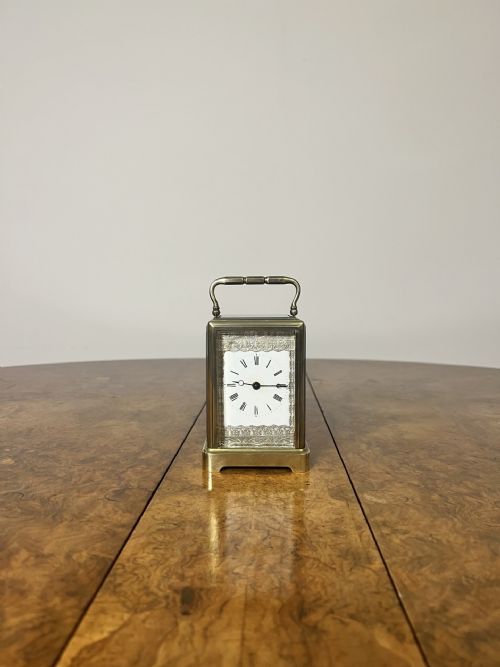


Portable Brass Clock
A portable brass clock is a sturdy travel timepiece housed in a glass-fronted metal case, built to keep time reliably on the move.
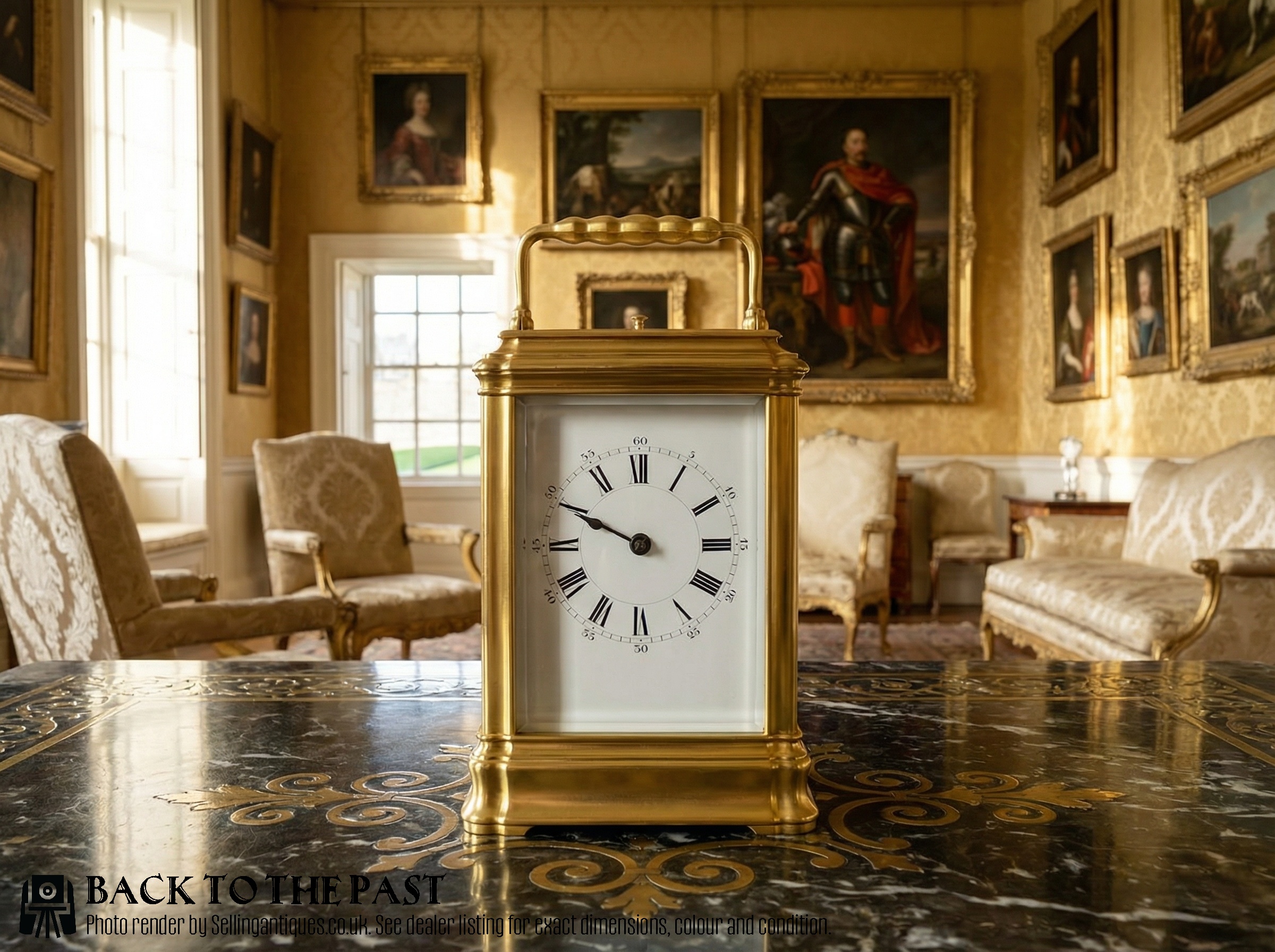
Portable Brass Clock
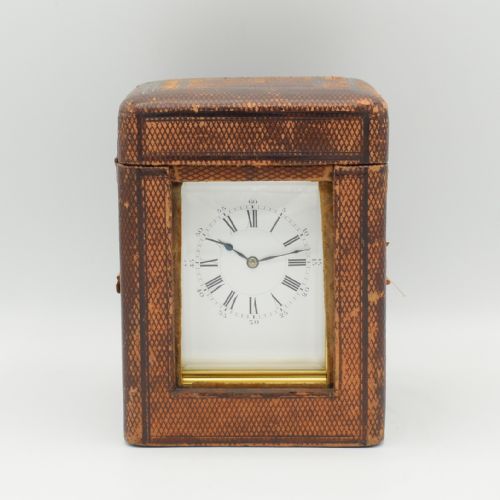
A portable brass clock primarily takes the form of a carriage clock, designed for travel during the nineteenth and early twentieth centuries. These timepieces range from standard upright models to miniature versions and larger striking examples housed in protective leather travel cases.
You will encounter pieces originating from French workshops as well as English makers, spanning periods from Victorian and Edwardian eras up to Art Deco designs. Many feature bevelled glass panels that reveal the mechanical movement inside.
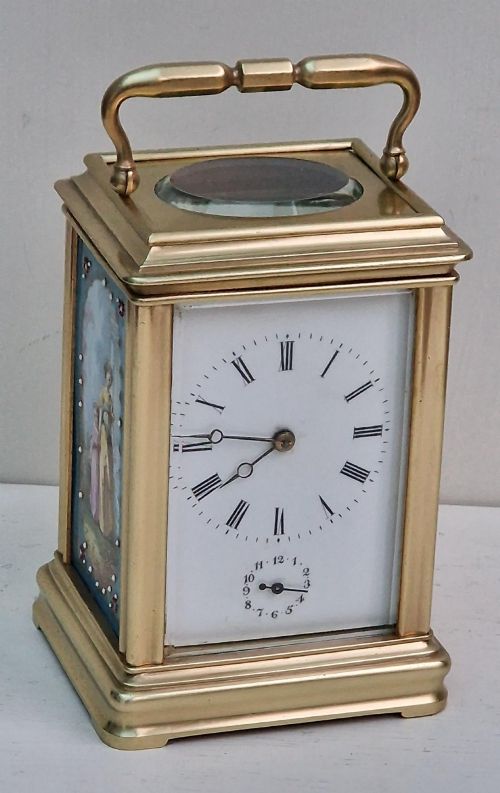
Standard forms include plain brass cases alongside gilt brass, silvered metal, and examples adorned with porcelain panels or intricate enamel work. Certain specimens were specifically produced for export markets such as China, incorporating sweep seconds hands.
Materials and construction
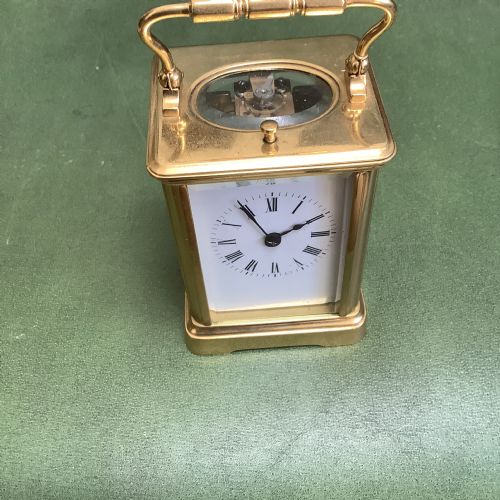
These clocks are constructed using brass and gilt brass for the primary frame, paired with transparent glass panels on the top, sides, and door to showcase the escapement and gear train.
Movements are mechanical, often featuring eight-day spring-driven mechanisms with strike and repeat functions, housed alongside fitted leather travel cases where surviving cases remain.
Portable Brass Clock Retail Price Guide 2026
Typical asking prices for portable brass clock among the pieces listed under this phrase on Sellingantiques today, from the lower quarter to the upper quarter. They describe what is for sale here now, not the wider market.
Listings feature portable brass clock examples spanning the Victorian, Edwardian, and Art Deco periods, incorporating gilt brass, porcelain, and leather.
Judging quality and merit
Quality rests in the precision of the mechanical movement and the crispness of the cast brass or gilt brass case. Finer examples display superior finishing on the internal gear train and more substantial case weight.
Decorative elements set finer pieces apart, such as hand-painted porcelain panels, detailed enamel work, and filigree masks surrounding the dial. The presence of an original leather travelling case adds significantly to a piece's completeness.
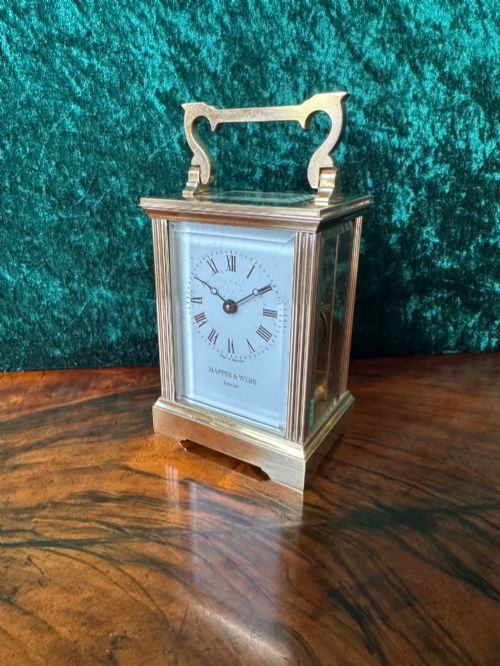
Henri Jacot·Mappin and Web·Pickford of London·Latshea and Sons·Paul Garnier
The Portable Brass Clock Glossary
- Carriage clock
- A portable spring-driven timepiece developed for travel in the nineteenth century. These clocks typically feature a rectangular brass case with glass panels and a folding handle on top.
- Repeater
- A mechanism that chimes the hours and quarters on demand when a button or lever on the case is pressed. This complication was especially useful for checking the time in the dark.
- Gilt brass
- Brass coated with a thin layer of gold or gold-coloured alloy to enhance appearance and prevent tarnishing. It provides the bright finish seen on many fine period timepieces.
- Escapement
- The internal mechanism that controls the release of power from the mainspring to the gear train. It translates the unwinding of the spring into regulated, measurable ticks.
Portable Brass Clock: Frequently Asked Questions
How do I wind a portable brass clock?
Most mechanical models use a dedicated winding key inserted into the arbours located on the backplate. Turn the key gently until firm resistance indicates the mainspring is fully tensioned.
Take care not to overwind the mechanism, as this can place undue stress on the internal springs and compromise timekeeping accuracy.
What is the folding handle for?
The pivoting handle on top of the case allows the timepiece to be carried safely during travel. When the clock is stationary on a mantelpiece or desk, the handle folds flat against the top glass panel.
Original handles should move smoothly within their retaining brackets without excessive looseness or binding.
How can I date my clock?
Dating relies on stylistic clues such as case shape, dial typography, and any maker signatures or registration marks stamped on the movement backplate. Victorian and Edwardian examples often display distinct design shifts from earlier nineteenth-century models.
Comparing the escapement type and decorative details like porcelain panels or enamel work helps narrow down the period of manufacture.
Did these clocks travel in carriages?
They were originally conceived as portable timekeepers for officers, diplomats, and travellers moving by coach, train, or carriage. Their robust brass frames and fitted leather travel cases protected the delicate movements from rough transit conditions.
Today, they function primarily as decorative desk or mantel clocks rather than active travel companions.