




Bevelled Glass Carriage Clock
A bevelled glass carriage clock is a portable timepiece housed in metal and glass, offering mechanical precision and decorative elegance for the home.

Bevelled Glass Carriage Clock
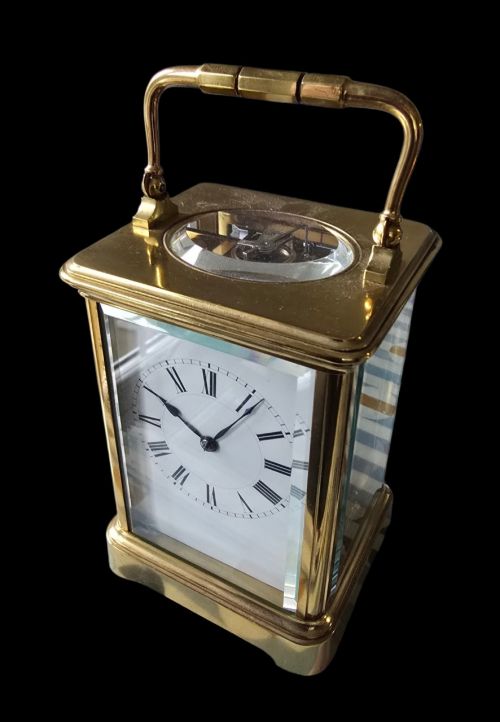
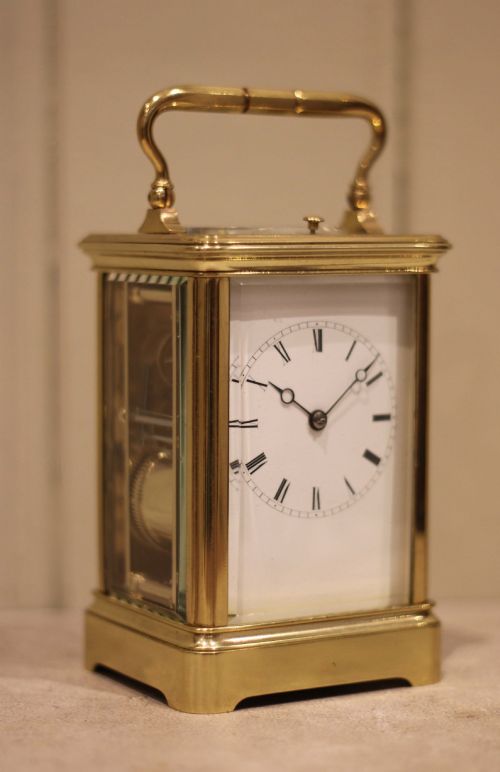
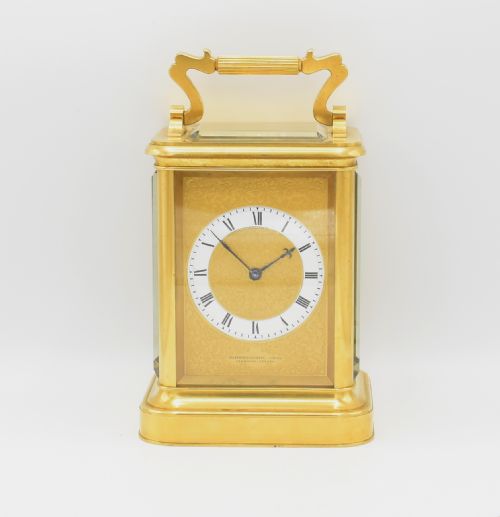
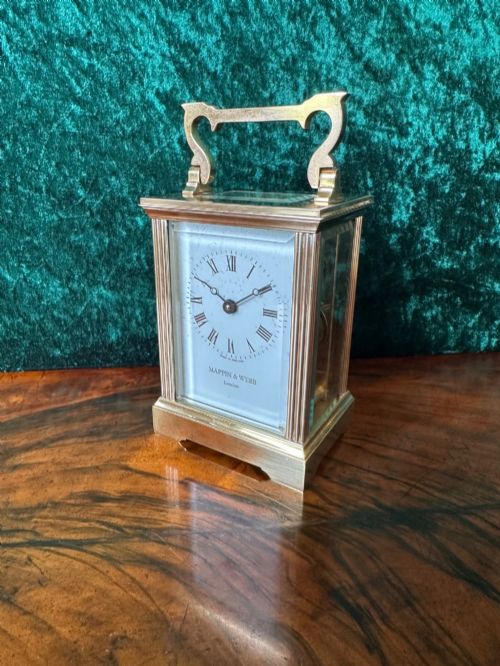
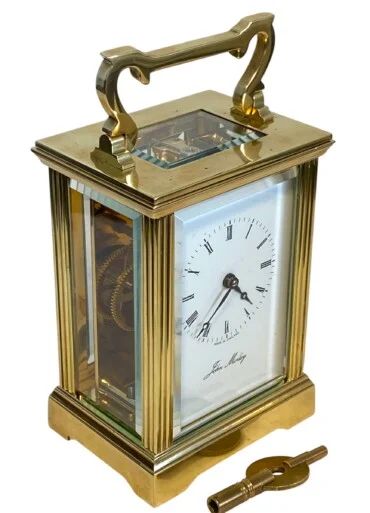
A bevelled glass carriage clock is a portable mechanical timepiece enclosed in a metal frame with angled glass panels that display the internal movement. These objects originate primarily from French and British workshops spanning the nineteenth and early twentieth centuries.
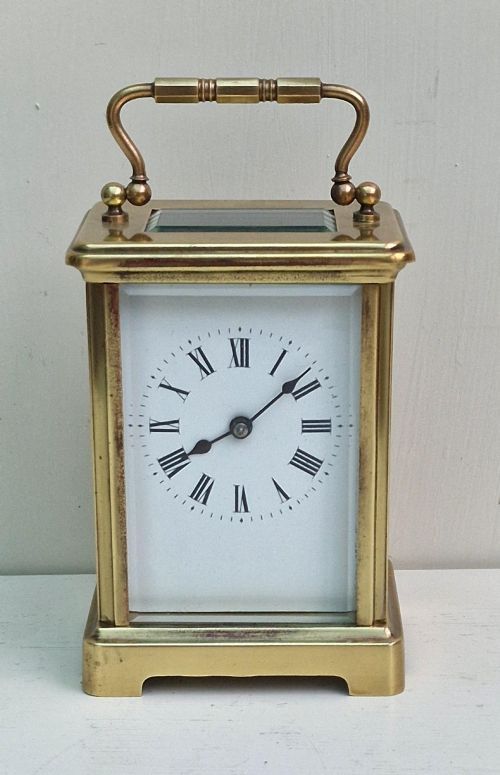
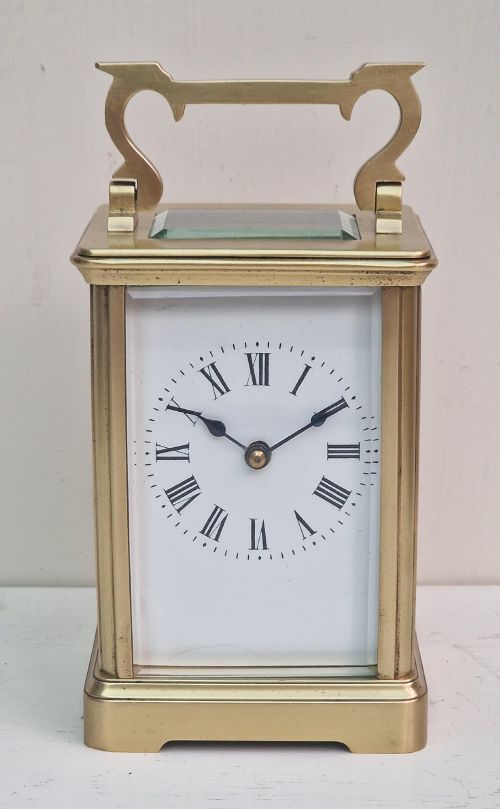
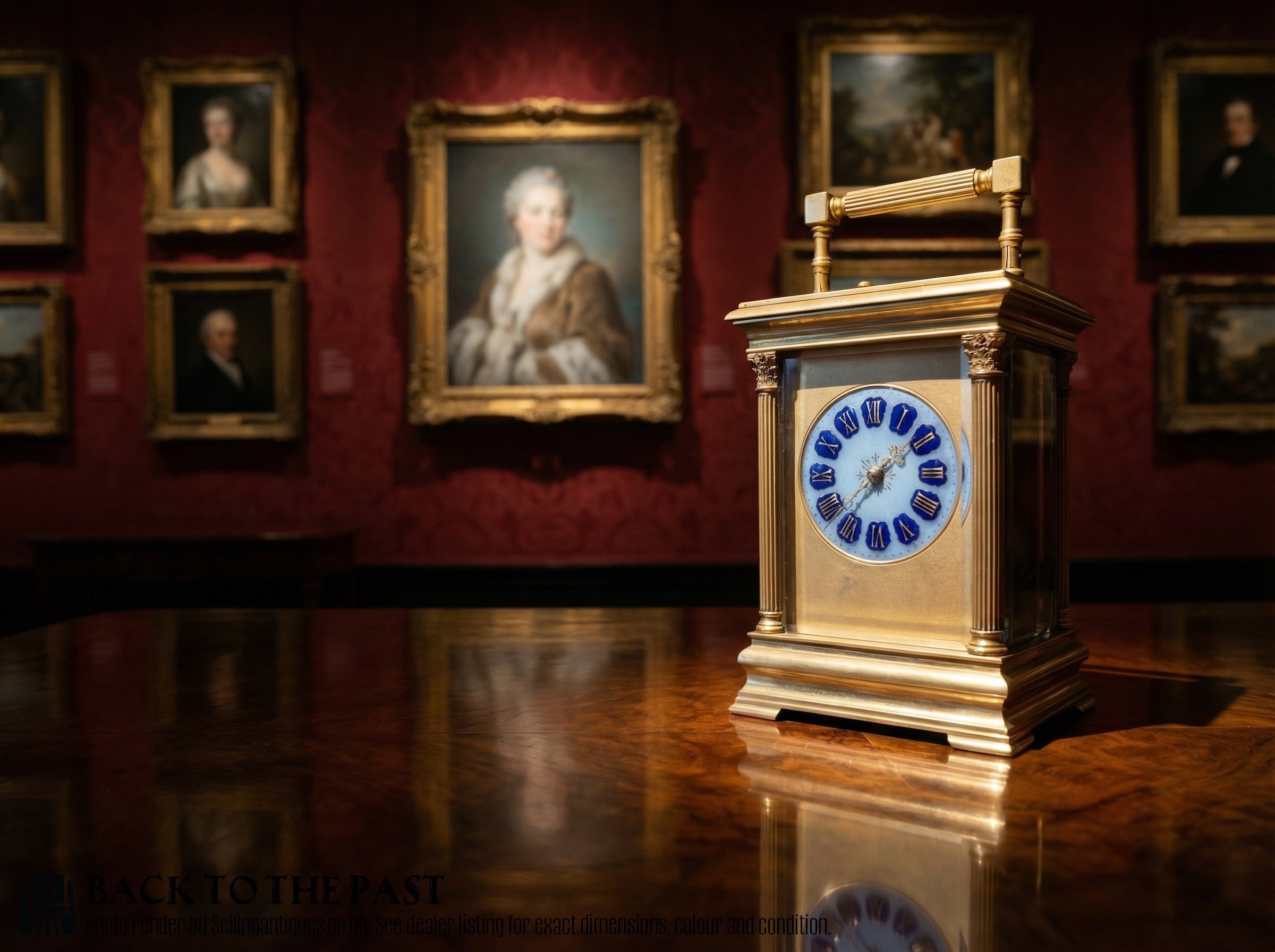
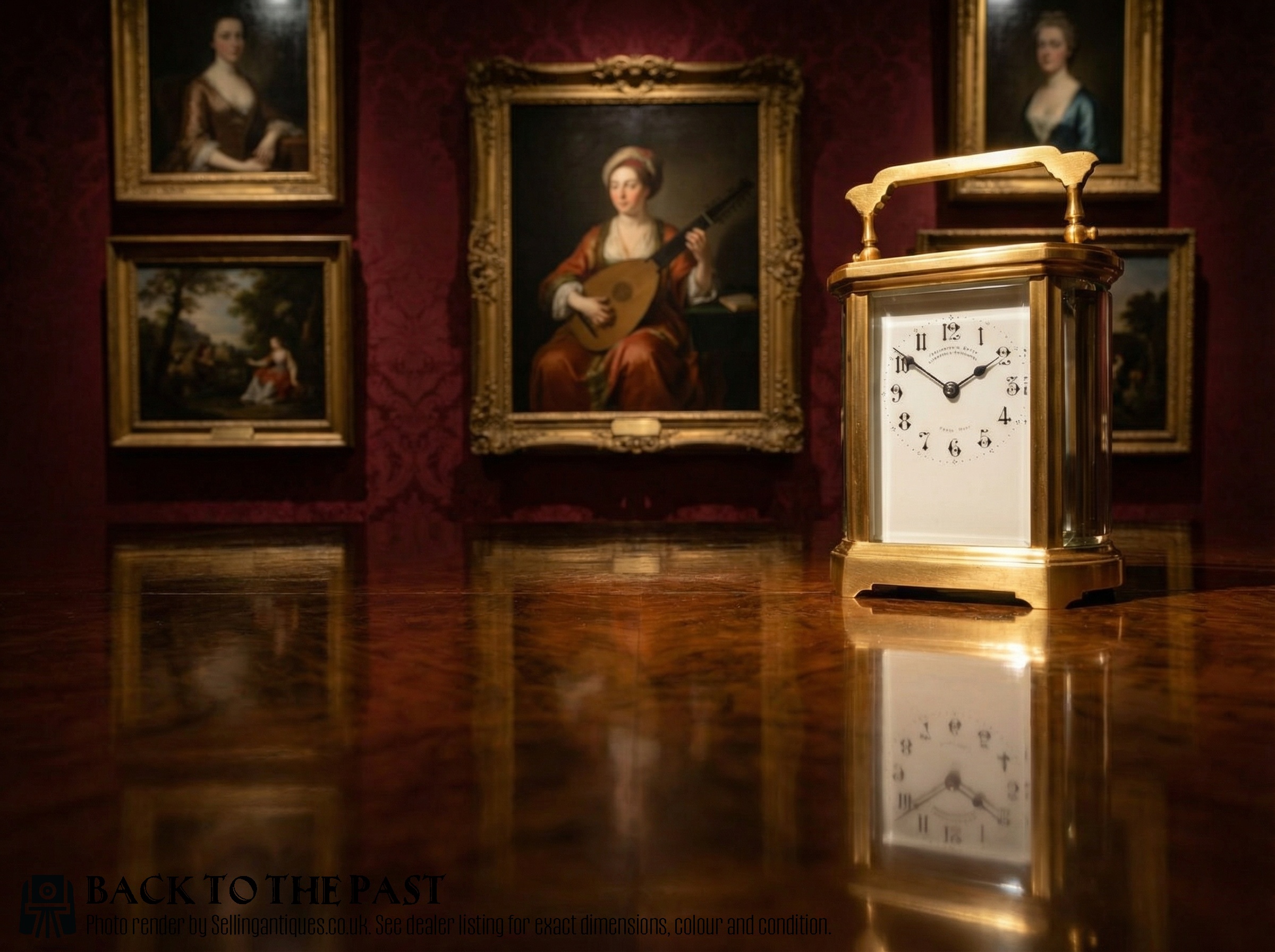
The version most commonly encountered on this page is the French brass carriage clock from the Victorian era or around nineteen hundred. These pieces often feature white enamel dials, swing handles, and heavy brass or gilt brass cases designed for travel or domestic placement.
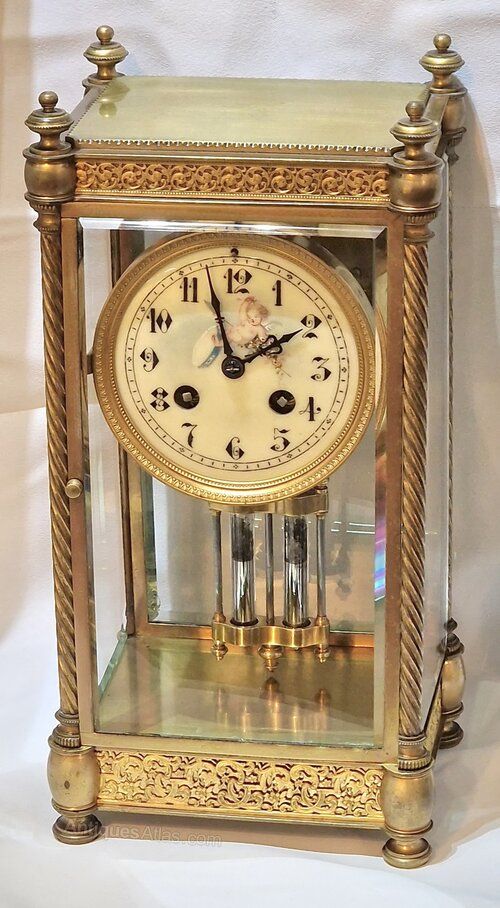
Listings also include related forms such as four glass mantel clocks, serpentine cased timepieces, and specialist models with striking, repeating, or alarm mechanisms. The materials consistently revolve around brass, gilt brass, steel, and glass, sometimes accompanied by leather travelling cases.
How they were made
Makers constructed these clocks using heavy cast or sheet brass frames, often finished with fire gilding or polished surfaces to house the intricate steel gear trains. The distinctive windows consist of thick glass panes with hand-ground bevelled edges fitted tightly into the metal apertures.
Dials were typically formed from white enamel fired onto copper backing plates, painted with Roman or Arabic numerals and fitted with delicate blued steel hands. Mechanical components including escapements, balance wheels, and strike or repeat mechanisms were meticulously hand-fitted by skilled horologists.
Bevelled Glass Carriage Clock Retail Price Guide 2026
Typical asking prices for bevelled glass carriage clock among the pieces listed under this phrase on Sellingantiques today, from the lower quarter to the upper quarter. They describe what is for sale here now, not the wider market.
Materials recorded across the inventory include brass, gilt brass, steel, leather, enamel, and thick bevelled glass.
What varies in quality
The standard of a bevelled glass carriage clock is defined by the weight and casting quality of its brass case, alongside the complexity of its movement. Simpler timepieces contrast with elaborate examples featuring quarter striking, chiming functions, or intricate engraved gilt decoration on the brass frame.
Hand-finished dial execution and the inclusion of signed movements by notable makers elevate an example above standard production pieces. Furthermore, the crispness of the glass bevelling and the preservation of original gilding and enamel contribute significantly to the standing of the object.
Mappin and Web·John Morley·Duverdrey and Bloquel·Samuel Marti et Cie·Drocourt
The Bevelled Glass Carriage Clock Glossary
- Carriage clock
- A portable spring-driven timepiece originally built for travellers during the nineteenth century. These clocks usually feature a hinged handle on top and heavy glass panels.
- Bevelled glass
- Glass panes featuring an angled edge ground along the perimeter. This technique adds depth and catches the light when fitted into metal clock cases.
- Gorge case
- A distinct stepped architectural brass case style commonly found on French carriage clocks. The top and bottom sections feature stepped mouldings.
- Repeater
- A complication mechanism that sounds the hours and quarters when a button or lever is pressed. This allowed owners to check the time in darkness.
- Four glass clock
- A mantel clock design enclosed entirely by glass panels on all four sides and the top. This style exposes the movement and pendulum to view from every angle.
Bevelled Glass Carriage Clock: Frequently Asked Questions
What is a bevelled glass carriage clock?
A bevelled glass carriage clock is a portable mechanical timepiece featuring thick glass panels set into a brass or gilt brass frame. They were originally designed for travel by coach.
Today these objects serve as decorative mantel or desk timepieces, prized for their visible gear trains and polished metal cases.
How do repeating carriage clocks work?
Repeating carriage clocks contain an additional mechanism that chimes the last hour and quarters on demand. Pressing a button on the top of the case activates this striking sequence.
This feature allowed nineteenth century owners to ascertain the time during the night without needing to light a candle.
How do I date a carriage clock?
Dating relies upon stylistic cues, case proportions, dial designs, and maker marks stamped on the movement backplate. Victorian and late nineteenth century examples typically show robust brass framing and white enamel dials.
Later pieces from the early twentieth century often display more streamlined architectural forms or simplified dial layouts.
Where were these clocks made?
The majority of carriage clocks on the market were produced in French workshops, particularly in Paris and Saint Nicolas d'Aliermont. British makers and retailers also produced or retailed high quality models.
French pieces often utilised platform escapements and gong strikes, while British variants featured distinct fusee movements.