

Antique French Desk Clock
These antique french desk clock pieces bring precise timekeeping and classical form together on a study table or mantelpiece.
Antique French Desk Clock
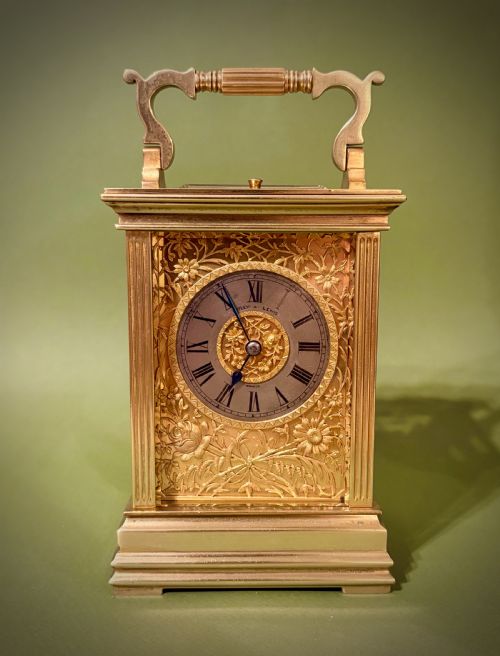
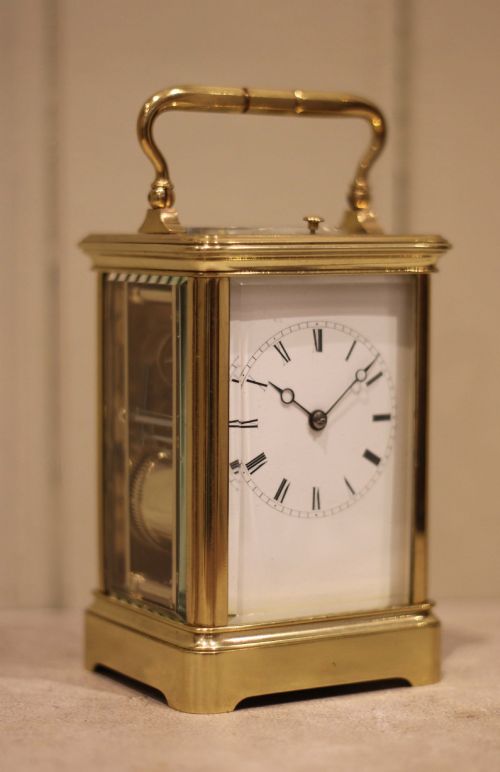
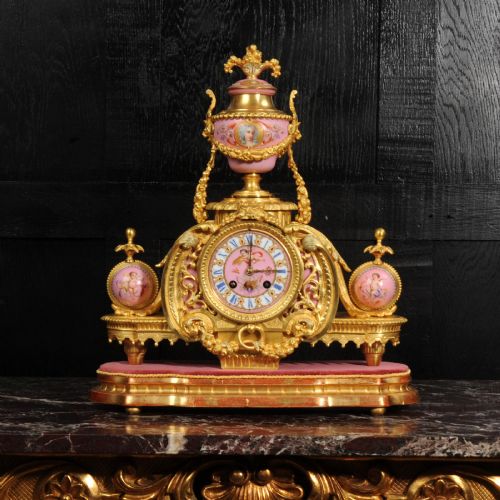
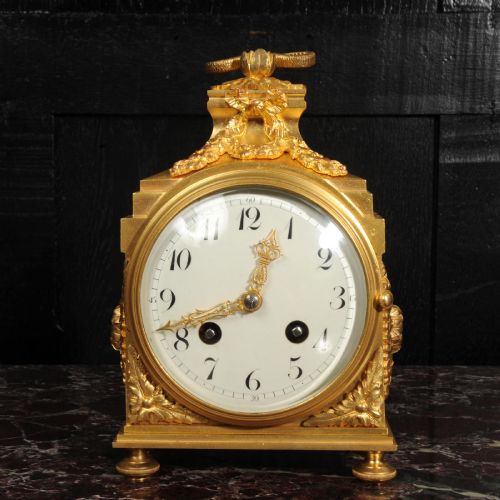
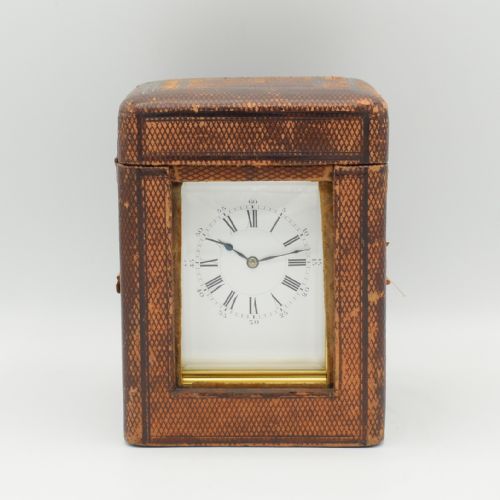
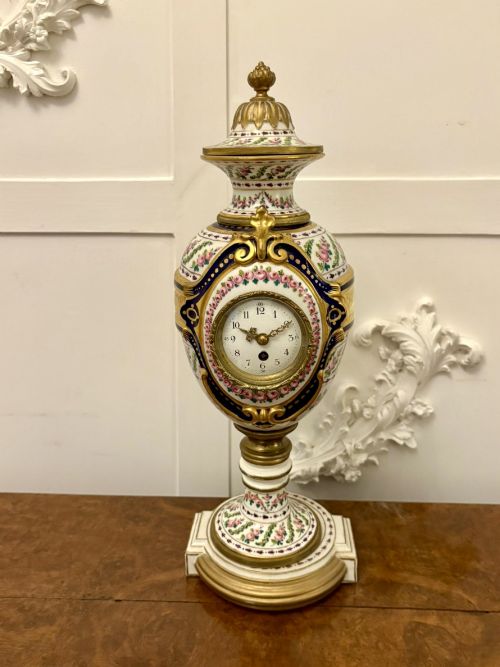
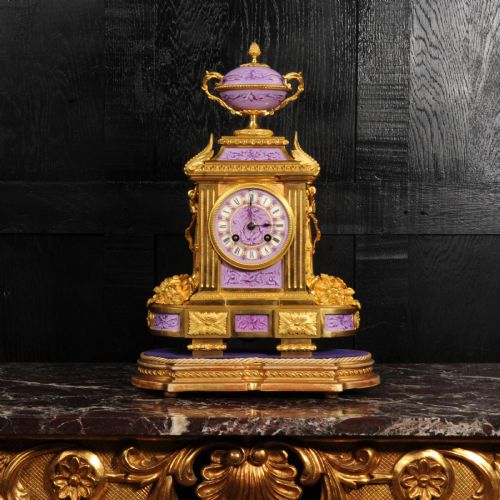
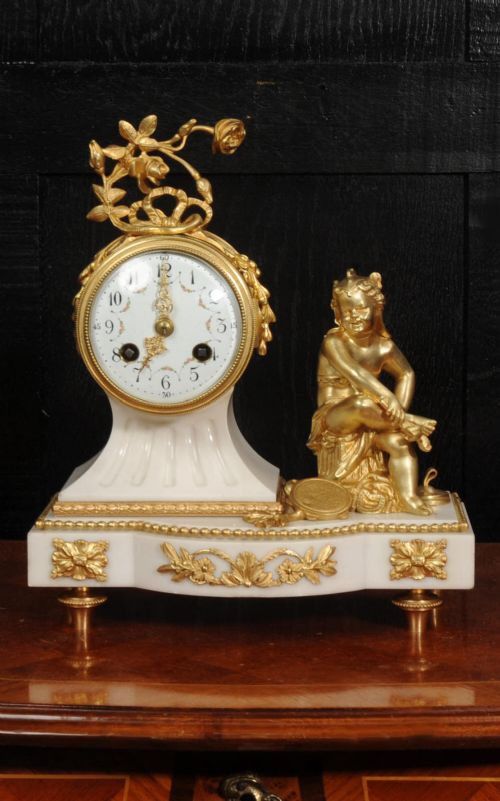
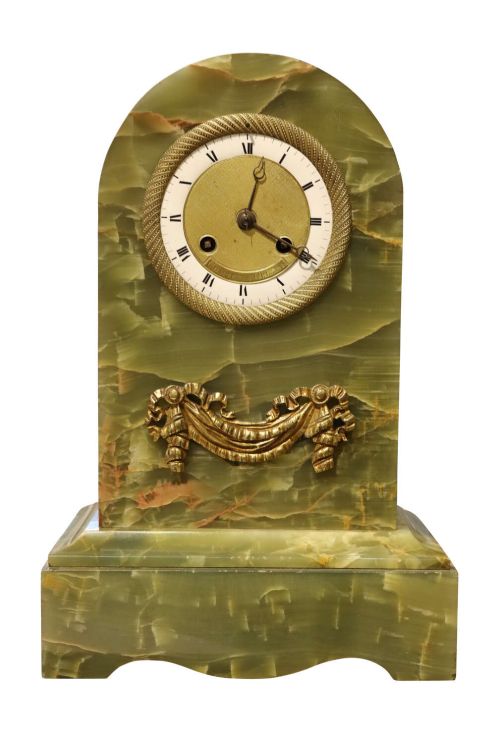
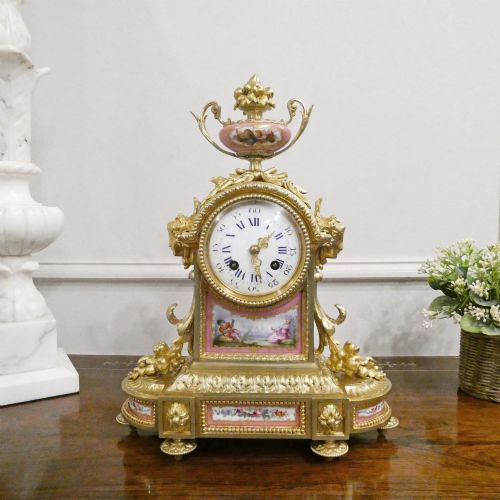
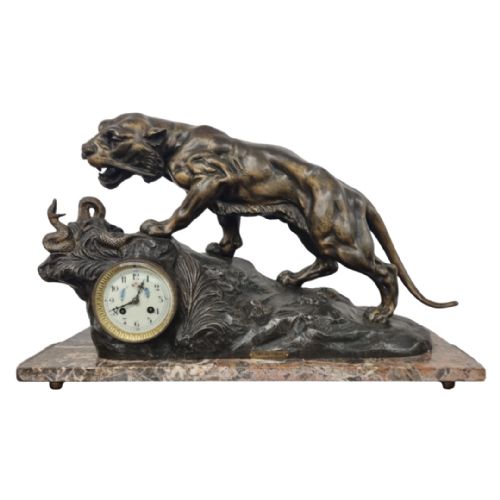
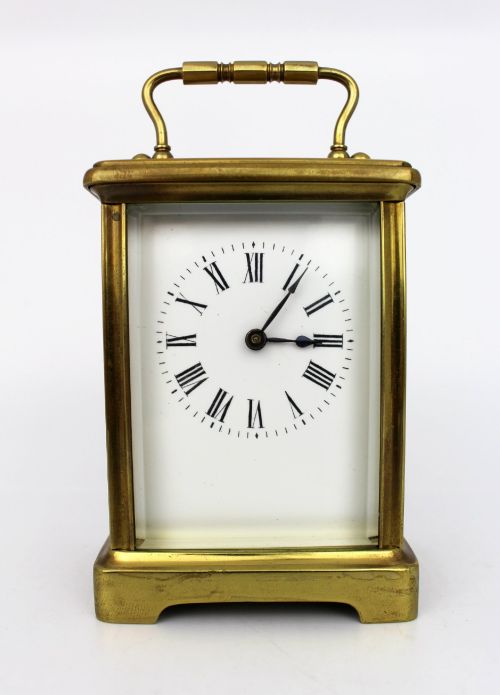
When you search for an antique french desk clock, you encounter a variety of forms spanning the nineteenth and early twentieth centuries, including carriage clocks, smaller mantel timepieces and specialised desk companions. The majority on offer date from the Victorian period through to the Art Deco era, encompassing styles from French Empire and Rococo Revival to clean geometric lines. These pieces range from robust brass carriage designs with travel cases to elaborate porcelain-mounted ormolu works intended strictly for static display.
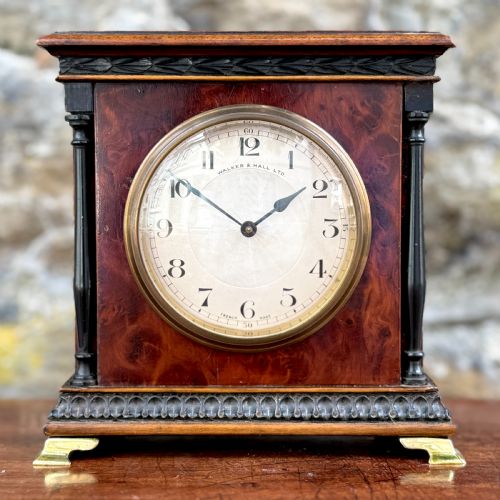
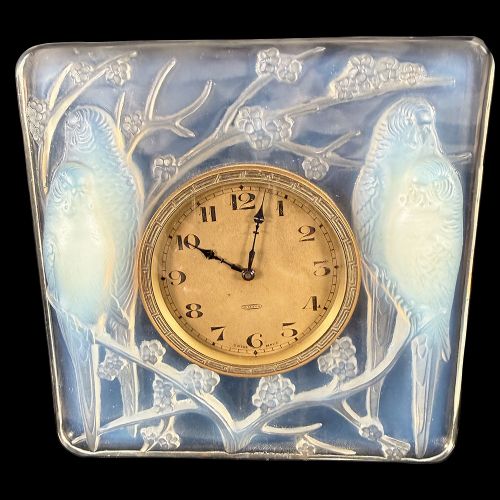
Makers and workshops from Paris and the regions stamped their movements, producing everything from simple timepieces to repeating carriage clocks that chimed the hours and quarters. Alongside traditional brass and glass carriage formats, you find architectural marble cases, mahogany drumhead bodies and occasional modernist experiments in bakelite or opalescent glass. Collectors often meet items featuring hand-painted ceramic panels, enamel dials, or gilt bronze mounts reflecting classical mythologies and floral motifs.
Materials and construction
Foundries and horologists relied heavily on cast brass, gilt bronze, and ormolu to construct the structural housings, often combining them with white enamel dials and bevelled glass panels. Ormolu involved applying finely ground high-carat gold to a bronze base through mercury amalgamation or electroplating, yielding a rich, lasting lustre that defined nineteenth-century luxury goods.
Cabinetmakers and bronze-workers integrated decorative stones such as green onyx, rouge marble and porcelain plaques from Sèvres into the metal frameworks. Movements were mechanically driven by spring barrels and gear trains, requiring precise hand-fitting of escapements, balance wheels and striking mechanisms by skilled ateliers.
Antique French Desk Clock Retail Price Guide 2026
Typical asking prices for french desk clock among the pieces listed under this phrase on Sellingantiques today, from the lower quarter to the upper quarter. They describe what is for sale here now, not the wider market.
Distinguishing quality across the range
The division between standard production and top-tier execution rests on the crispness of the bronze casting and the depth of the gilding. Superior examples exhibit hand-chased surface details where craftsmen manually refined the cast metal, whereas lesser pieces retain soft edges and flat, unadorned surfaces.
Movement complexity and signature marks separate ordinary pieces from collector items. Clocks featuring full striking and repeating work, jewelled escapements, or signed movements by established makers demonstrate a higher grade of horological ambition and mechanical longevity.
Achille Brocot·Henri Jacot·Japy Freres·Paul Sormani·R Lalique·Vincenti et Cie
The Antique French Desk Clock Glossary
- Ormolu
- Gilded bronze produced by applying gold leaf or a gold-mercury amalgam to a bronze object. The technique creates a durable, golden finish characteristic of decorative French metalwork.
- Carriage clock
- A portable spring-driven clock designed for travel, featuring a brass case with glass panels and a folding handle on top. These typically house platform escapements visible through the upper glass.
- Repeating clock
- A mechanical clock equipped with a repeating mechanism that chimes the last hour or quarter-hour when a cord or lever is pulled. This function allowed users to check the time in darkness.
- Pendule d'officier
- A military-style desk or travel clock popular in France, often featuring a robust brass case and a distinctively shaped top handle. These represent an early evolution of the portable timepiece.
- Garniture
- A set of decorative matching objects, such as a mantel clock accompanied by a pair of urns or candelabra. They were designed to sit together as a unified decorative scheme on a mantel or sideboard.
Antique French Desk Clock: Frequently Asked Questions
How do I wind a carriage clock?
Use the dedicated winding key on the underside or backplate of the clock, turning it gently until resistance indicates the mainspring is fully tensioned. Avoid over-winding, as this can strain the internal spring mechanism.
Ensure you turn the key in the correct direction specified for the time train or striking train. Regular, careful winding preserves the longevity of the movement.
What is the difference between a clock and a timepiece?
In horological terms, a timepiece indicates the hours and minutes without any striking or chiming mechanism. A clock includes additional gear trains that sound the hours or quarters on bells or gongs.
When reading listings, a timepiece will lack the extra winding arbors or strike levers visible on a striking clock. Both share the same fundamental escapement and dial layout.
Where were these clocks placed historically?
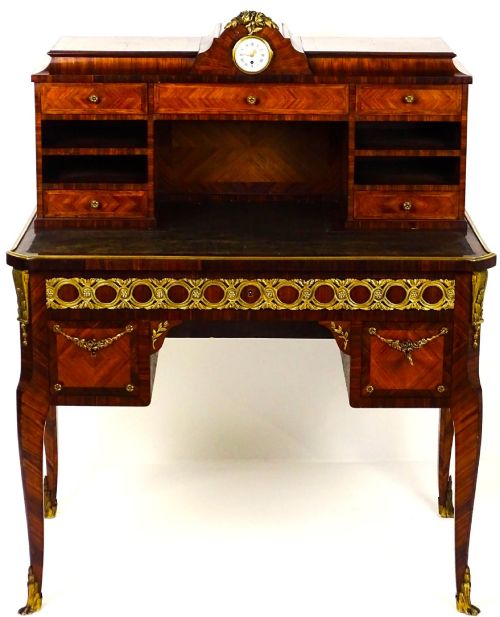
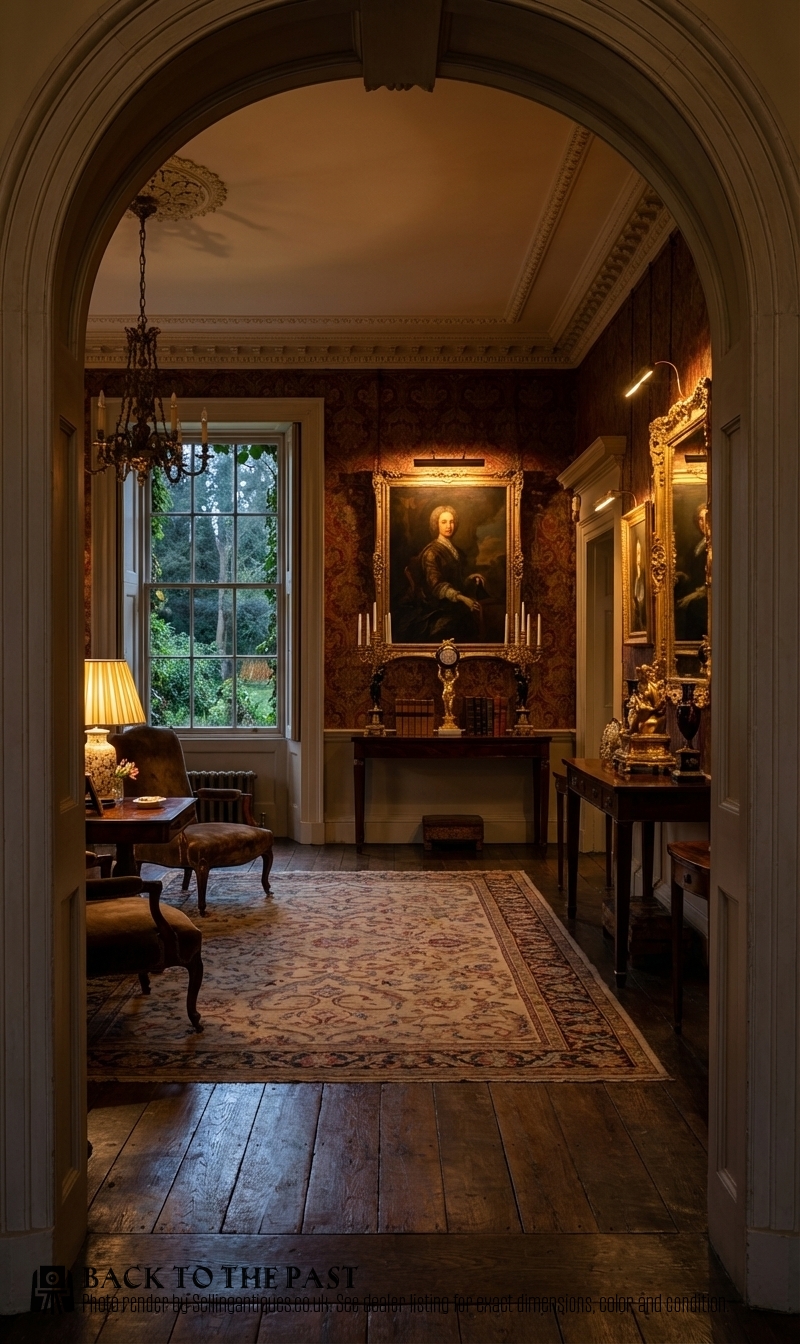
Owners positioned desk clocks and smaller timepieces on writing tables, boudoir dressers, or library desks where they could be easily consulted during daily correspondence. Larger mantel clocks served as architectural centerpieces on drawing room chimney pieces.
Portable carriage clocks travelled with owners in fitted leather cases, moving between bedchambers and carriages. Their design combined utility with portability for the nineteenth-century traveller.