

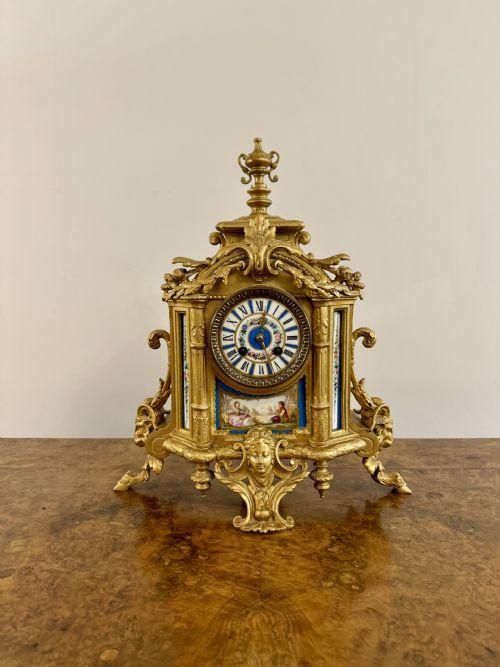


Gilt Bronze Mantle Clock
A gilt bronze mantle clock brings the heavy presence of nineteenth-century French and English domestic interiors straight onto a modern mantelpiece.
Gilt Bronze Mantle Clock
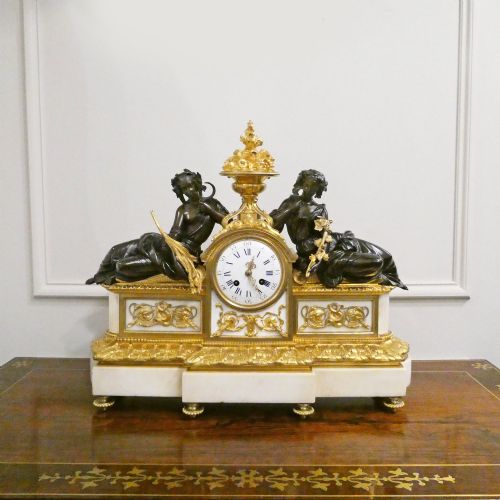
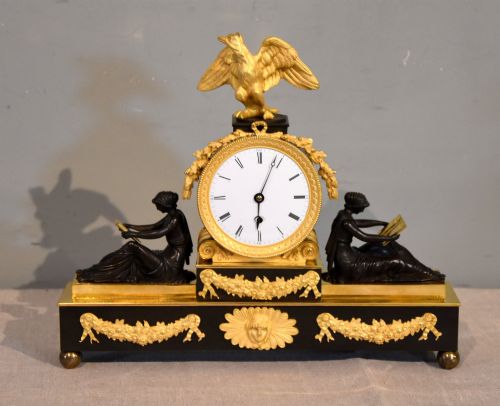
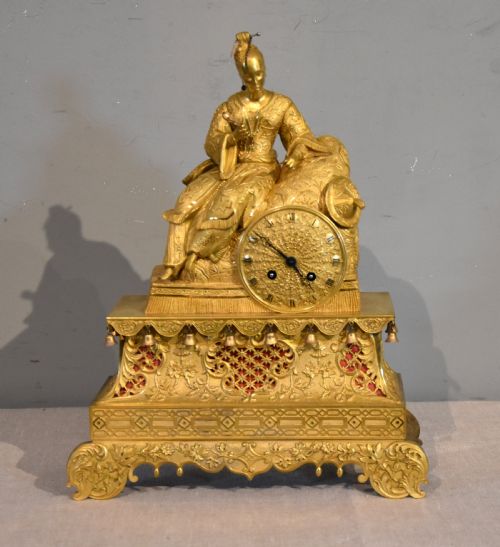
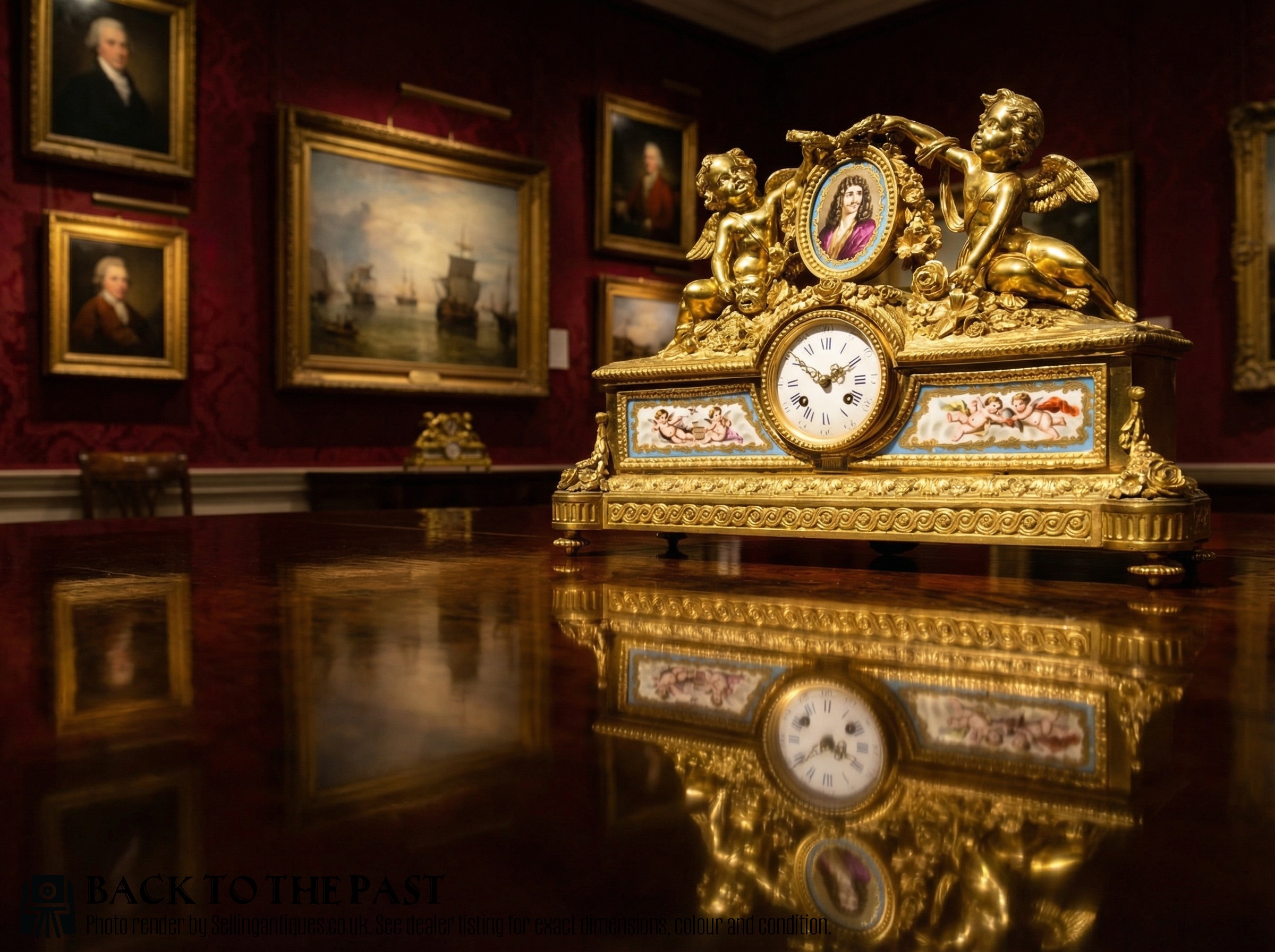
A gilt bronze mantle clock is a heavy domestic timekeeper driven by mechanical movements and housed in gilded metalcases, frequently paired with white marble bases or porcelain dials. Collectors searching for a gilt bronze mantle clock will find that the vast majority originate from nineteenth-century French workshops, spanning styles from the restrained Empire and Charles X periods to exuberant Rococo and Louis XVI revivals.
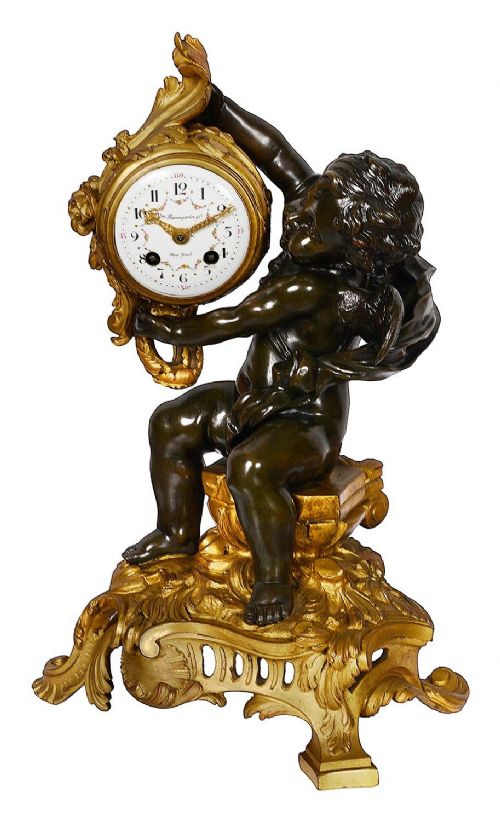
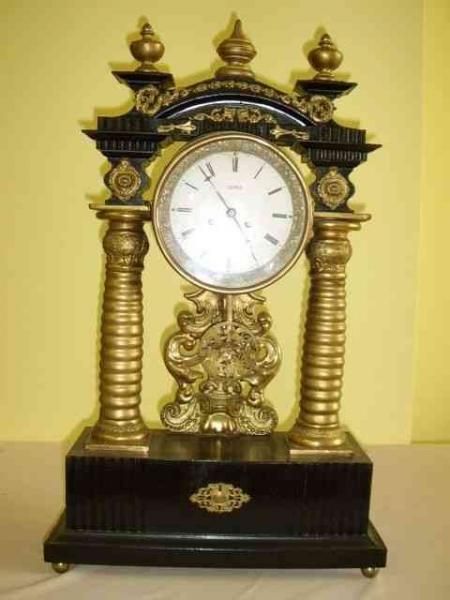
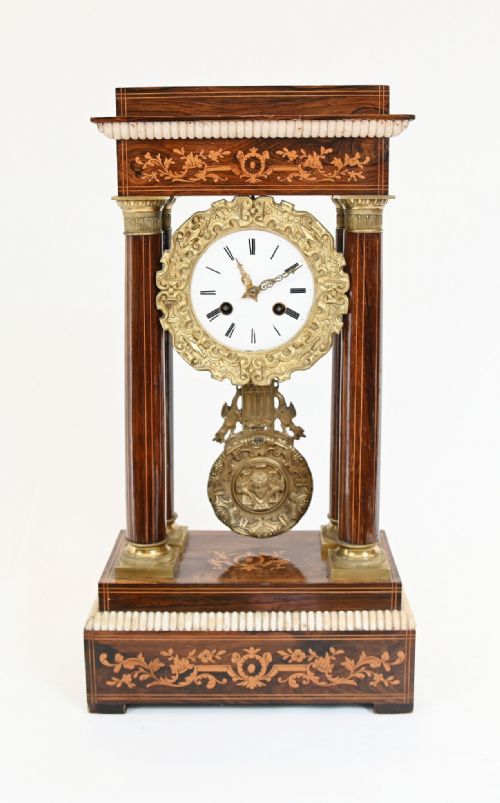
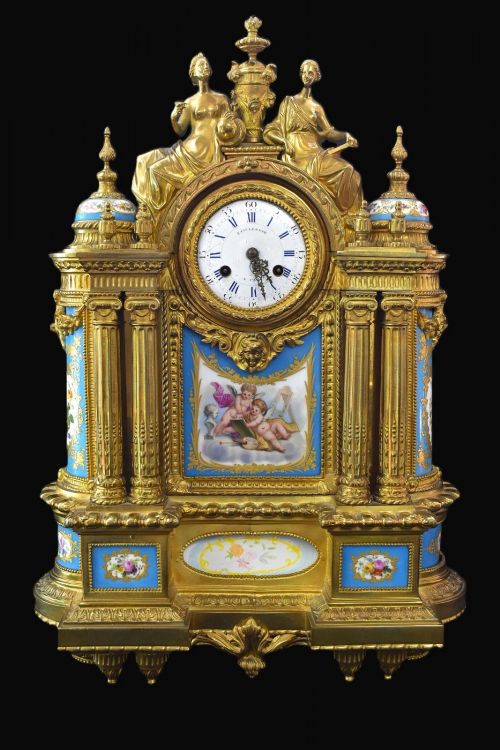
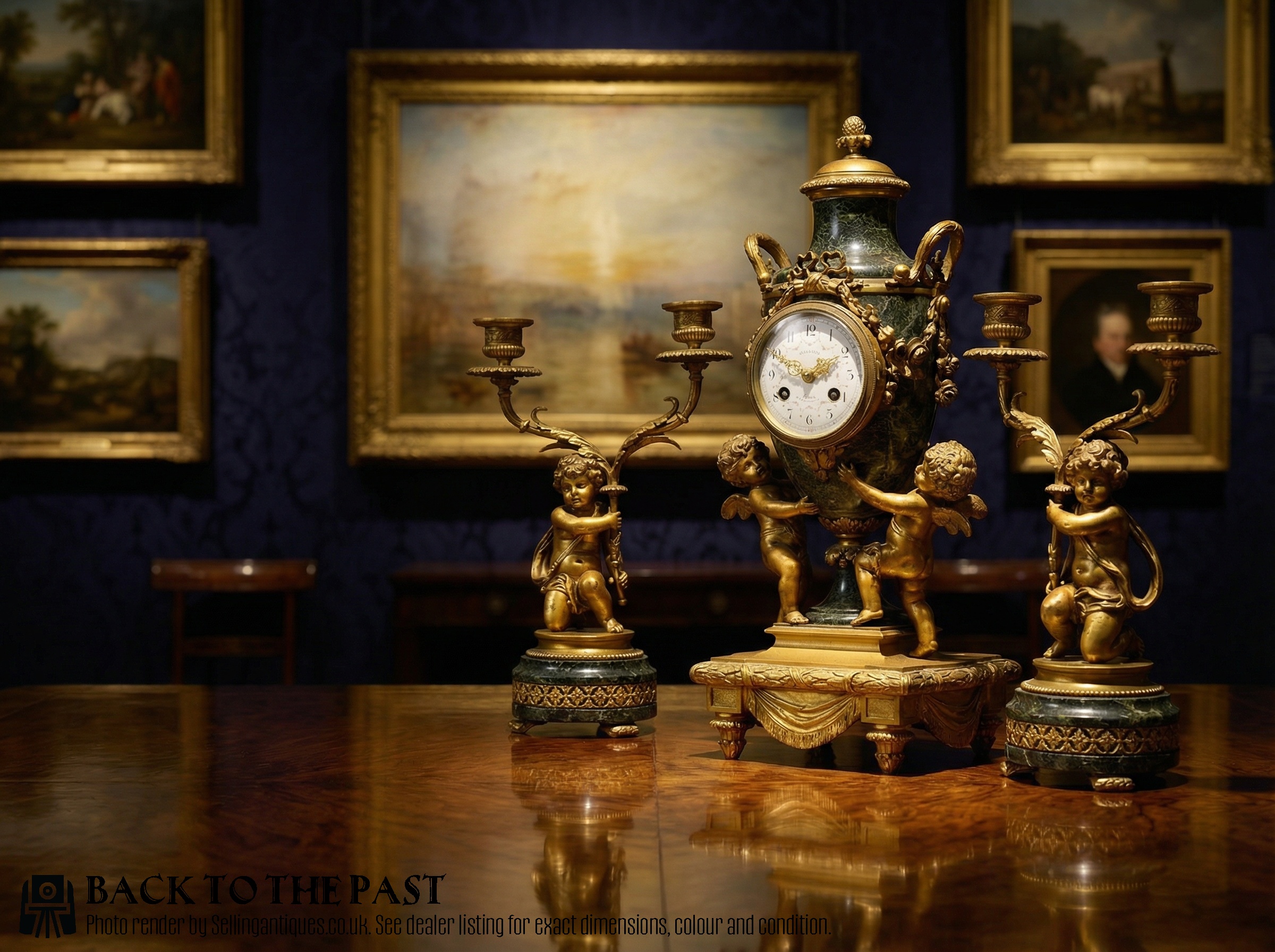
The format ranges from compact drum-head designs and four-glass cases to architectural portico structures and elaborate figural compositions featuring cherubs or knights. Many examples arrive complete with matching side garnitures or candelabras, forming three-piece sets designed for central placement on a fireplace or console table.
Materials and construction
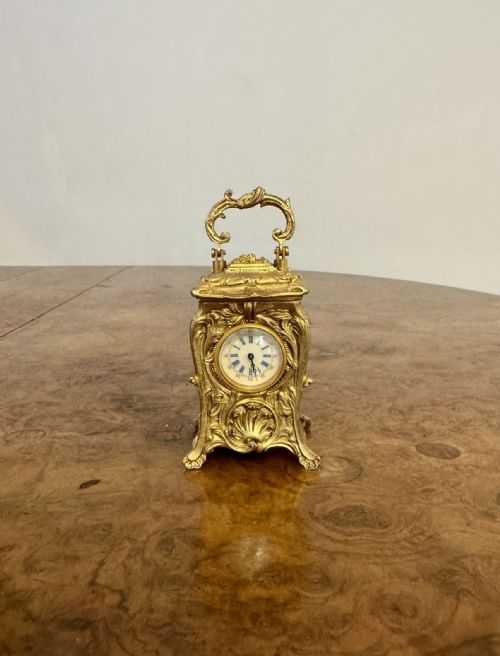
Maker workshops built these cases primarily from cast bronze or brass, applying mercury gilding or modern electroplating to create the characteristic golden surface finish known as ormolu. These metal mounts were frequently combined with contrasting white or black marble, cut crystal glass panels, and hand-painted porcelain plaques depicting figures or floral scenes.
Movements inside are predominantly mechanical eight-day mechanisms, often utilising pendulum regulation, silk suspension threads, or strike trains that ring bells or gongs on the hour and half-hour. Dials combined white enamel chapter rings with delicate hands, protected behind hinged glass bezels.
Gilt Bronze Mantle Clock Retail Price Guide 2026
Typical asking prices for gilt bronze mantle clock among the pieces listed under this phrase on Sellingantiques today, from the lower quarter to the upper quarter. They describe what is for sale here now, not the wider market.
Materials recorded across current and archive listings include ormolu, gilt bronze, white marble, Sevres porcelain, and cut crystal.
Distinctions in quality
The reputation of the maker movement also dictates standing, with signed Parisian movements by firms such as Japy Freres, Vincenti, or Raingo Freres commanding greater respect than anonymous mass-produced equivalents. The integration of materials defines the tier, where heavy solid marble bases and genuine hand-painted Sevres porcelain elements outrank lighter brass-plated substitutes.
Vincenti·Etienne Lenoir·Japy Freres·Breguet·Raingo Freres·Gay Vicarino and Co
The Gilt Bronze Mantle Clock Glossary
- Ormolu
- Gilded bronze, derived from the French term ouest moulu meaning ground gold. It describes the brilliant gold-coloured finish applied to bronze mounts on nineteenth-century clock cases.
- Garniture
- A set of matching decorative objects designed to be displayed together on a mantelpiece. In clock collecting, this typically pairs a central timepiece with matching candelabras or urns.
- Portico clock
- An architectural style of clock featuring twin side columns supporting a horizontal entablature that houses the movement. They frequently date from the Empire and Charles X periods.
- Champleve
- An enamelling technique where troughs or cells are hollowed out of the metal surface and filled with vitreous enamel colours before firing. It appears on brass and gilt metal clock bezels and bezels.
- Silk suspension
- An early method of hanging the pendulum from a fine ribbon of woven silk rather than a steel spring. This delicate mechanism is typical of earlier nineteenth-century French movements.
Gilt Bronze Mantle Clock: Frequently Asked Questions
How do I wind a mechanical mantle clock?
Winding requires inserting a key into the winding arbours on the enamel dial and turning gently until resistance increases. Care must be taken not to overwind the mainspring.
Most traditional movements run for eight days per wind, requiring a steady routine and occasional professional calibration to maintain accurate timekeeping.
Are these clocks suitable for daily use?
These historical timepieces operate reliably when properly serviced, though their striking mechanisms and delicate suspensions require a stable, vibration-free surface. They function well as daily clocks if placed away from direct drafts and sudden temperature shifts.
Many examples benefit from professional cleaning and oiling to ensure the gear trains run smoothly without wearing down original bronze components.
How can I tell the period of a clock?
Dating relies on combining the stylistic clues of the bronze case, such as Empire symmetry versus Rococo asymmetry, with signatures stamped on the backplate of the brass movement. Case materials like white marble or Boulle marquetry also point towards specific decades of manufacture.
Comparative study of dial typography, hands, and decorative mounts helps narrow down whether a piece belongs to the early nineteenth century or the later Victorian revival eras.