
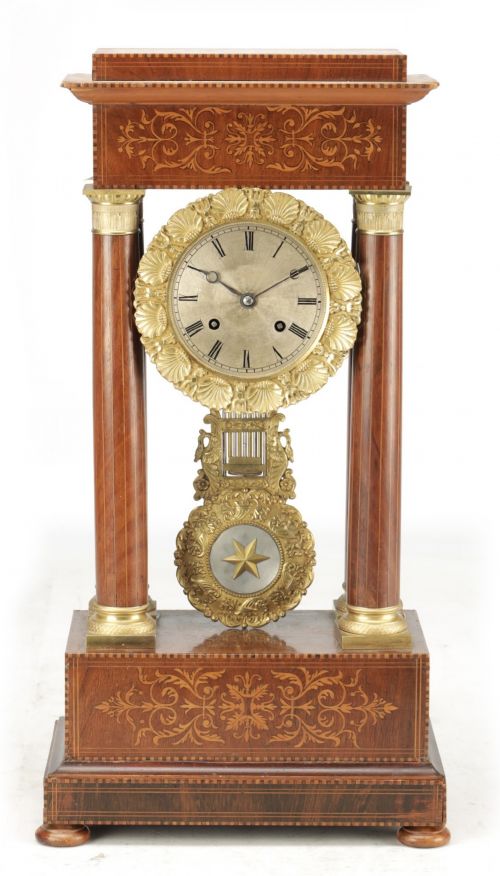
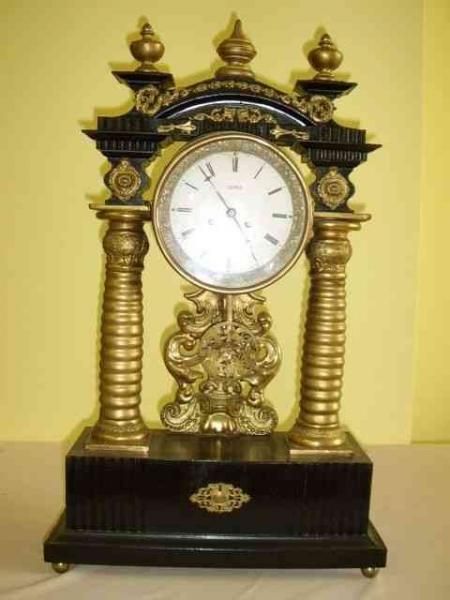
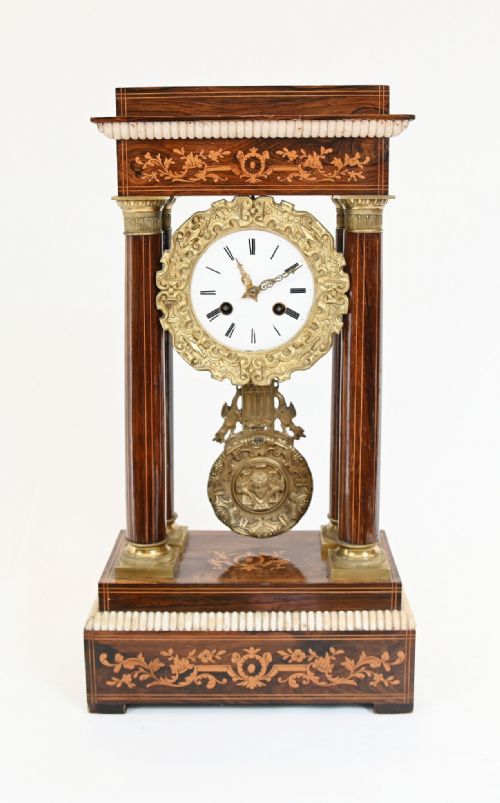

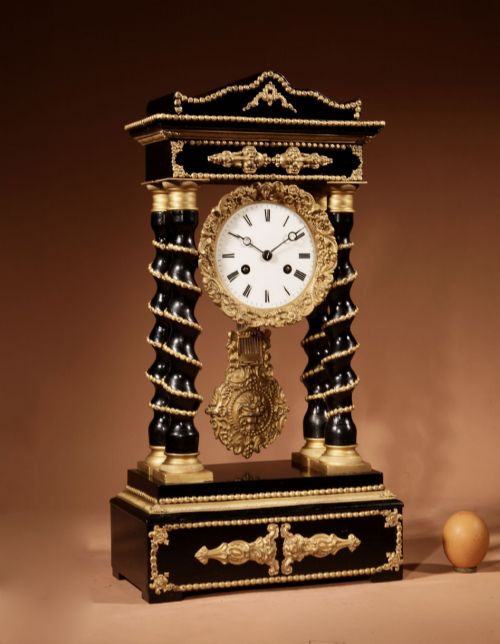





Antique Column Clock
An antique column clock brings architectural dignity to a mantelpiece, combining precise horology with classical proportion.
Antique Column Clock
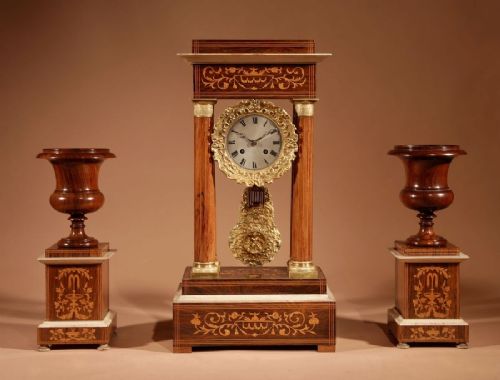
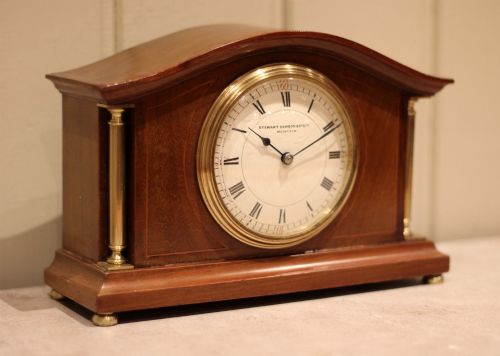
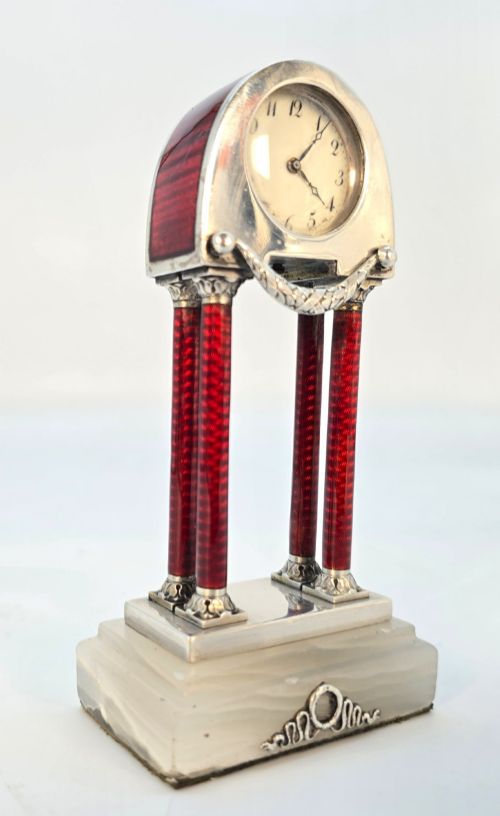
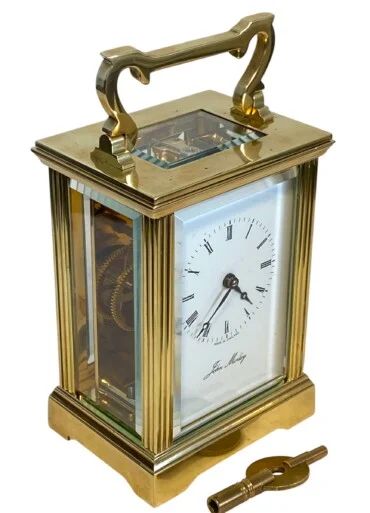
When you search for an antique column clock, you encounter architectural timepieces designed around vertical supports, most frequently expressed as portico clocks, mantel clocks with marble columns, and carriage clocks with corner pillars.
The selections span the eighteenth century through the early twentieth century, with French and Victorian examples dominating the available forms.
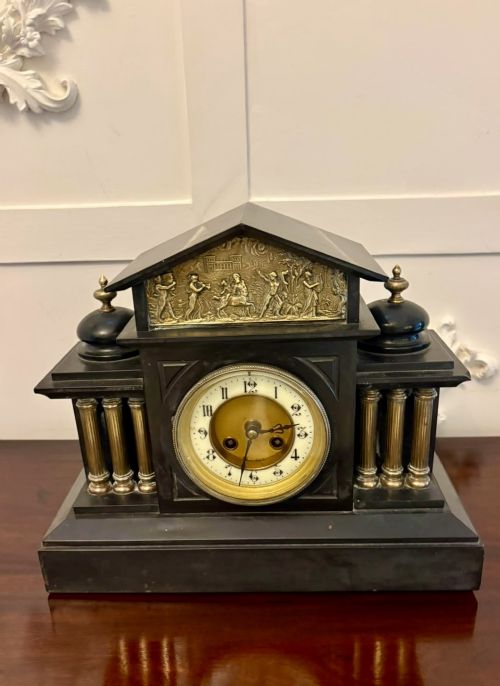
Makers housed these movements within mahogany, rosewood, ebonised wood, black marble, and ormolu structures that draw heavily on neoclassical and Empire design vocabulary.
How they were made
Horologists utilised heavy brass and gilt bronze for the movements, bezels, and decorative mounts, pairing them with white enamel dials and delicate hands.
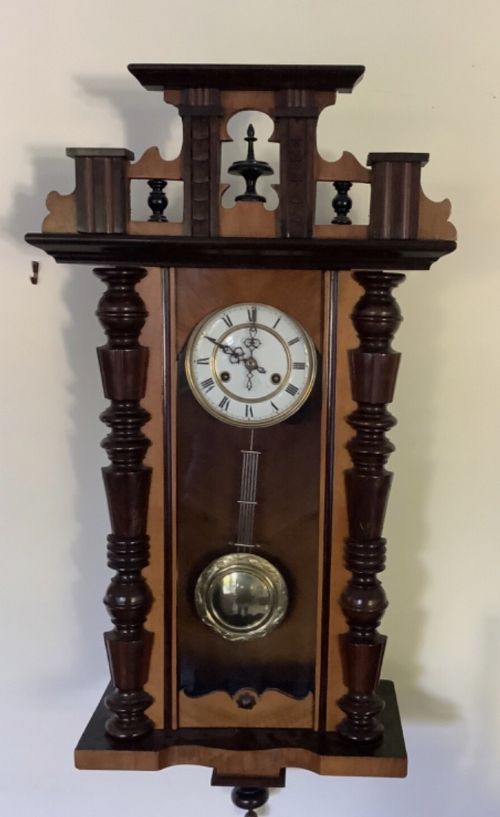
Cabinetmakers constructed the wooden housings using rosewood, mahogany, and ebonised timber, often incorporating delicate lemon wood inlay or fruitwood marquetry.
Stonemasons shaped black marble and faux marble into substantial architectural plinths and columns, frequently enclosing delicate French portico movements beneath glass domes.
Antique Column Clock Retail Price Guide 2026
Typical asking prices for column clock among the pieces listed under this phrase on Sellingantiques today, from the lower quarter to the upper quarter. They describe what is for sale here now, not the wider market.
What varies in quality
The refinement of the casting and gilding on bronze mounts separates standard production from exceptional pieces, as sharper chisel work indicates superior workshop standards.
The integrity of the dial, whether engine-turned metal or painted enamel, dictates visual success, alongside the complexity of the movement itself such as musical functions or grand sonnerie striking.
The choice of cabinet materials, from simple stained pine to finely figured rosewood with intricate stringing, marks the clear division between basic household timepieces and high-status salon clocks.
Georg Adam Scheid·John Morley·Philippes Paris·Baby and Jannings·Mappin and Webb·Delépine
The Antique Column Clock Glossary
- Portico clock
- A mantel clock featuring a distinct architectural frame supported by four or more columns, popular during the French Empire and Charles X periods.
- Garniture
- A set comprising a central clock accompanied by matching side ornaments such as vases or candelabra designed to sit together on a mantelpiece.
- Grand Sonnerie
- A sophisticated clock movement that strikes both the hours and the quarters automatically on every quarter hour.
- Ormolu
- Finely ground high-carat gold applied to a bronze base using a mercury amalgamation technique common in nineteenth-century French metalwork.
- Engine-turned
- A geometric decorative pattern mechanically engraved into metal dials or cases using a rose engine lathe.
Antique Column Clock: Frequently Asked Questions
How do I wind an antique column clock?
Most mechanical column clocks require a specific winding key inserted into the dial holes to tension the mainspring barrels every eight days. Care must be taken not to over-wind the mechanism beyond its natural resistance point.
Moving the hands requires gentle adjustment, typically only moving the minute hand clockwise depending on the specific escapement type fitted by the maker.
Where should I place a portico clock?
A portico clock requires a stable, level surface such as a mantelpiece or heavy sideboard to ensure the pendulum swings evenly and keeps accurate time. Placing them away from direct sunlight and drafts preserves the delicate wooden veneers and gilt finishes.
Many French portico examples were originally supplied with glass domes, which protect the suspended pendulum and intricate ormolu mounts from household dust.
What is the difference between a portico clock and a mantel clock?
A portico clock specifically utilises an open architectural structure with visible vertical pillars framing a suspended central pendulum. Standard mantel clocks usually enclose the movement entirely within a solid wooden, marble, or metal housing.
Both forms draw on neoclassical design, but the portico style emphasises open spatial geometry rather than a solid box form.
How can I tell a French nineteenth-century clock from an English one?
French makers during the nineteenth century favoured ornate ormolu, black marble, and architectural portico arrangements with complex striking movements. English examples from the same era often prioritise restrained mahogany cases and reliable fusee movements.
Examining the backplate of the movement usually reveals stamps or signatures that indicate the Parisian or London workshop of origin.