



Antique Glass Dome Clock
An antique glass dome clock brings the mesmerising motion of a mechanical movement into your interior under a protective hand-blown cover.
Identifying an antique glass dome clock
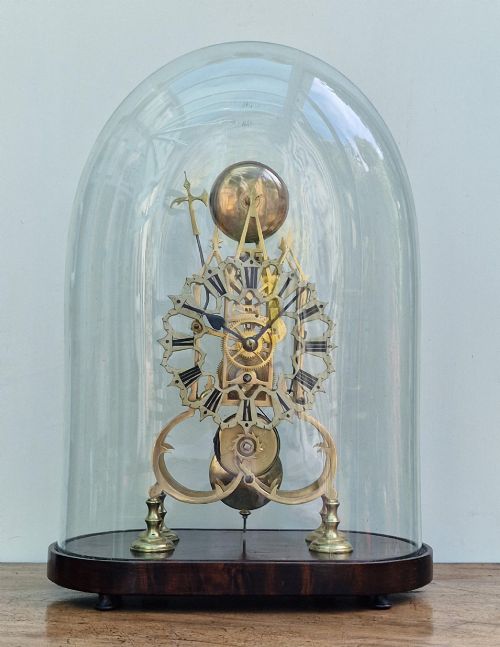
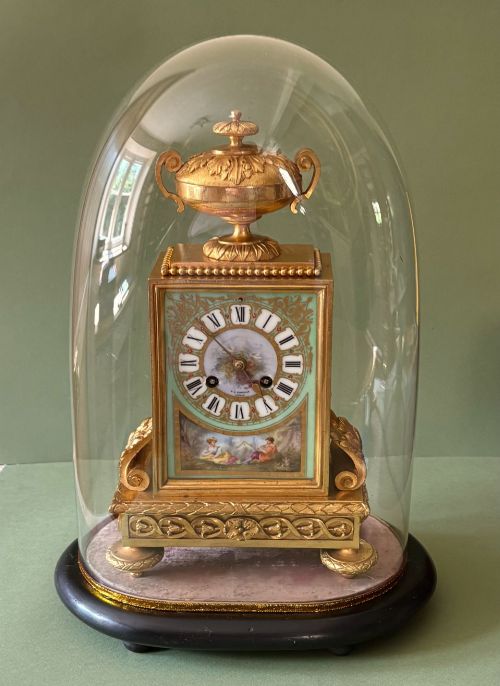
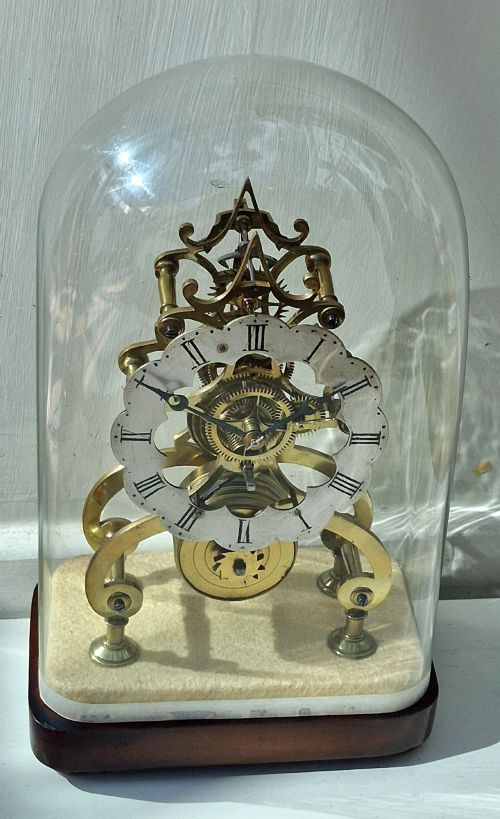
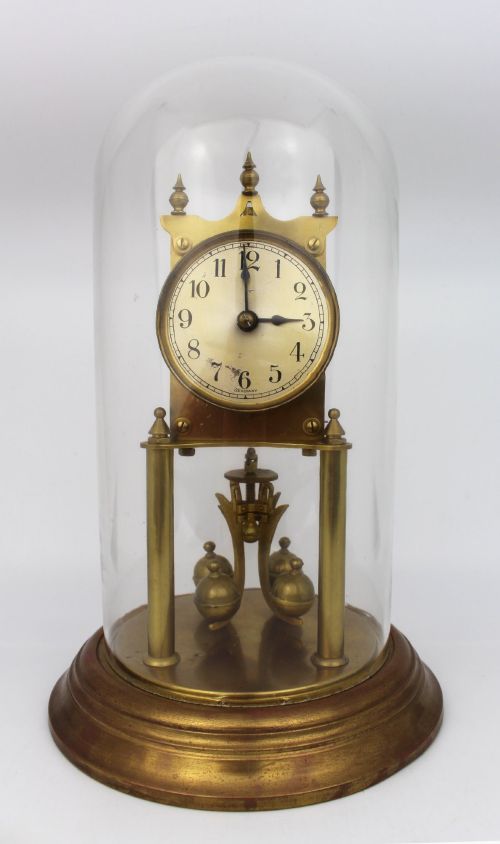
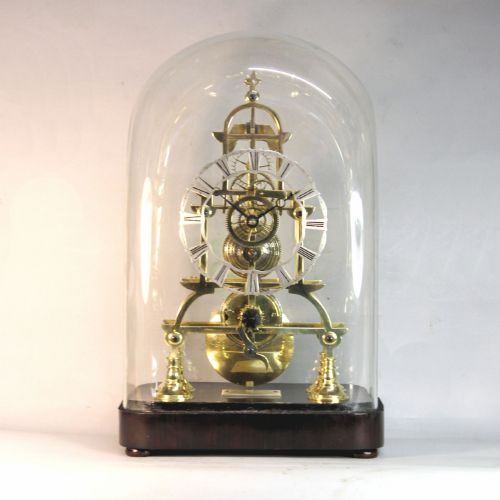
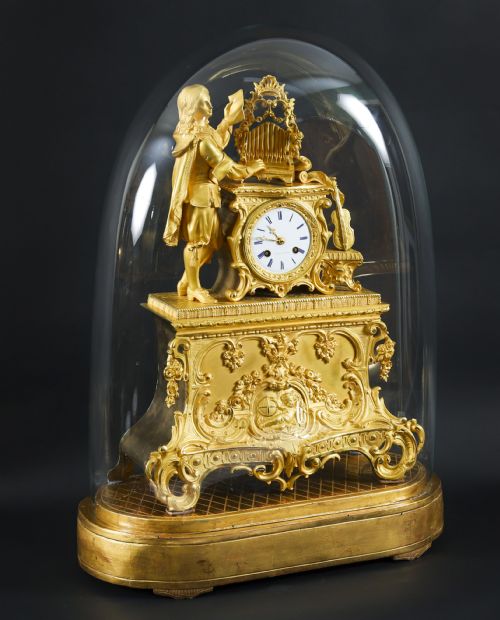
When you search for an antique glass dome clock, you encounter timepieces designed to sit beneath a clear protective cover, keeping dust away from delicate mechanisms. The selection encompasses Victorian torsion anniversary clocks, French mantel clocks with porcelain plaques, and skeleton clocks housed on ebonised wood bases.
Most examples originate from the nineteenth century, spanning French Rococo Revival designs and English brass skeleton movements. The physical evidence shows pieces dating from the eighteen-fifties through to the Edwardian era, predominantly featuring brass, marble, and ormolu.
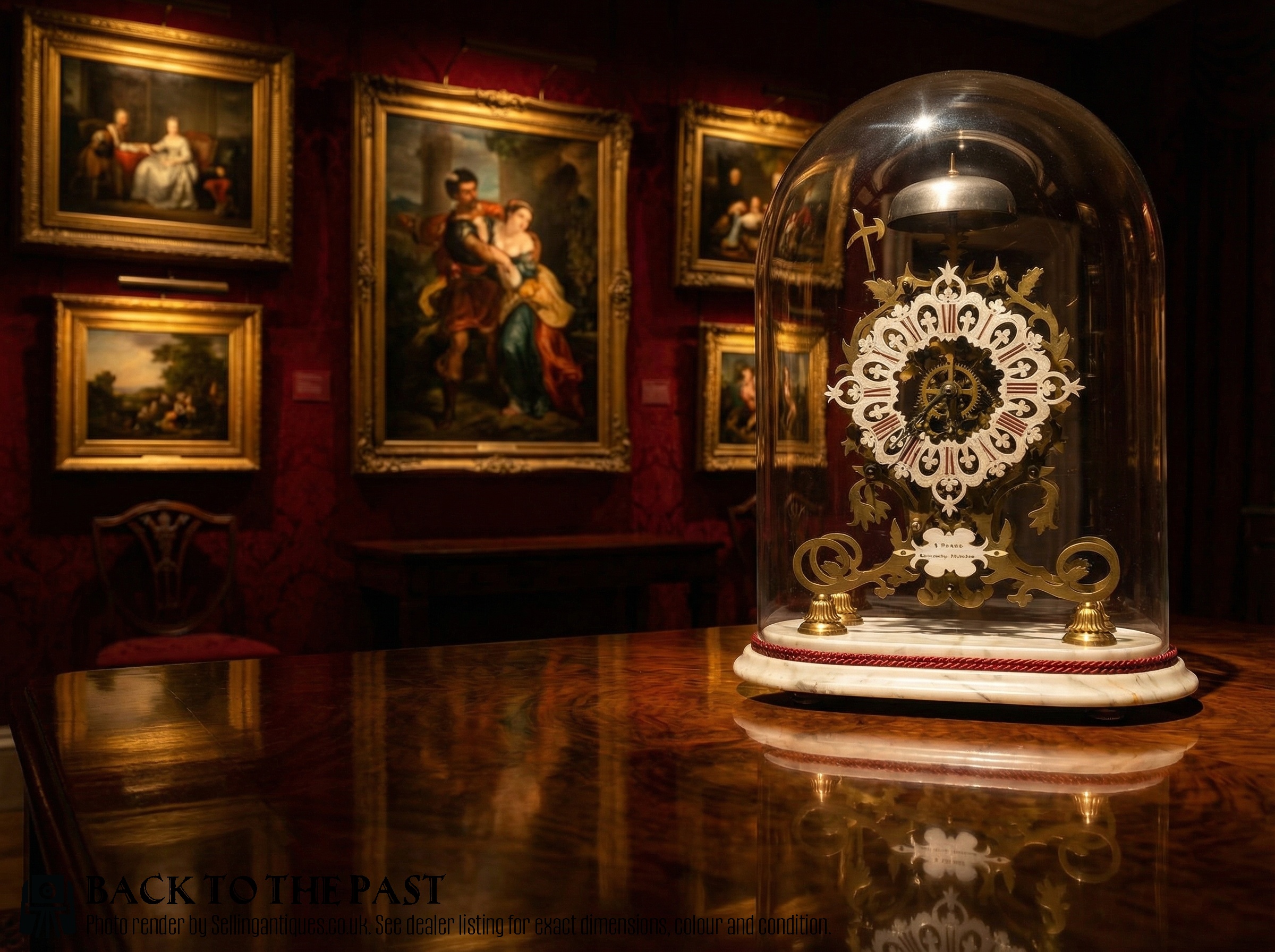
Mantel clocks and portico clocks appear alongside torsion movements, each configuration pairing an exposed or enamelled dial with a heavy glass shade. These objects serve as both functional timekeepers and decorative centrepieces for libraries and drawing rooms.
Construction and materials
Makers constructed these timepieces using cast brass, gilded bronze, ormolu, and marble, frequently mounting movements upon ebonised wood bases. Metal components were cast, chased, and gilded, while dials often featured hand-painted porcelain or white enamel with delicate numerals.
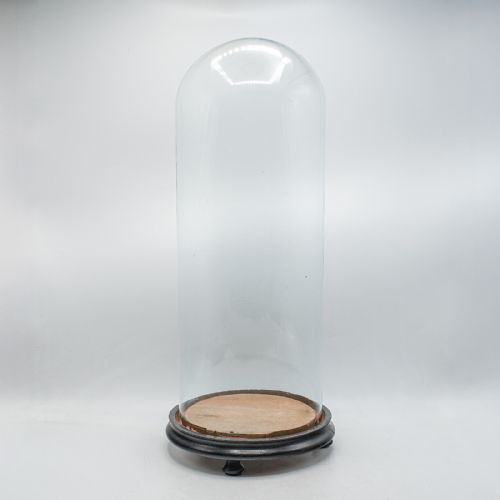
The characteristic domes consist of blown glass, typically displaying slight imperfections, bubbles, and variations in thickness inherent to nineteenth-century glassmaking techniques. These fragile covers rest securely on fitted wooden or metal plinths designed to support their weight.
Retail Price Guide 2026
Typical UK retail prices for glass dome clock, calculated from the Sellingantiques database of over a million retail prices indexed since 2003. This retail price guide relies exclusively on Sellingantiques data; no external sources or auction records are used, so the figures do not describe the wider market.
Early glass blowers occasionally trapped stray workshop dust inside the molten dome, leaving a tiny permanent witness to the nineteenth-century kiln.
Judging quality and execution
Quality rests in the crispness of the cast ormolu mounts, the depth of the gilding, and the refinement of the movement architecture. Finer skeleton clocks and French mantel pieces exhibit meticulous hand-finishing on every brass plate and pinion.
The integrity of the glass dome itself influences the character of the piece, with clearer, heavier glass representing superior nineteenth-century production. Matching materials across the dial, bezel, and base distinguish standard production from exceptional examples.
Leroy Paris·Thwaites of London
The Antique Glass Dome Clock Glossary
- Ormolu
- Gilded bronze produced by applying a mercury and gold amalgam to cast brass or bronze, then heating to drive off the mercury. This technique creates a distinctive matte golden finish found on nineteenth-century French pieces.
- Torsion clock
- A timepiece regulated by a slow-rotating pendulum suspended on a thin strip of spring steel, often called an anniversary clock because it runs for a year on a single winding. These movements sit neatly beneath glass domes to prevent air currents from disrupting the delicate suspension.
- Skeleton clock
- A clock designed with an open brass frame that exposes the gear train and escapement to view. They were frequently housed under glass shades to protect the intricate exposed wheels from dust.
Frequently Asked Questions
Why do these clocks have glass domes?
Glass domes protected delicate mechanical movements, particularly skeleton and torsion clocks, from household dust, soot, and damp air. Keeping the mechanism clean ensured more reliable timekeeping between services.
The clear cover also allowed the intricate gears and escapements to remain visible from every angle while preventing inquisitive fingers from disturbing the balance wheel.
How do I wind a torsion clock?
Torsion clocks require careful handling of the slow-rotating pendulum when applying the key to the mainspring arbor. Many nineteenth-century examples require winding only once or twice a year.
Consult the specific movement type before adjusting the hands, as turning them backwards can damage delicate escapements.
Where should I place a glass dome clock?
Position these clocks on stable mantelpieces, heavy sideboards, or library tables away from direct sunlight and heavy foot traffic. The heavy glass dome makes stability paramount for the wooden or marble base.
Ensure the surface is completely level so the pendulum or balance wheel beats evenly.
Are the glass domes original?
Nineteenth-century glass domes often display minor bubbles, striations, and slight irregularities from mouth-blowing techniques. Finding a dome that fits the exact contours and base rebate of the clock indicates period authenticity.
Replacement domes lack these subtle historical traits and often show modern glass production methods.